Green Manure Crops: The Plow-Under Secret
Long before synthetic nitrogen existed, farmers knew a quiet secret: green manure crops could feed the soil better than almost anything money could buy. They grew specific plants — clover, vetch, buckwheat, rye — then cut them down at just the right moment and buried them. The decomposing plants released nitrogen, organic matter, and microbial fuel directly into the root zone. No bags, no chemicals, no guesswork. Just soil science that had been working for centuries.
Today, most gardeners reach for a bottle or a bag when their soil looks tired. But there’s a better way — and it costs almost nothing. In this post, you’ll learn exactly which green manure crops work best, when to cut and bury them for maximum nitrogen release, and how to build a practical planting calendar you can start using this season.
What Are Green Manure Crops — And Why Do They Work?
A green manure crop is any fast-growing plant you grow specifically to chop and dig back into the soil. Unlike a traditional crop grown for harvest, a green manure’s entire purpose is to enrich the ground beneath it.
Here’s why it works so well. Living plants pull carbon from the air and nitrogen from the atmosphere — especially legumes, which form partnerships with soil bacteria to fix nitrogen directly from air pockets in the soil. When you cut that plant and turn it under while it’s still green and lush, all that stored nutrient energy releases directly into your soil’s food web.
The result? Earthworms multiply. Fungi spread. Beneficial bacteria explode in population. Your soil stops being just dirt and starts becoming a living system.
If you’ve been reading along with our post on Soil Sense Without the Lab: Read Your Dirt, Fix It Fast, you already know how to recognize tired, compacted, or nitrogen-starved soil. Green manures are one of the most powerful corrections you can make — and they work at a biological level that bagged fertilizers simply can’t replicate.
The Best Green Manure Crops for Home Gardeners
Not every plant makes a great green manure. The best ones grow fast, produce abundant biomass, and either fix nitrogen or break up compacted soil with deep roots. Here are the top choices, organized by season.
Spring and Summer Green Manures
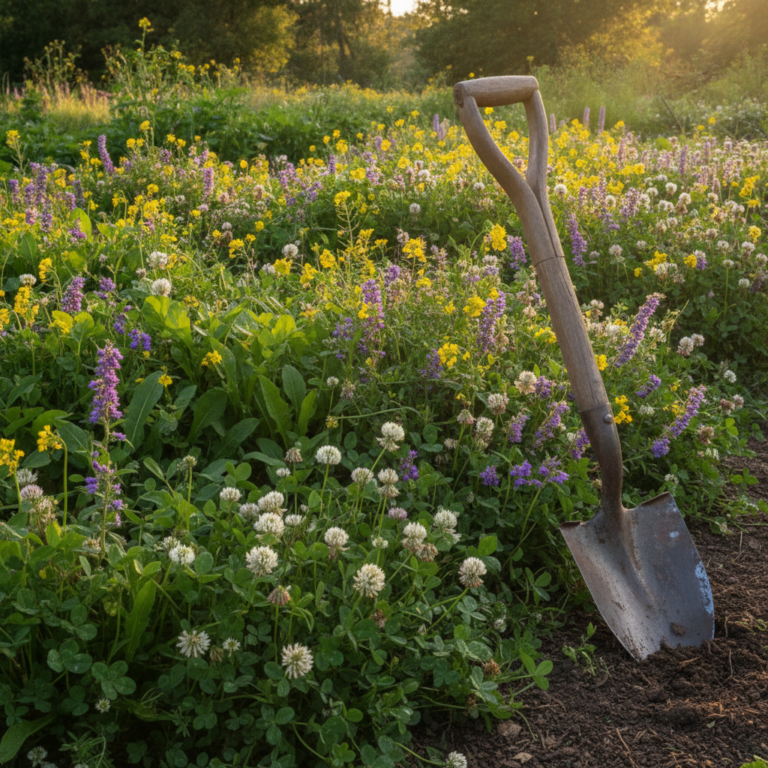
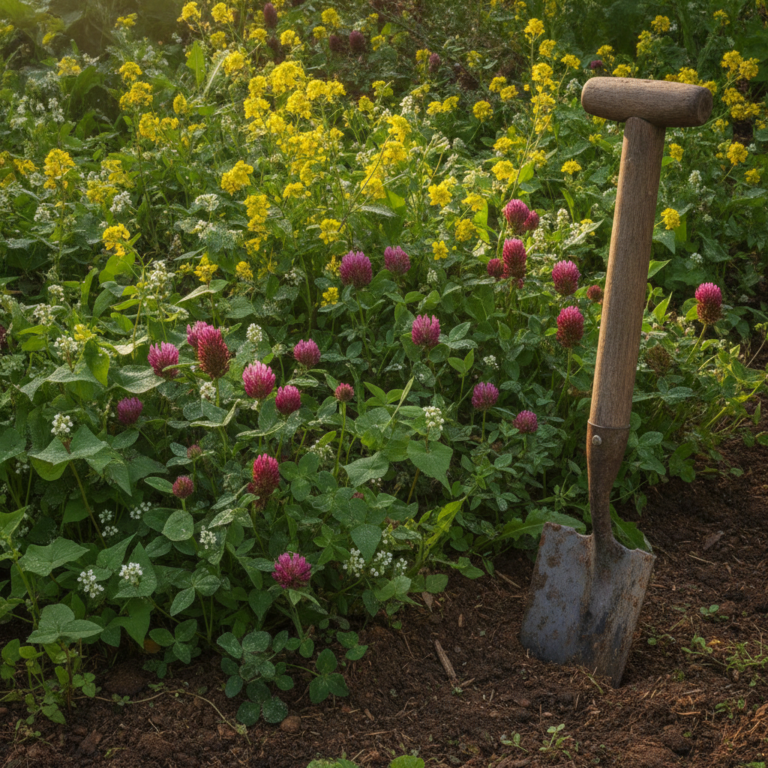
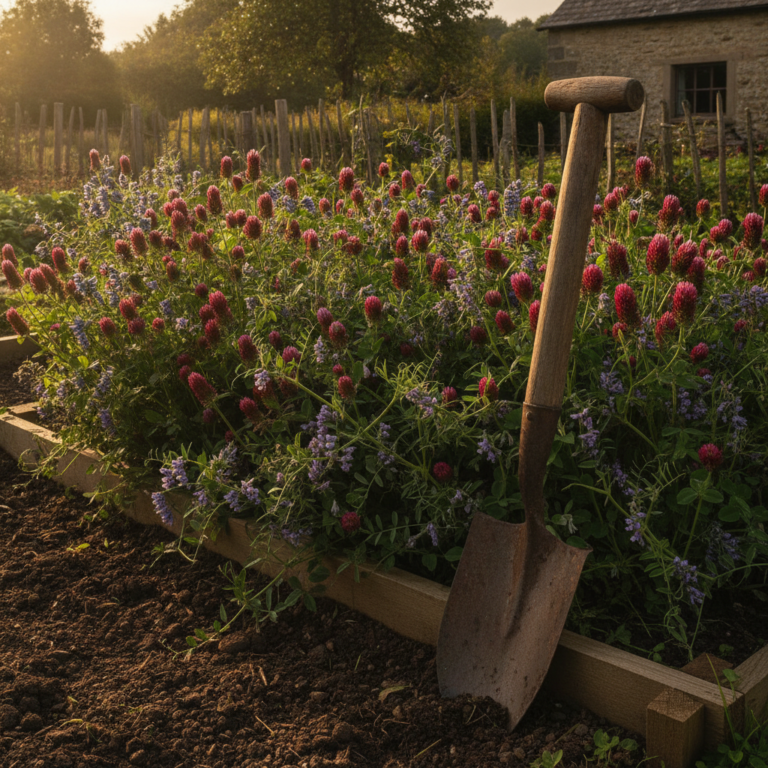
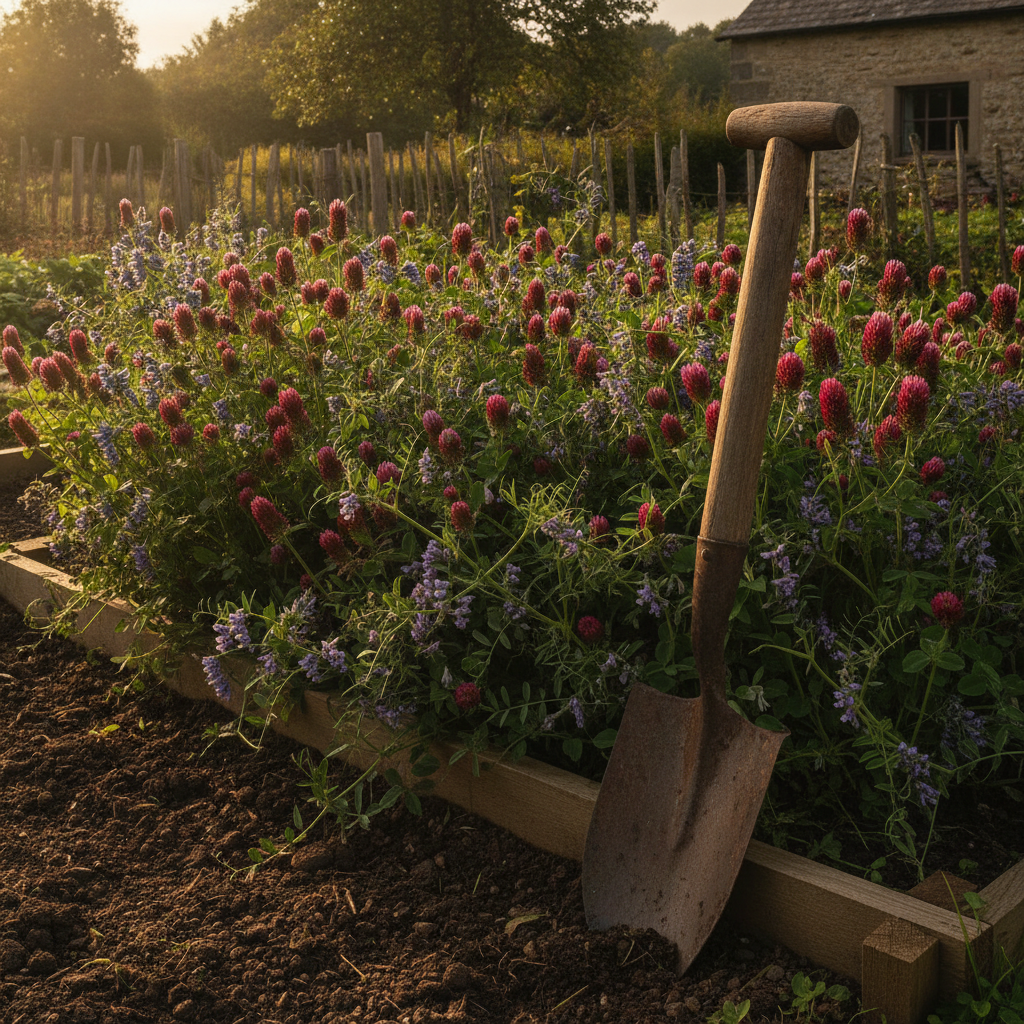
Crimson Clover is arguably the most useful green manure for home gardeners. It fixes nitrogen aggressively, grows quickly in cool to warm temperatures, and its flowers attract pollinators before you cut it. Sow after your last frost. Turn it under when it reaches 30–45 cm tall, just before it flowers heavily.
Buckwheat is a summer powerhouse. It smothers weeds, grows to full height in just 5–6 weeks, and breaks down rapidly after cutting. It doesn’t fix nitrogen, but it releases phosphorus from the soil in forms other plants can use — a seriously undervalued trick. Buckwheat also attracts beneficial insects by the hundreds.
Phacelia is fast, frost-tolerant, and produces a leafy mass that breaks down into rich humus within weeks of being turned under. It’s particularly good for improving soil structure in heavy clay.
Late Summer and Autumn Green Manures
Hairy Vetch is a cool-season legume and one of the most powerful nitrogen fixers in the garden toolkit. It can fix up to 150 kg of nitrogen per hectare in a season. For a home garden, that’s extraordinary. Sow it from late summer through early autumn for a winter-hardy stand that you turn under in spring.
Winter Rye doesn’t fix nitrogen, but it does something equally valuable: its dense root system breaks up compacted soil and adds enormous amounts of organic matter. It’s also allelopathic — meaning it suppresses weed germination naturally. Turn it under in spring, but wait 2–3 weeks before planting into it, as the breakdown process can temporarily inhibit germination.
Field Beans are a traditional green manure used for centuries across Europe. They fix nitrogen, grow tall and robust through the cold months, and their chunky stems add serious organic matter when turned under. Perfect for hungry beds that will host heavy-feeding crops like brassicas or corn the following season.
Timing the Cut: When to Plow Under for Maximum Nitrogen
Timing is everything with green manure crops. Cut too early and you lose biomass. Cut too late — after flowering and seed set — and the plant becomes woody, slow to break down, and may even re-establish itself from seed.
The sweet spot is just before or at first flower. At this stage, the plant has built up maximum nitrogen and nutrients in its leaves and stems, but it hasn’t yet shifted those resources into seed production. The tissue is still soft, green, and rich — ideal for rapid breakdown by soil microbes.
Here’s the simple process:
- Cut the plants at soil level with shears or a sharp spade. Chop the stems into smaller pieces — 10–15 cm lengths break down much faster than whole plants.
- Leave the cut material on the surface for 24–48 hours to wilt slightly. This speeds decomposition.
- Dig or fork the material into the top 15–20 cm of soil. You don’t need to bury it deeply — just below the surface.
- Water the bed and leave it for 2–4 weeks before planting. The decomposition window is essential. During this time, soil microbes get to work and a temporary nitrogen draw-down occurs as the carbon in the plant matter is processed.
That waiting period might feel frustrating, but it’s the step most gardeners skip — and it matters. Planting too soon into freshly turned green manure can actually stunt young transplants. Patience here pays off enormously.
If you’re planning your full growing season around this rotation, the Climate-Proof Your Crops: A 30-Day, Microclimate–Aware Planting Plan is an excellent companion resource. It will help you weave green manure windows into your overall calendar without losing prime growing time.
Why Green Manures Beat Most Store-Bought Soil Conditioners
Here’s what the bag of fertilizer can’t do:
It can’t grow fungal networks. It can’t stimulate worm populations. It can’t improve drainage and water retention simultaneously. It can’t suppress weeds while it’s working. And it certainly can’t pay for itself the way a £1 packet of clover seed does — improving your soil for the next five to ten years through the biological activity it triggers.
Green manure crops feed the entire soil ecosystem rather than just flooding the root zone with one specific nutrient. That’s a fundamentally different approach — and it’s why old-time farmers rotated green manures into their fields religiously. They didn’t have a choice, but in retrospect, they were doing something profoundly right.
For a broader picture of how these techniques fit into a low-input garden that builds on itself season after season, take a look at The Perennial Playbook: Build a Low-Input Garden That Keeps Flourishing With You. Green manures and perennial systems work beautifully together.
A Practical Green Manure Planting Calendar
Here’s a simple seasonal rotation you can adapt to your own garden beds. This assumes a temperate climate with frosts from November through March.
Spring (March–May)
- Turn under any overwintered hairy vetch or field beans. Wait 3 weeks, then plant your summer crops.
- After early harvests (radishes, lettuce, spring onions), immediately sow phacelia or crimson clover into the cleared space.
Summer (June–August)
- Sow buckwheat into any bed sitting empty for 6+ weeks. Turn under before it sets seed (around week 5–6).
- Follow cleared beds with a second sowing of phacelia or a clover mix for fast organic matter before autumn.
Autumn (September–October)
- Sow hairy vetch, winter rye, or field beans into beds that have finished producing for the season. These will overwinter and be ready to turn under in early spring.
- This is your most important sowing window. Don’t let beds sit bare through winter — that’s free soil-building time being wasted.
Winter (November–February)
- Your green manures are quietly working — fixing nitrogen, protecting soil structure from rain compaction, and feeding overwintering soil life.
- Use this time to plan next year’s rotation. If you enjoy tracking what works, the templates in Field Notes to Flourishing: Templates and Prompts to Track Growth, Mistakes, and Milestones are genuinely useful for logging which green manures performed best in your specific beds.
Getting Started This Season
You don’t need to overhaul your entire garden. Start with one bed — ideally one that will sit empty for 4–6 weeks between crops. Buy a small packet of crimson clover or phacelia, broadcast it thickly, water it in, and watch what happens.
Then, when the flowers just begin to open, cut it down. Chop it up. Dig it in. Wait. Plant.
That simple cycle — grow, cut, bury, wait, plant — is the heartbeat of a living soil system. Your grandparents knew it. Their grandparents refined it. And once you experience the difference it makes to your soil’s texture, smell, and productivity, you’ll understand exactly why this old rotation trick has outlasted every synthetic shortcut ever invented.
Green manure crops aren’t a fringe idea from a forgotten era. They’re one of the most practical, proven, and affordable tools in the organic gardening toolkit. Start this season. Your soil will thank you next year — and for many years after that.