Green Manure Crops: The Plow-Under Secret
Long before the first bag of synthetic fertilizer ever sat on a store shelf, farmers had already solved the nitrogen problem. Their secret? Green manure crops — fast-growing plants grown not to eat, but to chop down and bury. These living soil builders fed generations of productive gardens without a single chemical input. Today, most gardeners have never heard of them. That’s a shame, because green manure crops may be the single most powerful and affordable soil upgrade you can make this season.
What Are Green Manure Crops — and Why Did We Forget Them?
Green manure is exactly what it sounds like. You grow a crop, then you plow it under while it’s still green and fresh. The decomposing plant matter releases nitrogen, organic acids, and microbial food directly into the root zone where your vegetables need it most.
Farmers used this technique for thousands of years. Ancient Roman agricultural writers documented it. Japanese farmers refined it over centuries. Before World War II, nearly every serious kitchen gardener rotated green manures into their beds as standard practice.
Then synthetic nitrogen arrived. It was cheap, fast, and required almost no planning. Green manure crops fell out of fashion — but not because they stopped working. They work better than ever. And unlike a bag of fertilizer, they also improve soil structure, suppress weeds, protect against erosion, and feed your earthworm population all at once.
If you’re still trying to understand what your soil is doing, it helps to start with a read of Soil Sense Without the Lab: Read Your Dirt, Fix It Fast. Knowing what you’re starting with makes green manure timing far more effective.
The Best Green Manure Crops for Home Gardens
Not every plant makes an equally good green manure. The best ones are fast-growing, nitrogen-fixing or nitrogen-rich, and easy to chop and dig. Here are the top performers for home gardeners.
Crimson Clover
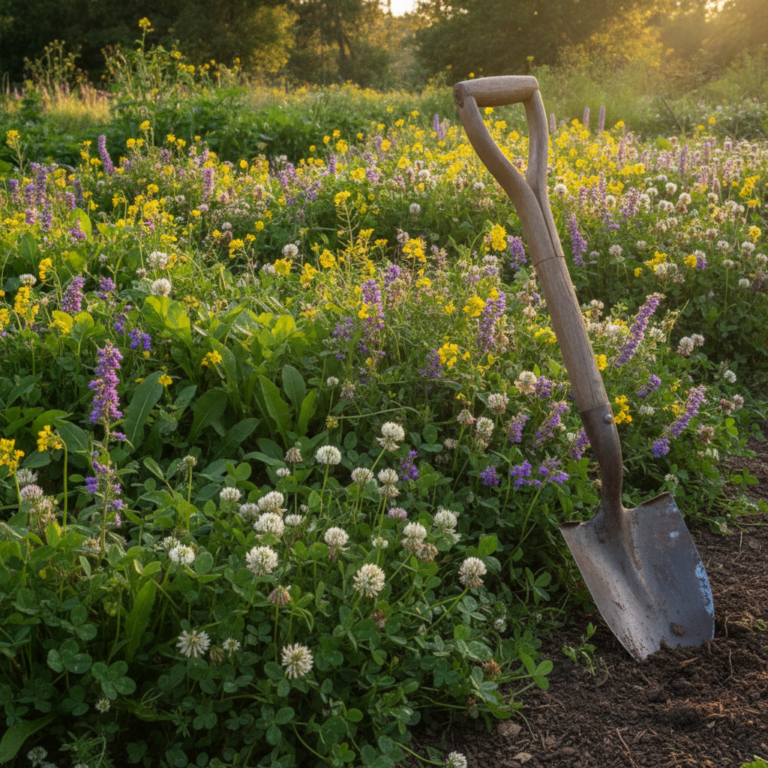
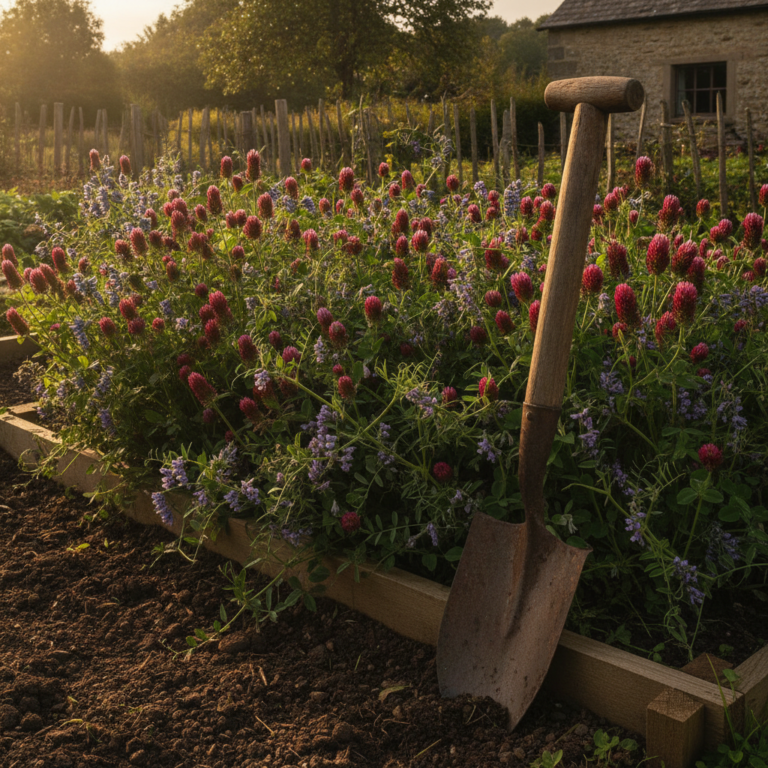
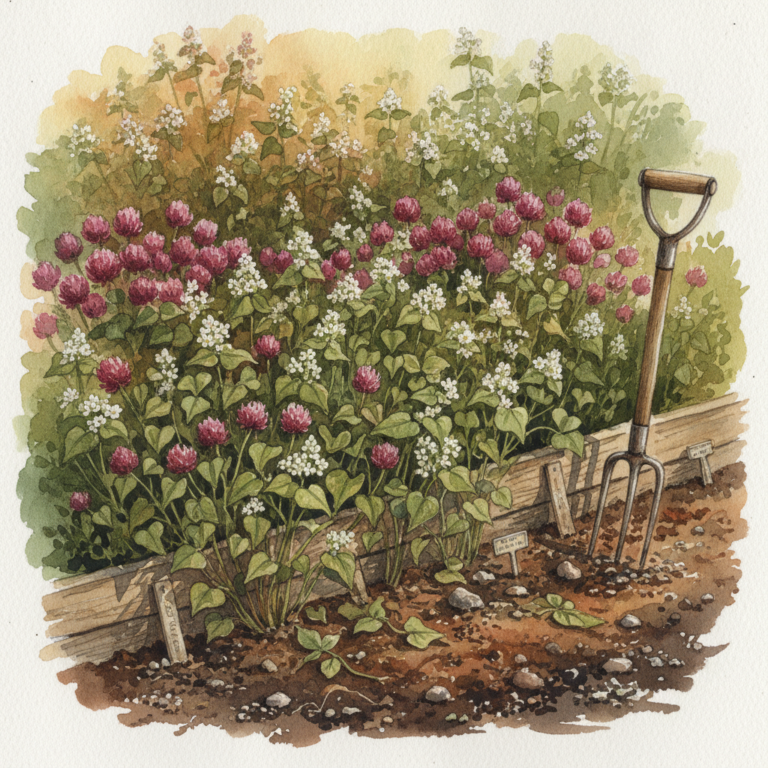
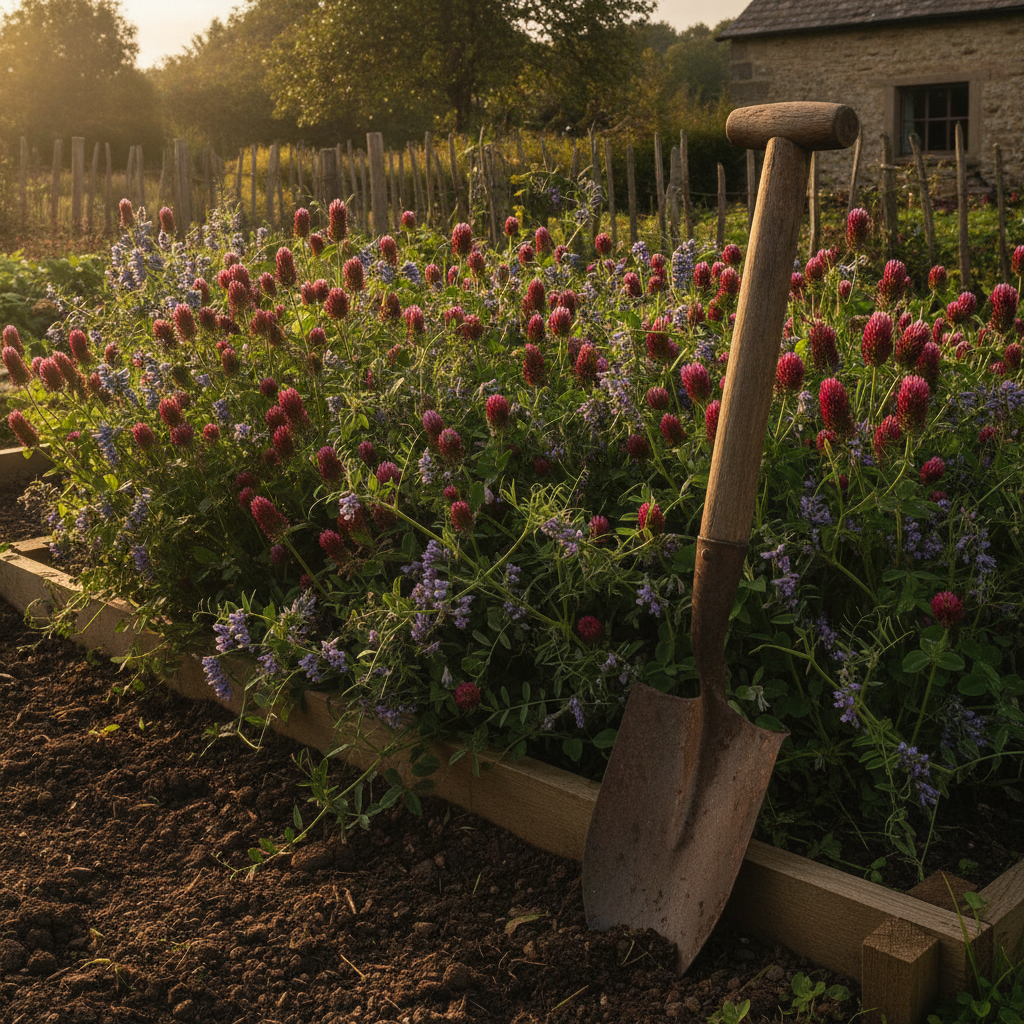
This is the workhorse of green manures. Crimson clover is a legume, which means it works with soil bacteria to pull nitrogen right out of the air and fix it in root nodules. When you dig it under, those nodules release all that stored nitrogen into the soil. It’s fast, it’s beautiful, and it attracts pollinators while it grows. Sow in early spring or fall. Turn it under at peak bloom for maximum nitrogen release.
Buckwheat
Buckwheat is not a legume, but it’s a summer powerhouse. It grows in as little as five weeks, smothers weeds completely, and scavenges phosphorus from deep in the soil — bringing it up to the surface where shallow roots can reach it. It’s also remarkably easy to chop and dig even by hand. Use buckwheat in the gap between spring crops and fall plantings.
Winter Rye
For late-season soil protection and spring soil building, winter rye is unbeatable. It germinates in cold soil, overwinters without dying, and produces tremendous biomass by early spring. The deep roots break up compaction. When you turn it under in spring, the slow decomposition feeds soil life for weeks. One caution: let it decompose for two to three weeks before planting into it, as fresh rye releases compounds that can slow germination.
Fava Beans
Fava beans are a cool-season legume that fixes impressive amounts of nitrogen. They’re also edible — so you can harvest the top third for the kitchen and still dig the rest under as green manure. This dual-purpose quality makes them a favorite among frugal growers. Plant in early spring or autumn depending on your climate.
Mustard
Mustard grows fast and hot. Its roots release natural compounds called glucosinolates that suppress soil-borne pathogens and some nematodes. It’s sometimes called a “biofumigant” for this reason. Turn mustard under while it’s still flowering for the most potent fumigation effect. Excellent before a heavy-feeding crop like tomatoes or brassicas.
How to Time the Cut-and-Dig for Maximum Nitrogen Release
Timing is everything with green manure crops. Dig too early, and you lose biomass. Dig too late, and the plant has set seed and put all its energy into reproduction instead of foliage. The sweet spot is just before or at the moment of flowering.
Here’s why that matters: plants concentrate their nitrogen in young, green tissue. As they flower and mature, that nitrogen migrates into seeds. If you cut at peak flower, you capture the highest leaf-to-stem nitrogen ratio before it moves on.
The process is simple. Chop the plants down at soil level with a sharp hoe or spade. Then use a fork to turn the chopped material into the top six to eight inches of soil. Water the bed well. Wait two to four weeks before planting your main crop. That waiting period lets the organic matter break down and become available to plant roots.
Want to track this in a way that improves season after season? A good garden journal makes all the difference. Check out Garden Journaling for Mastery: Ready-to-Use Templates and Prompts to Track Your Progress for templates you can start using right now.
Green Manure vs. Store-Bought Soil Conditioners
Let’s be honest about the comparison. A bag of granular fertilizer delivers a precise amount of nitrogen quickly. That’s useful in certain situations. But it does nothing for soil structure. It doesn’t feed fungi. It doesn’t build aggregates or encourage earthworms. It delivers a nutrient hit and then it’s gone.
Green manure crops, by contrast, deliver nitrogen alongside a full suite of organic matter. As they decompose, they feed bacteria and fungi, which in turn build the sticky compounds that hold soil particles together into crumbles. That crumbly structure is what allows air and water to move freely — which is ultimately what makes plants thrive.
Studies comparing green manure rotations to fertilizer-only systems consistently show better long-term yields in the green manure plots — even when the nitrogen input is similar. The difference is in the biology.
This connects directly to what your microclimate demands from your soil. If you haven’t yet mapped your garden’s unique conditions, Mapping Your Garden Microclimates: Turn Sun, Wind, and Shade into Higher Yields is a great companion read to this one.
A Practical Green Manure Planting Calendar
Here’s a simple seasonal framework you can adapt to your climate zone. Think of it as a rotation backbone — a way to ensure your soil is always either growing something or digesting something.
Spring (March–May)
- Sow: Crimson clover or fava beans as soon as soil is workable
- Turn under: Any overwintered rye or vetch from the previous fall
- Wait: Two to three weeks after turning before planting summer crops
Early Summer (May–July)
- Sow: Buckwheat in gaps left by spring harvests or in unused beds
- Turn under: Buckwheat at five to six weeks, just as it begins to flower
- Follow with: Late summer plantings of brassicas, carrots, or beans
Late Summer (August–September)
- Sow: Mustard in beds being cleared of spent tomatoes or squash
- Turn under: After three to four weeks, before mustard sets seed
- Purpose: Biofumigate and build organic matter heading into fall
Fall (September–November)
- Sow: Winter rye or a clover-vetch mix in all cleared beds
- Leave to overwinter: Roots protect soil, top growth adds spring biomass
- Turn under: In early spring, four to six weeks before planting
This calendar is flexible. You don’t need to apply it to every bed at once. Start with one or two beds this season and observe the difference in soil texture, worm activity, and plant performance. You’ll notice it quickly.
Getting Started Without Overwhelm
The most common mistake new gardeners make with green manures is overcomplicating the plan before they’ve grown a single crop. Start simple. Pick one plant — buckwheat is the easiest for beginners — and try it in a single empty bed this summer. Observe how fast it grows. Notice how the soil looks and smells after you turn it under. Let the experience teach you before you build out a full rotation.
If you’re newer to gardening and want a structured path forward, Smart Starts: A 4-Week Skill-Build Plan for Complete Garden Beginners lays out a practical progression that fits beautifully alongside green manure experiments.
The old farmers who used these techniques weren’t working harder than modern gardeners. They were working smarter — with the soil rather than against it. Green manure crops are one of the clearest examples of that wisdom. They cost next to nothing, they ask very little of you, and they give the soil exactly what it needs to grow food abundantly, season after season.
Your grandparents may not have called it “soil biology.” But they knew this much: bury the green, and the garden will thank you come harvest time. They were right.