Moon Phase Planting: Ancient Timing Your Grandparents Knew
Before electric lights dimmed our connection to the night sky, moon phase planting guided generations of farmers through their growing seasons. Your grandparents understood what modern agriculture has forgotten-that lunar cycles influence everything from seed germination to harvest timing. This ancient wisdom offers a natural rhythm that can transform your garden’s success.
Tonight, step outside and look up. That glowing orb has been orchestrating agricultural cycles for millennia, and it’s ready to help your garden thrive again.
The Science Behind Moon Phase Planting
While skeptics dismiss lunar gardening as folklore, the gravitational forces that create ocean tides also affect the moisture in soil and plant tissues. During the new moon, gravitational pull draws water upward through plant capillaries, creating ideal conditions for seed germination and root development.
As the moon waxes toward full, this upward water movement intensifies, encouraging leaf growth and strong stem development. During the waning phase, energy shifts downward into roots and soil microorganisms, making it perfect for transplanting and soil building activities.
Traditional farmers observed these patterns for generations, noting that seeds planted during certain lunar phases germinated faster, grew stronger, and produced better yields than those planted randomly.
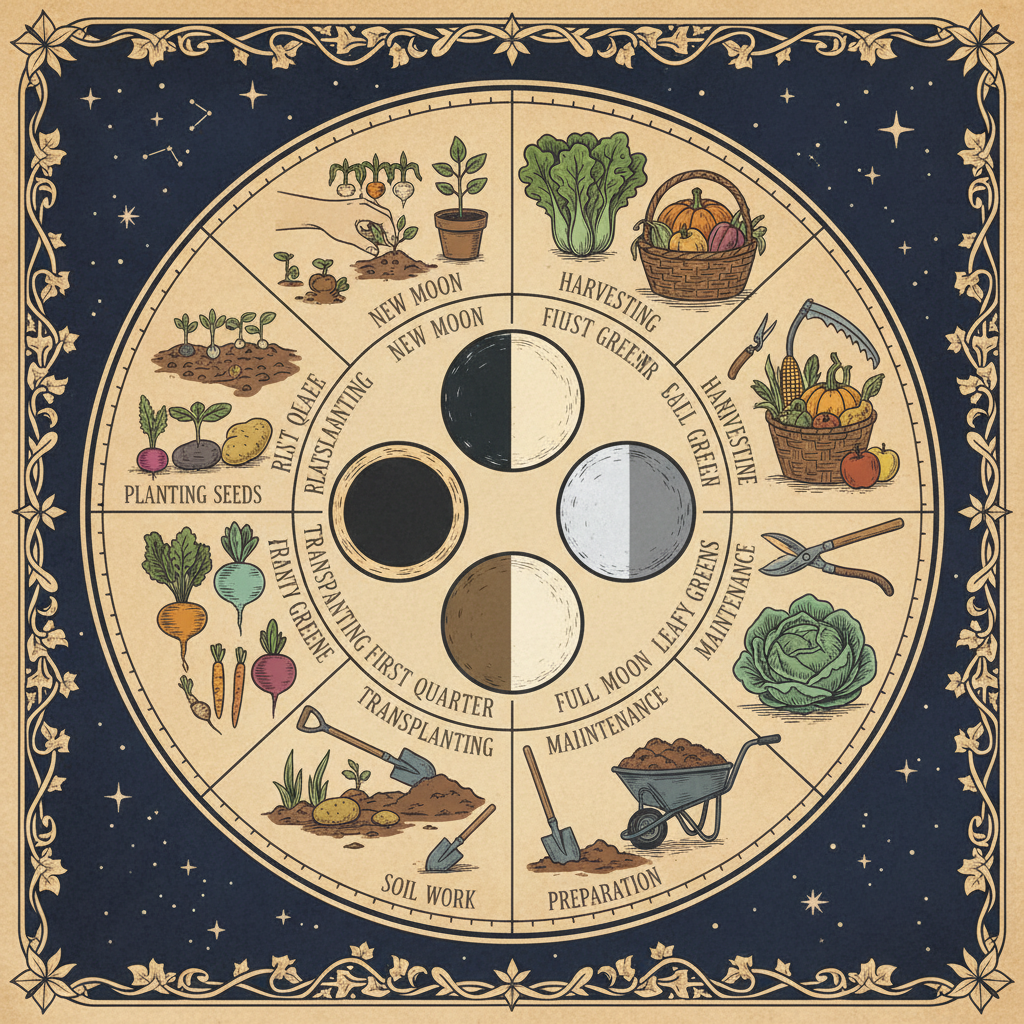
The Four-Phase Calendar System
Your ancestors used a simple four-phase system that you can implement immediately. No complex calculations or specialized equipment required-just a basic lunar calendar and careful observation.
New Moon Phase: Underground Action
The three days around the new moon create optimal conditions for planting seeds that develop their edible parts underground. Root vegetables like carrots, potatoes, onions, and radishes germinate more successfully during this phase.
Plant directly in prepared beds, ensuring your soil condition supports strong root development. The decreased light and increased gravitational pull encourage seeds to focus energy on establishing deep, robust root systems.
First Quarter: Above-Ground Growth
As the moon grows brighter, plant anything that produces its harvest above ground. Lettuce, spinach, broccoli, and other leafy greens thrive when planted during the first quarter phase.
This is also excellent timing for transplanting seedlings. The increasing moonlight and upward water movement help newly transplanted plants establish quickly in their permanent locations.
Full Moon: Peak Energy Period
The full moon brings maximum gravitational pull and peak growing energy. While some gardeners avoid planting during this intense period, it’s perfect for harvesting, as plants contain maximum moisture and nutrients.
Use this high-energy time for garden maintenance tasks like weeding, pest management, and applying organic fertilizers. Plants are most responsive to beneficial inputs during this phase.
Last Quarter: Root Focus Returns
During the waning moon, energy flows back underground. This makes it ideal for transplanting established plants, as they’ll focus on root development rather than leaf growth, reducing transplant shock.
It’s also perfect for soil improvement activities like adding compost, applying mulch, or working biochar into your beds. The downward energy movement helps beneficial amendments integrate more effectively.
Practical Moon Phase Planting Implementation
Start incorporating moon phase planting gradually into your existing garden routine. You don’t need to overhaul everything immediately-begin with just a few plants or one garden bed.
Keep a simple lunar calendar in your garden journal, marking the four main phases each month. Track which seeds you plant during each phase and compare their performance. Many gardeners notice differences within the first growing season.
Coordinate lunar timing with your microclimate awareness. If the optimal moon phase falls during unsuitable weather, wait for the next appropriate phase rather than fighting both lunar timing and climate conditions.
Beyond Planting: Lunar Harvest Timing
Your grandparents knew that harvest timing affects storage life and nutritional content. Root vegetables harvested during the waning moon, when energy concentrates underground, store longer and taste better.
Leafy greens picked just before the full moon contain peak moisture and nutrients. Fruits harvested during the waxing moon have better flavor and texture than those picked randomly.
Seeds saved during the proper lunar phase maintain higher viability rates. Collect seeds during the waning moon for better germination rates the following season.
Common Misconceptions and Modern Adaptations
Moon phase planting doesn’t require mystical beliefs or complicated rituals. It’s simply about working with natural rhythms rather than against them.
Urban light pollution doesn’t negate lunar effects on your garden. Gravitational forces remain constant regardless of artificial lighting. However, if you’re starting with container gardening or working in small spaces, focus on the timing aspects rather than expecting dramatic transformations immediately.
Don’t abandon practical gardening fundamentals for lunar timing. Soil health, proper nutrition, and good cultural practices remain essential. Moon phase planting enhances these basics rather than replacing them.
Building Your Lunar Garden Strategy
Create a seasonal planting calendar that combines moon phase planting with your local growing conditions. Mark optimal lunar phases for different crops alongside your last frost dates and seasonal temperature patterns.
Start with easy-to-grow crops that show obvious differences when planted during optimal phases. Radishes, lettuce, and beans respond particularly well to proper lunar timing, giving you quick feedback on this ancient technique.
Document your results in your garden journal. Note germination rates, growth patterns, and harvest quality for plants started during different moon phases. This personal data will guide your future planting decisions more effectively than any generic advice.
Remember that moon phase planting works best as part of a holistic approach to natural gardening. Combine it with companion planting, soil building techniques, and seasonal garden planning for maximum benefit.
Reconnecting With Agricultural Wisdom
Every month offers four opportunities to align your garden work with lunar cycles. This regular rhythm creates a deeper connection to seasonal patterns and natural timing that modern life often obscures.
As you begin incorporating moon phase planting into your garden routine, you’ll rediscover the same patterns your grandparents relied on. These weren’t superstitions-they were practical observations refined over generations of successful growing.
The moon that guided your ancestors still travels the same path overhead. By learning to read its signals again, you’re not just improving your garden’s productivity-you’re reconnecting with wisdom that sustained communities long before chemical fertilizers and artificial growing seasons disconnected us from natural rhythms.
Start tonight. Check the current moon phase, plan your next planting session accordingly, and begin rebuilding this lost connection between sky and soil.