Green Manure Crops: The Plow-Under Secret
Long before synthetic nitrogen arrived in a bag, farmers had a quiet secret. They grew specific plants not to harvest — but to bury. These were green manure crops, and for centuries they were the engine behind productive, living soil. Today, most gardeners reach for a bottle of liquid fertilizer without knowing this older, deeper method even exists. But once you understand how green manures work, you may never look at an empty bed the same way again.
What Are Green Manure Crops — And Why Did We Forget Them?
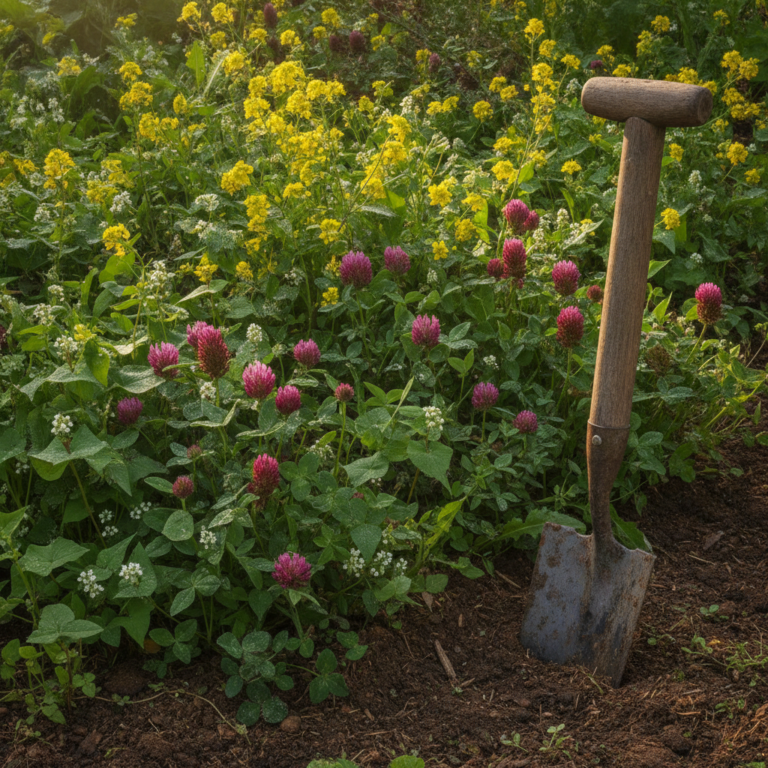
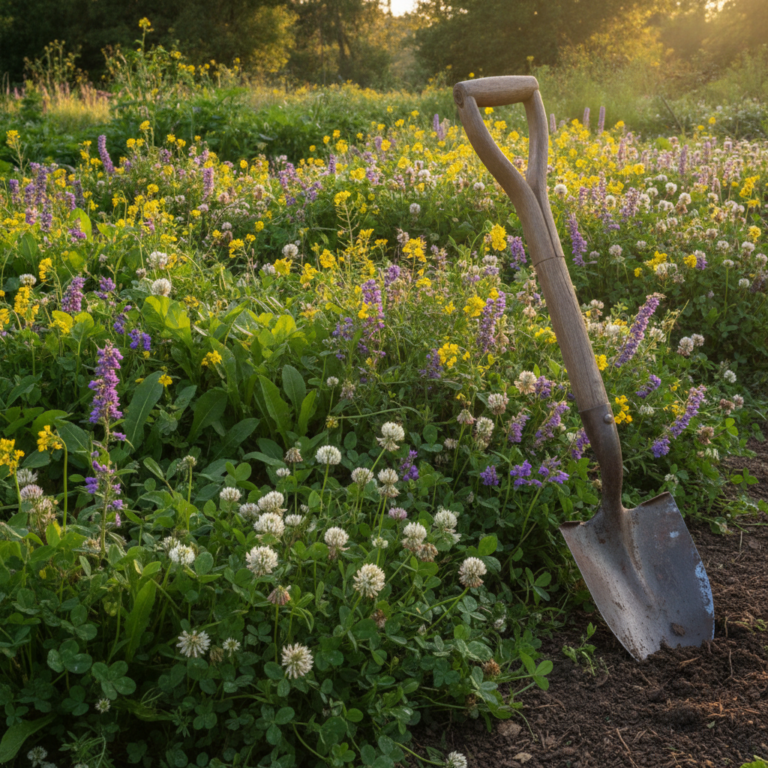
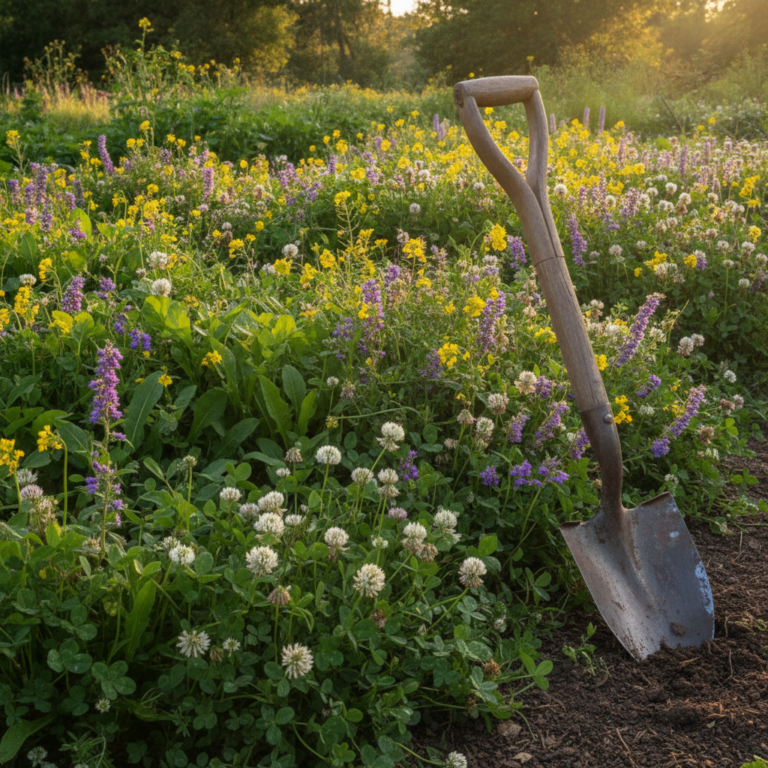
Green manure crops are fast-growing plants — usually legumes, grasses, or broad-leaved herbs — that you grow specifically to chop down and dig into the soil before they set seed. The buried plant matter decomposes rapidly, releasing nitrogen, organic carbon, and trace minerals directly into the root zone of your next crop.
This is not composting. It is faster, more targeted, and happens in place. The biology involved is remarkable. Leguminous green manures like clover and vetch host bacteria in their roots that pull nitrogen directly from the air. When you cut and bury them, all that captured nitrogen gets released into the soil within a matter of weeks.
We forgot this technique largely because synthetic nitrogen became cheap after World War II. Farmers stopped growing fertility and started buying it. But synthetic fertilizers skip the soil food web entirely. They feed the plant, not the ground. Over time, that soil becomes dependent — less alive, less structured, less resilient.
Green manure crops, by contrast, feed microbes, improve drainage, suppress weeds, and build long-term soil structure. They are a complete system, not just a nutrient delivery mechanism.
If you are still learning to read what your soil needs, the post Soil Sense Without the Lab: Read Your Dirt, Fix It Fast is an excellent starting point before you choose your first green manure.
The Best Green Manure Crops for Home Gardeners
Not all cover crops function equally as green manures. Here are the best options sorted by season and purpose.
Nitrogen-Fixing Legumes
These are the workhorses of the green manure world. They partner with soil bacteria to fix atmospheric nitrogen, making them the most valuable choice for depleted beds.
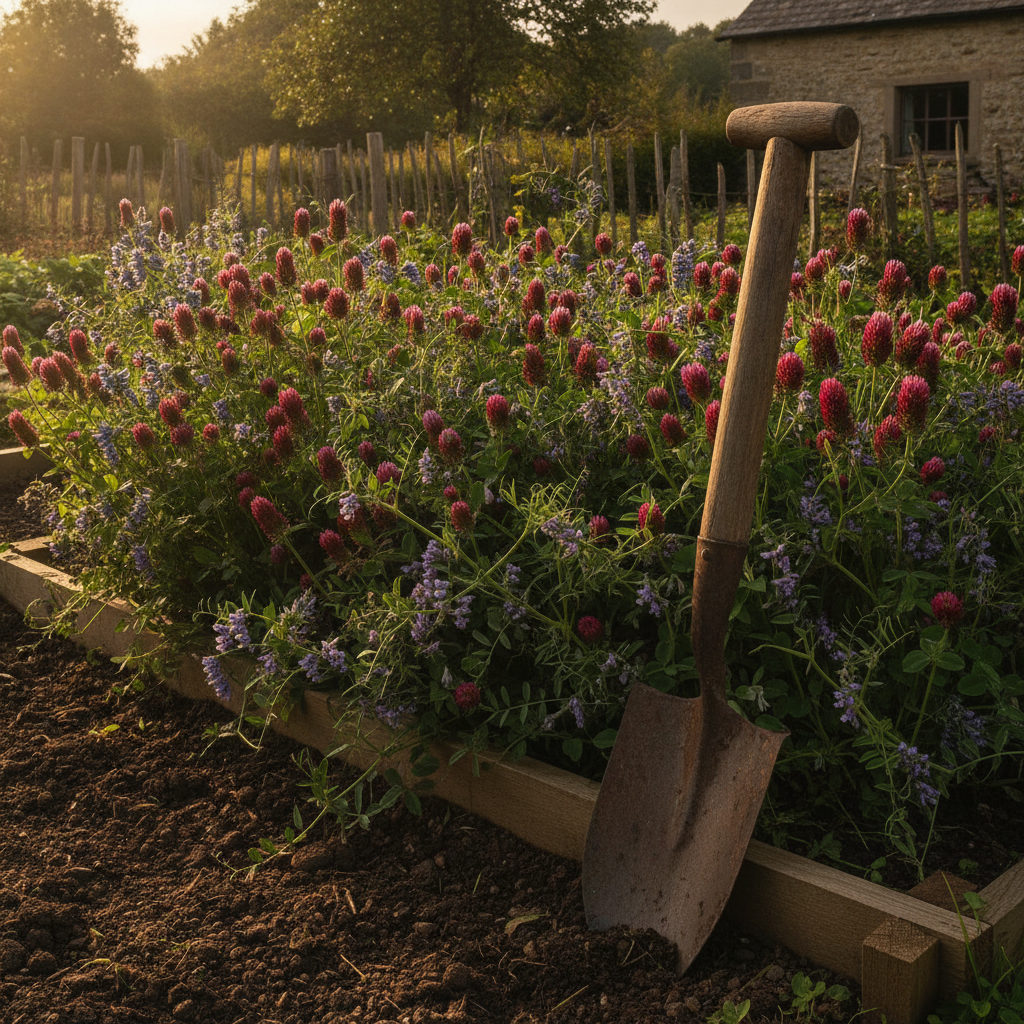
- Crimson Clover — Fast-growing, beautiful, and one of the best nitrogen contributors. Sow in spring or late summer. Ready to cut in 6–8 weeks.
- Hairy Vetch — Excellent for overwintering. Very cold-hardy. Fixes up to 200 lbs of nitrogen per acre. Great before corn or squash.
- Fava Beans — One of the oldest green manures in European agriculture. Deep-rooted. Best sown in autumn for a spring cut-and-dig.
- Field Peas — Grows fast in cool weather. Cut just as flowers appear for maximum nitrogen content in the stems and leaves.
Organic Matter Builders
These crops don’t fix nitrogen, but they add tremendous bulk and improve soil structure.
- Buckwheat — Grows explosively in summer heat. Smothers weeds. Breaks down rapidly after cutting. Also scavenges phosphorus from subsoil.
- Phacelia — A stunning purple-flowered plant beloved by pollinators. Breaks down quickly and has a near-neutral pH effect on soil.
- Mustard — Has mild biofumigant properties. Helps suppress soilborne disease and nematodes. Good between brassica rotations.
- Oats or Winter Rye — Excellent bulk builders. Combine with vetch for a nitrogen-plus-carbon one-two punch.
The Cut-and-Dig: Timing Is Everything
Here is where most beginners go wrong. They either cut too early (before maximum nitrogen accumulates) or too late (after seeds have set and the crop becomes a weed problem).
The golden window is just before or at early flowering. At this stage, the plant’s nitrogen content is at its peak. The stems are still soft, which means they will decompose quickly once turned in.
The process is simple:
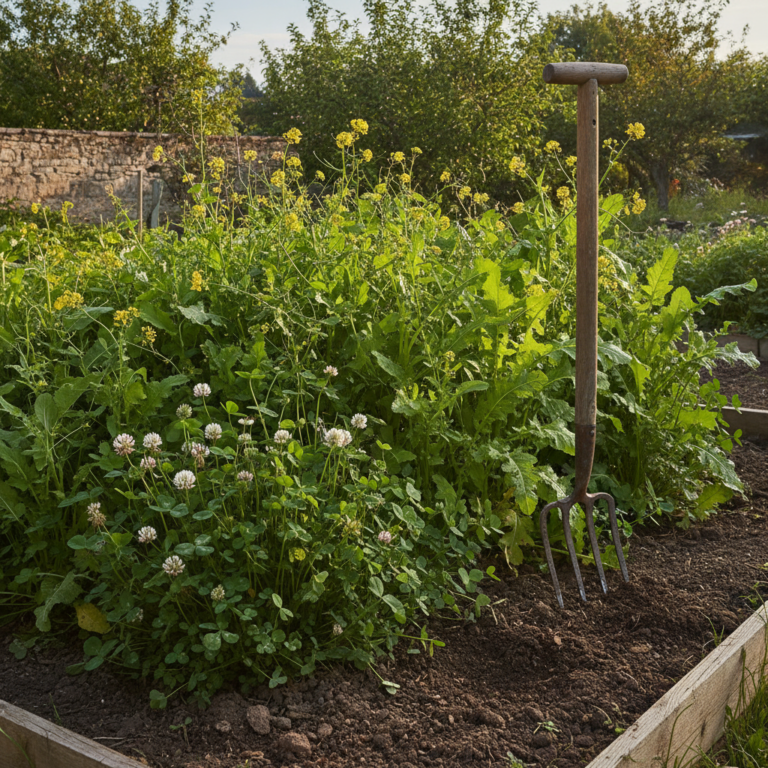
- Cut or mow the crop down to a few inches above the soil.
- Let it wilt for one to two days. This slows regrowth and starts breakdown.
- Turn it into the top six inches of soil with a fork or spade.
- Water if conditions are dry. Moisture accelerates decomposition.
- Wait two to four weeks before planting your main crop.
That waiting period matters. Fresh green matter is temporarily high in carbon relative to nitrogen while it breaks down. Planting too soon can cause a brief nitrogen drawdown. Patience here pays off significantly.
For gardeners who want to pair this technique with thoughtful planting sequences, the Climate-Proof Your Crops: A 30-Day, Microclimate–Aware Planting Plan gives excellent context for timing decisions across different bed positions.
A Practical Green Manure Planting Calendar
This seasonal guide works for most temperate climates in the Northern Hemisphere. Adjust two to three weeks earlier or later based on your local conditions.
Spring (March–May)
Sow field peas, phacelia, or crimson clover in any bed that won’t be planted until summer. Cut and dig in late May or early June, three to four weeks before transplanting tomatoes, squash, or peppers.
Early Summer (June–July)
Sow buckwheat in any gap left after early crops like lettuce or spinach. Buckwheat grows so fast — ready to turn in within just four to five weeks — that it fits neatly between spring and late-summer plantings.
Late Summer (August–September)
After main-season crops are harvested, sow hairy vetch mixed with winter rye. This combination overwinters beautifully in most zones. The rye provides structure; the vetch fixes nitrogen all winter. Turn it in next April or May.
Autumn (October–November)
Sow fava beans in mild climates (Zone 7 and warmer). In colder zones, use a thick seeding of winter rye as an overwintering soil cover and carbon builder.
Even in small gardens, working one or two beds through a green manure rotation each season makes a visible difference within two to three years. If you are building a more layered, biodiverse growing space, the principles in Microforest in Small Spaces: A Step-by-Step Plan for Edible, Biodiverse Gardens pair well with this approach.
Why Green Manures Outperform Store-Bought Soil Conditioners
Bagged amendments — even good ones — are static. They deliver a fixed amount of nutrition in a fixed form. Green manure crops, on the other hand, are living systems. They interact with your existing soil biology in ways no bag can replicate.
Consider what a hairy vetch and winter rye combination does over a single winter season:
- Fixes 80–150 lbs of nitrogen per acre — released slowly as it decomposes.
- Adds thousands of pounds of organic matter per acre.
- Protects bare soil from compaction and erosion during rain.
- Feeds soil microbes actively throughout the cold months.
- Suppresses winter annual weeds under dense growth.
No bag of fertilizer does all of that. And the cost? A small packet of seed — often under five dollars — covers a generous garden bed. The return on investment is extraordinary.
This is the kind of thinking your grandparents’ generation built their gardens on. They understood that healthy soil grows healthy crops — not the other way around. Green manure crops are one of the clearest expressions of that philosophy in action.
Getting Started This Season
You do not need to overhaul your entire garden to try this. Start with one empty bed. Sow buckwheat or phacelia this summer, cut it just before it flowers, and dig it in. Then wait three weeks and plant something demanding — like squash or kale — into that same bed.
Watch what happens. The soil will feel different. Darker, softer, more alive. Your plants will respond without being prompted.
This is not complicated gardening. It is patient gardening. And patience, as any old farmer would tell you, is the most powerful soil amendment of all.
If you are building your skills step by step, the Smart Starts: A 4-Week Skill-Build Plan for Complete Garden Beginners gives you a clear progression that fits beautifully alongside seasonal green manure work.
Start small. Observe closely. Let the soil teach you. That is exactly what farmers understood before the fertilizer bag arrived — and it is a lesson worth remembering.