Green Manure Crops: The Plow-Under Secret
Long before synthetic nitrogen came in a plastic bag, farmers already knew how to feed their soil. They grew green manure crops — specific plants raised with a single purpose: to be chopped down and buried alive. This old rotation trick quietly rebuilds soil fertility from the ground up. And the best part? It costs almost nothing and works better than most things you’ll find on a garden center shelf.
If you’ve ever struggled with tired, depleted soil or wondered why your vegetables never quite thrive despite adding compost, this post is for you. Let’s dig into the buried wisdom of green manuring — the timing, the plants, and the practical planting calendar you can start using this season.
What Are Green Manure Crops, Exactly?
Green manure crops are fast-growing plants you sow specifically to dig or till back into the soil before they set seed. You’re not harvesting them for food. You’re growing them to feed the earth beneath your feet.
The concept is ancient. Roman farmers used lupins. Chinese rice paddies relied on azolla fern. English farmers rotated fields with clover and vetch for centuries. These weren’t random choices — each plant was selected for what it gives back to the soil when it breaks down.
When you bury green plant matter, soil microbes get to work. They break down the organic tissue, releasing nitrogen, phosphorus, and trace minerals directly into the root zone of your next crop. It’s a living fertilizer system, and it’s completely free once you have the seeds.
Want to understand your soil’s current state before you start? This guide on reading your soil without a lab will help you identify what it’s already missing.
The Best Green Manure Crops to Grow
Not all green manures work the same way. Some fix nitrogen from the air. Others break up compaction. Some suppress weeds so effectively you’ll barely need to weed at all. Here’s a breakdown of the most reliable options for home gardeners.
Nitrogen-Fixing Legumes
These are the heavy hitters. Legumes form a partnership with soil bacteria called rhizobia, which pull nitrogen out of the air and store it in root nodules. When you plow them under, that stored nitrogen releases slowly into the soil.
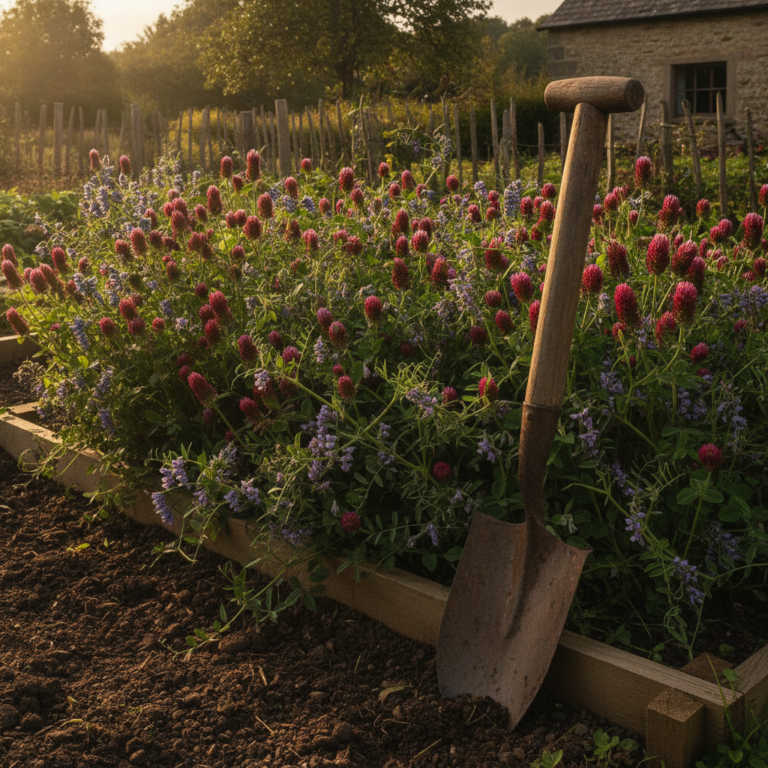
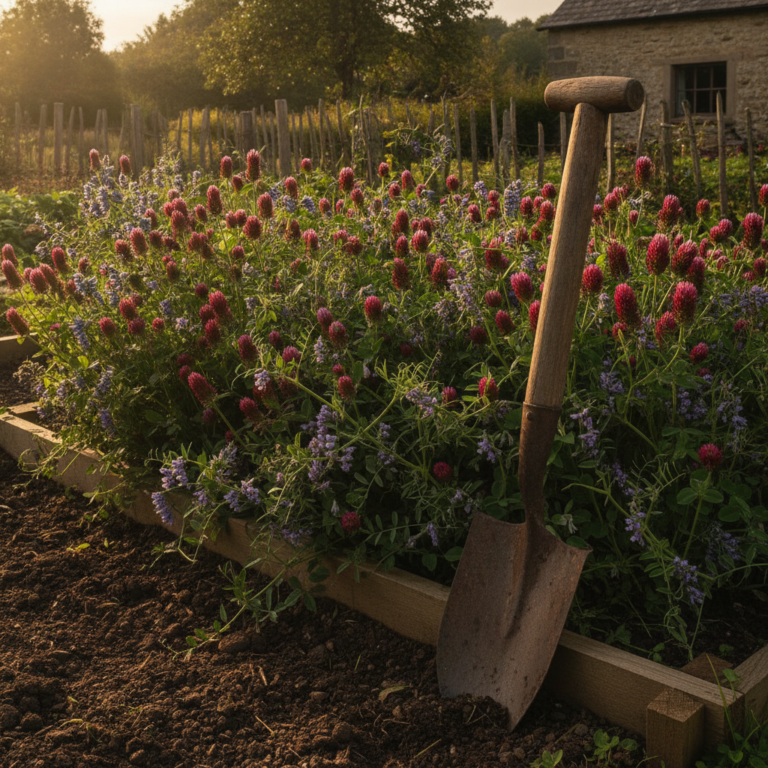
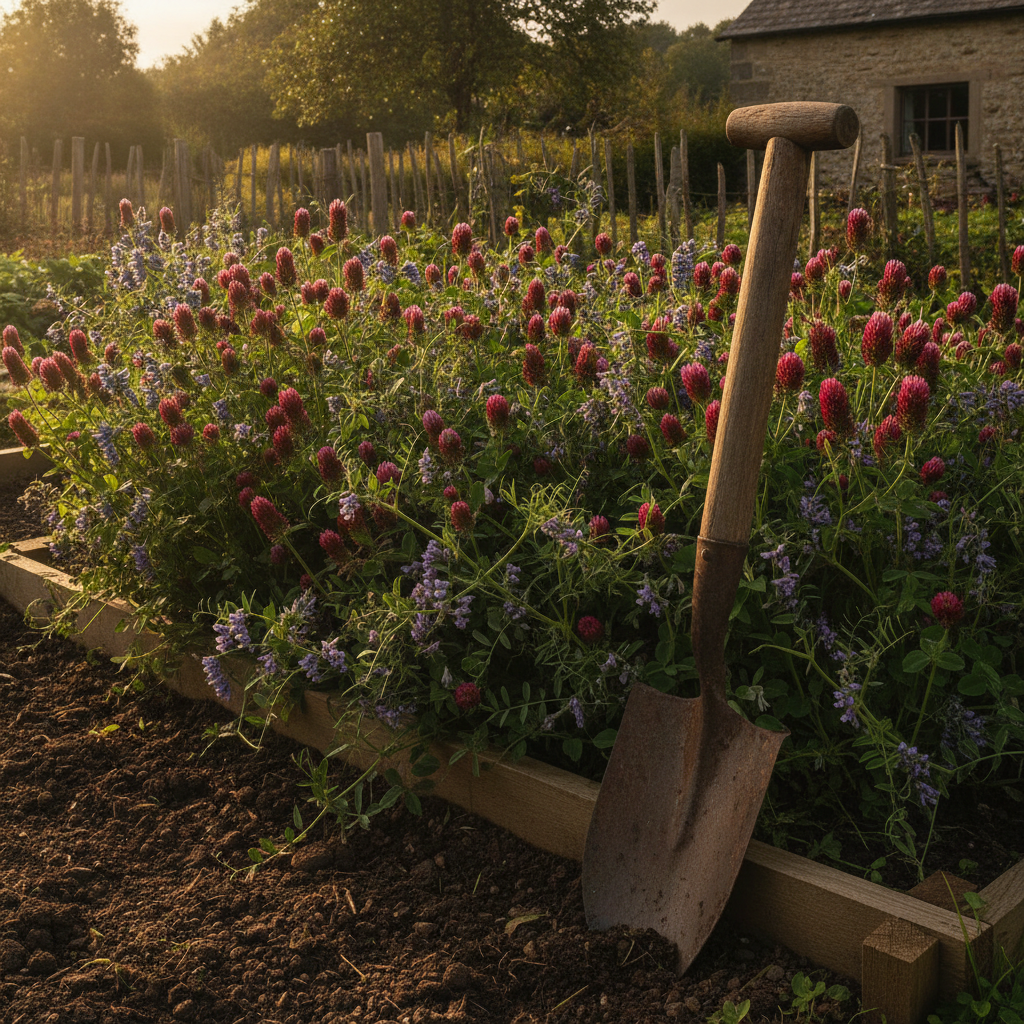
- Crimson Clover — Fast-growing, beautiful, and loved by bees. Fixes up to 150 lbs of nitrogen per acre. Easy for small gardens.
- Hairy Vetch — Incredibly hardy. Survives cold winters and fixes large amounts of nitrogen. Excellent before corn or heavy feeders.
- Field Peas (Austrian Winter Peas) — Quick to establish, great for spring and autumn rotations.
- Fava Beans — Powerhouse nitrogen fixers. Also improve soil structure with deep roots.
- Lupins — Tolerate poor, acidic soils. Particularly effective at breaking up compacted subsoil.
Non-Legume Green Manures
These don’t fix nitrogen, but they contribute in other important ways.
- Buckwheat — Extremely fast-growing (ready in 6–8 weeks). Scavenges phosphorus from the soil and makes it available to the next crop. Smothers weeds brilliantly.
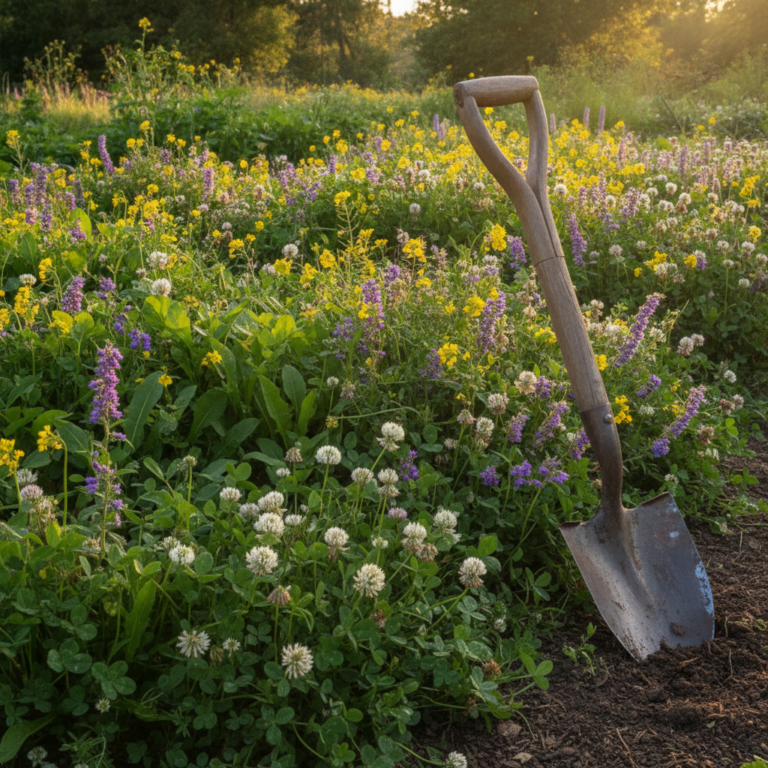
- Phacelia — Gorgeous purple flowers, deeply attractive to pollinators, and breaks down rapidly after cutting. One of the best all-around green manures.
- Mustard — Biofumigant properties help suppress soil-borne diseases and pests. Excellent before brassicas and tomatoes.
- Oats or Rye — Adds bulk organic matter quickly. Winter rye is especially useful for cold-season cover since it handles frost well.
Mixing legumes with non-legumes — say, hairy vetch with winter rye — is a well-tested combination. The rye provides structure and bulk; the vetch adds nitrogen. Together, they create a far richer green manure than either plant alone.
How to Time the Cut-and-Dig for Maximum Nitrogen Release
Timing is everything. Cut too early and you lose biomass. Cut too late and the plants get woody, slow to break down, and may even set seed and become weeds.
The golden rule: plow under green manure crops just before they flower, or at the very first sign of bloom. At this stage, the plants are at their most lush and nitrogen-rich. The tissues are still soft and will break down quickly in the soil.
Here’s a simple step-by-step process:
- Cut or mow the crop down to within a few inches of the soil surface.
- Let it wilt for a day or two. This makes it easier to dig in and slows any regrowth.
- Dig, turn, or till it into the top 6–8 inches of soil. A garden fork or spade works well for small beds. No need for a tiller.
- Wait 2–4 weeks before planting your next crop. The decomposing matter needs time to break down. Planting too soon can cause nitrogen lock-up as microbes compete for nutrients.
That waiting period is important. Use it wisely — plan your next planting sequence, improve your bed layout, or check out this 30-day microclimate-aware planting plan to get your crop timing dialed in perfectly.
Why Green Manure Beats Most Bagged Amendments
Bagged fertilizers deliver a quick hit of nutrients. But they don’t improve soil structure. They don’t feed soil biology. And they certainly don’t build the long-term fertility that a well-maintained rotation creates.
Green manure crops do all three simultaneously. Here’s what consistently happens when gardeners switch to a green manure rotation:
- Soil becomes noticeably darker and more crumbly within one season
- Worm populations increase dramatically
- Water retention improves — especially in sandy or compacted soils
- Subsequent crops grow stronger with less supplemental feeding
- Pest and disease pressure often drops, especially after mustard green manures
The organic matter from buried green manures feeds the entire soil food web. Bacteria, fungi, earthworms, and microscopic creatures all multiply. A teaspoon of biologically active soil contains more living organisms than there are people on Earth. Green manuring is how you wake all of them up.
If you’re building soil from scratch in a new garden space, combining green manure rotations with food forest principles is especially powerful. This microforest planner for small spaces shows you how to layer plants for maximum soil and food benefit over time.
A Practical Green Manure Planting Calendar
Here’s a simple, season-by-season guide you can adapt to your climate. Use this as a starting framework, then adjust based on your last frost date and local conditions.
Early Spring (March–April)
Sow field peas, phacelia, or crimson clover as soon as the ground is workable. These establish quickly in cool soil. Cut and dig in by late May or early June — 4–6 weeks before you want to plant summer crops like tomatoes or squash.
Early Summer (May–June)
Sow buckwheat in any bare patches after spring harvests. It matures in just 6–8 weeks. Cut it before it flowers and dig it in to prepare ground for autumn plantings.
Late Summer (July–August)
Sow mustard or phacelia after early summer harvests. These will suppress weeds during the late season and add organic matter before autumn planting begins.
Autumn (September–October)
Sow hairy vetch, winter rye, or a vetch-rye mix in beds that will sit empty over winter. These overwinter crops protect soil from erosion, suppress weeds, and fix nitrogen all winter long. Cut and dig them in come April.
Over Winter (November–February)
Plan your spring rotations. Decide which beds will receive a green manure treatment before your first crops go in. Sketch out a simple map so no bed skips its turn in the rotation. Even a small raised bed can benefit enormously from one green manure cycle per year.
Tracking your rotation year over year makes a huge difference. A simple garden journal helps you spot patterns and improve your timing each season — these garden planning templates and prompts are a great place to start.
Getting Started This Season
You don’t need a large plot to benefit from green manure crops. Even a single raised bed rotated through one green manure cycle a year will show meaningful improvement within two seasons. Start small. Pick one plant from the list above. Sow it in a resting bed this month.
The old farmers who relied on this method weren’t operating on faith alone — they were watching their soil darken, their yields rise, and their costs drop year after year. That same slow, cumulative magic is available to you right now, with nothing more than a packet of seeds and a spade.
Your soil already knows how to heal. Green manure crops are simply your way of saying: go ahead and get started.