Biochar Magic: Ancient Amazon Soil Secret Revealed
Deep in the Amazon rainforest lies a secret that could revolutionize your garden forever. Scattered throughout the basin, patches of incredibly fertile black soil called Terra Preta still feed communities 500 years after pre-Columbian farmers stopped tending them. The magic ingredient? Biochar magic – a simple charcoal technique your ancestors knew but modern agriculture forgot.
While contemporary farmers dump synthetic fertilizers on depleted fields, indigenous Amazonian peoples created soil so rich it continues producing abundant harvests centuries later. They understood something we’re just rediscovering: burned organic matter doesn’t just improve soil temporarily – it transforms it permanently.
Today, you can harness this ancient wisdom in your backyard, creating carbon-sequestering powerhouse soil that feeds plants for decades using nothing more than wood scraps and fire.
The Lost Science Behind Biochar Magic
Pre-Columbian farmers didn’t stumble upon Terra Preta by accident. They deliberately created these “super soils” through careful application of charred organic matter, food scraps, and human waste over generations. The result? Soil containing 70 times more organic carbon than surrounding rainforest dirt.
Modern soil scientists call this engineered earth “Anthropogenic Dark Earths” – human-made soils so superior they’re still 2-3 times more fertile than nearby natural soils. The secret lies in biochar’s unique structure: millions of tiny pores that create massive surface area for beneficial microbes to colonize while storing nutrients and water like microscopic reservoirs.
Unlike compost that breaks down within months, biochar persists in soil for hundreds of years. It’s essentially permanent soil improvement that keeps working long after you’ve forgotten where you applied it. This isn’t just sustainability – it’s soil building that outlasts generations.
Why Your Garden Desperately Needs Biochar Magic
Most home gardeners fight the same battles every season: plants that struggle in poor soil, constant need for fertilizers, and disappointing harvests despite their best efforts. Meanwhile, commercial agriculture has strip-mined soil fertility, leaving behind compacted, chemically-dependent earth that barely resembles the rich loam our grandparents knew.
Biochar addresses these problems at the root level. Its porous structure improves drainage in clay soils while increasing water retention in sandy ones. It provides safe harbor for beneficial fungi and bacteria that form crucial partnerships with plant roots. Most importantly, it slowly releases stored nutrients while preventing others from washing away during heavy rains.
Think of biochar as permanent soil insurance. Once applied, it continues improving your garden’s health for decades. Plants grown in biochar-amended soil show increased disease resistance, better drought tolerance, and significantly higher yields – sometimes doubling production compared to untreated areas.
Before diving into biochar production, it’s wise to understand your starting point. Check out our guide on reading your soil without expensive lab tests to identify which garden areas would benefit most from this ancient technique.
Making Biochar at Home: The Simple Method
Creating biochar doesn’t require expensive equipment or dangerous chemicals. You need three things: organic material (wood chips, prunings, or agricultural waste), controlled fire, and patience. The goal is incomplete combustion – burning hot enough to drive off volatile compounds while preserving the carbon skeleton.
The easiest method uses a simple burn barrel with a smaller container inside. Place your organic material in the inner container, surround it with kindling in the outer barrel, and light the outer fire. As the inner material smolders, it creates biochar while the outer fire provides necessary heat.
Another approach involves the “trench method” used by traditional societies worldwide. Dig a narrow trench, fill with organic matter, and create a controlled burn that slowly moves along the length. Cover sections as they finish charring to prevent complete combustion to ash.
Safety matters tremendously. Always check local fire regulations, have water nearby, and never leave biochar fires unattended. The process takes several hours and requires constant monitoring to maintain proper conditions.
Activating Your Homemade Biochar
Raw biochar straight from the fire won’t immediately benefit your garden. It needs “activation” – loading its porous structure with nutrients and beneficial microorganisms before soil application. Skip this step, and fresh biochar might actually rob nutrients from plants as microbes colonize its empty spaces.
The simplest activation method involves soaking finished biochar in compost tea for 24-48 hours. This inoculates the char with beneficial bacteria and fungi while loading it with readily available nutrients. Alternatively, mix biochar with finished compost at a 1:1 ratio and let it cure for several weeks.
Some gardeners activate biochar with liquid fertilizer solutions, but organic materials work better for long-term soil health. Fish emulsion, kelp meal extracts, or worm casting tea all provide excellent activation media that align with natural growing principles.
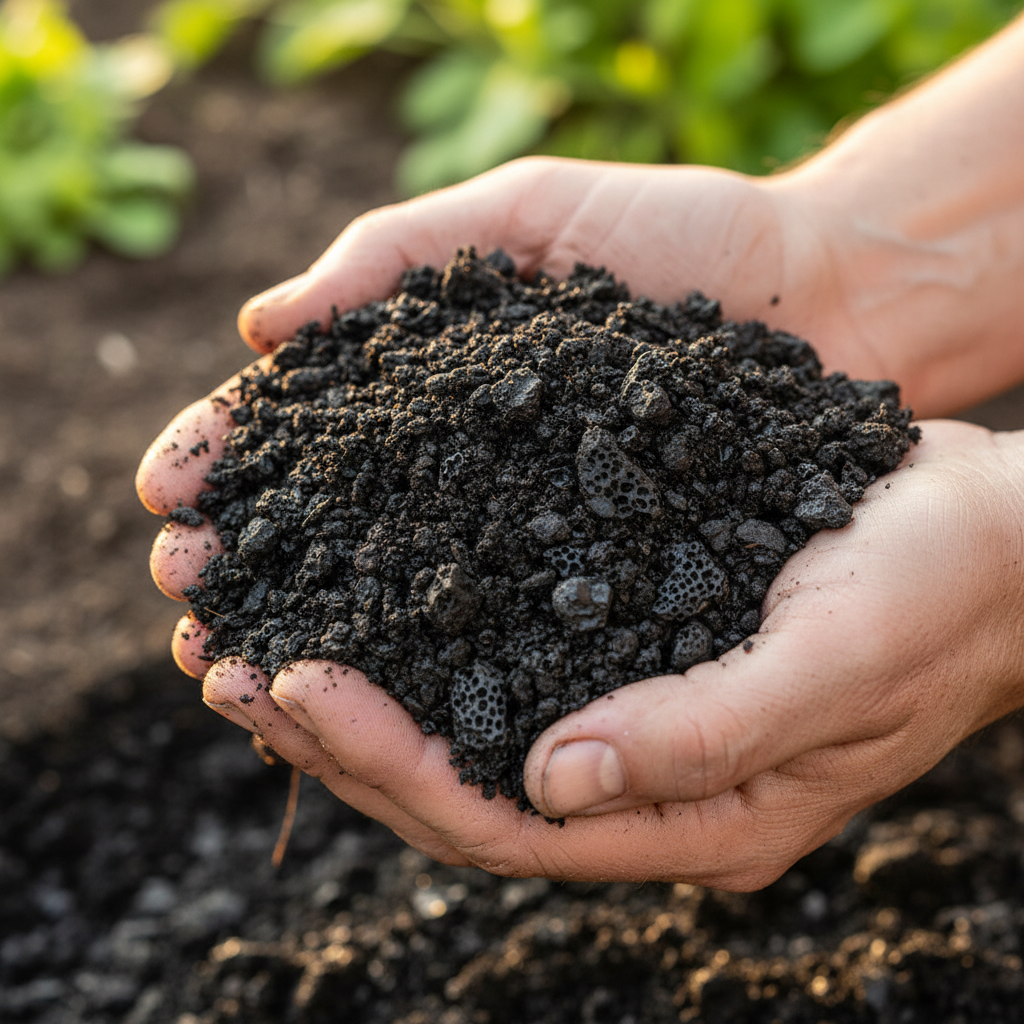
Remember that activated biochar should feel damp and smell earthy, not dusty and sterile. Properly prepared biochar teams with microbial life ready to enhance your soil’s ecosystem from day one.
Application Techniques That Maximize Results
Unlike fertilizers that provide quick fixes, biochar works best when integrated thoughtfully into long-term garden planning. Start small with test areas rather than treating your entire garden at once. This lets you observe results and adjust techniques before major investment.
For new garden beds, mix activated biochar into the top 6-8 inches of soil at rates between 5-10% by volume. Higher concentrations aren’t necessarily better – biochar works through biological activity, not sheer quantity. Focus on creating optimal conditions for soil life rather than maximum char content.
Established gardens benefit from lighter applications worked into mulch layers or compost additions. Top-dressing around perennial plants with biochar-compost mixtures provides slow-release benefits without disturbing root systems.
Consider your garden’s overall ecosystem when planning biochar applications. Areas with existing healthy soil biology will show faster results than depleted ground that needs broader rehabilitation. For comprehensive garden planning that incorporates biochar strategically, explore our microclimate-aware planting strategies.
Beyond Soil: The Climate Benefits of Biochar Magic
Every pound of biochar you create removes carbon dioxide from the atmosphere and locks it away for centuries. While plants naturally sequester carbon, most returns to the air when organic matter decomposes. Biochar breaks this cycle, creating stable carbon storage that actually reverses greenhouse gas accumulation.
This makes biochar production a legitimate climate action you can take in your backyard. Large-scale biochar projects could sequester billions of tons of atmospheric carbon while simultaneously improving agricultural productivity worldwide. You’re participating in ancient wisdom that offers modern solutions to contemporary challenges.
The water benefits extend beyond individual gardens too. Biochar-improved soils reduce runoff and erosion while increasing groundwater recharge. Nutrients stay put instead of washing into waterways where they cause algae blooms and dead zones.
For gardeners interested in expanding their environmental impact, consider how biochar fits into broader sustainable practices outlined in our safe garden experimentation guide.
Starting Your Biochar Journey
Begin your biochar adventure with small batches and careful observation. Document application rates, plant responses, and soil changes over time. This ancient technique rewards patience and attention rather than rushed implementation.
Source organic materials locally when possible – pruned branches, agricultural waste, or sustainably harvested wood scraps all work well. Avoid treated lumber, painted materials, or anything containing chemicals that might contaminate your biochar.
Connect with other gardeners experimenting with traditional techniques. Quality organic seeds and soil amendments complement biochar applications perfectly, creating synergistic effects that maximize garden productivity.
Remember that biochar magic isn’t about replacing good gardening practices – it’s about enhancing them with time-tested wisdom. Combined with proper plant selection, adequate water management, and attention to soil biology, biochar transforms ordinary gardens into productive, resilient ecosystems that improve with age.
The indigenous farmers who created Terra Preta understood something we’re still learning: true soil fertility isn’t bought in bags but built through patient application of natural principles. Their legacy lives on in every handful of rich, dark earth that continues feeding communities centuries later. Now it’s your turn to carry this ancient knowledge forward, one biochar burn at a time.