Canopy Layer Planning: Choose Trees That Feed Your Forest
When you’re building a food forest, canopy layer planning becomes the foundation that determines your entire ecosystem’s success. These towering fruit and nut trees don’t just provide food-they create the protective umbrella that shapes every layer beneath them. Think of your canopy as the CEO of your garden: its decisions influence everyone below.
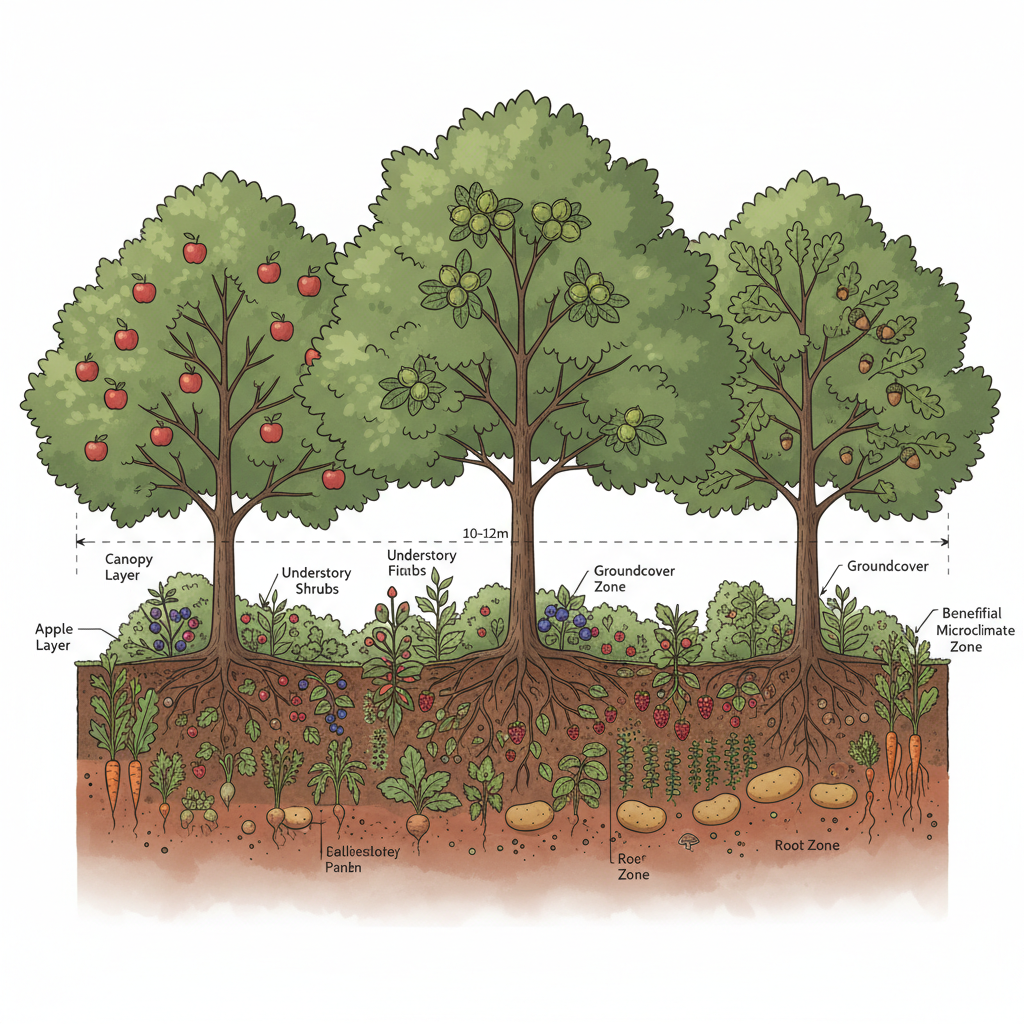
The canopy layer represents the tallest trees in your food forest, typically reaching 30 feet or higher. These mighty guardians cast shade, create windbreaks, and establish the microclimate conditions that determine which plants can thrive in the understory, shrub, herbaceous, and ground cover layers.
Smart canopy choices set you up for decades of abundant harvests. Poor planning? You’ll spend years fighting an uphill battle against shade, competition, and cramped growing conditions.
Understanding Canopy Layer Planning Fundamentals
Your canopy trees function as living architecture. They’re permanent fixtures that will outlive most other plants in your food forest, so getting this layer right from the start saves countless headaches later.
The key principle behind successful canopy layer planning lies in understanding mature tree size, growth patterns, and light penetration. Different species cast different types of shade-some create dense, dark canopies while others filter light through delicate leaves.
Consider your climate zone first. If you’re working on climate-proofing your crops with microclimate awareness, you’ll want to select canopy trees that enhance rather than fight your natural conditions.
Most importantly, remember that canopy planning requires patience. These trees take 3-7 years to establish and 10-20 years to reach maturity. But once they’re established, they’ll feed your family for generations.
Calculating Proper Tree Spacing
Proper spacing prevents your canopy trees from becoming competitors instead of companions. The general rule: space trees at distances equal to their mature crown width. However, this varies significantly based on your goals and species selection.
For maximum production, use the “mature spread plus 10 feet” formula. A tree with a 20-foot mature canopy needs 30 feet between its trunk and the next canopy tree’s trunk. This ensures adequate sunlight penetration and reduces root competition.
Dense food forests can tolerate closer spacing-mature spread plus 5 feet-but you’ll need to practice selective pruning and choose complementary species. For example, a deep-rooted walnut tree can grow closer to a shallow-rooted apple than two walnuts can to each other.
Additionally, consider your soil conditions when planning spacing. Poor soil requires wider spacing to reduce competition for nutrients. Rich, deep soil allows for tighter arrangements.
Create a simple spacing chart: measure your property, mark potential tree locations with stakes, and live with the layout for a full season before planting. This prevents costly mistakes.
Accounting for Mature Size in Small Spaces
Small-space gardeners can still incorporate canopy elements through creative planning. Dwarf and semi-dwarf fruit trees reach 8-15 feet at maturity, creating a “mini-canopy” effect perfect for urban lots.
Consider espalier techniques for extremely tight spaces. Trained against fences or walls, fruit trees can provide canopy benefits while occupying minimal ground space. These living walls cast strategic shade while maximizing your vertical growing space.
Another approach: select naturally compact species like serviceberries, elderberries, or dwarf chestnuts. These provide canopy function at a manageable scale. Even in containers, large fruit trees can create microclimates for smaller plants growing beneath them.
Selecting the Right Canopy Trees for Your Climate
Climate compatibility determines long-term success more than any other factor. Your canopy trees must handle your region’s temperature extremes, precipitation patterns, and seasonal variations.
Start with native and adapted species. These trees evolved alongside your local ecosystem and require minimal intervention once established. Native oaks, hickories, and chestnuts create excellent canopy layers while supporting local wildlife.
For edible production, focus on fruit and nut trees suited to your hardiness zone. Apples thrive in zones 3-8, while citrus requires zones 9-11. Pushing climate boundaries usually results in weak, disease-prone trees that struggle to fulfill their canopy role.
However, microclimates within your property can extend growing possibilities. South-facing slopes, protected courtyards, and thermal mass areas may allow you to grow trees from one zone warmer than your official designation.
Research local extension office recommendations and talk to established food forest gardeners in your area. Their experience trumps catalog descriptions every time.
Balancing Food Production and Ecosystem Services
The best canopy trees multitask brilliantly. Beyond food production, they should provide windbreak protection, soil improvement, wildlife habitat, and aesthetic value.
Nitrogen-fixing trees like black locust or honey locust improve soil fertility while providing beans or pods. Fast-growing species like hybrid poplars establish windbreaks quickly, even if they’re not long-term canopy solutions.
Consider seasonal interest too. Spring flowering trees attract pollinators crucial for your food forest’s productivity. Fall color extends your garden’s beauty beyond harvest season.
How Canopy Choices Shape Lower Layers
Every canopy decision ripples through your entire food forest ecosystem. Dense shade from maple or beech trees limits understory options to shade-tolerant species like elderberries and wild gingers.
Conversely, light-filtering trees like honey locusts or ashes allow diverse understory plantings. You can grow shade-tolerant vegetables, berries, and herbs in dappled sunlight conditions.
Consider the timing of leaf emergence and drop. Early-leafing trees create longer shade periods, while late-leafing species allow spring wildflowers and cool-season crops to thrive before full shade develops.
Root patterns matter too. Shallow-rooted trees compete directly with herbaceous plants, while deep-rooted species like walnuts allow more diverse groundcover options. Some trees, like black walnut, produce allelopathic compounds that inhibit certain plants-plan accordingly.
If you’re following a microforest approach for small spaces, these interactions become even more critical since every square foot must contribute to your overall productivity.
Creating Productive Microclimates
Strategic canopy layer planning creates beneficial microclimates throughout your property. North-side plantings receive protection from harsh winter winds while maintaining summer cooling. East-side locations get gentle morning sun but avoid scorching afternoon heat.
Use canopy trees to channel airflow, creating cooling breezes in summer and wind protection in winter. Proper placement can reduce your home’s energy costs while creating ideal growing conditions for temperature-sensitive crops.
The thermal mass effect of large trees moderates extreme temperatures. Areas beneath mature canopies experience less temperature fluctuation, extending growing seasons for tender understory plants.
Common Canopy Planning Mistakes to Avoid
The biggest mistake? Planting too many trees too close together. Enthusiasm often overrides practical spacing calculations, resulting in overcrowded forests that underperform for decades.
Another common error: ignoring mature size completely. That cute little apple tree will eventually cast significant shade and develop extensive root systems. Plan for the 20-year tree, not the nursery sapling.
Don’t forget about infrastructure conflicts. Overhead power lines, septic systems, building foundations, and buried utilities all constrain tree placement. Research before you plant-moving a mature tree is exponentially more difficult than planning properly from the start.
Finally, avoid monocultures even in the canopy layer. Diverse tree species create more resilient ecosystems, reduce pest pressure, and provide varied harvest times and food types.
Getting Started with Your Canopy Design
Begin your canopy layer planning with a simple site analysis. Map existing trees, buildings, utilities, and natural features. Note sun patterns, prevailing winds, and water flow across your property.
Create a rough sketch showing mature tree sizes and spacing. Use circles to represent full-grown canopies-this visualization prevents overcrowding mistakes and helps you see the big picture.
Start with one or two well-placed canopy trees rather than attempting a complete forest installation. This allows you to observe their growth patterns and microclimate effects before committing to additional plantings.
Consider beginning your journey with proven, easy-to-grow species adapted to your climate. Success with your first canopy trees builds confidence for more adventurous selections later.
Remember, canopy layer planning sets the stage for your entire food forest adventure. Take time to plan thoughtfully, space generously, and choose species that align with both your climate and your long-term vision. Your future self-and the generations who’ll enjoy these trees-will thank you for the careful consideration you put into this crucial foundation layer.