Living Mulch Systems: Natural Weed Suppression Guide
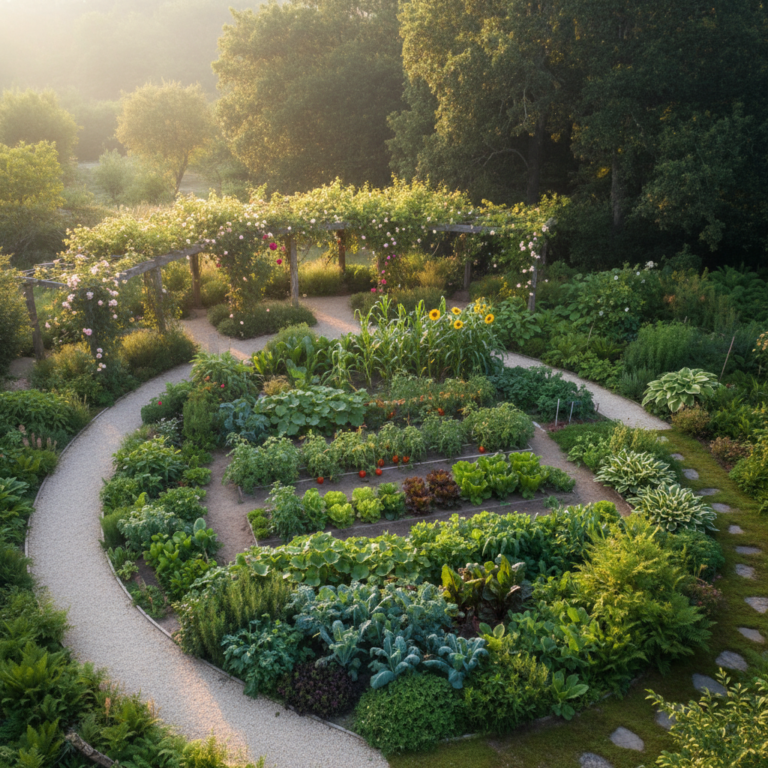
Imagine a garden that weeds itself while you sleep. Living mulch systems make this dream a reality by using carefully selected plants to create dense ground coverage that naturally suppresses weeds. Instead of hauling bags of bark chips or straw, you’ll cultivate a self-maintaining carpet of beneficial plants that work around the clock to keep unwanted invaders at bay.
This approach transforms your garden into a productive ecosystem where every plant has a purpose. Your living mulch doesn’t just prevent weeds-it adds nutrients to the soil, provides habitat for beneficial insects, and often produces food or medicine for your family.
Understanding Living Mulch Systems
Living mulch works by the simple principle of competitive exclusion. When desirable plants occupy every available niche in your garden, weeds simply can’t establish themselves. Unlike traditional mulch that sits on top of the soil, living mulch systems actively engage with the earth below.
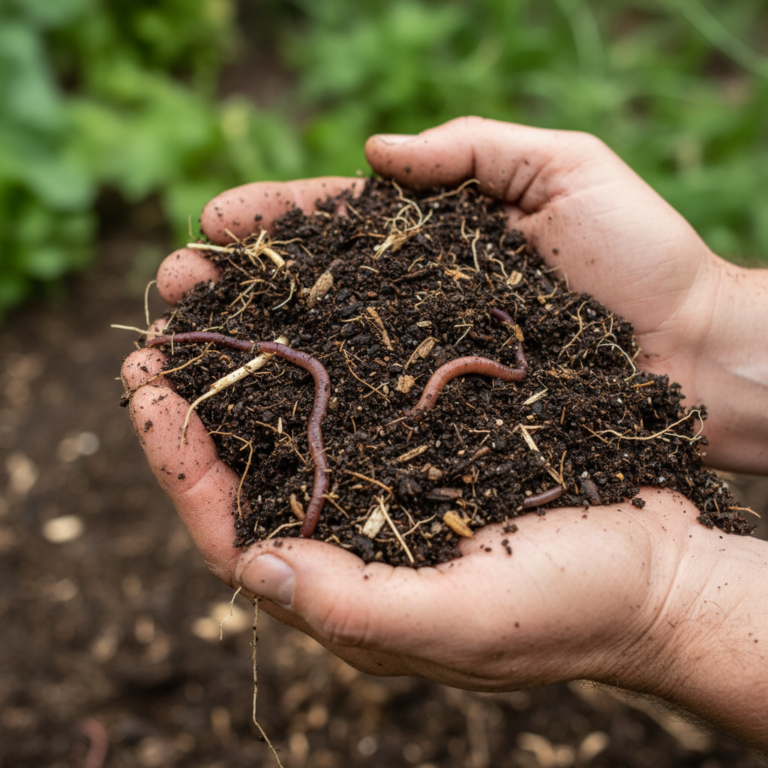
These plant-based systems offer multiple advantages over conventional mulching. First, they’re self-renewing-no need to replace decomposed materials annually. Second, they contribute organic matter continuously as roots die back and regrow. Finally, they create a dynamic, breathing ecosystem that supports soil life in ways inorganic mulches cannot.
The key lies in selecting plants that spread quickly, grow densely, and complement rather than compete with your main crops. This requires understanding your soil conditions and choosing appropriate species for your specific environment.
Fast-Spreading Perennial Living Mulch Options
Perennial living mulches provide the ultimate low-maintenance solution. Once established, these plants return year after year, creating increasingly effective weed suppression as they mature.
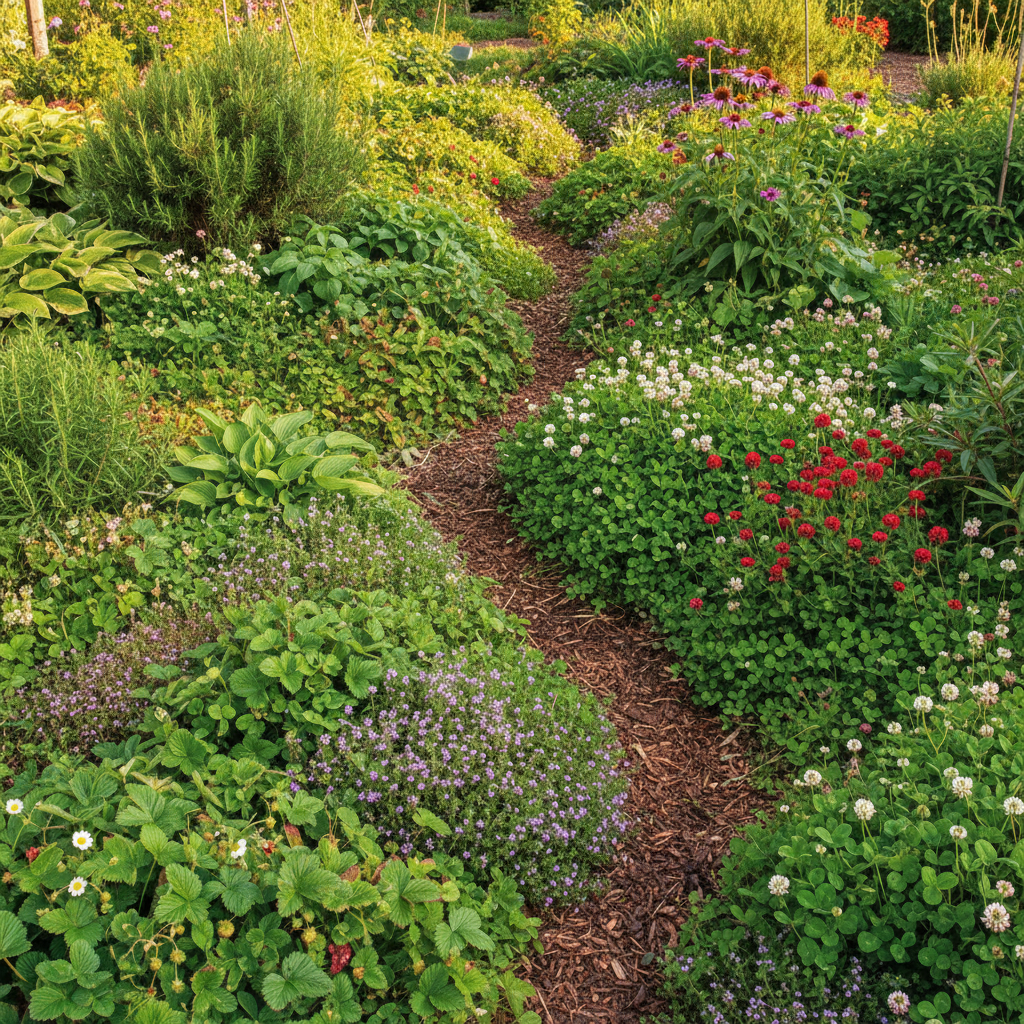
Creeping thyme tops the list for sunny, well-drained areas. This aromatic herb spreads rapidly, forming a dense mat that weeds struggle to penetrate. Moreover, it produces edible flowers and leaves while attracting beneficial pollinators throughout the growing season.
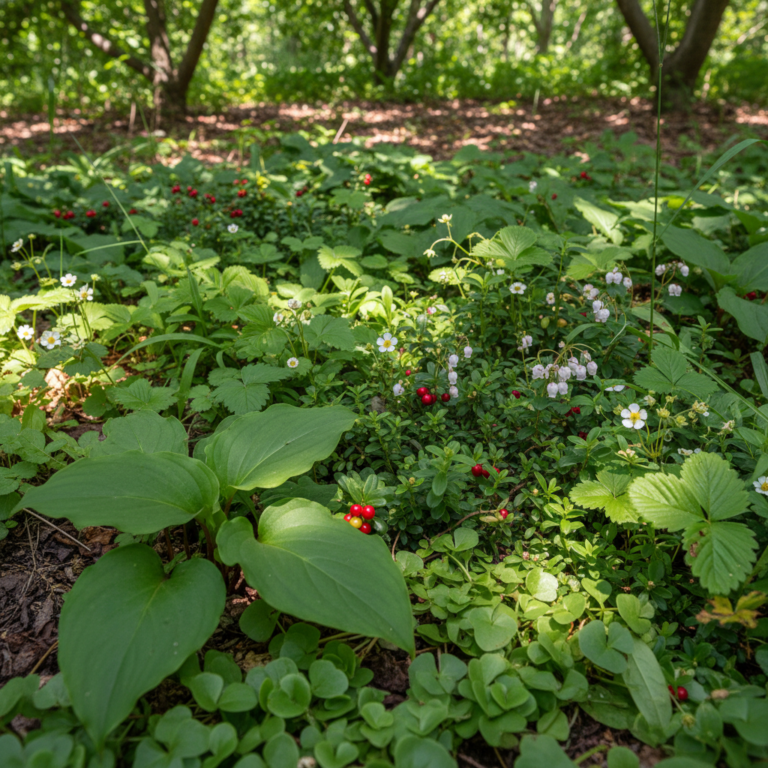
Wild strawberries excel in partial shade and woodland edges. Their runners quickly colonize open ground, producing small but flavorful berries as a bonus. The three-part leaves create effective coverage while the white flowers add seasonal beauty.
For deeper shade, consider wild ginger or pachysandra. These shade-tolerant spreaders form thick colonies that exclude weeds while thriving in conditions where grass struggles. Additionally, many varieties offer attractive foliage patterns that enhance your garden’s visual appeal.
Annual Living Mulch for Quick Coverage
Annual living mulches offer flexibility for gardeners who like to change their garden layout frequently. These plants complete their life cycle in one season, making them perfect for temporary coverage or experimental areas.
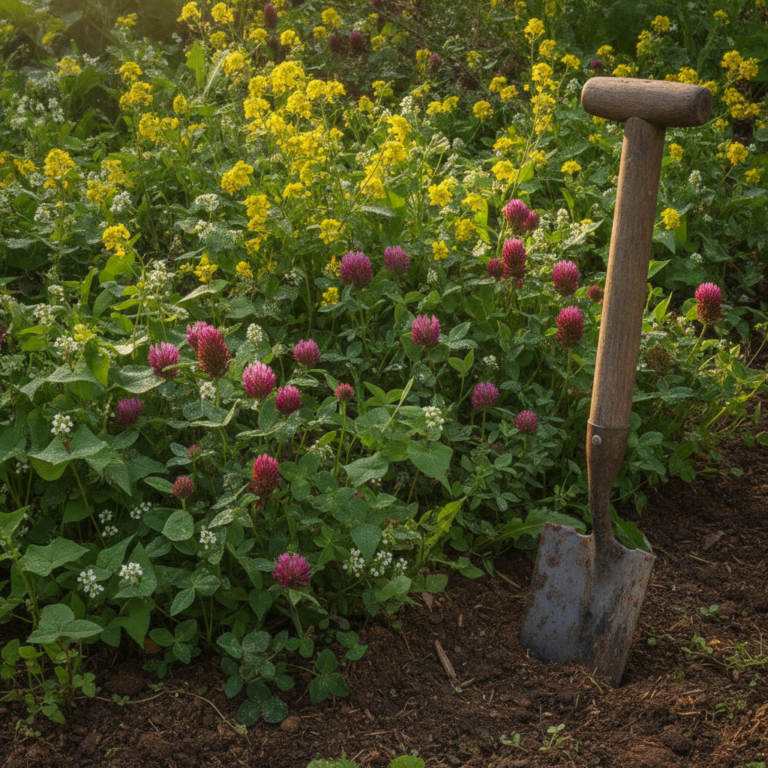
Crimson clover serves double duty as living mulch and nitrogen fixer. This fast-growing legume creates dense coverage while adding valuable nutrients to your soil. Furthermore, its bright red flowers provide nectar for beneficial insects throughout its blooming period.
Buckwheat grows incredibly quickly, often flowering within 30 days of planting. This makes it ideal for filling gaps between slower-establishing plants. The flowers attract hover flies and other beneficial predators that help control garden pests naturally.
For areas with poor soil, purslane thrives where other plants fail. This succulent annual spreads rapidly, creating thick mats that suppress weeds while providing edible greens rich in omega-3 fatty acids.
Strategic Placement in Your Living Mulch System
Success with living mulch requires thoughtful placement based on your plants’ needs and growth habits. Start by mapping your garden’s microclimates to match each mulch species with its ideal conditions.
Around tree bases, use spreading plants that tolerate root competition and changing light conditions. As trees leaf out, your living mulch should adapt to increased shade without losing coverage density.
Between vegetable rows, choose low-growing annuals that won’t compete for sunlight with your main crops. These plants should establish quickly but remain manageable if you need to access your vegetables for harvesting.
Consider your long-term garden strategy when selecting perennial options. Some aggressive spreaders may become problematic in small spaces, while gentle colonizers work better in mixed plantings.
Companion Planting with Living Mulch
The most effective living mulch systems integrate seamlessly with your existing plantings through thoughtful companion relationships. This approach maximizes benefits while minimizing conflicts between different plant species.
Nitrogen-fixing living mulches like white clover work beautifully around heavy-feeding crops such as tomatoes and corn. The clover provides continuous nitrogen while suppressing weeds, creating a win-win relationship.
Aromatic herbs used as living mulch can provide pest protection for vulnerable crops. Planting creeping oregano around cabbage family plants may help deter common pests while adding culinary value to your garden.
Deep-rooted living mulches complement shallow-rooted main crops by accessing different soil layers. This reduces competition while maximizing nutrient uptake from various soil depths.
Establishing Your Living Mulch System
Starting a living mulch system requires patience and proper timing. Begin with small areas to test plant combinations before expanding to larger spaces.
Prepare your planting areas by removing existing weeds and improving soil structure. Poor establishment often results from inadequate site preparation rather than plant selection errors.
Plant during optimal seasons for each species. Cool-season living mulches establish best in spring or fall, while warm-season options prefer late spring planting after soil temperatures rise.
Water consistently during establishment, but avoid overwatering once plants begin spreading. Most effective living mulch plants prefer slightly drier conditions once mature.
Maintenance and Management Tips
Well-designed living mulch systems require minimal maintenance once established. However, periodic management ensures they continue serving your garden’s needs effectively.
Monitor spreading patterns to prevent aggressive species from overtaking less vigorous neighbors. Early intervention prevents major replanting projects later.
Supplement with traditional mulch during the establishment phase if needed. This temporary measure prevents weeds while your living mulch fills in completely.
Divide and transplant successful living mulch colonies to expand coverage to new areas. This approach saves money while ensuring plant varieties proven successful in your specific conditions.
Troubleshooting Common Challenges
Every garden faces unique challenges when implementing living mulch systems. Understanding common issues helps you adapt your approach for better results.
If living mulch fails to establish, examine soil conditions first. Compacted or nutrient-poor soil often prevents successful establishment regardless of plant selection.
Aggressive weeds may initially outcompete young living mulch plants. Consider using temporary traditional mulch or more frequent cultivation during the establishment year.
Seasonal gaps in coverage occur naturally with some living mulch combinations. Plan for these periods by incorporating evergreen species or accepting temporary traditional mulch supplements.
Building Long-Term Success
Creating sustainable living mulch systems requires thinking beyond immediate weed suppression. Consider how your choices will evolve with your garden’s changing needs over time.
Document successful combinations in your garden journal for future reference. This record becomes invaluable when expanding or modifying your system.
Experiment with new species gradually rather than replacing entire areas at once. This conservative approach maintains weed suppression while testing new possibilities.
Remember that effective living mulch systems develop over several seasons. Initial results may seem modest, but patience rewards gardeners with increasingly effective and beautiful ground coverage that truly maintains itself while supporting the broader garden ecosystem.