Green Manure Crops: The Plow-Under Secret
Long before a bag of synthetic nitrogen fertilizer ever sat on a store shelf, farmers knew a quiet secret: green manure crops could feed the soil better than almost anything else. They grew specific plants — clover, vetch, buckwheat, rye — then chopped them down and buried them alive. The decomposing roots and stems pumped nitrogen, organic matter, and microbial life straight into the ground. It cost almost nothing. And it worked beautifully. Today, most gardeners have never heard of it. Let’s change that.
What Are Green Manure Crops, Exactly?
A green manure crop is any plant grown specifically to be turned back into the soil. You don’t eat it. You don’t compost it in a pile. You grow it, then bury it right where it stands — while it’s still green and full of nutrients.
This is fundamentally different from a mulch or a dry amendment. When you bury fresh plant matter, soil microbes go to work immediately. They break down the stems and leaves into humus. Root systems — especially on legumes — leave behind nitrogen-rich deposits that feed whatever you plant next.
Think of it as growing your own fertilizer factory, right in the ground. Before synthetic inputs existed, this is how every serious farmer kept their soil alive. It’s one of those forgotten techniques that modern gardening quietly set aside — and is now very worth rediscovering.
If you’re still learning to read your soil’s current needs, this post on Soil Sense Without the Lab: Read Your Dirt, Fix It Fast is an excellent place to start before you choose your first green manure plant.
The Best Green Manure Crops for Home Gardens
Not every plant works equally well as a green manure. The best choices fall into two main groups: legumes, which fix nitrogen from the air into the soil, and non-legumes, which add bulk organic matter and break up compaction.
Legume Green Manures (Nitrogen Fixers)
These are the powerhouses. Legumes form a relationship with soil bacteria called rhizobia, which live in small nodules on their roots. Those nodules pull nitrogen gas out of the air and convert it into plant-available nitrogen. When you bury the plant, that nitrogen releases into your soil.
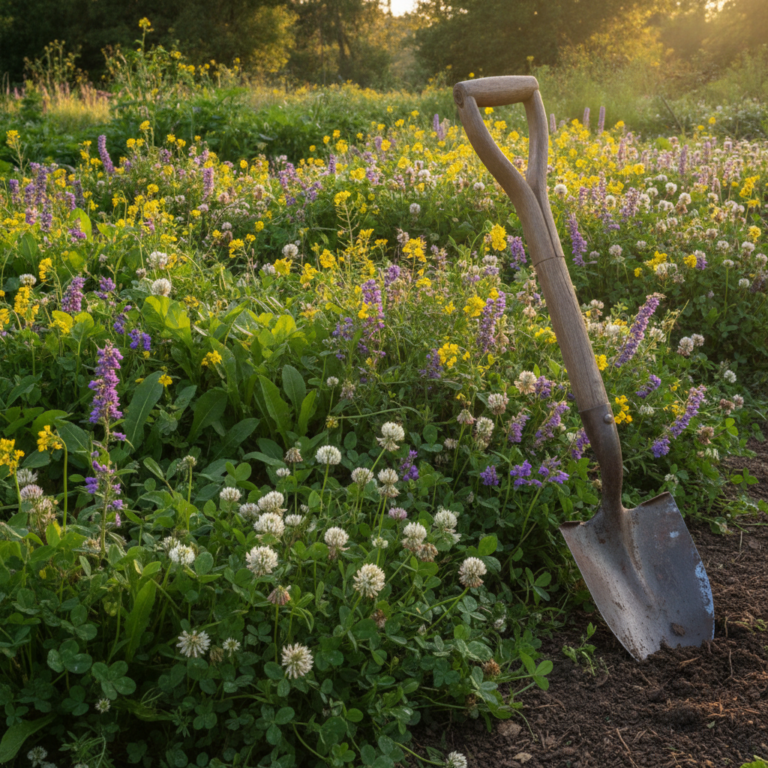
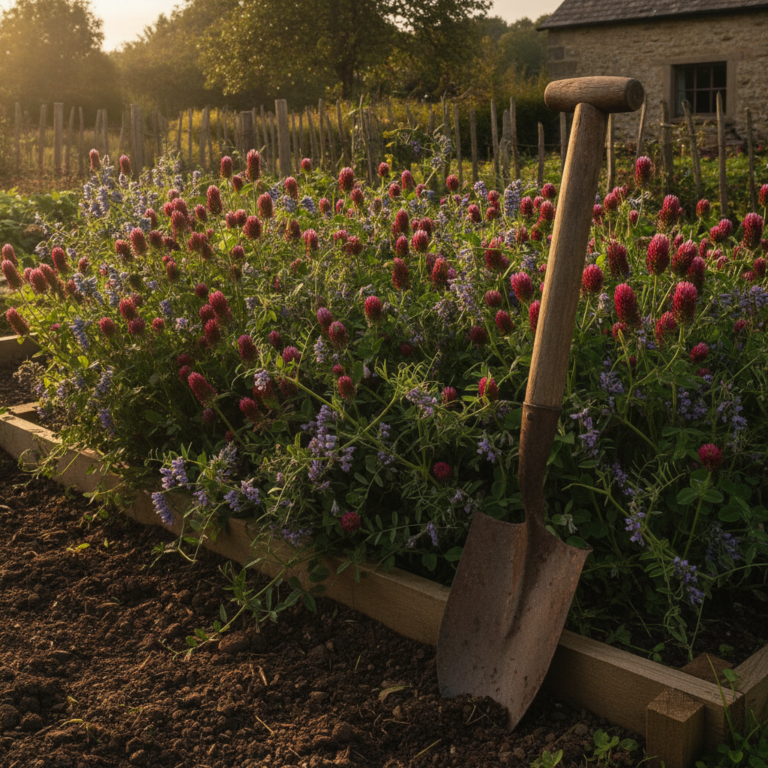
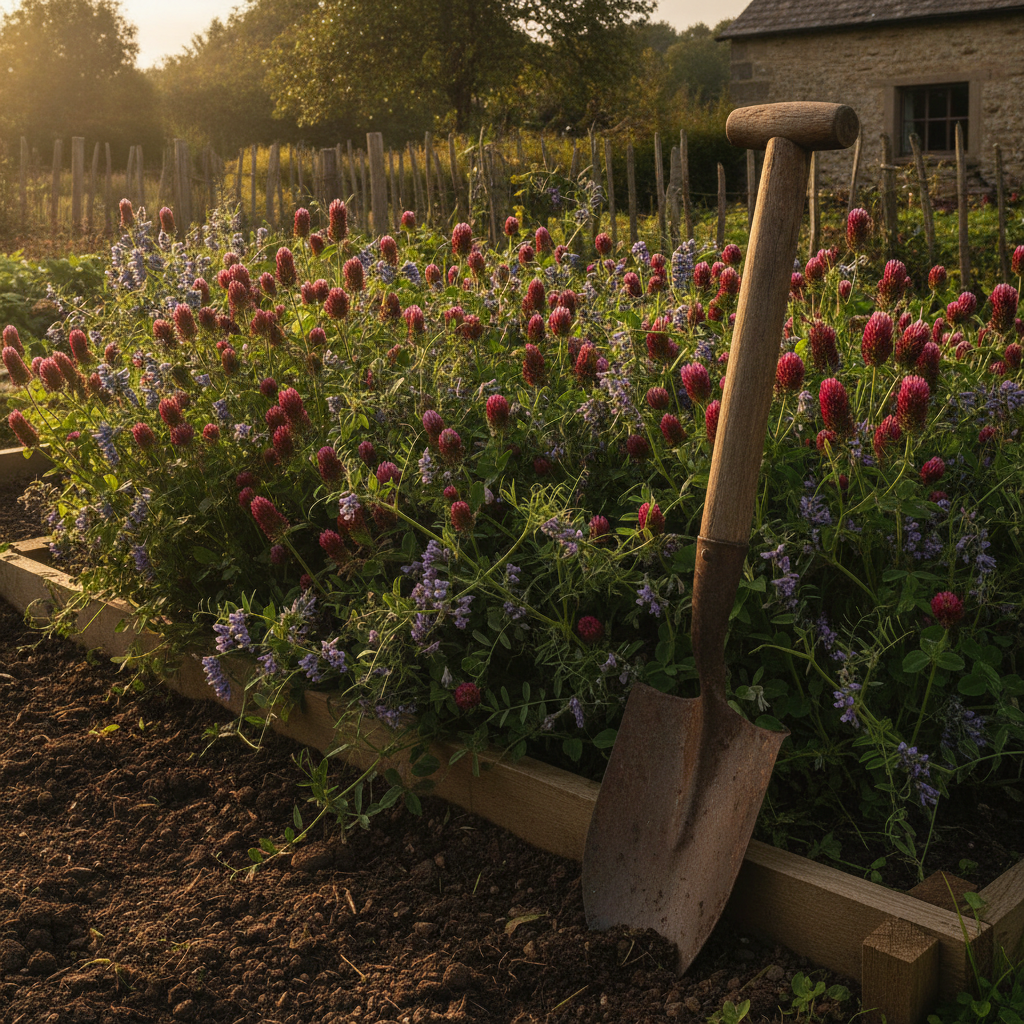
- Crimson Clover — Fast-growing, fixes up to 150 lbs of nitrogen per acre, beautiful red flowers, easy to establish
- Hairy Vetch — Cold-hardy, vigorous, one of the highest nitrogen-fixing legumes available to home growers
- Field Peas — Quick to establish, great for spring and fall, edible if you want dual purpose
- Fava Beans — Heavy nitrogen producers, cold tolerant, excellent winter green manure in mild climates
- Cowpeas (Black-eyed Peas) — Ideal for hot summers and poor soils, very drought tolerant
Non-Legume Green Manures (Organic Matter Builders)
These plants don’t fix nitrogen, but they build structure, suppress weeds, and add enormous amounts of carbon-rich organic matter when turned in. They work best in combination with legumes.
- Winter Rye — Deep fibrous roots, suppresses weeds aggressively, adds bulk organic matter
- Buckwheat — Fast-growing summer crop, loosens compacted soil, attracts pollinators before you cut it
- Phacelia — Extremely fast (5–8 weeks to maturity), soft tissue breaks down quickly, excellent bee plant
- Mustard — Biofumigant properties, helps suppress soil pathogens, breaks down fast
- Oats — Affordable, winter-kills in cold climates (no-dig option), softens soil structure
Mixing a legume with a non-legume — like vetch with rye, or clover with oats — gives you both nitrogen and organic bulk at once. Old-time farmers called these “nurse crops.” The combination still outperforms either plant alone.
Timing the Cut-and-Dig for Maximum Nitrogen Release
Here’s where most beginners go wrong. Timing matters enormously with green manure crops. Cut too late, and the plants get woody and slow to decompose. Cut too early, and you lose potential nutrient buildup. The sweet spot is just before or at early flowering.
Why flowering? Because that’s when the plant’s nitrogen content is at its highest. The stems are still soft. Decomposition happens quickly. And the roots — especially on legumes — are fully loaded with nitrogen nodules.
The Three-Week Rule
After you chop and turn your green manure under, wait at least two to three weeks before planting your food crops. During that window, microbial decomposition is at its peak. The soil temporarily draws on nitrogen as it breaks down the plant matter. Plant too soon and your seedlings may actually suffer from nitrogen deficiency — the opposite of what you want.
This waiting period is also a great time to check on soil drainage, texture, and worm activity. Your soil will be visibly more active and alive. You can almost smell the difference.
If your garden schedule is tight, lighter materials like phacelia and mustard break down in as few as ten days in warm weather. Heavier crops like rye and vetch take the full three weeks or longer in cool conditions.
A Practical Green Manure Planting Calendar
The beauty of green manure crops is that there’s always a season to use them. Every gap in your planting schedule is an opportunity. Here’s a simple seasonal framework you can adapt to your climate.
If you want to fine-tune this calendar to your specific microclimate conditions, the post on Climate-Proof Your Crops: A 30-Day, Microclimate–Aware Planting Plan gives you an excellent framework to work from.
Spring (March–May)
- Sow field peas or crimson clover in any empty beds after last frost
- Turn under after 6–8 weeks, before transplanting summer vegetables
- Alternatively, sow between rows and cut in before they flower
Summer (June–August)
- Buckwheat is your best option — it grows fast and handles heat
- Sow in beds that won’t be used until fall
- Cut at first flower (about 30–40 days after sowing), dig in, wait two weeks
- Cowpeas work well in hot, dry climates where buckwheat struggles
Fall (September–October)
- Sow hairy vetch and winter rye together — the classic pairing
- Let it overwinter if you’re in a cold climate
- Turn under in spring, 3–4 weeks before planting
Winter (November–February)
- In mild climates (zones 7+), fava beans and crimson clover grow through winter
- In cold climates, sow oats in early fall — they’ll winter-kill and leave a ready-to-plant mulch layer in spring
- No digging required with winter-killed crops — just rake and plant
Why Green Manures Outperform Most Store-Bought Soil Conditioners
Bagged nitrogen fertilizers are fast. They’re convenient. And they do raise nutrient levels — temporarily. But they do almost nothing for soil biology, structure, or long-term organic matter. In fact, heavy use of synthetic nitrogen can suppress microbial life and degrade soil structure over time.
Green manure crops, by contrast, feed the whole system. They add organic matter that improves water retention. They stimulate microbial diversity. They improve soil structure through root action. And their nitrogen releases slowly and steadily — exactly how plants prefer to receive it.
One season of vetch and rye turned under can increase soil organic matter measurably. Two or three seasons in rotation can transform struggling, compacted soil into something that genuinely feels alive in your hands.
This is the kind of compounding benefit that every experienced organic grower talks about. The soil gets better every year, not worse. And the input cost approaches zero.
For gardeners who are newer to working with soil biology and rotations, the Smart Starts: A 4-Week Skill-Build Plan for Complete Garden Beginners is a wonderful companion guide that puts these principles into an accessible weekly framework.
Getting Started This Season
You don’t need a large plot to try green manuring. Even a single raised bed can benefit. Pick one of the following simple starting strategies:
- The Summer Bridge: After harvesting spring crops, sow buckwheat immediately. Turn it under before fall planting. Your soil will be noticeably richer.
- The Fall Investment: Sow hairy vetch and winter rye in any empty beds this September. Turn under in spring. This single act can replace a full season of bagged fertilizer.
- The In-Between Sow: Scatter clover or field peas between rows of slow-growing crops. Cut and lay flat as a green mulch before it flowers. A no-dig option that still feeds the soil.
The tools you need are minimal — a sharp spade or broadfork, a hoe, and seed. Speaking of tools, if you want gear that holds up season after season without constant replacement, Tools That Grow with You: Durable Gear and Smart Maintenance for Every Skill Level covers exactly what to look for.
The Old Way Was the Right Way
Your grandparents’ generation didn’t have easy access to synthetic fertilizers. So they worked with what grew. They planted clover between crops. They buried rye in the fall. They grew cowpeas through summer heat and turned them under before frost. Their soils held water better. Their yields were steady. Their gardens didn’t need rescuing every spring.
Green manure cropping isn’t a complicated technique. It’s simply paying attention to what the soil needs and growing it yourself. It costs almost nothing. It fits into any garden schedule. And it works — season after season, year after year.
Start with one bed. Sow one crop. Turn it under at the right time. Then watch what your soil does next spring. Chances are, you’ll be hooked.
The old farmers knew something worth knowing. Now, so do you.