Green Manure Crops: The Plow-Under Secret
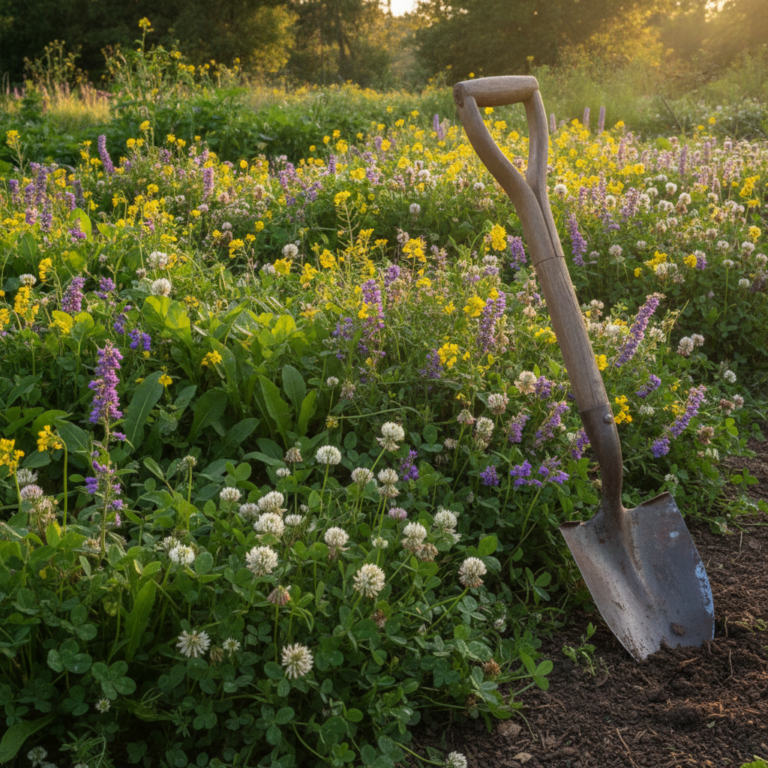
Long before synthetic nitrogen came in a bag, farmers fed their soil the old-fashioned way — they grew it. Green manure crops were planted not for harvest, but for burial. Farmers would let a field of clover, rye, or vetch reach its prime, then chop it all down and dig it straight back into the earth. The result was soil that hummed with life, held moisture, and grew incredible food year after year. If you’re skeptical of chemicals and curious about what the old-timers really knew, this forgotten rotation trick may be the most powerful thing you add to your garden this season.
What Are Green Manure Crops — And Why Did Farmers Swear by Them?
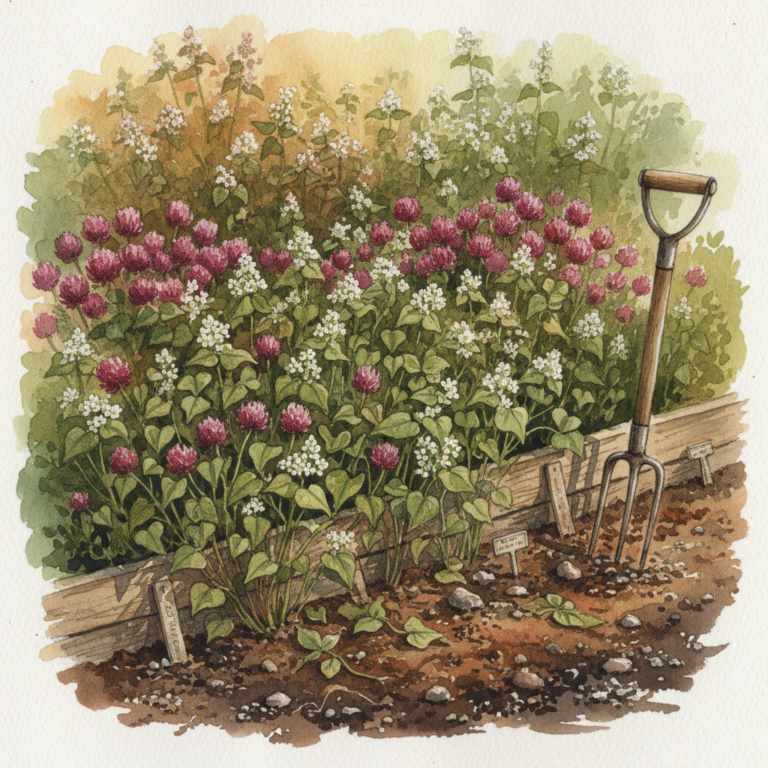
A green manure crop is any plant grown specifically to be incorporated back into the soil while still green and actively growing. The goal isn’t the plant itself — it’s the organic matter, nutrients, and microbial activity the plant delivers underground.
Think of it as feeding the soil a fresh, living meal instead of a processed supplement. When you dig under a dense mat of legumes or grasses, you’re adding nitrogen, carbon, and complex root sugars that synthetic fertilizers simply can’t replicate. You’re also feeding fungi, bacteria, and earthworms — the underground workforce that turns average dirt into something extraordinary.
Before you can get the most from this method, it helps to understand what your soil is already telling you. Our guide to reading your dirt and fixing it fast is a great starting point if you’ve never assessed your soil before.
Green manure isn’t new wisdom — it’s ancient wisdom. Roman farmers used lupins. Chinese farmers grew milk vetch for centuries. Your grandparents likely called it “turning in” a crop. The practice fell out of fashion when cheap synthetic nitrogen arrived in the mid-20th century. But many gardeners are rediscovering that no bag of fertilizer builds soil structure, feeds soil life, and suppresses weeds the way a living crop does.
The Best Green Manure Crops by Season and Goal
Not every cover crop works as green manure equally well. The best choices depend on your season, your climate, and what your soil needs most. Here’s a breakdown of the top performers.
Nitrogen-Fixers: The Heavy Lifters
These legumes work with soil bacteria to pull nitrogen from the air and store it in their roots. When you dig them under, that nitrogen feeds your next crop directly.
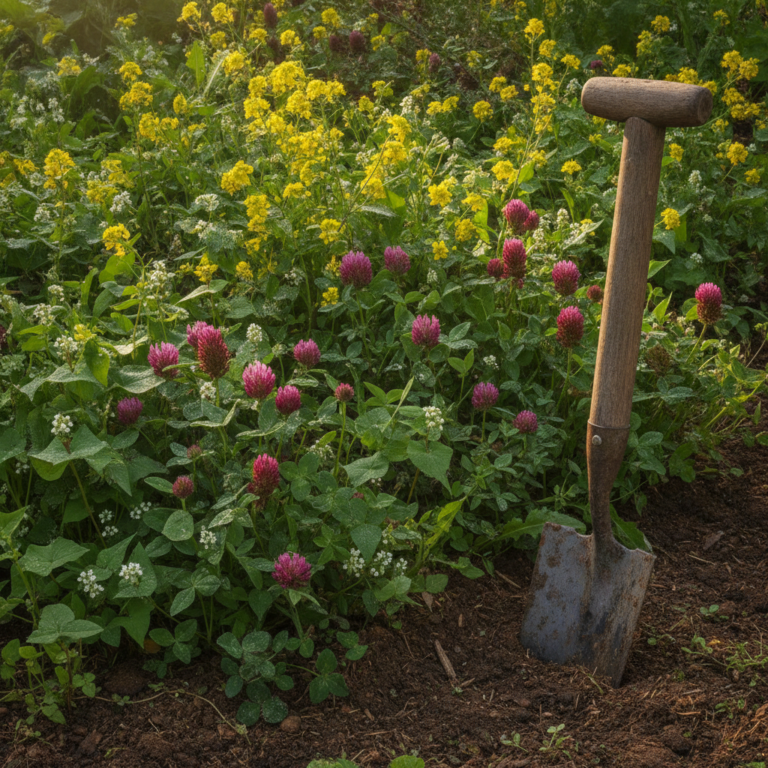
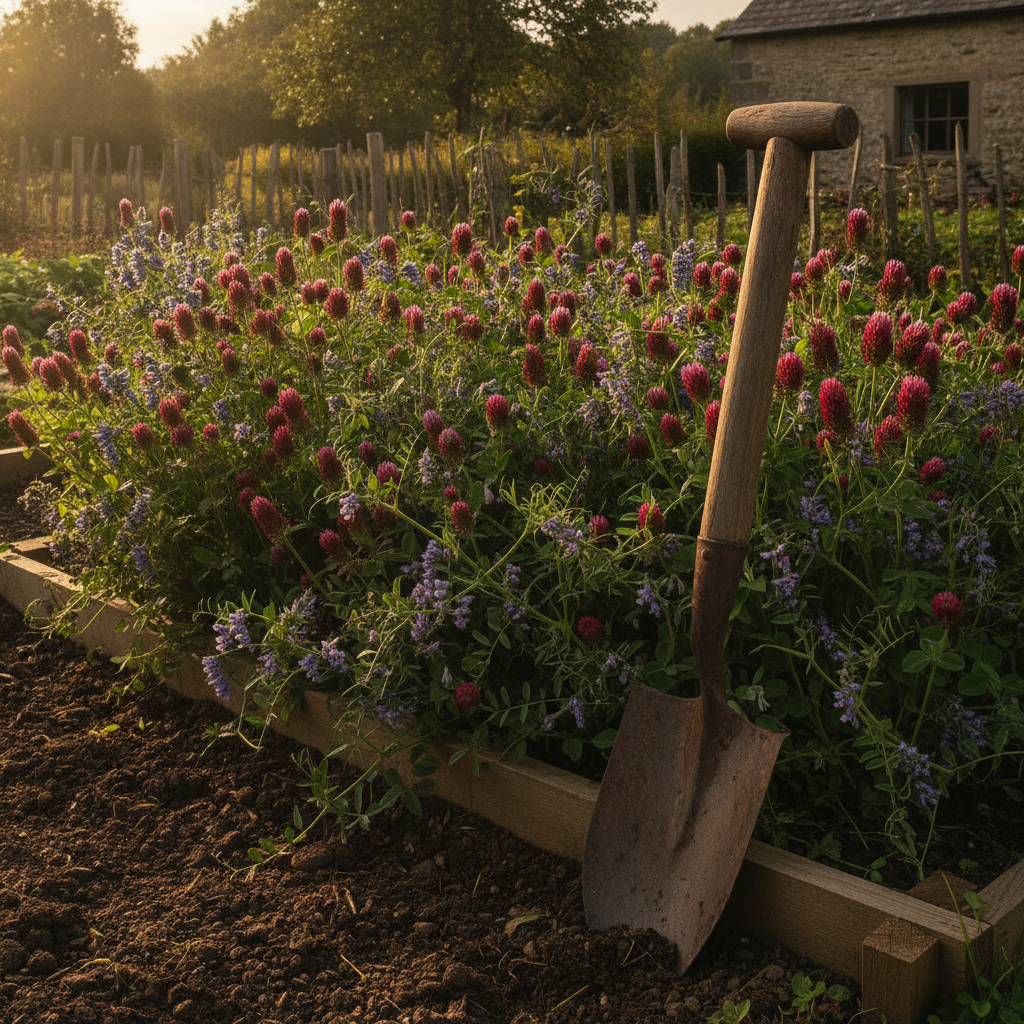
- Crimson clover — Fast-growing, stunning in flower, and one of the best nitrogen-fixers for spring and autumn. Fix up to 150 lbs of nitrogen per acre when properly inoculated.
- Hairy vetch — A cold-hardy legume that thrives in late autumn and overwinters in many climates. Exceptional nitrogen contribution and biomass.
- Field peas — A spring or autumn favorite. They grow quickly, suppress weeds, and are easy to chop and dig under before setting seed.
- Fenugreek — A forgotten gem. Fast-growing, aromatic, and effective in summer slots. Adds nitrogen and breaks up compacted soil.
- Lupins — Hardy, drought-tolerant, and deeply rooting. Excellent for breaking up heavy clay while fixing nitrogen.
Biomass Builders: For Carbon and Structure
Some crops don’t fix nitrogen, but they contribute enormous amounts of organic matter and help build the spongy, well-aerated soil structure that roots love.
- Mustard — Fast-growing summer cover that also suppresses soil-borne diseases when dug under. A natural biofumigant.
- Buckwheat — A warm-season star. It smothers weeds, attracts beneficial insects, and breaks down fast when incorporated. Perfect for short summer gaps.
- Phacelia — Beautiful, bee-friendly, and quick to decompose. One of the fastest-breakdown green manures available.
- Winter rye — A late-season powerhouse. Grows dense even in cool weather, protects soil from erosion, and adds serious carbon when dug under in spring.
Timing the Cut — When to Chop and Dig for Maximum Nitrogen Release
Here’s where most gardeners get it wrong. The timing of when you cut and incorporate your green manure crops is just as important as which crops you choose.
The golden rule: incorporate before flowering, ideally at bud stage. At this point, the plant is at peak nitrogen content, the stems are still soft, and the material will break down quickly. Once a plant flowers and sets seed, nitrogen migrates into the seed heads. Stems become woody and slow to decompose.
There’s a second timing rule most people miss: wait two to three weeks after incorporation before planting your next crop. Fresh green material releases compounds as it breaks down that can actually inhibit germination. Give the soil time to digest its meal. This waiting period also lets soil microbes multiply and convert all that raw organic matter into plant-available nutrients.
If you want to get really precise about timing based on your local conditions, our 30-day microclimate-aware planting plan can help you map out exactly when each rotation step fits your specific garden environment.
How to Incorporate Green Manure in Small Gardens
You don’t need a tractor. In a home garden, here’s the simple method:
- Cut the crop at soil level using a sharp hoe or garden shears.
- Chop the material into smaller pieces — 6 to 8 inches or shorter decomposes fastest.
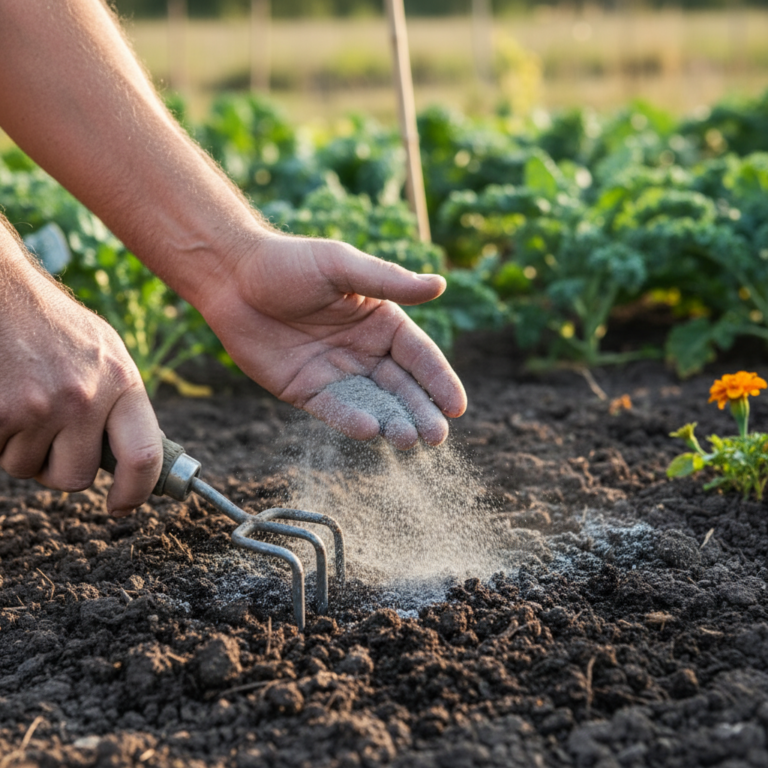
- Dig it into the top 6 to 8 inches of soil, working it in thoroughly.
- Water lightly if conditions are dry to activate microbial breakdown.
- Wait two to three weeks, then plant your main crop.
For a no-dig variation, cut the crop at ground level, leave the roots to rot in place, and layer the chopped top growth as a thick mulch. It takes slightly longer but disturbs soil structure less.
Green Manure Crops: A Practical Planting Calendar
Here’s a seasonal schedule you can start using this year. Adjust planting dates by two to four weeks depending on your climate zone.
Early Spring (March–April)
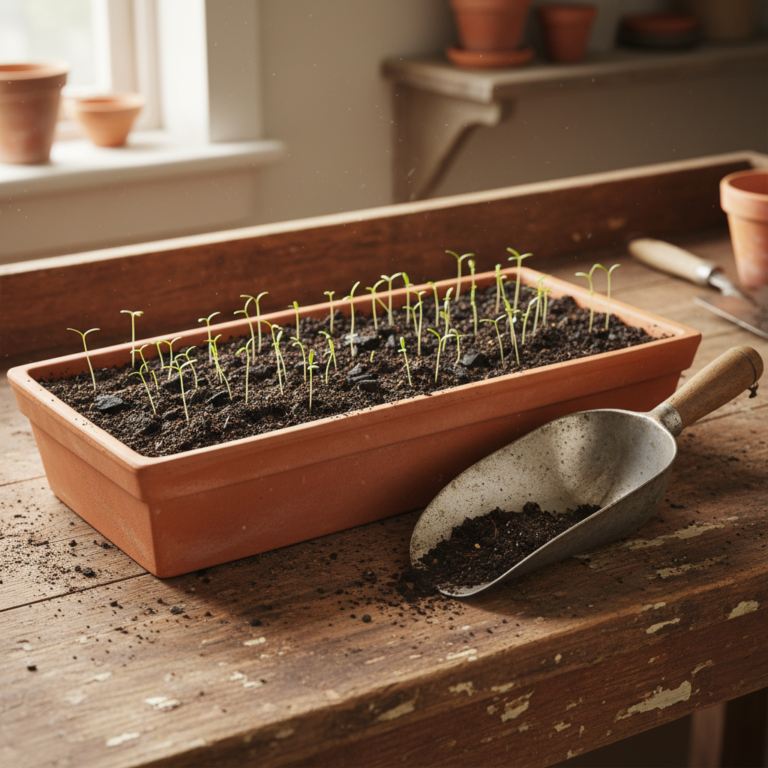
Sow field peas or crimson clover as soon as soil can be worked. These grow quickly in cool weather. Incorporate them in May, six to eight weeks after sowing, just before they flower.
Late Spring Gap (May–June)
After incorporating your spring green manure, wait two to three weeks, then transplant summer crops like tomatoes, squash, or peppers into that freshly fed soil.
Summer Slot (June–July)
If a bed will sit empty for four to six weeks, sow buckwheat or phacelia. These grow fast in heat. Chop and dig under before flowers fully open — usually within four to five weeks of sowing.
Late Summer–Early Autumn (August–September)
Sow hairy vetch, winter rye, or a vetch-rye mix in beds that are winding down. These will establish before frost, overwinter, and be ready to incorporate in early spring — just in time for your first warm-season plantings.
Autumn (October)
In mild climates, sow crimson clover or field peas for a late-season nitrogen boost. In cold climates, focus on winter rye as a soil protector through the dormant months.
If you’re just getting started and this feels like a lot to manage at once, don’t worry. The 4-week skill-build plan for complete beginners is a gentle way to build confidence before layering in advanced techniques like green manure rotations.
Why Green Manure Outperforms Most Store-Bought Soil Conditioners
A bag of pelletized fertilizer delivers a narrow spectrum of nutrients — usually nitrogen, phosphorus, and potassium in isolation. It does nothing for soil structure, microbial life, or water retention. It doesn’t build anything. It just feeds the plant temporarily.
Green manure crops do something fundamentally different. They build the soil ecosystem. They add living carbon that feeds fungi and bacteria. Their roots create channels that improve drainage and aeration. Their decomposing tissue releases a full spectrum of micro and macronutrients in slow, plant-available forms. They attract earthworms. They suppress weeds. They protect bare soil from erosion and compaction during wet weather.
In short, they improve the soil itself — not just the plant growing in it right now. That’s the difference between feeding a crop and building a garden.
If you want to take this soil-building philosophy even further, the principles of green manure crops pair beautifully with layered planting strategies. Our guide to building a microforest in small spaces explores how permanent plant layers work alongside seasonal rotations to create genuinely self-sustaining garden systems.
Start Small, See the Difference
You don’t need to overhaul your whole garden at once. Start with one empty bed this season. Sow a quick crop of buckwheat or phacelia, let it grow for four to five weeks, chop it under, and wait. Then plant something in that bed and compare it to a bed that didn’t receive a green manure treatment.
The difference in plant growth, soil texture, and moisture retention will likely surprise you. Once you see it firsthand, this old rotation trick becomes one of those things you can’t imagine gardening without.
Your grandparents didn’t need a chemistry degree to grow extraordinary food. They understood that healthy soil grows healthy plants — and that the best way to feed your soil is to grow its food for it. That wisdom never went away. It just got buried. Time to dig it back up.