Fermented Plant Extracts: Living Fertilizer Recipes
Your grandmother’s secret to a thriving garden wasn’t found in colorful bottles at the garden center. Instead, she brewed her own fermented plant extracts from common weeds that most people pull and toss. These bubbling, aromatic concoctions created nutrient-dense liquid feeds teeming with beneficial microorganisms – nature’s own probiotic soup for soil.
Today’s synthetic fertilizers deliver nutrients in sterile packages, but they can’t replicate the living ecosystem that fermented plant extracts provide. These time-tested brewing methods transform nettle, comfrey, and dandelion into potent soil amendments that work with your soil’s natural biology rather than against it.
Why Fermented Plant Extracts Outperform Store-Bought Fertilizers
The magic happens during fermentation. As plant materials break down in water, beneficial bacteria and enzymes multiply rapidly. This process creates a living fertilizer that feeds not just your plants, but the entire soil web below ground.
Commercial fertilizers provide NPK numbers, but they’re missing the microbial life that makes nutrients truly available to plants. Furthermore, synthetic feeds can actually harm soil biology over time. Your fermented plant extracts, on the other hand, deliver nutrients in forms that plants recognize and can easily absorb.
The fermentation process also breaks down plant cell walls, releasing locked-up minerals and trace elements. What starts as tough plant material becomes a nutrient-rich liquid that’s immediately bioavailable to your crops.
The Holy Trinity: Nettle, Comfrey, and Dandelion Ferments
Three common weeds form the backbone of traditional plant extract brewing. Each brings unique nutritional properties to your garden’s feast.
Nettle Extract: The Nitrogen Powerhouse
Stinging nettle creates one of the most potent fermented plant extracts for leafy growth. This plant accumulates nitrogen, potassium, and iron in remarkable concentrations. Additionally, nettle contains natural growth hormones that stimulate root development and overall plant vigor.
Harvest young nettle shoots before they flower for maximum potency. The sting disappears once fermentation begins, making this extract safe to handle and apply.
Comfrey Extract: The Potassium Champion
Comfrey’s deep taproot mines potassium from subsoil layers that shallow-rooted plants can’t reach. This makes comfrey extract exceptional for flowering and fruiting plants. The high potassium content also improves plant disease resistance and cold tolerance.
Russian comfrey (Symphytum x uplandicum) produces the highest yields and doesn’t spread aggressively like true comfrey. However, any comfrey variety will create effective extracts.
Dandelion Extract: The Mineral Accumulator
Dandelions excel at gathering trace minerals from deep soil layers. Their extract provides a broad spectrum of micronutrients often missing from both synthetic fertilizers and shallow-rooted plant materials.
Use entire dandelion plants – roots, leaves, and flowers. The roots contain the highest concentration of minerals, while leaves add readily available nutrients.
Traditional Fermented Plant Extract Recipes
These recipes follow methods passed down through generations of organic gardeners. The process is simple, but timing and ratios matter for creating effective extracts.
Basic Single-Plant Extract Method
Start with fresh plant material for best results. Wilted or dried plants work but produce less potent extracts. Here’s the fundamental process:
Ingredients:
- 2 pounds fresh plant material (nettle, comfrey, or dandelion)
- 5 gallons non-chlorinated water
- 1 tablespoon molasses (feeds beneficial bacteria)
Instructions:
Chop plant material into 2-inch pieces to increase surface area. Place in a large bucket or barrel with a loose-fitting lid. Add water until plants are completely submerged. Stir in molasses and mix thoroughly.
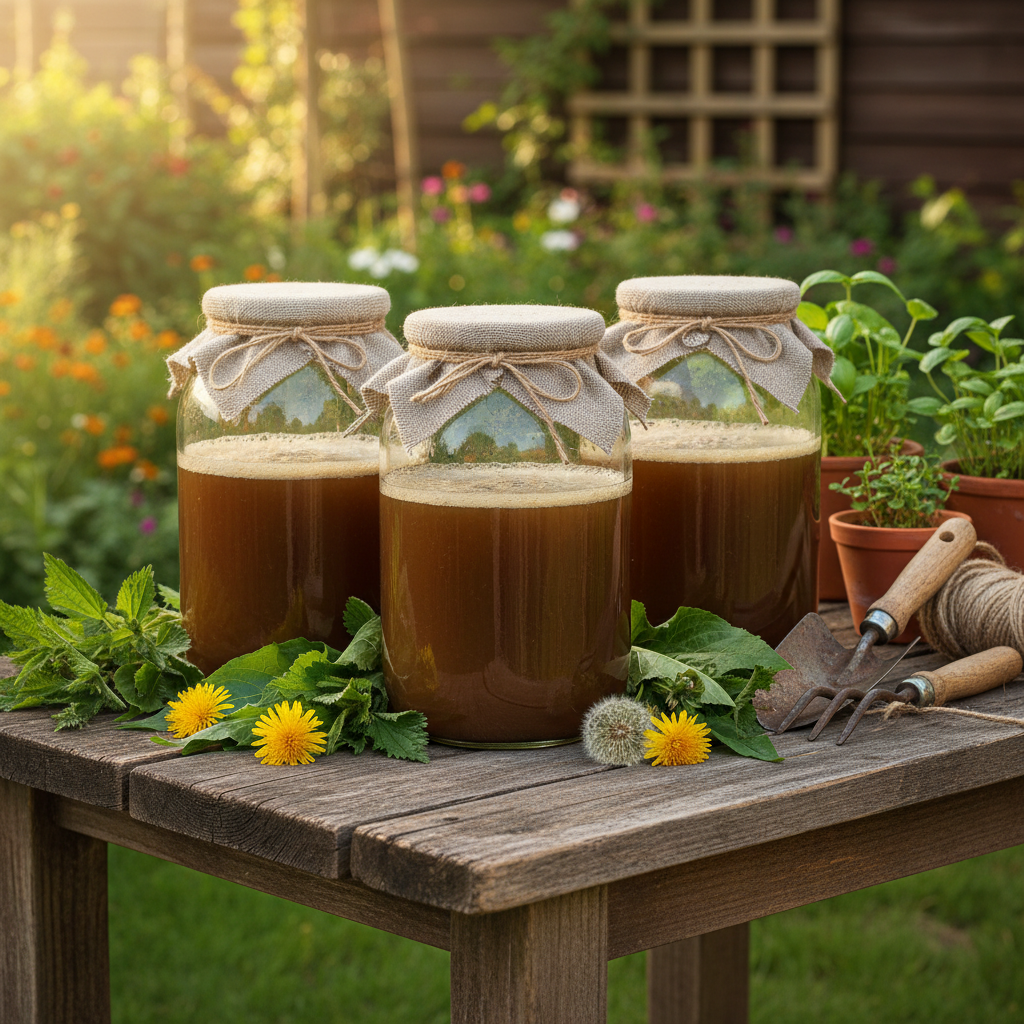
Cover with a loose lid or cloth to allow gases to escape while keeping debris out. Stir daily for the first week, then every few days. The extract will bubble and develop a strong smell – this indicates healthy fermentation.
Most extracts are ready in 2-3 weeks during warm weather, or 4-6 weeks in cooler conditions. The liquid turns dark brown and the plant material breaks down significantly when complete.
Multi-Plant Powerhouse Blend
Combining plants creates more complete nutrition than single-ingredient extracts. This blend provides balanced NPK plus trace minerals:
Ingredients:
- 1 pound fresh nettle
- 1 pound fresh comfrey
- ½ pound dandelion (whole plants)
- 5 gallons non-chlorinated water
- 2 tablespoons molasses
Follow the same process as single-plant extracts. This combination provides nitrogen for growth, potassium for flowering, and trace minerals for overall health.
Application Methods and Timing
Proper dilution and timing maximize the benefits of your fermented plant extracts while preventing plant burn or root damage.
Dilution Guidelines
Always dilute extracts before application. The finished liquid is concentrated and can damage plants if used straight. Standard dilution ratios:
- Soil drench: 1:10 (1 cup extract to 10 cups water)
- Foliar spray: 1:20 (1 cup extract to 20 cups water)
- Seedling feed: 1:30 (1 cup extract to 30 cups water)
Start with weaker dilutions and observe plant response. You can always increase concentration if plants show positive results without stress signs.
Application Schedule
Apply extracts during active growing periods for best results. Early morning or evening applications prevent leaf burn and allow better absorption.
For established plants, apply diluted extracts every 2-3 weeks during the growing season. New transplants benefit from weekly weak applications until established. This approach aligns well with the systematic planning found in our 30-day microclimate planting plan.
Troubleshooting Common Fermentation Issues
Even experienced gardeners encounter challenges when brewing plant extracts. Recognizing and solving common problems ensures consistently good results.
Foul Odors and Anaerobic Conditions
Healthy fermentation smells earthy and slightly sour, like compost tea. However, putrid or rotten egg odors indicate anaerobic (oxygen-free) conditions that produce harmful bacteria.
If extracts smell truly awful, increase stirring frequency and ensure adequate air circulation. Adding a small aquarium pump can provide continuous aeration for problem batches.
Slow or Stalled Fermentation
Cold weather or insufficient beneficial bacteria can slow fermentation. Add a handful of finished compost or a splash of previously successful extract to inoculate new batches with active microorganisms.
Molasses feeds fermentation bacteria, but too much can create alcohol instead of the desired bacterial activity. Stick to recommended amounts and adjust gradually if needed.
Seasonal Considerations and Storage
Temperature affects fermentation speed and extract quality. Understanding seasonal patterns helps you plan brewing schedules and manage storage effectively.
Spring and early summer provide the best plant material when growth is rapid and nutrient content peaks. This timing coincides perfectly with increased garden activity and higher plant nutrient demands.
Finished extracts store well in cool, dark locations for 3-6 months. However, fresh extracts always outperform stored ones. Plan brewing schedules to match your garden’s peak feeding periods rather than making large batches for long-term storage.
Winter brewing works in heated spaces or greenhouses, but cold-weather extracts ferment slowly and may require additional bacterial inoculants. Consider this when developing your year-round garden management approach, as outlined in our soil diagnostic guide.
Integration with Other Natural Growing Methods
Fermented plant extracts work synergistically with other forgotten techniques like biochar, rock dust, and compost tea. These methods all support soil biology rather than bypassing it.
Combine diluted extracts with compost tea applications for maximum microbial diversity. The plant extracts provide readily available nutrients while compost tea adds beneficial fungi and bacteria that help plants access stored soil nutrients.
This integrated approach builds soil health progressively, creating conditions where plants thrive with minimal external inputs. It’s a perfect complement to the systematic skill-building found in our 8-week garden skill ladder.
Rediscovering Nature’s Wisdom
Creating your own fermented plant extracts connects you to generations of gardeners who understood that the best plant food comes from plants themselves. These living fertilizers cost nothing but time and observation – resources most gardeners have in abundance.
Start small with a single nettle extract this growing season. Watch how your plants respond to this ancient nutrition source. As you gain confidence, experiment with different plant combinations and application methods.
The microorganisms in your fermented extracts are working 24/7 to improve your soil’s health and fertility. Unlike synthetic fertilizers that provide temporary feeding, these extracts build long-term soil biological activity that sustains plant health naturally.
Your garden will thank you for rediscovering this time-tested wisdom – and your plants will show their appreciation with vigorous growth and abundant harvests.