Water-Wise Garden Design: 5 Essential Permaculture Principles
Creating a water-wise garden design doesn’t mean sacrificing beauty or productivity. In fact, using permaculture principles can help you build a thriving, drought-resistant garden that requires less water while improving soil health naturally. Whether you’re dealing with water restrictions, high water bills, or simply want to garden more sustainably, these five foundational principles will transform how you think about water in your landscape.
The beauty of permaculture lies in working with nature rather than against it. Instead of fighting your climate and soil conditions, you’ll learn to embrace them and create systems that become more resilient over time.
1. Observe and Interact: Reading Your Garden’s Water Story
Before making any changes, spend time observing how water moves through your space. This principle forms the foundation of effective water-wise garden design.
Walk your property during and after rainstorms. Notice where water pools, where it runs off quickly, and which areas stay moist longest. Pay attention to microclimates too – that sunny south-facing slope will have very different water needs than the shaded area under your oak tree.
Take notes or sketch a simple map showing:
- Natural water flow patterns
- Wet and dry zones
- Sun and shade areas throughout the day
- Existing slopes and flat areas
This observation phase might take a full season, but it’s invaluable. Understanding your unique conditions helps you make smart decisions about plant placement and water management strategies. For deeper insights into reading your garden’s conditions, check out our guide on Soil Sense Without the Lab: Read Your Dirt, Fix It Fast.
2. Catch and Store Energy: Smart Water Collection Strategies
The second principle focuses on capturing and storing water when it’s abundant for use during drier periods. This approach is central to successful water-wise garden design.
Simple Swales and Berms
Swales are shallow depressions that capture rainwater runoff. They’re perfect for beginners because they require no special materials – just a shovel and some observation skills.
Dig shallow trenches along the contour of gentle slopes, about 6-12 inches deep and 18-24 inches wide. The excavated soil becomes a berm (small hill) on the downhill side. Plant the swale with water-loving plants and the berm with drought-tolerant species.
Rain Gardens
Create dedicated rain gardens in naturally low spots or areas where water collects. These planted depressions slow water infiltration while filtering runoff. Choose native plants that can handle both wet and dry conditions.
Mulch Basins
Around individual trees and shrubs, create slight depressions surrounded by berms. Fill with organic mulch to capture and hold moisture. This technique works especially well for fruit trees and large perennials.
3. Use Small and Slow Solutions: Start Simple, Build Skills
Don’t try to redesign your entire landscape overnight. Effective water-wise garden design develops gradually through small, manageable projects that build your confidence and skills.
Start with one small area – perhaps a problem spot where water runs off quickly or plants struggle. Apply one technique at a time and observe the results before expanding.
Begin with these simple strategies:
- Add organic mulch around existing plants
- Create one small swale to catch roof runoff
- Plant groundcover on bare slopes to prevent erosion
- Install a simple rain barrel for container watering
As you gain experience, you can tackle larger projects like terracing steep slopes or installing greywater systems. Our Garden Skill Ladder: An 8-Week Path from First Seed to Confident Planner offers a structured approach to building these skills progressively.
4. Use and Value Diversity: Plant Communities That Conserve Water
Diverse plant communities are naturally more water-efficient than monocultures. Different plants have varying root depths, water needs, and growth patterns that complement each other.
Layer Your Plantings
Create plant communities that mimic natural forests with multiple layers:
- Canopy layer: Large trees for shade and windbreak
- Understory: Small trees and large shrubs
- Shrub layer: Berry bushes and flowering shrubs
- Herbaceous layer: Perennial flowers and herbs
- Ground cover: Low-growing plants that conserve soil moisture
- Root layer: Underground crops like bulbs and tubers
This layered approach creates beneficial microclimates. Taller plants provide shade and wind protection for smaller ones, while diverse root systems improve soil structure and water infiltration.
Choose Climate-Appropriate Plants
Select plants adapted to your local climate rather than fighting against it. Native plants are often the most water-efficient choices because they’ve evolved to thrive in your specific conditions.
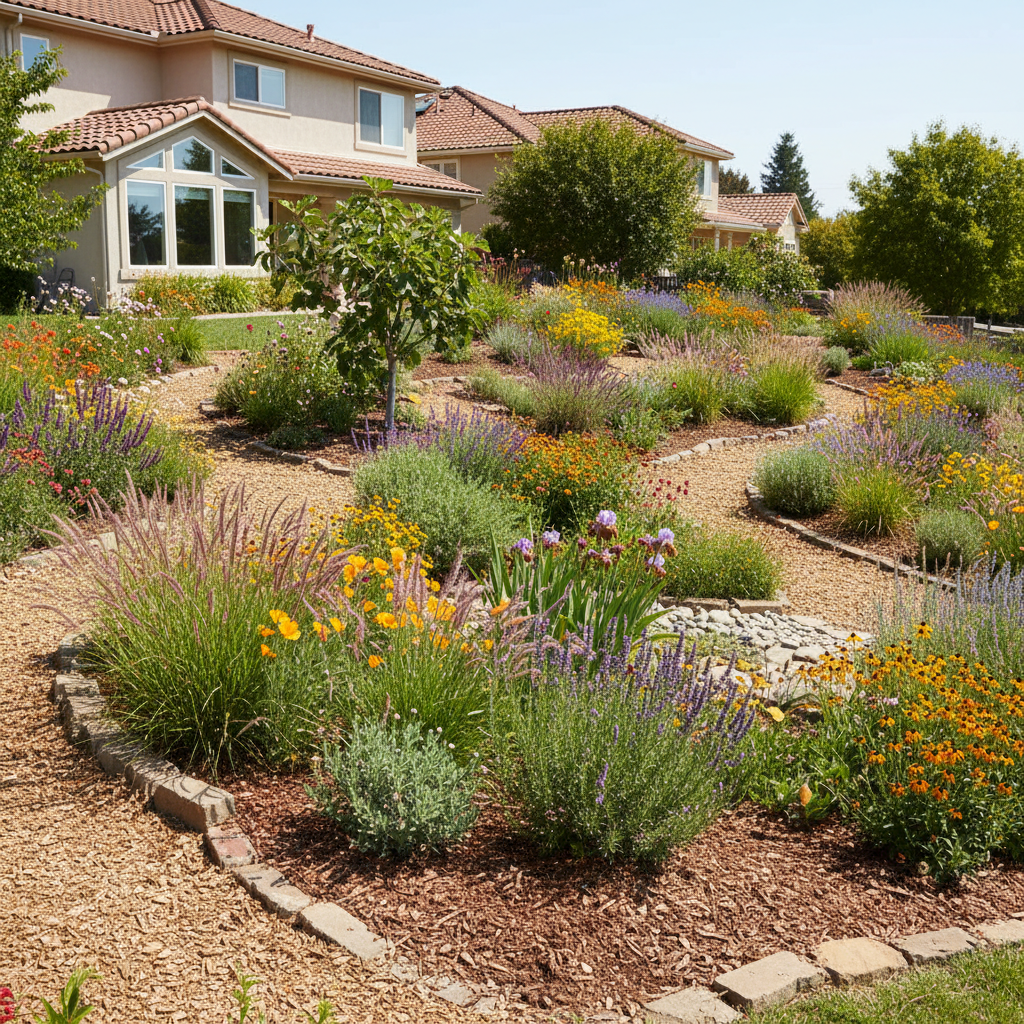
Mix drought-tolerant plants with those requiring more water, but group them strategically. Place thirstier plants in naturally moist areas or near your water collection points, while drought-tolerant species go on slopes and in full sun areas.
5. Use Edges and Value the Marginal: Maximize Water Efficiency
The edges between different zones in your garden – where sun meets shade, wet meets dry, or lawn meets wildflower meadow – are often the most productive and water-efficient areas.
These transition zones, called ecotones in ecology, support the greatest diversity of plants and wildlife. They also offer opportunities for creative water-wise garden design solutions.
Create Productive Edges
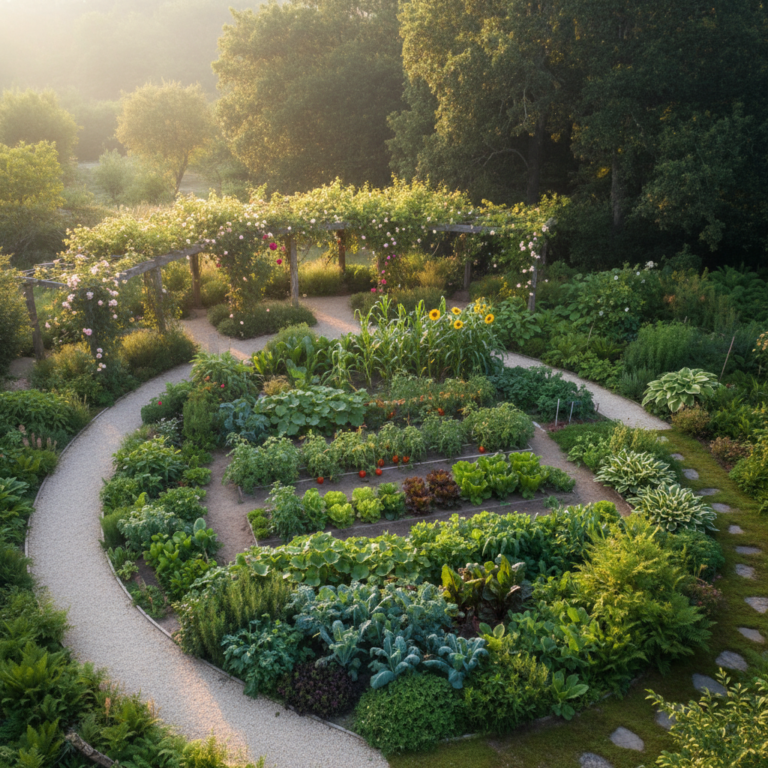
Instead of straight lines between different garden areas, create curved, undulating borders. This increases edge habitat and provides more opportunities for beneficial relationships between plants.
For example, plant moisture-loving herbs like mint and watercress near the edge of a rain garden, while positioning Mediterranean herbs like rosemary and thyme on the drier side.
Utilize Marginal Spaces
Don’t overlook challenging areas like steep slopes, rocky patches, or areas with poor drainage. These “problem” spots often become the most interesting and low-maintenance parts of your water-wise garden design.
Steep slopes can become terraced food forests, rocky areas can support drought-tolerant herb spirals, and poorly drained spots can become productive rain gardens or bog gardens.
Putting It All Together: Your Water-Wise Action Plan
Ready to start implementing these water-wise garden design principles? Here’s your step-by-step action plan:
Week 1-4: Observe your space during different weather conditions. Document water flow patterns, microclimates, and existing plant performance.
Week 5-8: Start small with mulching existing plants and creating one simple swale or rain garden. Focus on the area with the most obvious water challenges.
Month 3-6: Gradually expand your water-catching systems and begin replacing high-water plants with more drought-tolerant alternatives. Layer your plantings for better water efficiency.
Ongoing: Continue observing, adjusting, and building on your successes. Each season will teach you more about your unique site conditions.
For additional guidance on site analysis and plant selection, explore our comprehensive Climate-Proof Your Crops: A 30-Day, Microclimate-Aware Planting Plan.
Beyond Water Conservation: The Bigger Benefits
Implementing these water-wise garden design principles delivers benefits far beyond reduced water bills. You’ll notice improved soil health, increased biodiversity, and more resilient plants that better handle weather extremes.
Your garden will become a living example of sustainability in action. Friends and neighbors will notice the lush growth, abundant wildlife, and obvious health of your plants – all achieved with less water input than conventional gardens.
Remember, permaculture is about creating regenerative systems that improve over time. Your water-wise garden design will become more efficient and productive each year as plants establish deeper roots, soil biology improves, and beneficial relationships develop between different species.
Start small, observe carefully, and celebrate each success. Before you know it, you’ll have created a beautiful, productive garden that thrives even during dry spells – all while contributing to a more sustainable future for your community and the planet.