Green Manure Crops: The Plow-Under Secret
Long before a bag of synthetic nitrogen ever sat on a farm store shelf, farmers already knew how to feed their soil. They grew green manure crops — specific plants cultivated not to eat, but to chop down and bury. That buried organic matter broke down into a slow, steady feast for soil microbes, releasing nitrogen, improving structure, and building fertility season after season. It was elegant, cheap, and incredibly effective. Then modern agriculture came along, and most gardeners simply forgot.
If you are tired of buying amendments every spring and wondering why your soil still feels tired, this post is for you. We are going to dig into the old-time plow-under method, explore the best plants to use, and give you a practical planting calendar you can actually start this season.
What Are Green Manure Crops, Exactly?
Green manure crops are fast-growing plants — usually legumes or grasses — that you grow specifically to incorporate back into the soil before they set seed. The term “green manure” simply means fresh, living organic matter used as fertilizer. Unlike compost, which you add from outside the bed, green manures grow right where they are needed. You are essentially farming fertility in place.
This is not the same as mulching, and it is not quite the same as a standard cover crop either. The goal here is timed burial. You want to cut and dig the plant at a specific growth stage to capture maximum nitrogen and organic matter. Timing matters enormously — and we will get to that shortly.
The practice goes back thousands of years. Ancient Chinese farmers, Roman agricultural writers, and American frontier homesteaders all used versions of this technique. It fell out of fashion in the mid-20th century when synthetic fertilizers became cheap and widely available. But those fertilizers come with costs — financial, ecological, and long-term soil health costs that are becoming increasingly hard to ignore.
If you want to understand your soil’s current condition before you start, take a look at Soil Sense Without the Lab: Read Your Dirt, Fix It Fast. Knowing what your soil needs helps you choose the right green manure plant to grow.
The Best Green Manure Crops for Home Gardeners
Not every plant makes a good green manure. You want something that grows fast, produces a lot of biomass, and ideally fixes atmospheric nitrogen into the soil. Here are the top performers:
Legumes: The Nitrogen Fixers
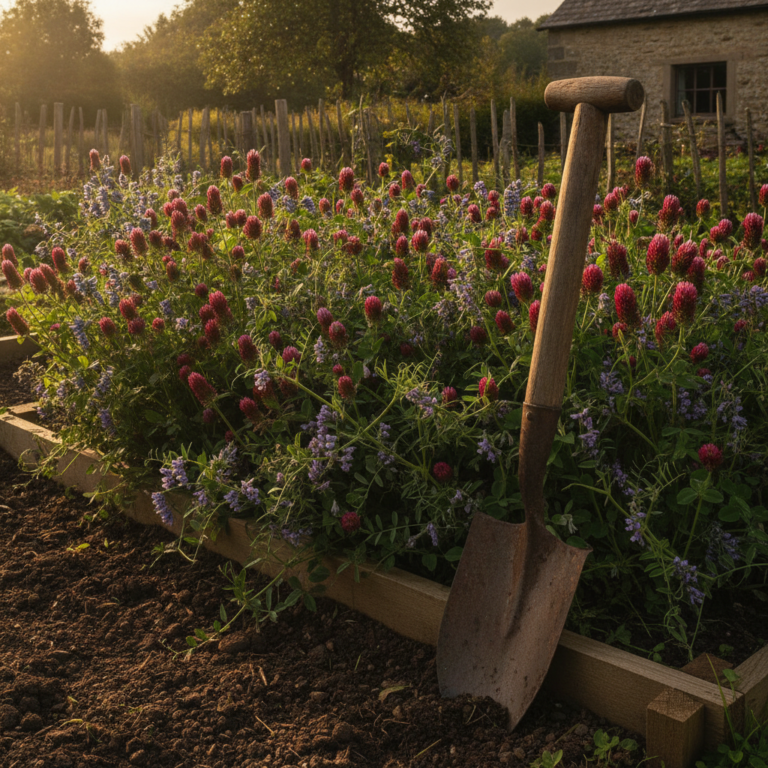
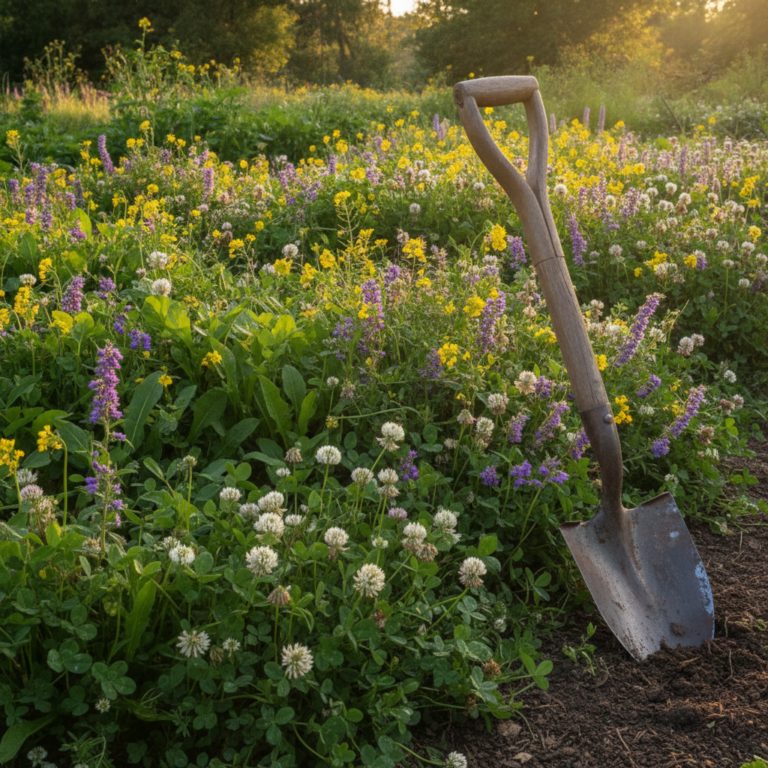
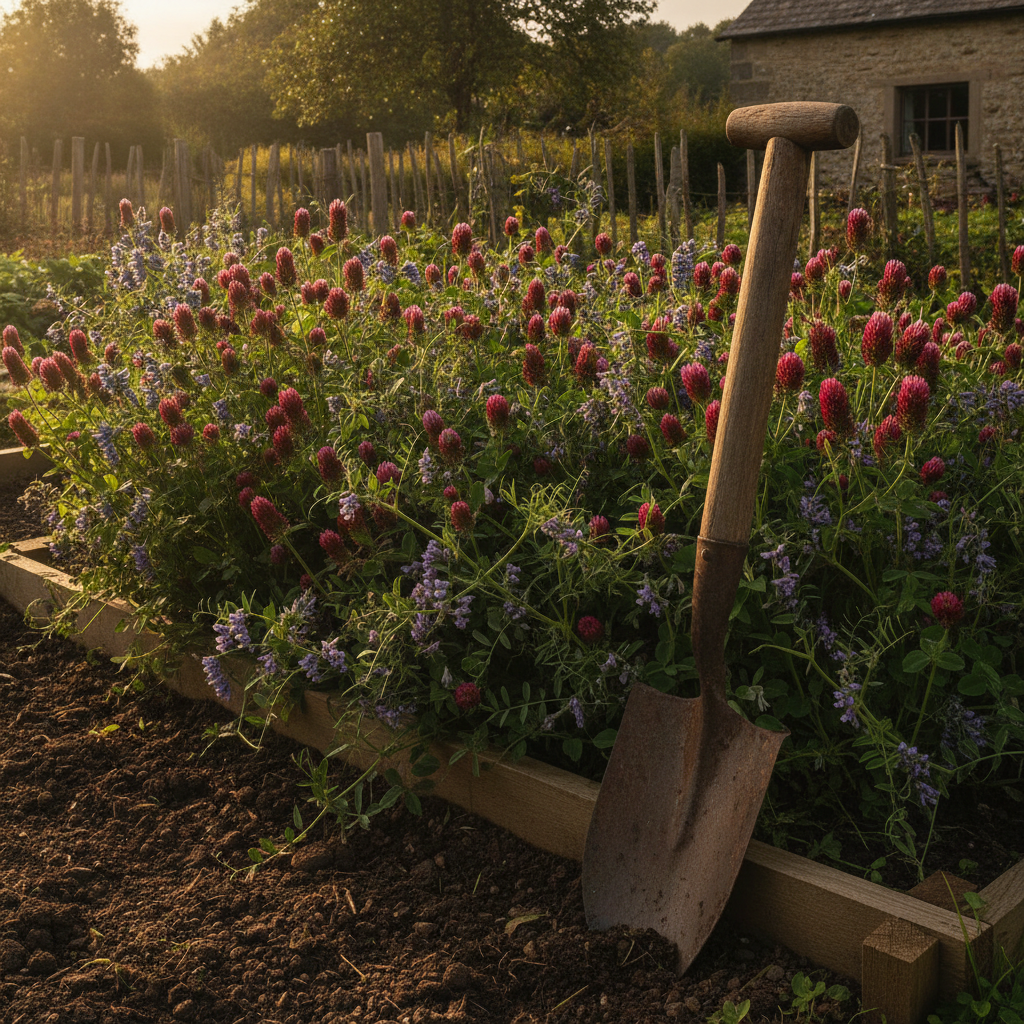
Crimson Clover is arguably the most popular green manure for home gardens. It is easy to establish, produces abundant biomass, and fixes 70–150 lbs of nitrogen per acre when properly inoculated with rhizobia bacteria. It is also beautiful — a bonus for any garden space.
Hairy Vetch is cold-hardy and aggressive in the best possible way. It fixes even more nitrogen than clover — sometimes up to 200 lbs per acre — and works brilliantly as a fall-planted green manure to be turned in spring. It does sprawl, so give it room.
Field Peas are excellent for spring planting. They grow quickly, fix moderate nitrogen, and their stems and leaves break down fast once tilled in. They are also forgiving for beginners.
Fenugreek is an underused gem. It establishes in six to eight weeks, has a deep taproot that breaks up compacted soil, and adds decent nitrogen. Your grandparents in the Mediterranean or South Asian tradition likely knew this one well.
Non-Legumes: The Biomass Builders
Buckwheat is not a legume, so it does not fix nitrogen. However, it smothers weeds, accumulates phosphorus from deep in the soil profile, and breaks down incredibly fast once tilled in — within two to three weeks. It is the perfect warm-season gap filler between vegetable plantings.
Mustard does double duty. Its glucosinolate compounds act as a natural biofumigant, suppressing soil pathogens and root-knot nematodes when tilled in. It adds organic matter and helps clean up tired, overworked beds.
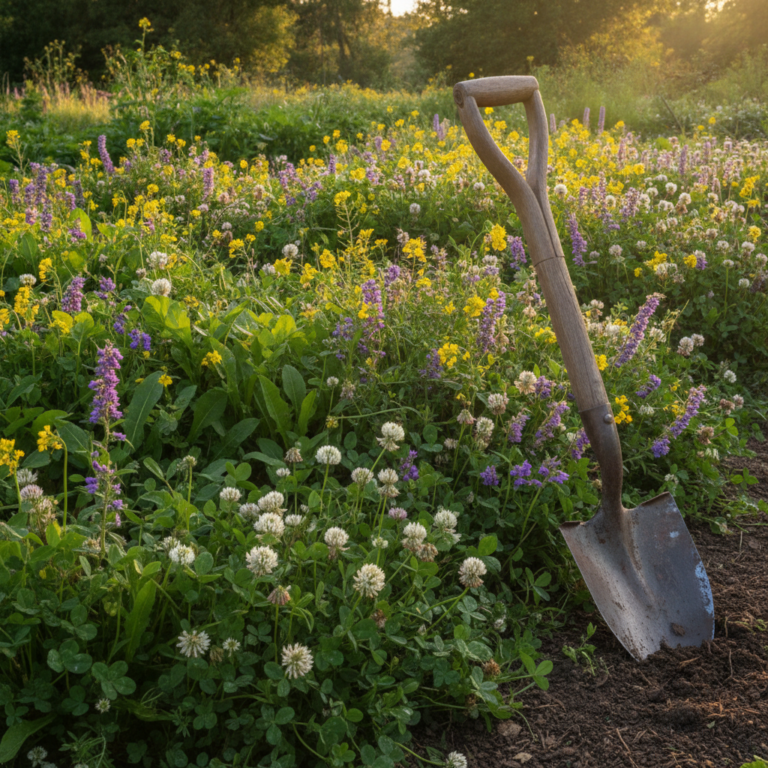
Phacelia is a powerhouse biomass producer that also happens to be one of the best pollinator plants you can grow. Bees absolutely love it before it gets turned in. It breaks down quickly and leaves the soil fluffy and rich.
The Cut-and-Dig Timing Secret
Here is where most gardeners go wrong when they try green manuring for the first time. They either wait too long or act too soon. Both mistakes reduce the nitrogen benefit significantly.
The ideal window for cutting and incorporating green manure crops is just before or at early flowering — typically when 10–25% of the plants are beginning to bloom. At this stage, the plants have maximum nitrogen content locked in their tissues, but they have not yet begun to move that nitrogen into seed production. The stems are still soft enough to break down quickly, and the carbon-to-nitrogen ratio is at its most favorable.
Cut the plants at the base. Chop them roughly with a spade or hoe. Then turn them into the top six to eight inches of soil. Water the bed well and wait. This is important: do not plant into a freshly incorporated green manure bed. The decomposing material temporarily ties up available nitrogen as microbes get to work. Wait two to four weeks before transplanting or seeding your vegetable crops.
In warm weather, breakdown happens faster — sometimes in two weeks. In cooler soil, it may take three to four weeks. This timing gap is not wasted time. Use it to prepare transplants, start seeds indoors, or work on another bed. If you are working with a tight schedule, Climate-Proof Your Crops: A 30-Day, Microclimate–Aware Planting Plan can help you sequence everything intelligently across your growing space.
Why Green Manure Outperforms Bagged Soil Conditioners
Bagged amendments have their place. But they cannot do what a properly managed green manure rotation does. Here is why.
First, living roots feed the soil food web in real time. As a green manure plant grows, its roots exude sugars and organic acids that feed billions of bacteria and fungi. That biological activity does not happen with a bag of pelletized fertilizer.
Second, green manures improve soil structure physically. Deep-rooted species like fenugreek and vetch crack through compaction. Their root channels become pathways for water and air long after the plant is gone. No bag of fertilizer does that.
Third, the cost is almost nothing. A packet of clover seed covers a 100-square-foot bed for a dollar or two. The nitrogen equivalent in a bag of organic fertilizer would cost ten times that — and deliver less benefit to your soil biology.
Finally, green manures suppress weeds while they grow. A thick stand of buckwheat or phacelia shades out weed seedlings so effectively that many gardeners use them specifically to clean up neglected beds before replanting. That is multiple jobs done with one plant.
A Practical Green Manure Planting Calendar
Here is a simple, season-by-season schedule you can adapt to your climate. If you are still building your overall garden plan, Garden Storylines: A Month-by-Month Narrative Approach to Grower Growth offers a great framework for thinking about your whole growing year.
Early Spring (Soil Temp Above 45°F)
Sow field peas, crimson clover, or phacelia as soon as the ground can be worked. These tolerate light frost. Aim to incorporate them 6–8 weeks later, just before your warm-season planting window opens.
Late Spring to Summer (After First Crop Harvest)
Sow buckwheat immediately after harvesting spring vegetables. It establishes fast — within days — and can be turned in within 5–6 weeks. This fills the gap before fall planting with no wasted time or bare soil.
Late Summer to Early Fall (6–8 Weeks Before First Frost)
This is the most powerful window for green manure crops. Sow hairy vetch, winter rye, or crimson clover. Let them overwinter if your climate allows. Turn them in the following spring for an enormous nitrogen deposit before your main garden season begins. The results are remarkable.
Fall Clean-Up Beds
For beds that are done for the season, sow a fast mustard or radish green manure to suppress weeds, add organic matter, and do some biofumigation work over the dormant months. Even a partial season of growth helps.
Getting Started Without Overthinking It
You do not need a perfect plan to begin. Pick one empty bed. Buy a small packet of crimson clover or buckwheat. Scatter it, rake it in lightly, water it. Watch it grow. Cut it at first bloom. Turn it in. Wait three weeks. Plant something you love.
That is the whole method. Everything else is refinement.
The gardeners who get the most from green manure crops are not the ones with the most elaborate systems. They are the ones who keep trying, keep observing, and keep improving. If you want support building that kind of progressive, confident approach to gardening, Layered Learning: A Gardener’s Progressive System That Grows with You is a wonderful next step.
Your soil has been waiting for this. Your grandparents knew it. Now you do too. Start digging — in the very best way.