Green Manure Crops: The Plow-Under Secret
The Forgotten Fertilizer That Grew Empires
Long before a bag of 10-10-10 sat on a hardware store shelf, farmers around the world fed their land with green manure crops — plants grown specifically to be chopped down and buried alive. Roman farmers did it. Chinese rice paddy growers did it. Your great-grandparents probably did it too. Then synthetic nitrogen arrived after World War II, and almost everyone forgot.
That forgetting cost us dearly. Decades of synthetic fertilizers have left millions of garden soils compacted, biologically depleted, and chemically dependent. Meanwhile, the old plow-under trick — growing living plants and returning them directly to the earth — quietly outperforms most store-bought soil conditioners in ways that matter most.
This post gives you everything you need to bring this ancient practice back to your garden. We’ll cover which plants to use, when to cut them, how deep to bury them, and a practical planting calendar you can start using this very season.
What Makes Green Manure Crops Different from Mulch?
Mulch sits on top of the soil and breaks down slowly. Green manure crops are incorporated directly into the soil while still green and juicy — sometimes even while flowering. That distinction matters enormously.
When you turn fresh, nitrogen-rich plant tissue into warm, moist soil, microbial activity explodes. Bacteria, fungi, and earthworms go to work immediately. They break down cell walls, release locked-up nutrients, and weave organic matter into the soil structure itself. The result isn’t just fertility — it’s living, breathing, structured soil that holds water, drains properly, and resists compaction.
Mulch feeds your soil slowly from the top down. Green manure feeds it from the inside out. Both are valuable, but only one of them transforms soil biology at depth.
If you’re still learning to read what your soil needs in the first place, check out Soil Sense Without the Lab: Read Your Dirt, Fix It Fast — it’ll help you spot deficiencies before you plant your first cover crop.
The Best Green Manure Crops for Home Gardens
Not every plant qualifies. The best choices grow fast, fix nitrogen or break up compaction, and decompose quickly after burial. Here are the heavy hitters, organized by season.
Spring and Summer Options
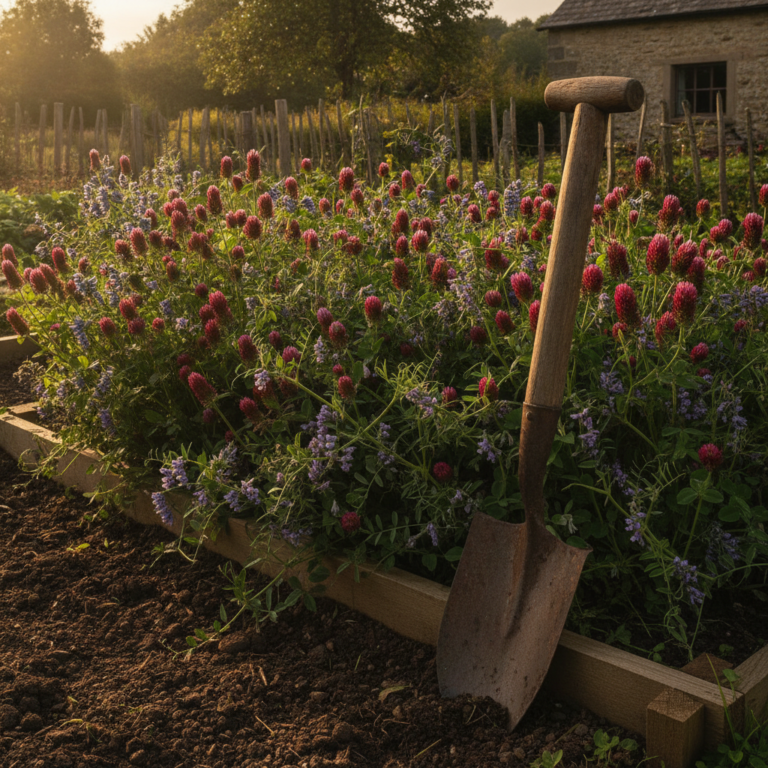
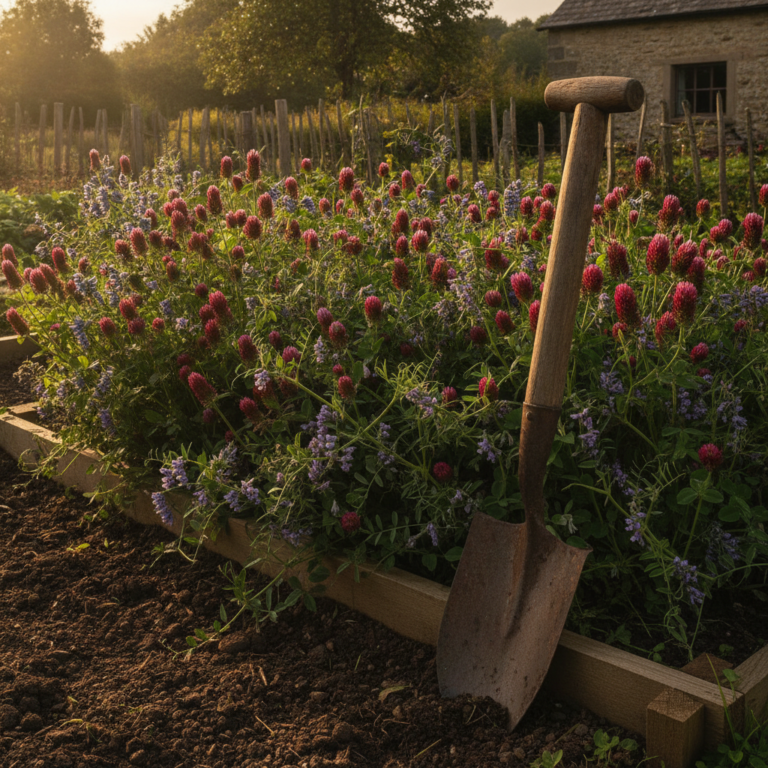
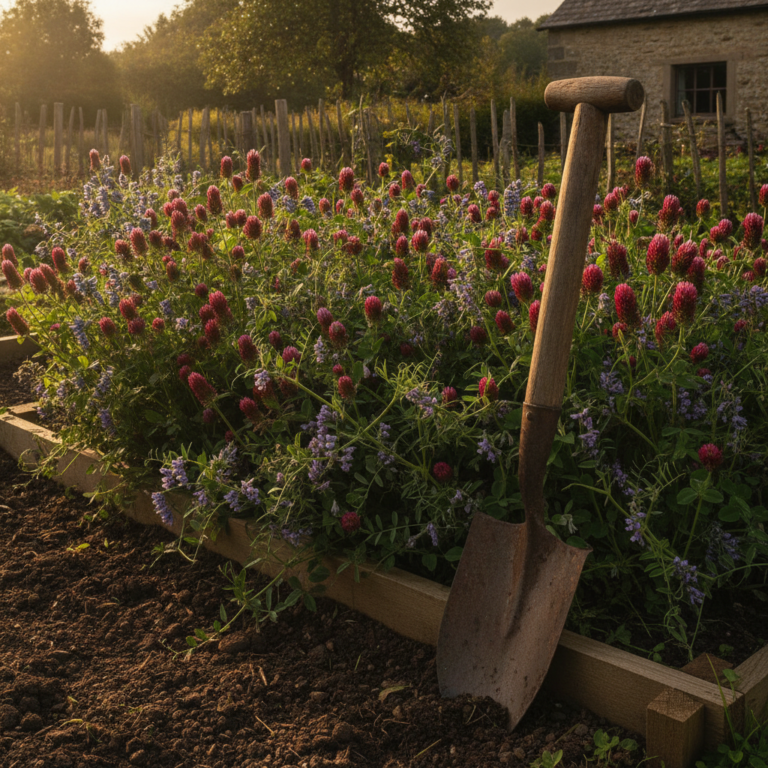
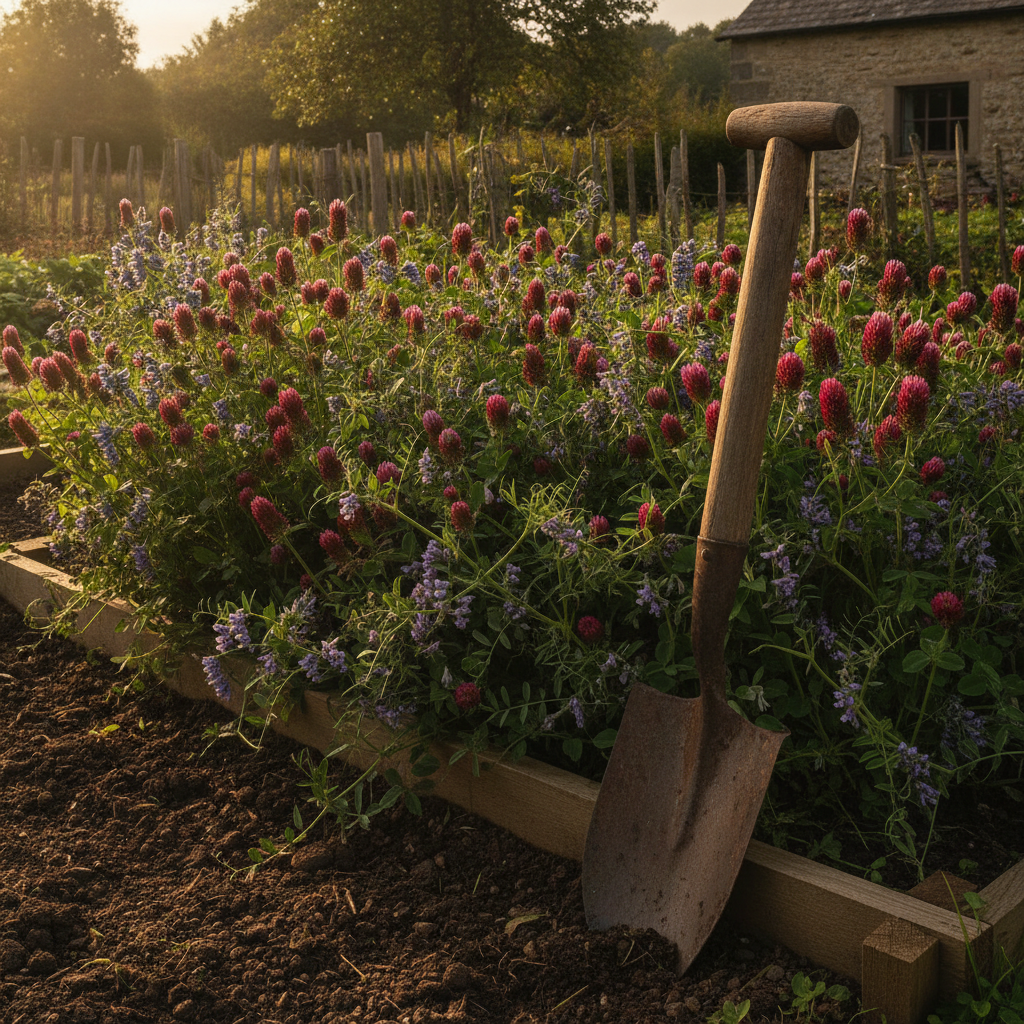
Crimson Clover is arguably the king of green manures. A legume, it hosts nitrogen-fixing bacteria in nodules on its roots. When you bury it, those nodules release up to 150 pounds of nitrogen per acre — enough to feed a heavy crop like corn or squash without any bagged amendment. It’s easy to establish, attractive to pollinators, and breaks down quickly after incorporation.
Buckwheat isn’t a legume, so it doesn’t fix nitrogen. But it suppresses weeds aggressively, breaks up compacted subsoil with its strong taproot, and decomposes so rapidly that you can plant into it within three weeks of turning it under. It’s perfect for filling a six-week gap between spring and fall plantings.
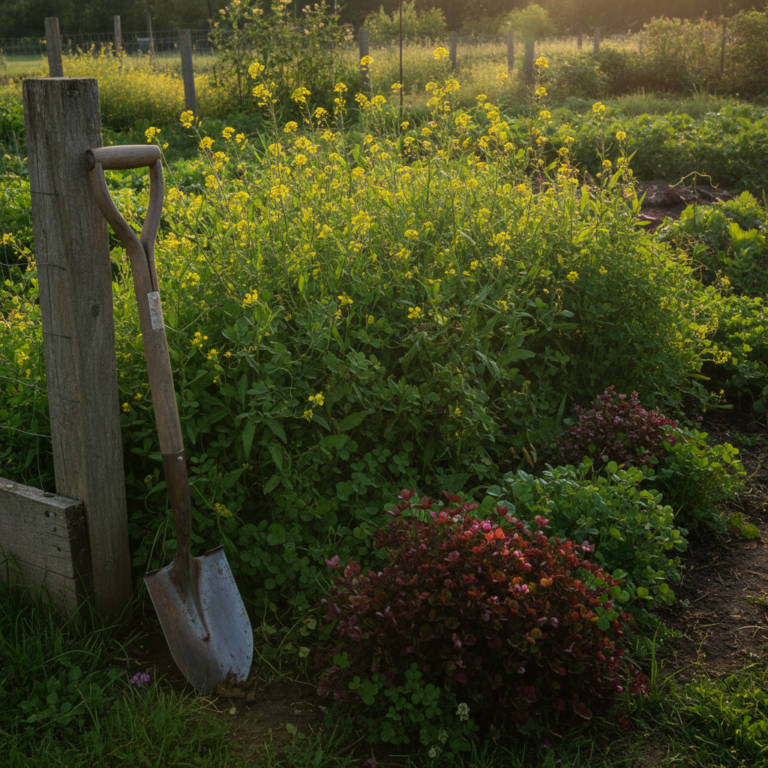
Fenugreek is lesser-known but beloved by old-school gardeners. It fixes modest amounts of nitrogen, produces abundant biomass quickly, and has deep roots that mine minerals from lower soil layers. It brings nutrients up that shallow-rooted cash crops can’t reach.
Fall and Cool-Season Options
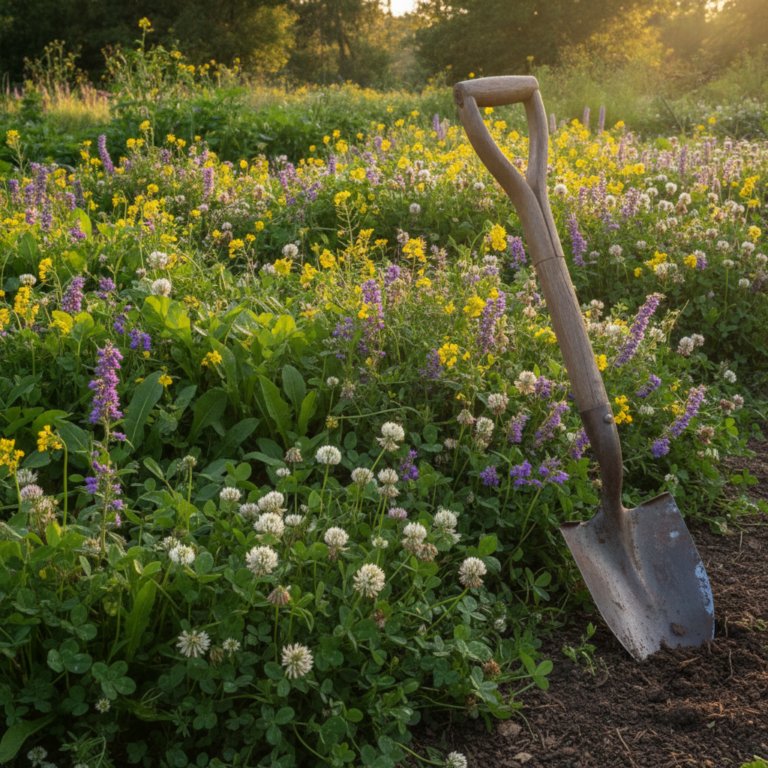
Hairy Vetch is cold-tolerant and enormously productive. Planted in early fall, it overwinters in most climates and can be turned under in spring just before your first vegetable planting. It fixes substantial nitrogen — sometimes over 200 pounds per acre — and its sprawling vines create a thick, weed-smothering mat.
Winter Rye is the backbone of many fall rotation plans. It isn’t a nitrogen fixer, but its dense root system stabilizes bare soil over winter, and its abundant carbon-rich biomass improves soil structure dramatically when turned under in spring. Pair it with hairy vetch for a nitrogen-plus-carbon combination that mimics what professional organic farmers use.
Field Peas are another excellent cool-season legume. They establish quickly, fix nitrogen efficiently, and die back naturally after a hard freeze — making spring incorporation easy.
Timing the Cut: When to Bury for Maximum Nitrogen Release
This is where most gardeners who try green manures get it wrong. They either wait too long or cut too early. Timing the cut-and-bury correctly is the real secret to making green manure crops work.
The golden window is just before or at early flowering. Here’s why: at early flower, the plant has accumulated its maximum amount of nutrients in its leaves and stems, but it hasn’t yet begun sending those nutrients into seeds. The tissue is still tender and high in nitrogen. It will decompose quickly and release nutrients within two to four weeks.
If you wait until the plant has set seed, two bad things happen. First, nutrient content drops as energy moves into seed production. Second, you risk spreading volunteer seedlings across your garden for years.
If you cut too early — say, when the plants are only six inches tall — you lose biomass and the full benefit of root development. Wait for that early flower signal. It’s your cue.
How Deep to Turn It Under
Four to six inches is the sweet spot for most home garden soils. Deeper than eight inches, and decomposition slows because oxygen levels drop. Shallower than three inches, and the material can dry out before microbes finish their work.
Use a garden fork or broadfork to turn the material under in sections. You don’t need a tractor. A good fork and thirty minutes will handle most garden beds. For tool recommendations that will actually last, see Tools That Grow with You: Durable Gear and Smart Maintenance for Every Skill Level.
The Waiting Period (And Why You Can’t Skip It)
After you turn under your green manure crops, you must wait. Most gardeners want to plant immediately, but fresh green material releases compounds as it breaks down that can temporarily inhibit seed germination. This is called allelopathy, and it’s temporary — but real.
Wait at least two to three weeks in warm weather (soil temperatures above 60°F) before seeding into freshly incorporated green manure. In cooler conditions, wait three to four weeks. You’ll know decomposition is complete when the buried material is no longer recognizable and the soil smells earthy and sweet rather than sour or fermented.
That waiting period is a great time to plan your next rotation, prep your seedlings, or tackle other garden tasks. If you want help structuring those in-between garden days productively, the The 60-Minute Garden: Quick, High-Impact Tasks for Beginners and Seasoned Growers is packed with ideas.
A Practical Green Manure Planting Calendar
Use this as a starting framework. Adjust by two to four weeks based on your climate zone. For deeper microclimate adjustments, Climate-Proof Your Crops: A 30-Day, Microclimate–Aware Planting Plan walks you through the process bed by bed.
Early Spring (March–April)
Sow field peas or fenugreek as soon as soil can be worked. These will establish quickly in cool conditions. Turn them under in late April or early May, just before summer planting begins.
Early Summer Gap (May–June)
After your spring harvest, sow buckwheat immediately. It establishes in one week and reaches early flower in four to six weeks. Turn it under by late June or early July. Plant fall crops two to three weeks later into noticeably improved soil.
Late Summer into Fall (August–September)
Sow crimson clover, hairy vetch, or a hairy vetch-and-winter-rye mix. This is your most powerful window. These crops overwinter, protect bare soil from erosion and compaction, and deliver a massive nitrogen boost when turned under the following spring.
The Key Principle: Never Leave Soil Bare
Every bare patch is a missed opportunity. Weeds colonize it. Rain compacts it. Sun bakes it. Green manure crops turn idle ground into a soil-building factory. Even a short-season buckwheat planting is better than bare earth for six weeks.
Why This Beats Most Bagged Soil Conditioners
Bagged composts and fertilizers deliver nutrients in a single shot. They don’t build soil structure, stimulate microbial communities, or contribute living root architecture. They are expensive, heavy, and must be purchased season after season.
A pound of crimson clover seed costs less than two dollars and can cover a hundred square feet. It fixes atmospheric nitrogen for free, feeds pollinators, suppresses weeds, contributes organic matter, and improves drainage — all before you’ve spent a dollar on fertilizer. That’s the math your grandparents understood instinctively.
When you combine green manure crops with other forgotten techniques — compost teas, rock dust, biochar — you begin to rebuild soil that genuinely doesn’t need much intervention year after year. The garden becomes self-sustaining rather than input-dependent.
Start Small, Start This Season
You don’t need to convert your entire garden at once. Pick one bed. When it clears after your current planting, sow buckwheat or crimson clover. Watch it grow. Cut it at first flower. Wait three weeks. Plant into it. Notice the difference.
That one experiment will teach you more than any book. And once you feel the difference in soil tilth, in how your seeds germinate, in how your transplants take hold — you won’t want to go back to bags.
The soil your grandparents grew in wasn’t magical. It was managed with techniques exactly like this one. Those techniques are still here, waiting for you to rediscover them.