Green Manure Crops: The Plow-Under Secret
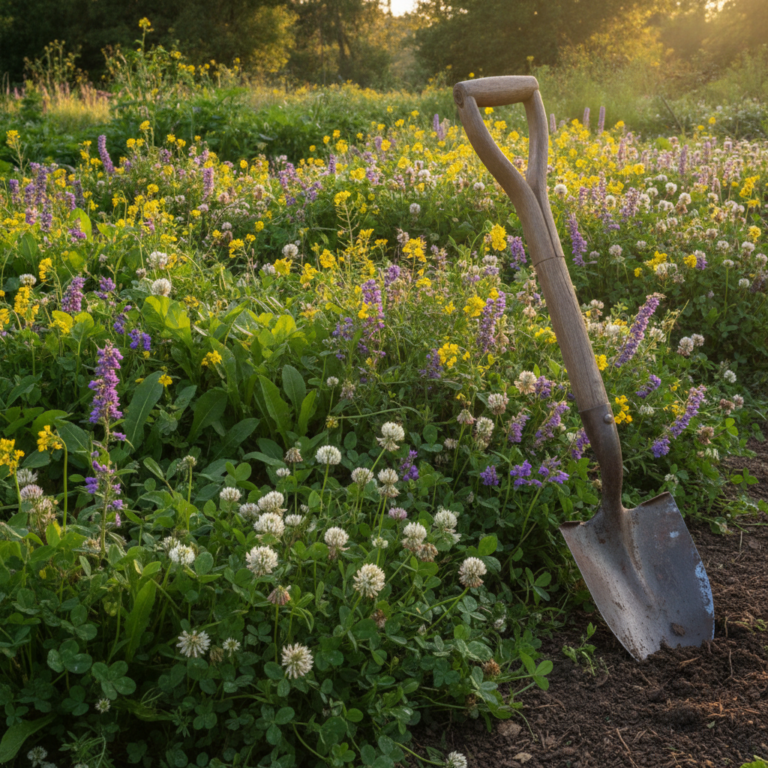
Before synthetic nitrogen came in a bag, farmers had a quiet secret. They grew certain crops not to harvest — but to bury. These green manure crops were planted specifically to be chopped down and dug into the soil while still green and lush. The result? Soil that fed itself, season after season, without a single dollar spent on amendments. This forgotten technique is one of the most powerful tools you can bring back into your home garden — and it costs almost nothing to start.
What Are Green Manure Crops, Exactly?
A green manure crop is any fast-growing plant that you grow purely to improve your soil. You don’t eat it. You don’t compost it in a pile. Instead, you cut it down at just the right moment and dig it directly into the ground beneath your feet.
As the plant material breaks down underground, it releases nutrients — especially nitrogen — right into the root zone where your future vegetables will need it most. It also adds organic matter, improves soil structure, and feeds the microbial life that makes healthy soil tick.
Think of it as feeding your soil a fresh, homegrown meal rather than a processed supplement. Your grandparents’ generation understood this deeply. Then synthetic fertilizers arrived in the mid-20th century, and the old rotation tricks quietly disappeared from most gardens.
It’s time to bring them back.
The Best Green Manure Crops for Home Gardeners
Not all cover crops are equal as green manures. Some fix nitrogen from the air. Others break up compacted soil. A few do both. Here are the most reliable options for home garden use.
Nitrogen-Fixing Legumes
These are your heavy hitters. Legumes form partnerships with soil bacteria that pull nitrogen straight from the atmosphere and store it in root nodules. When you bury the plant, all that stored nitrogen becomes available to your next crop.
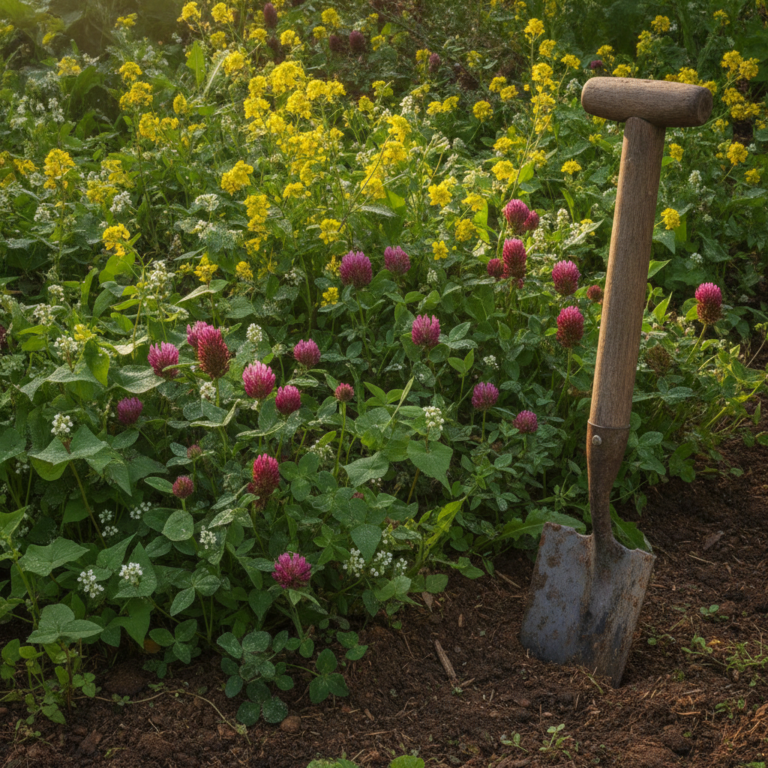
- Crimson clover — Fast-growing, stunning red blooms, excellent nitrogen fixer. Perfect for spring or fall planting.
- Hairy vetch — One of the highest nitrogen contributors of any cover crop. Tough, cold-hardy, and easy to establish.
- Field peas (Austrian winter peas) — Great for cooler seasons. Produces bulk organic matter quickly.
- Fava beans — Remarkable nitrogen fixers and cold-tolerant. Ideal for late summer planting before a spring main crop.
Soil-Building Non-Legumes
These crops don’t fix nitrogen, but they add enormous organic matter and break up compacted layers.
- Buckwheat — Fast-growing and smothers weeds beautifully. Ready to cut in just 5–6 weeks. Also scavenges phosphorus from the soil.
- Phacelia — An underrated gem. Decomposes incredibly fast after cutting. Pollinators love its flowers, too.
- Oats or winter rye — Excellent for fall planting. Produces a lot of biomass and suppresses weed seeds effectively.
If you’re still learning to read what your soil actually needs, check out Soil Sense Without the Lab: Read Your Dirt, Fix It Fast — it pairs perfectly with this approach.
Timing the Cut: Why It Matters More Than You Think
Here’s where most gardeners get it wrong. The timing of your cut-and-dig moment determines how much benefit you actually get from your green manure crops.
The golden rule: cut before the plant sets seed, ideally at first flower or just before. This is when nitrogen and nutrient levels in the plant tissue are at their peak. Once a plant goes to seed, it draws energy away from the leaves and stems — exactly the parts you’re burying.
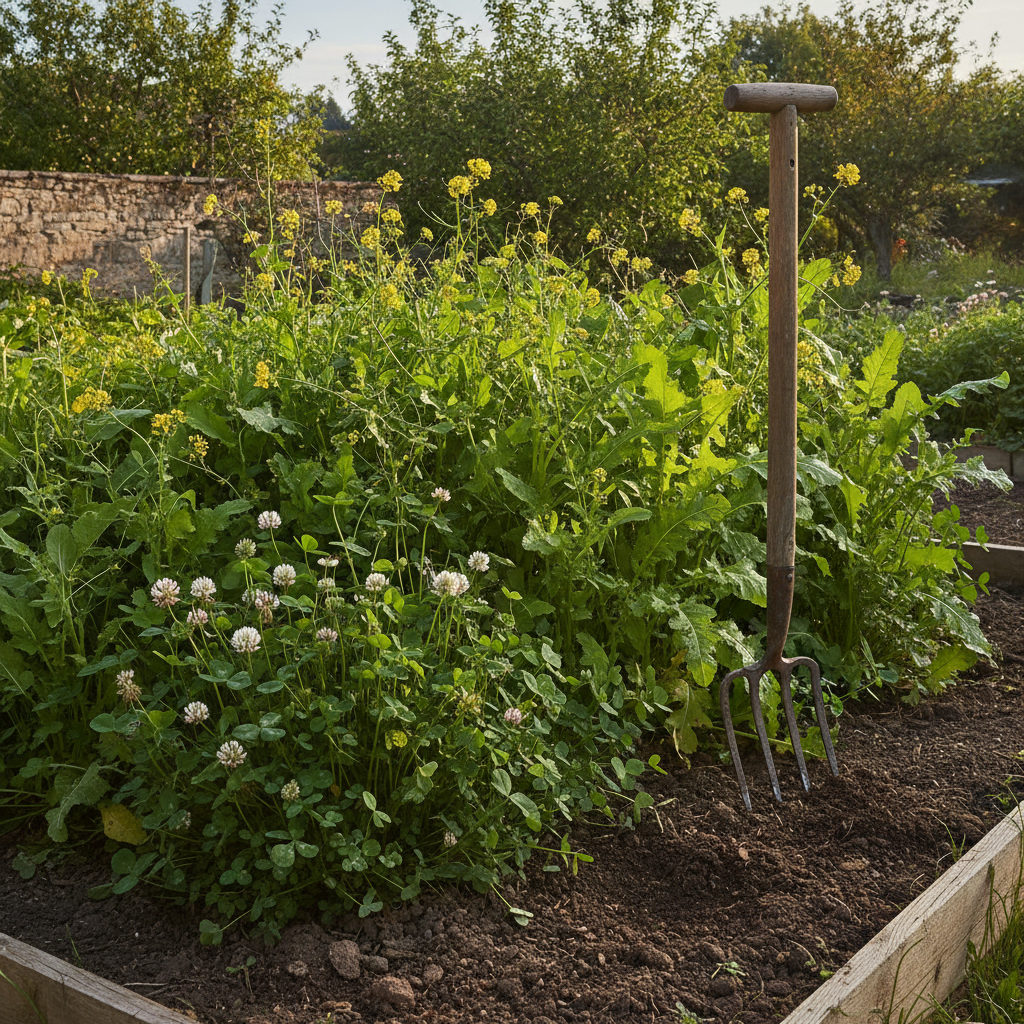
Cut the plants down to soil level with shears or a sickle. Then chop the material roughly with a spade and dig it 4–6 inches into the soil. Alternatively, you can use a broadfork to open the soil, lay the material in, and press it under without fully inverting the bed.
After burying, wait. This is the patience part.
Allow 2–4 weeks before planting your main crop. During this window, soil microbes go to work breaking down the green material and converting it into plant-available nutrients. If you plant too soon, the decomposing material can actually create nitrogen drawdown — temporarily locking up nutrients as microbes compete for them.
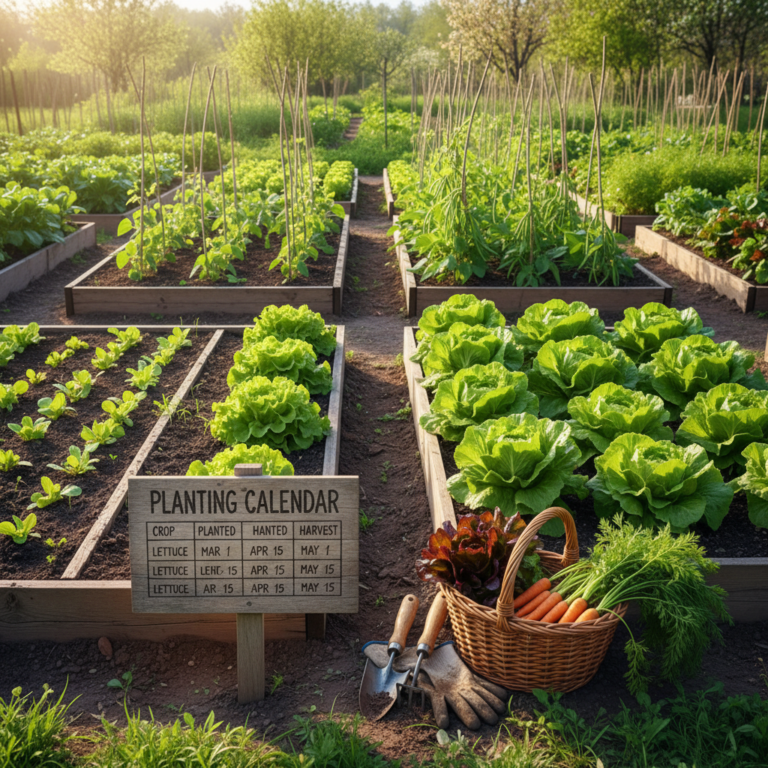
A Practical Green Manure Planting Calendar
This calendar works for temperate climates in the Northern Hemisphere. Adjust timing by 2–3 weeks based on your local frost dates. If you want a more detailed microclimate-aware planting approach, Climate-Proof Your Crops: A 30-Day, Microclimate–Aware Planting Plan is an excellent companion resource.
Early Spring (March–April)
Sow field peas or oats as soon as soil can be worked. These handle frost well. Cut and bury 6–8 weeks after sowing, around mid-May, before your warm-season transplants go in.
Late Spring / Early Summer (May–June)
Sow buckwheat or phacelia in any gap bed or fallow section. Ready to cut in 5–6 weeks. Perfect for preparing a bed that will receive fall brassicas or root vegetables.
Midsummer (July)
Sow crimson clover after harvesting early crops like garlic, peas, or spring greens. Clover will establish quickly in the heat and build nitrogen through late summer.
Late Summer / Early Fall (August–September)
Sow hairy vetch, winter rye, or fava beans. These overwintering crops fix nitrogen through fall, survive winter, and are cut and buried in early spring. This is one of the most powerful rotations available to a home gardener.
Fall into Winter (October–November)
In mild climates, sow field peas or crimson clover for late-season nitrogen building. In colder zones, let the winter rye or vetch overwinter undisturbed.
Why Green Manures Outperform Bagged Soil Conditioners
Store-bought soil amendments have their place. But they can’t replicate what a living plant does in your soil. Here’s the honest comparison.
A bagged nitrogen fertilizer delivers a single nutrient, quickly. Green manure crops deliver nitrogen plus carbon, plus living root exudates that feed soil biology, plus physical root channels that aerate compacted soil, plus weed suppression during their growing period. All of that at the cost of a small seed packet.
Furthermore, green manures build soil over time. Each cycle of grow-and-bury adds more organic matter, gradually increasing your soil’s water retention and nutrient-holding capacity. Bagged amendments don’t compound like that.
Old farming texts from the 1800s described this as “green dressing the land” — and farms using these rotations maintained productivity for generations without ever buying a bag of fertilizer.
Getting Started This Season
You don’t need a large garden or a farming background to use this technique. Even a single raised bed can benefit from one green manure rotation per year.
Start simple. After you pull out a finished crop this summer — your garlic, your spring peas, your early lettuce — don’t leave that bed bare. Sow buckwheat or phacelia immediately. Watch it grow for five weeks. Cut it. Dig it in. Wait two weeks. Then plant your next crop into visibly improved soil.
That one small action will teach you more about soil health than a hundred bags of fertilizer ever could. And if you want to track your results and compare seasons, Field Notes to Flourishing: Templates and Prompts to Track Growth, Mistakes, and Milestones gives you a practical system for doing exactly that.
The farmers who came before us weren’t lacking modern chemistry. They simply understood something we forgot: that the soil feeds the plant, and the plant — at the right moment — feeds the soil right back.
That loop is still available to you. It starts with a handful of clover seed and a spade.