Green Manure Crops: The Plow-Under Secret
Green Manure Crops: The Plow-Under Secret Your Grandparents Used Instead of Bagged Fertilizer
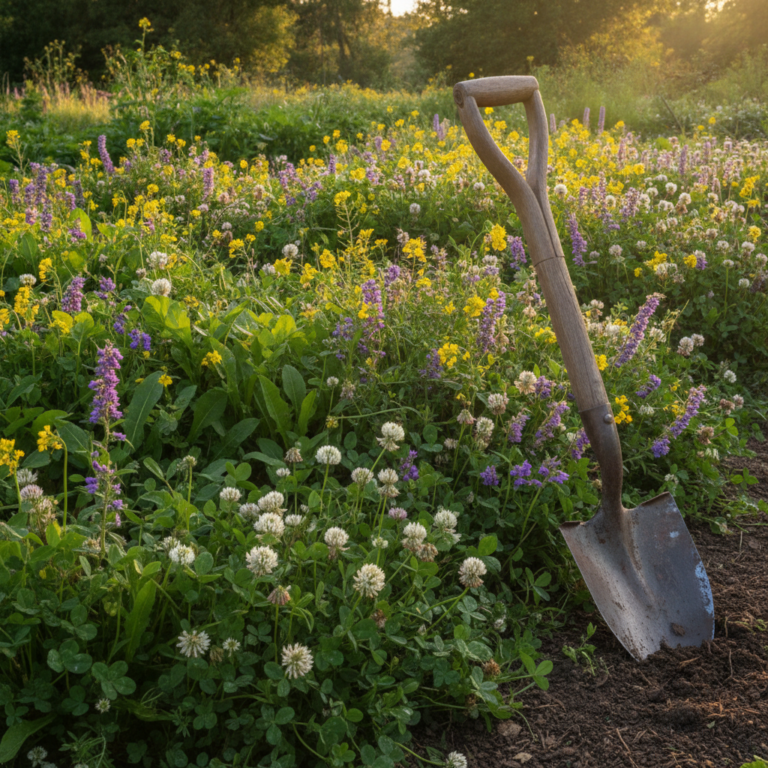
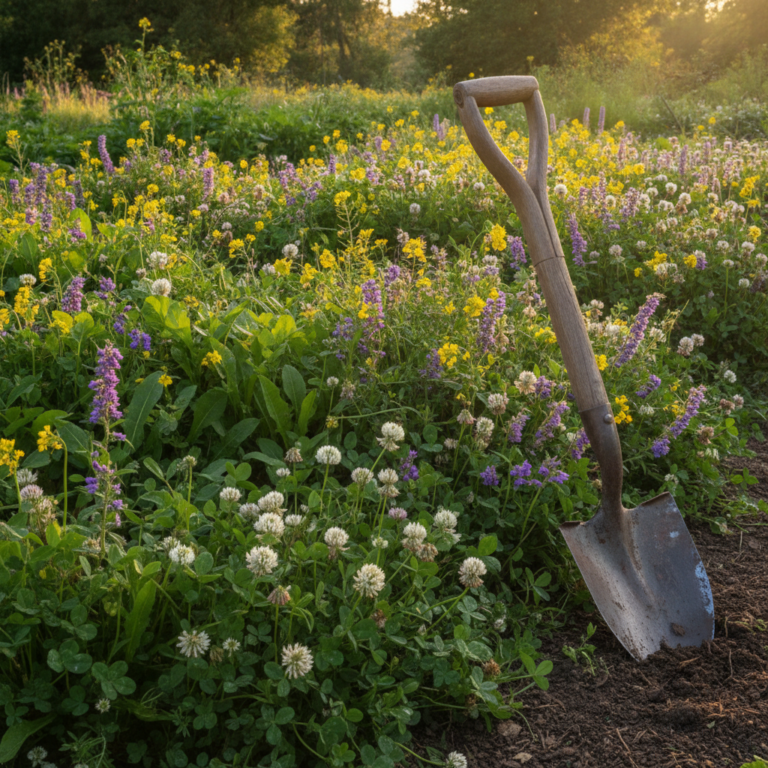
Before a single bag of synthetic nitrogen ever sat on a store shelf, farmers kept their soil rich and productive using green manure crops. They grew specific plants not to eat, but to cut down and bury — feeding the earth with living organic matter at exactly the right moment. It sounds almost too simple. But this forgotten technique built some of the most fertile farmland in history, and it can do the same for your backyard beds today.
If you’ve ever struggled with pale, tired soil that just doesn’t seem to support strong growth, this post is for you. We’re going to dig into which plants work best as green manures, how to time the cut-and-bury for maximum benefit, and how to build a practical planting calendar you can actually use this season.
What Are Green Manure Crops and Why Did Farmers Love Them?
A green manure crop is any plant grown specifically to be chopped down and dug into the soil while it’s still green and full of nutrients. It’s not the same as compost. You’re not hauling material in from elsewhere. Instead, you’re building fertility right where you need it — in the bed itself.
Farmers before the chemical era understood something we’ve largely forgotten. Healthy soil isn’t just a growing medium. It’s a living system. Green manures feed that system by adding:
- Nitrogen — especially from legumes that fix atmospheric nitrogen in their roots
- Organic matter — which improves soil structure, drainage, and water retention
- Microbial food — fresh green tissue is a feast for beneficial soil bacteria and fungi
- Root channels — deep-rooted varieties break up compaction and aerate subsoil
This is the kind of whole-system thinking that got buried — pun intended — when synthetic fertilizers made it easier to just rip open a bag. But easier isn’t always better, as any gardener who’s watched their soil turn grey and lifeless over the years knows too well.
If you haven’t yet tested what your soil actually needs, take a look at Soil Sense Without the Lab: Read Your Dirt, Fix It Fast before you start planning your green manure rotation. Knowing where you’re starting from makes everything else more targeted.
The Best Green Manure Crops for Home Gardeners
Not every plant makes a good green manure. The best choices are fast-growing, easy to cut, and break down quickly once turned in. Here are the top performers, grouped by what they do best.
Nitrogen Fixers (Legumes)
These are the stars of the green manure world. Legumes form a partnership with soil bacteria called rhizobia. Together, they pull nitrogen from the air and store it in root nodules. When you cut and bury the plant, all that stored nitrogen becomes available to your next crop.
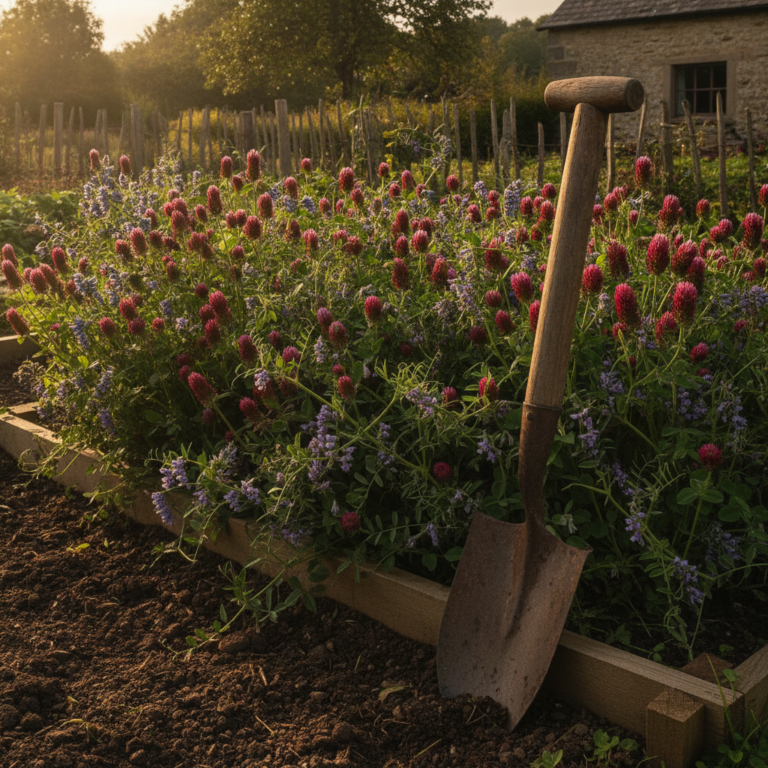
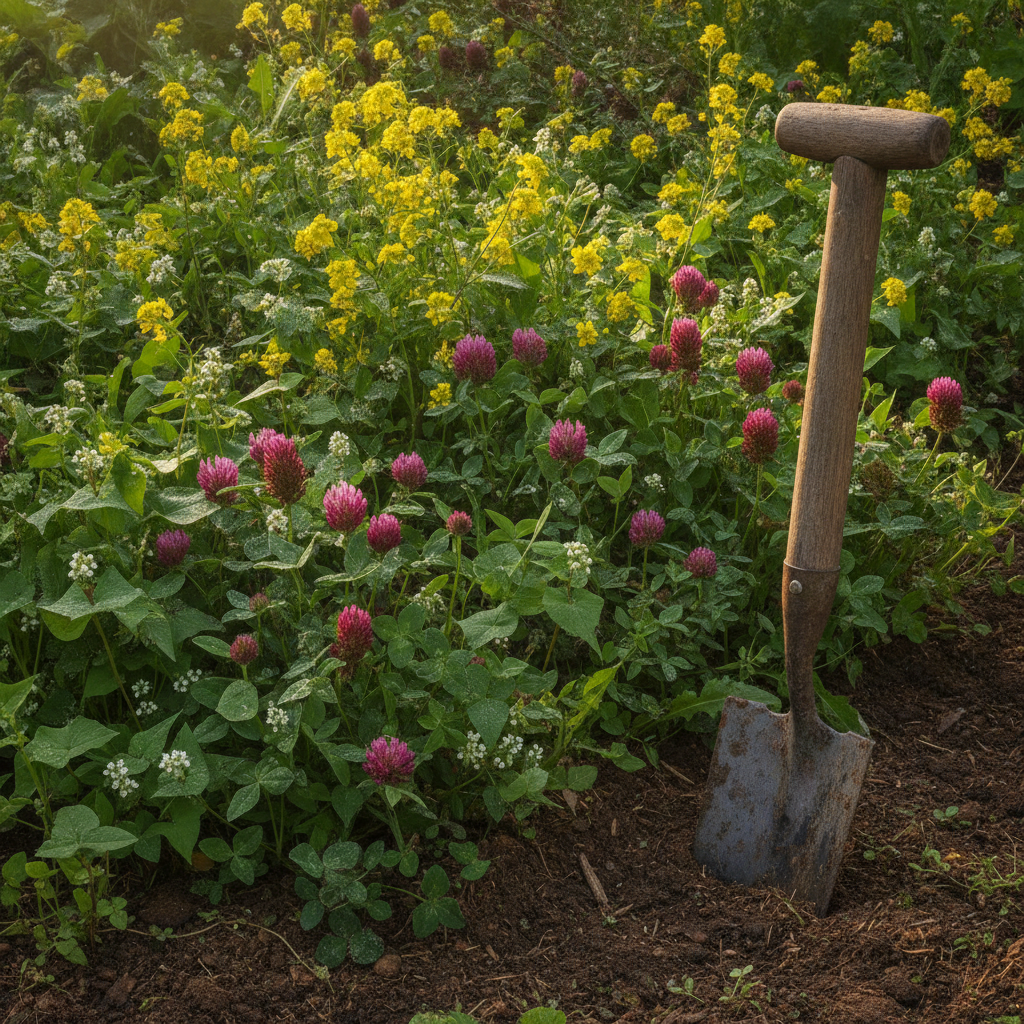
- Crimson clover — fast-growing, cold-tolerant, beautiful in bloom. Fixes up to 150 lbs of nitrogen per acre.
- Hairy vetch — incredibly hardy, perfect for fall planting. One of the highest nitrogen fixers available to home growers.
- Field peas — great for spring and fall use. Edible too, if you want a dual-purpose crop.
- Fenugreek — an old-world favorite that fixes nitrogen and adds pleasant aroma to the soil.
Organic Matter Builders
These plants don’t fix nitrogen, but they produce enormous volumes of biomass quickly. That bulk feeds soil life and dramatically improves structure.
- Buckwheat — grows from seed to flower in just 30 days. Scavenges phosphorus and suppresses weeds brilliantly.
- Oats — winter-killed in cold climates (which makes spring incorporation easy) and produces thick root mats.
- Phacelia — a European favorite that grows fast, attracts pollinators, and breaks down within two weeks of being turned in.
Deep Root Breakers
- Daikon radish — the taproot drills down 12 to 18 inches, shattering compacted layers. It winter-kills and leaves open channels behind.
- Mustard — also known for biofumigation. It releases compounds as it breaks down that suppress soil-borne diseases.
Timing the Cut: The Most Important Step Most Gardeners Miss
Growing green manure crops is the easy part. Cutting them at the right moment is where the real skill lies — and where most beginners leave a lot of nutrition on the table.
The golden rule is this: cut and turn your green manure just before or at the very start of flowering. Here’s why that timing matters so much.
As a plant flowers and sets seed, it draws nitrogen and other nutrients out of its leaves and stems to fuel reproduction. Essentially, the nitrogen you want in your soil starts migrating into seeds you’re going to chop up and bury. You lose the benefit.
Cut too early, when the plant is very young, and you haven’t built up enough biomass. Cut at early flowering and you hit the sweet spot — maximum nitrogen and organic matter, minimum carbon-to-nitrogen ratio, fast breakdown in the soil.
After cutting, chop the material finely with a spade or hoe. Then dig it into the top 4 to 6 inches of soil. Water lightly. Then wait. Most green manures need 2 to 4 weeks to break down before you plant into them. In warm weather, breakdown happens faster. In cool spring soil, give it a full month.
A Practical Green Manure Planting Calendar
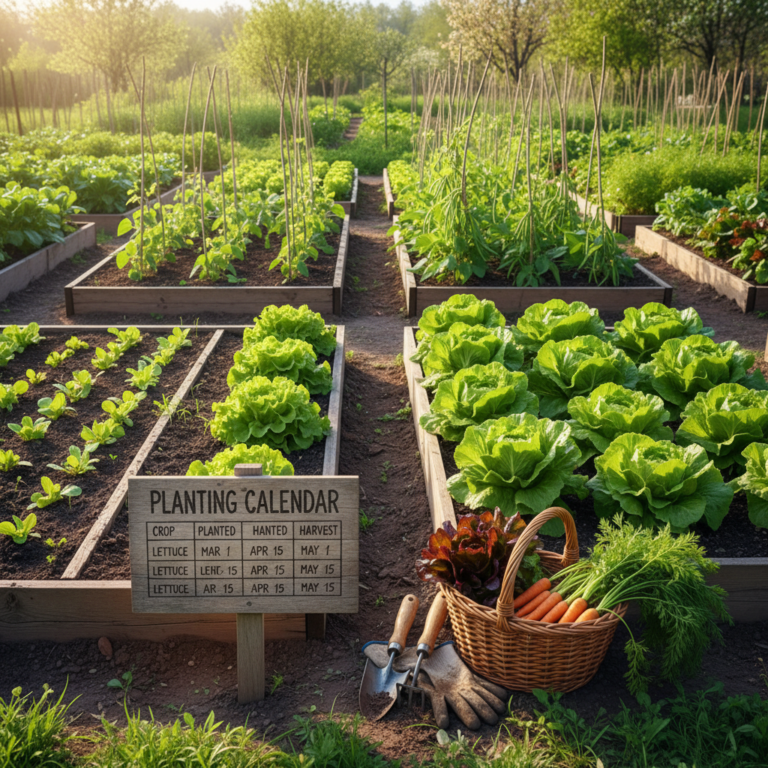
This calendar works for most temperate climates. Adjust timing based on your last and first frost dates. If you want to fine-tune it to your specific growing conditions, the guide at Climate-Proof Your Crops: A 30-Day Microclimate-Aware Planting Plan is an excellent companion resource.
Early Spring (March–April)
Sow field peas or crimson clover as soon as soil can be worked. These are cold-tolerant and will establish quickly. Cut and turn in May, 2 to 4 weeks before summer crops go in.
Early Summer (May–June)
After a spring crop is harvested or a bed becomes free, sow buckwheat. It matures in 30 to 45 days. Cut at first flower, turn in, and you can plant a second summer crop or fall brassicas into that bed within a month.
Late Summer to Fall (August–September)
This is the most important green manure window for most home gardeners. After summer vegetables finish, sow hairy vetch, winter rye, or oats. These will grow through autumn, winter-kill or overwinter depending on variety, and be ready to turn in the following spring.
Winter (October–February, cold climates)
Beds with winter-killed green manures (like oats or phacelia) simply rest. The frosted, softened material is easy to incorporate in spring. No digging required until planting time approaches.
Keeping track of what you sow, when you cut, and how each crop performed will sharpen your instincts enormously over time. The Field Notes to Flourishing: Templates and Prompts to Track Growth, Mistakes, and Milestones system is perfect for logging your green manure experiments season by season.
Why Green Manures Outperform Most Store-Bought Soil Conditioners
Here’s what a bag of granular fertilizer gives you: a measured dose of specific nutrients, available for a limited window, with no benefit to soil structure or microbial life.
Here’s what a well-timed green manure gives you: nitrogen, phosphorus, organic matter, improved drainage, enhanced microbial populations, suppressed weeds during the growing period, and roots that physically restructure compacted soil. The two aren’t even in the same category.
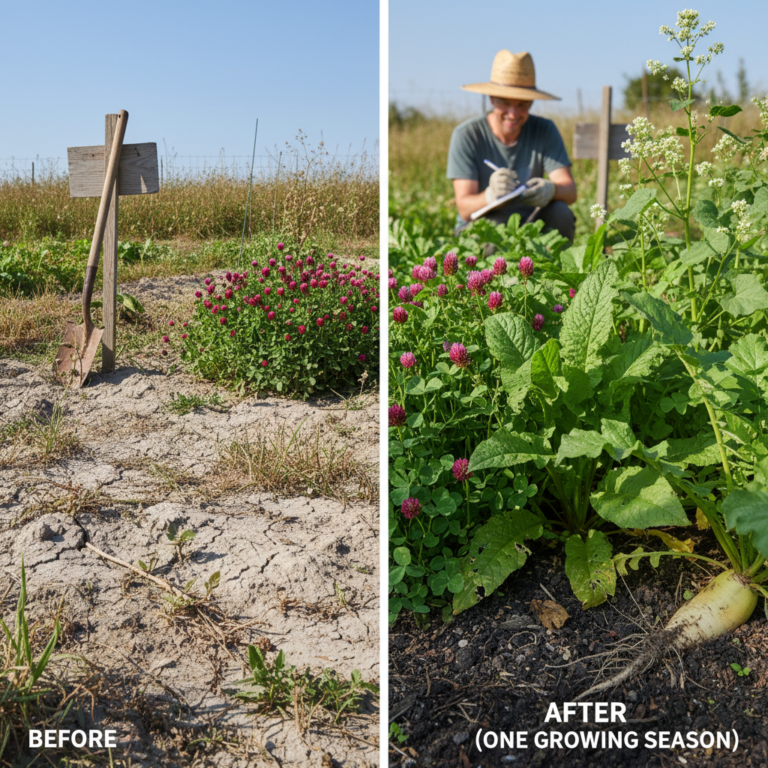
Synthetic nitrogen also carries hidden costs. It feeds plants but starves the fungi and bacteria that build long-term soil health. Over years and decades, chemically fertilized soil often becomes more dependent on inputs, not less. Green manure crops work in the opposite direction. Each rotation builds on the last, making your soil progressively richer with less work and no cost.
That cumulative effect is exactly what old-time farmers relied on. It’s what allowed certain family farms to grow food on the same land for generations without the soil giving out.
Getting Started This Season — No Experience Required
You don’t need a large plot or years of experience to try green manures. Even a single raised bed can become a test plot. If you have a bed finishing up in the next few weeks, that’s your starting point.
Pull the spent plants. Loosen the soil surface lightly. Scatter buckwheat or crimson clover seed at the rate of about one ounce per ten square feet. Rake it in shallowly, water, and watch it grow. In four to six weeks, you’ll have a thick mat of green material ready to cut and bury. Then plant into it a month later.
That one small experiment will show you more about living soil fertility than any bag of amendments ever could.
If you’re newer to gardening and want to build your skills step by step alongside techniques like this, Smart Starts: A 4-Week Skill-Build Plan for Complete Garden Beginners gives you a solid foundation to grow from.
The Bottom Line on Green Manure Crops
Farmers used green manure crops for thousands of years because they worked reliably, cost almost nothing, and improved the land with every passing season. That wisdom didn’t become outdated when synthetic fertilizers arrived. It just got buried — in the marketing of easier alternatives.
The good news is that the knowledge is still here. The seeds are still available. And your soil is still ready to respond.
Pick one bed. Choose one crop. Turn it under once. And see what your soil tells you.