Green Manure Crops: The Plow-Under Secret
Before the first bag of synthetic nitrogen ever hit a store shelf, farmers already knew how to grow rich, productive soil season after season. Their secret? Green manure crops — living plants grown specifically to be chopped down and buried, feeding the earth with fresh organic matter and naturally fixed nitrogen. It sounds almost too simple. That’s exactly why modern agriculture walked right past it.
If you’re tired of spending money on bagged amendments that give your soil a short-term boost and nothing more, this old-time technique is worth your full attention. This post will show you which plants work best as green manures, how to time the plow-under for maximum nitrogen release, and how to build a practical planting calendar you can start using this season.
What Are Green Manure Crops, Exactly?
A green manure crop is any plant grown not to harvest and eat, but to dig back into the soil while it’s still green and nutrient-dense. The term “green” doesn’t just describe the color — it means the plant is turned under fresh, before it dries out or goes fully to seed.
Farmers have used this practice for thousands of years. Ancient Roman writers documented it. Chinese farmers built entire crop rotation systems around it. Even your great-grandparents likely grew a patch of clover or rye every few years specifically to rest and rebuild their kitchen garden beds.
The magic happens underground. When you bury fresh plant matter, soil microbes go to work breaking it down. That biological activity releases nitrogen, phosphorus, and trace minerals directly into the root zone. You’re essentially feeding the soil food web — the microscopic community that makes your garden tick.
Want to understand your soil’s current condition before you plant anything? Check out Soil Sense Without the Lab: Read Your Dirt, Fix It Fast — it’ll help you see exactly what your soil needs most right now.
The Best Green Manure Crops for Home Gardens
Not all cover crops double as effective green manures. The best ones are fast-growing, biomass-heavy, and easy to turn under by hand or with basic tools. Here are the top performers for home gardeners.
Crimson Clover
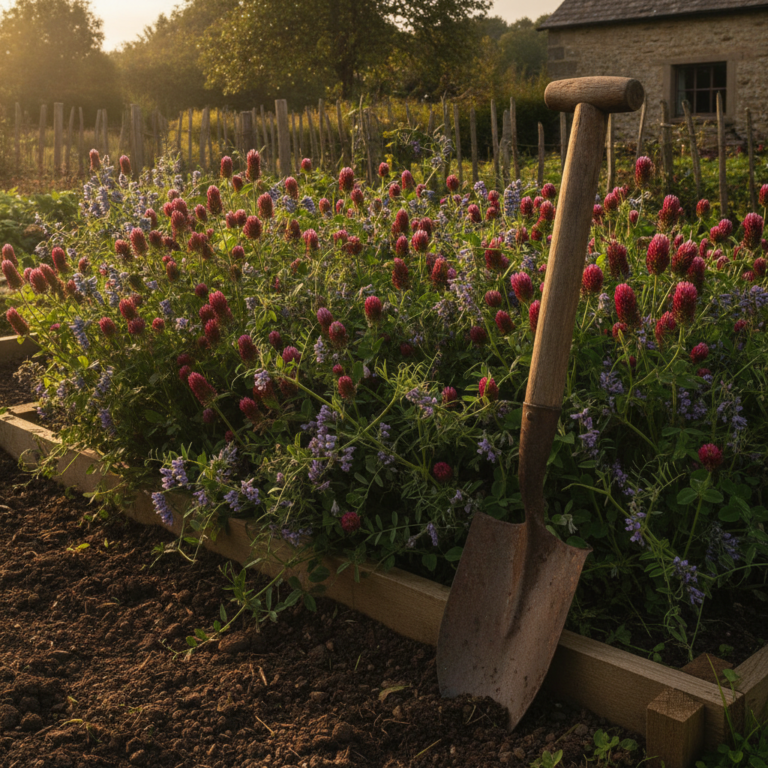
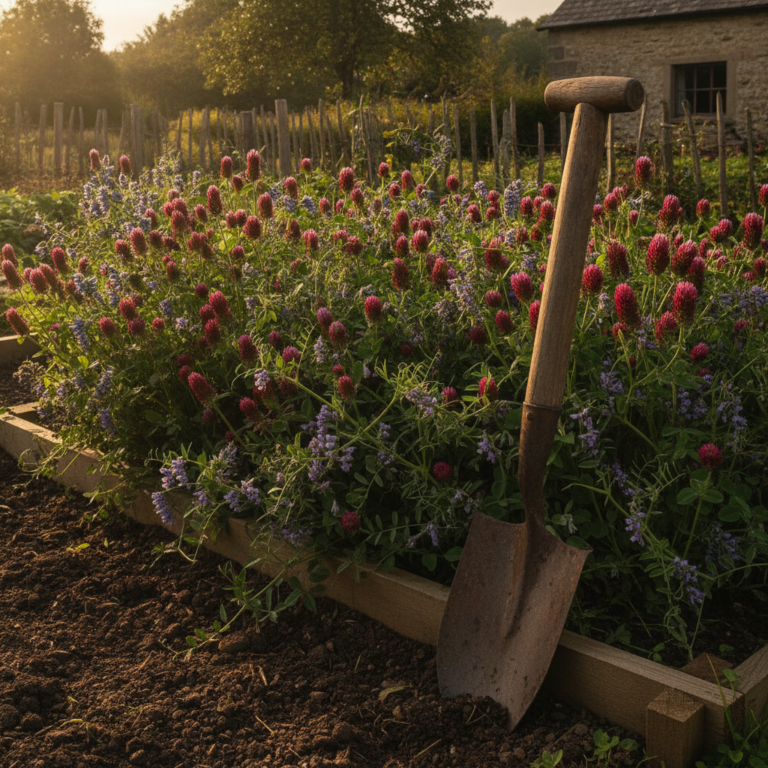
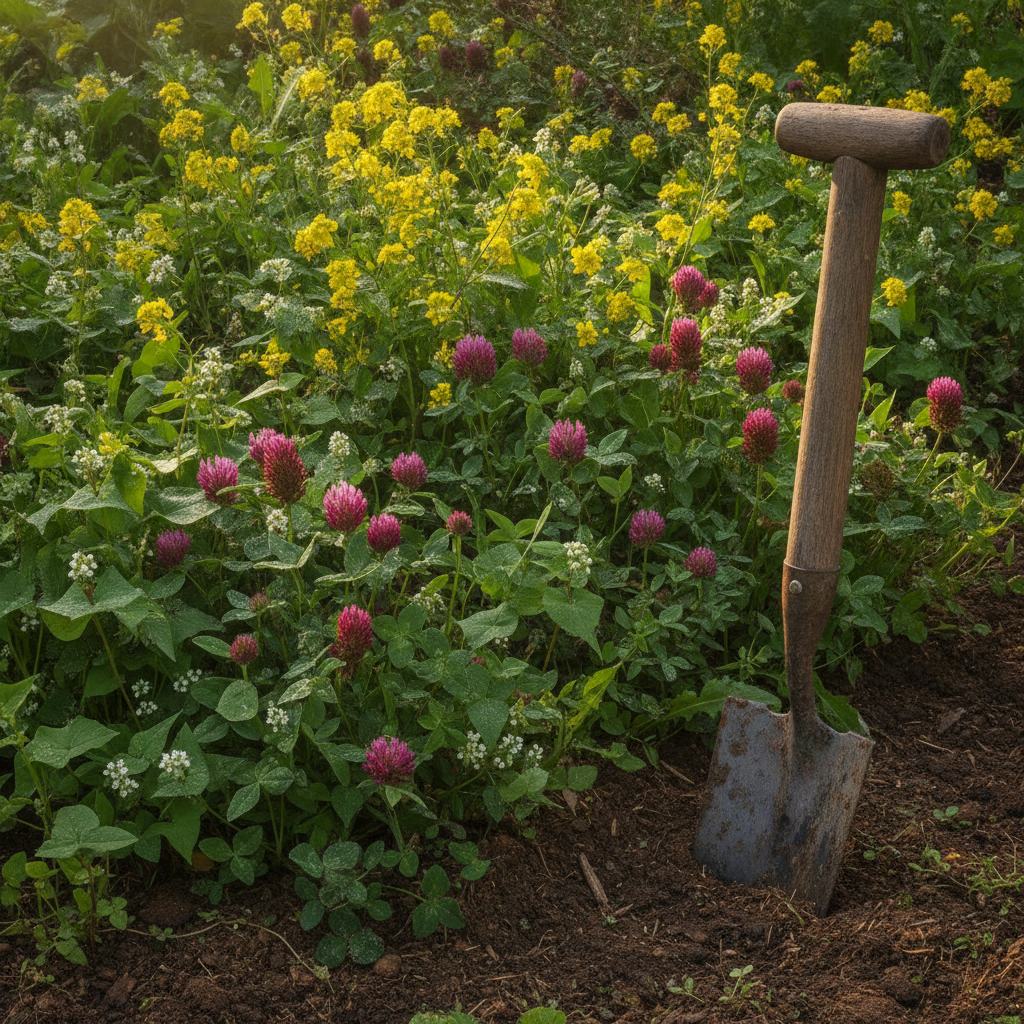
Crimson clover is arguably the most beloved green manure for good reason. As a legume, it hosts nitrogen-fixing bacteria on its roots. When you turn it under, those nitrogen nodules release directly into the soil. It’s easy to establish, grows quickly, and produces stunning red flowers if you let it bloom — though you’ll want to cut it just before or at first bloom for peak nitrogen content.
Best timing: Plant in early spring or late summer. Turn under 4–6 weeks after planting, just as flowers open.
Buckwheat
Buckwheat is the speed demon of green manures. It germinates within a few days and reaches cutting height in just 30–40 days. It’s not a nitrogen fixer, but it excels at mining phosphorus from subsoil and making it available to future crops. It also suppresses weeds aggressively, which is a bonus.
Best timing: Plant anytime after your last frost. Turn under at first flower for best soil benefit.
Field Peas (Winter Peas)
Field peas are cool-season legumes that fix generous amounts of nitrogen. They’re ideal for early spring or fall planting and can handle light frosts. They bulk up fast and add good organic matter when turned under.
Best timing: Plant 6–8 weeks before your first fall frost, or in early spring. Turn under before pods fully develop.
Winter Rye
Winter rye is not a nitrogen fixer, but it produces enormous amounts of biomass. A dense stand of rye builds soil structure, prevents erosion, and adds carbon-rich organic matter when turned under. It’s best paired with a legume like vetch for a complete nitrogen-plus-carbon green manure combination.
Best timing: Sow in fall. Turn under in spring when stems are still soft, about 2–3 weeks before planting.
Hairy Vetch
Hairy vetch is a nitrogen-fixing powerhouse. It can fix up to 200 pounds of nitrogen per acre under good conditions. For a home gardener, even a small patch will dramatically improve a tired bed. It’s winter-hardy and pairs beautifully with winter rye as a mixed green manure.
Best timing: Sow in fall. Turn under in spring when 50–75% is in bloom.
How to Time the Cut-and-Dig for Maximum Nitrogen
Timing is everything with green manure crops. Turn them under too early, and you haven’t built enough biomass. Wait too long, and the plant matter becomes woody and slow to decompose — locking up nitrogen instead of releasing it.
The golden rule: turn under at or just before peak flowering. This is when the plant has its highest concentration of nutrients and the softest stem tissue, which decomposes rapidly.
Here’s a simple step-by-step for the plow-under process:
- Cut the crop at soil level with a sharp hoe or scythe. Chop stems into smaller pieces if possible — smaller pieces decompose faster.
- Let it wilt for 24–48 hours on the surface. This reduces bulk and begins the breakdown process.
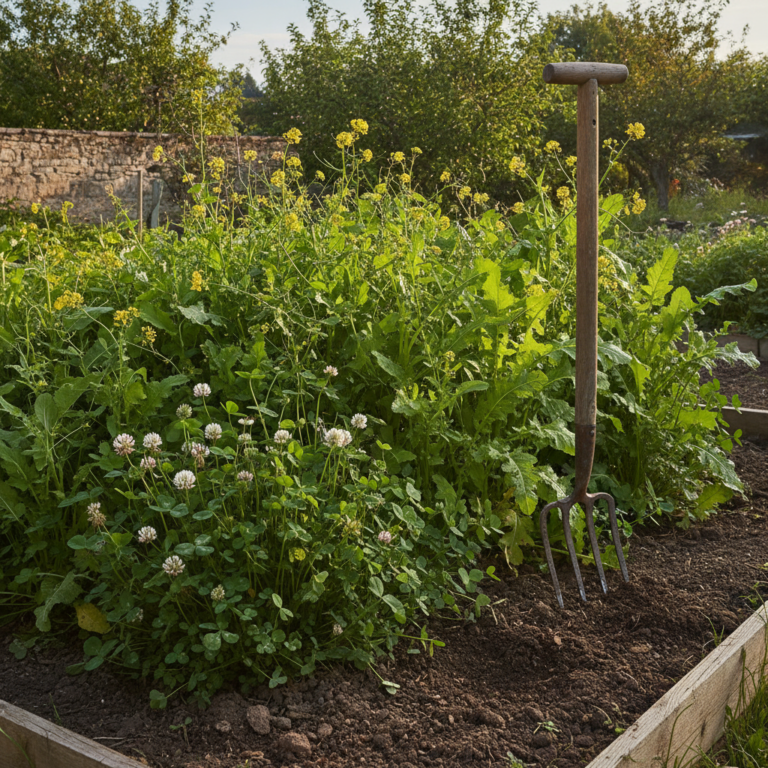
- Dig or till it in to a depth of 4–6 inches. Deeper isn’t always better — you want it in the active root zone, not buried below microbial activity.
- Wait 2–4 weeks before planting your next crop. This allows decomposition to complete and prevents the fresh organic matter from competing with seedlings for nitrogen during the initial breakdown phase.
If you need the bed sooner, you can speed things up by adding a small amount of finished compost on top after turning. The active microbes from the compost jump-start decomposition quickly.
Your tools matter here too. A good sharp spade makes the turn-under much easier. See Tools That Grow with You: Durable Gear and Smart Maintenance for Every Skill Level for guidance on what’s worth investing in.
Why Green Manure Crops Outperform Bagged Soil Conditioners
Bagged amendments have their place. But here’s the honest truth: most of them give your soil a single nutrient hit and nothing more. Green manure crops do something fundamentally different — they feed the entire soil ecosystem.
When you bury living plant matter, you’re adding:
- Nitrogen from legume root nodules
- Carbon from plant stems and leaves — the long-term food source for soil microbes
- Root channels that improve drainage and aeration
- Mycorrhizal activity stimulated by fresh organic input
- Weed suppression during the growing phase
No bag of granular fertilizer can replicate that list. And the cost? A packet of clover or vetch seed costs less than two dollars and covers a substantial bed.
This fits beautifully into a broader approach to climate-resilient gardening. If you haven’t mapped your growing conditions yet, Climate-Proof Your Crops: A 30-Day, Microclimate–Aware Planting Plan is a smart companion read.
A Practical Green Manure Planting Calendar
Here’s a simplified seasonal guide to get you started. Adjust timing based on your climate zone.
Spring (After Last Frost)
- Sow buckwheat or crimson clover in empty beds
- Turn under 4–6 weeks later, before main-season planting
Early Summer (After Cool-Season Crops)
- Sow buckwheat in freshly cleared beds
- Turn under in 30–40 days, then plant heat-lovers like squash or beans
Late Summer (After Harvest)
- Sow field peas or crimson clover as beds empty out
- Turn under in fall before first hard freeze, or let overwinter and turn in spring
Fall (6–8 Weeks Before First Frost)
- Sow winter rye mixed with hairy vetch for a combined carbon-nitrogen green manure
- Turn under in spring when vetch is 50–75% in bloom
- Wait 3 weeks, then plant your spring garden
This rotation approach keeps your soil working year-round — never bare, never depleted. It’s the closest thing to free fertility you’ll find in a garden.
If you’re building out a fuller skill base alongside your soil-building practices, Layered Learning: A Gardener’s Progressive System That Grows with You is worth bookmarking.
Getting Started This Season
You don’t need to overhaul your entire garden to try this. Start with one bed. Sow a handful of crimson clover or buckwheat seed. Watch it grow. Then cut and bury it four weeks later. Observe what that bed looks like — and how your plants perform — compared to one you didn’t treat.
That single experiment will tell you more about your soil than a year of reading. Green manure crops aren’t a complicated system. They’re a return to something that worked long before any of us started gardening. Your grandparents knew it. Now you do too.
The soil doesn’t need more chemicals. It needs more life. And sometimes, the most powerful thing you can grow is something you plan to bury.