Green Manure Crops: The Plow-Under Secret
Before synthetic nitrogen existed, farmers had a quiet trick that kept their soil rich, their crops productive, and their input costs at zero. They grew green manure crops — specific plants cultivated purely to be chopped down and buried while still green. No bags to buy. No chemicals to mix. Just living plants folded back into the earth, releasing a slow feast of nutrients as they decompose. If you’ve been spending money on store-bought soil amendments and still feel like your garden soil is just getting by, this forgotten technique might be exactly what you’ve been missing.
What Are Green Manure Crops, Exactly?
Green manure crops are fast-growing plants sown directly into a garden bed with one goal: to be turned under before they set seed. Unlike mulch or compost, which are applied from outside the system, green manures grow in your soil and feed it from within.
The concept is simple. Plants pull carbon from the air and nutrients from the soil. When you bury them while still young and green, that captured energy returns to the soil in a form that soil microbes can quickly break down. The result is a burst of organic matter, improved soil structure, and — depending on the plant — a significant release of nitrogen.
This is not a fringe idea. It is one of the oldest and most widely practiced soil-building techniques in agricultural history. Farmers in ancient Rome, China, and across the Middle East all used versions of this method. Modern organic growers are quietly bringing it back — and for very good reason.
If you’re still getting to know your soil’s personality, it helps to start by reading what your soil is already telling you. Check out Soil Sense Without the Lab: Read Your Dirt, Fix It Fast before you plant your first green manure. Understanding your baseline makes the results even more rewarding.
The Best Green Manure Crops for Home Gardeners
Not all cover crops function equally as green manures. Some are primarily nitrogen-fixers. Others add bulk organic matter or break up compacted soil with deep roots. The best choice depends on your season, your soil, and your goals.
Legumes: The Nitrogen Fixers
Legumes are the stars of the green manure world. They work with soil bacteria called rhizobia to pull nitrogen directly from the air and store it in root nodules. When you bury them, that nitrogen becomes available to your next crop.
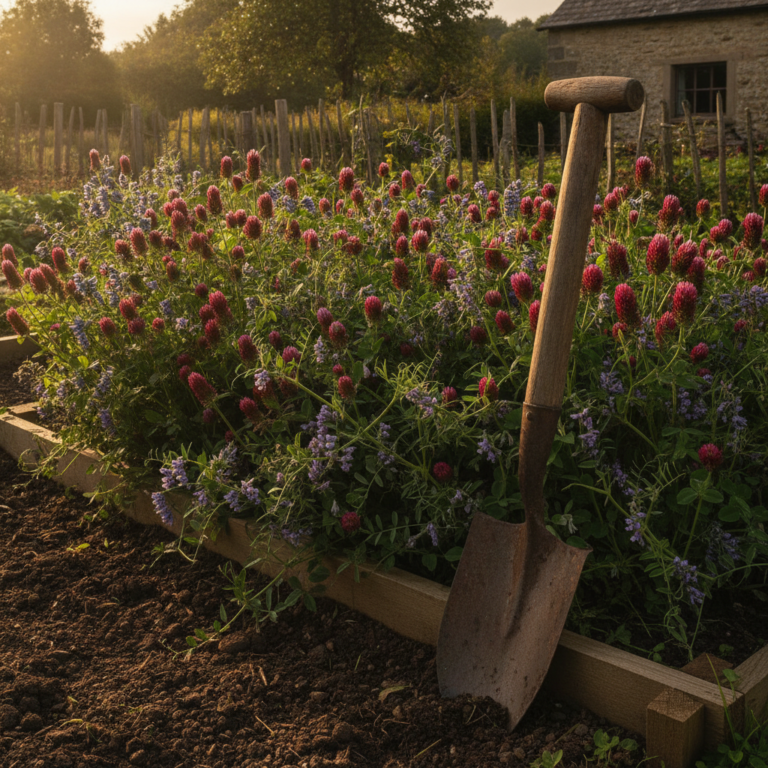
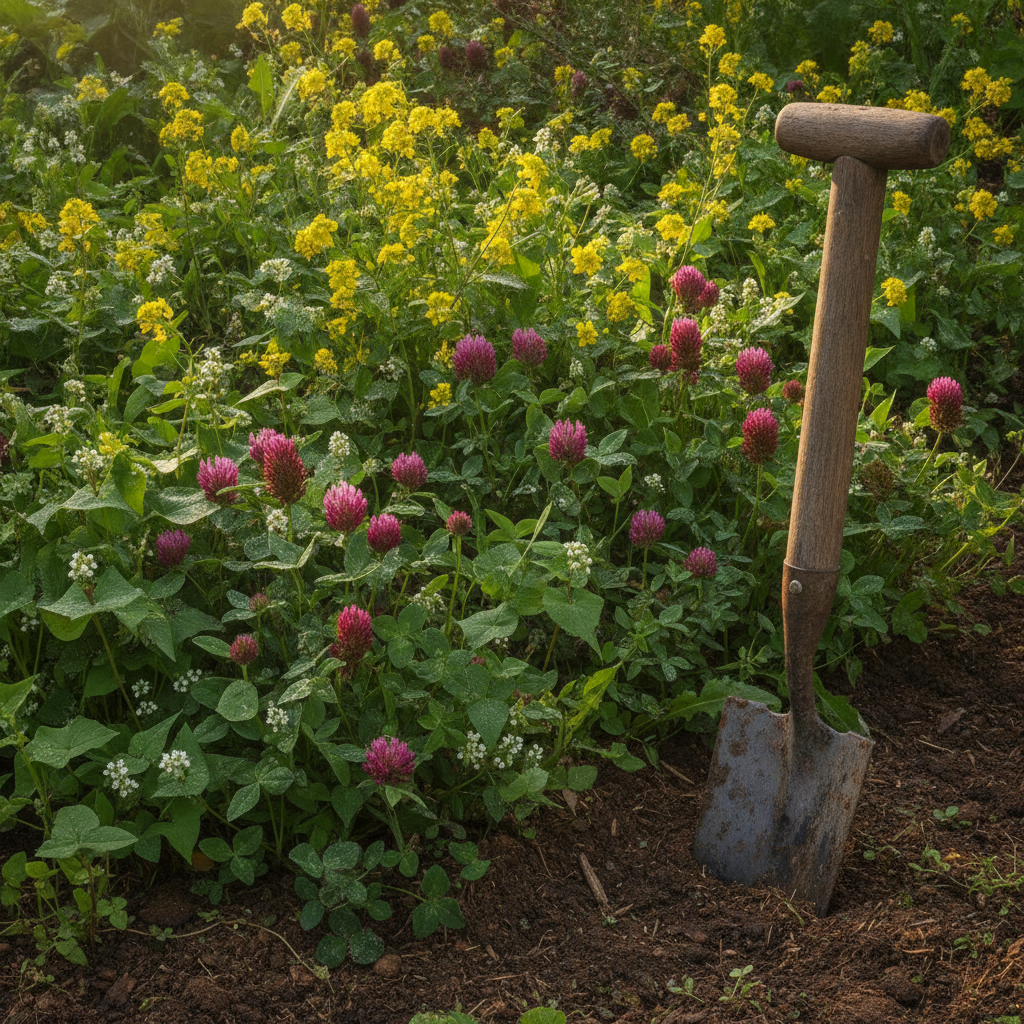
- Crimson clover — A beautiful, fast-growing annual that fixes up to 150 lbs of nitrogen per acre. Excellent for spring or fall planting.
- Hairy vetch — One of the most nitrogen-rich green manures available. Hardy, vigorous, and ideal for overwintering in most climates.
- Field peas (winter peas) — Quick-growing and easy to manage. Adds nitrogen and plenty of soft organic matter when turned under.
- Fava beans — Deep-rooted and cold-tolerant. An excellent winter green manure in mild climates.
Non-Legumes: Organic Matter Builders
These crops don’t fix nitrogen, but they build soil structure and suppress weeds with impressive efficiency.
- Buckwheat — A summer standout. It grows fast, smothers weeds, attracts pollinators, and adds soft, easily decomposed organic matter. Ready to turn under in just 5–6 weeks.
- Oats — A cold-season workhorse. Oats winter-kill in most climates, leaving behind a mat of organic matter that breaks down slowly through spring.
- Phacelia — Less well known but wildly effective. Phacelia decomposes rapidly, adds high-quality organic matter, and its flowers are beloved by beneficial insects before you cut them down.
- Mustard — Has the added benefit of acting as a biofumigant, releasing compounds that suppress soilborne diseases and nematodes as it decomposes.
Timing the Cut: When to Plow Under for Maximum Nitrogen
Here is where most gardeners leave results on the table. Timing is everything with green manure crops. Cut too late, and the stems become woody and carbon-heavy — slowing decomposition significantly. Cut too early, and you haven’t built enough biomass to make a difference.
The sweet spot is just before or at the very start of flowering. At this stage, the plant has built maximum leaf and stem mass, but the tissue is still soft, green, and nitrogen-rich. Soil microbes can break it down quickly, releasing nutrients just when your next crop needs them most.
As a general rule, allow two to four weeks between turning under and planting your next crop. This gives microbes time to begin decomposition and prevents the raw organic matter from creating a temporary nitrogen drawdown as it breaks down.
In practice, here is what the timing looks like:
- Sow your green manure crop in the window between crops (more on this below).
- Monitor growth. Watch for the first flower buds to form.
- Cut or mow the crop down to soil level.
- Chop the material into smaller pieces with a spade or sharp hoe.
- Dig or fork it into the top 6–8 inches of soil.
- Water well and leave it alone for 2–4 weeks before planting.
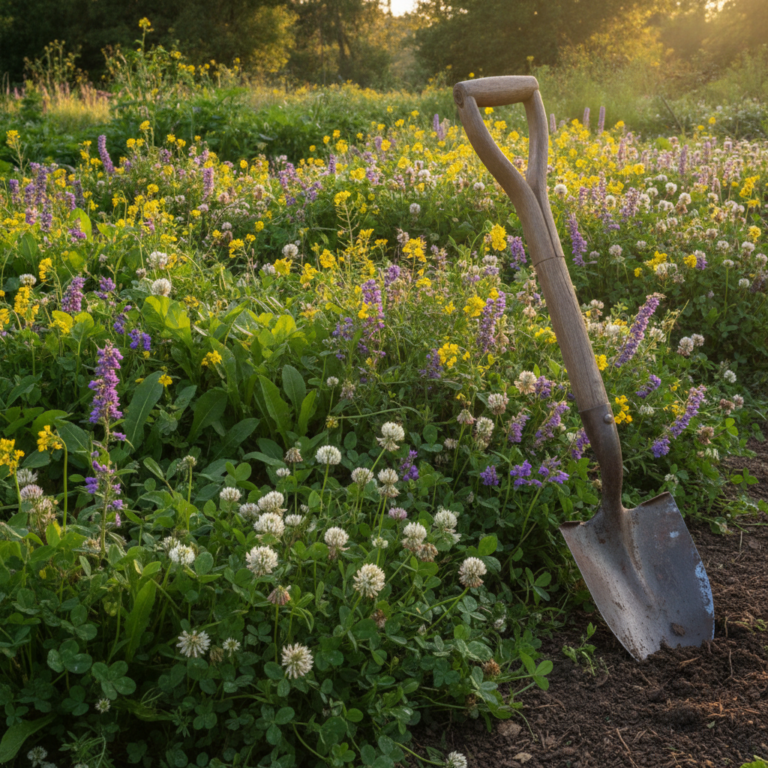
If you’re working with raised beds or small plots, a sharp spade works beautifully. You don’t need a plow. This is genuinely doable in an afternoon — and if you want to make the most of every hour in your garden, the The 60-Minute Garden framework will show you how to fit tasks like this into a busy schedule without feeling overwhelmed.
A Practical Planting Calendar for Green Manure Crops
One of the beauties of this technique is that it slots neatly into the gaps that already exist in your growing season. Every garden has windows — between a spring crop and a summer one, after tomatoes come out in fall, or in a bed resting over winter. Those windows are your green manure opportunities.
Spring (March–May)
Sow crimson clover, field peas, or oats as soon as the soil is workable. These establish quickly in cool soil. Turn them under 4–6 weeks later, then wait 2 weeks before transplanting warm-season crops like tomatoes or peppers.
Early Summer (May–June)
Sow buckwheat in any empty bed. It germinates in 3–5 days, establishes fast, and can be turned under in as little as 5 weeks. Perfect for filling gaps before a fall crop goes in.
Late Summer (July–August)
After harvesting early crops, sow phacelia or mustard. Both grow well in warm soil and can be turned under in late September before fall brassicas or garlic are planted.
Fall (September–October)
Sow hairy vetch or winter field peas for an overwintering green manure. These establish before frost, go dormant, then surge back in spring. Turn them under in April–May for a massive nitrogen boost before your main growing season.
Winter (November–February)
In mild climates, fava beans can be sown in autumn and grown through winter. In cold climates, let oats winter-kill naturally — they leave behind a residue that protects the soil surface and breaks down by spring without any digging required.
Pairing this calendar with a microclimate-aware planting approach takes results even further. If certain beds warm up faster or stay wetter, you can fine-tune which green manure goes where. The guide at Climate-Proof Your Crops: A 30-Day, Microclimate–Aware Planting Plan is an excellent companion to this calendar.
Why Green Manure Crops Outperform Most Store-Bought Amendments
Bagged fertilizers deliver nutrients in a single shot. Green manures build the soil’s entire ecosystem over time. There is a meaningful difference between feeding your plants and feeding your soil — and this technique does the latter far more effectively.
When you turn under a nitrogen-rich legume, you’re not just adding nitrogen. You’re adding carbon, microbial food, physical structure, water retention, and biological diversity all at once. A bag of 10-10-10 fertilizer cannot do any of that.
Furthermore, the nutrients released by decomposing green manure are held in organic form and released slowly — following the plant’s own rhythm rather than flooding the soil all at once and leaching away. This is precisely how pre-synthetic farmers maintained fertility across generations without a single trip to the garden center.
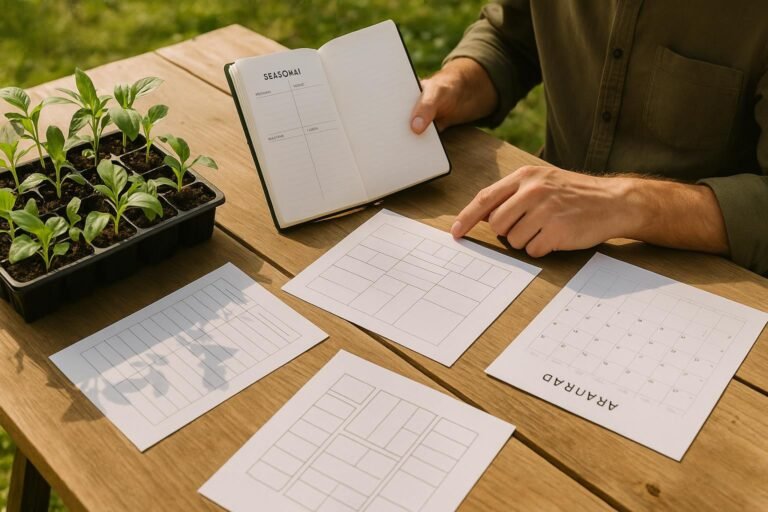
If you’re curious about tracking how your soil changes season to season as you introduce green manures, journaling your results makes a real difference. Garden Journaling for Mastery gives you ready-to-use templates to record exactly what you planted, when you turned it under, and what your next crop did as a result. Patterns will emerge faster than you’d expect.
Getting Started This Season
You don’t need to overhaul your entire garden to try this. Start with one bed. Identify the next gap in your planting calendar — even a 5-week window is enough for buckwheat. Scatter the seed, water it in, and let nature do the rest.
When those first buds appear, reach for your spade. Chop it down, turn it under, and give it a few weeks. Then plant into that bed and watch what happens. The difference in plant vigor and soil texture after even one cycle of green manure will likely be enough to make this a permanent part of how you garden.
Your grandparents didn’t need synthetic nitrogen because they had something better: a living, breathing soil-building system that cost almost nothing and improved with every passing season. That system is still available to you. It starts with a handful of seeds and a willingness to let the soil eat before you do.