Green Manure Crops: The Plow-Under Secret
Before the first bag of synthetic fertilizer ever sat on a store shelf, farmers were already solving the nitrogen problem — and they did it by growing the solution right in the ground. Green manure crops are plants grown specifically to be chopped down and buried, feeding the soil with fresh organic matter and a burst of available nutrients. It’s one of the oldest tricks in agriculture, and it works better than most people expect. If you’ve been spending money on bagged soil conditioners and still not seeing the results you want, this forgotten rotation method might be exactly what your garden has been missing.
What Are Green Manure Crops, Exactly?
A green manure is any crop grown not to harvest and eat, but to improve the soil beneath it. You let it grow, then cut it down and dig it in — ideally before it sets seed. The decomposing plant matter releases nutrients, improves soil structure, and feeds the microbial communities that make everything else in your garden thrive.
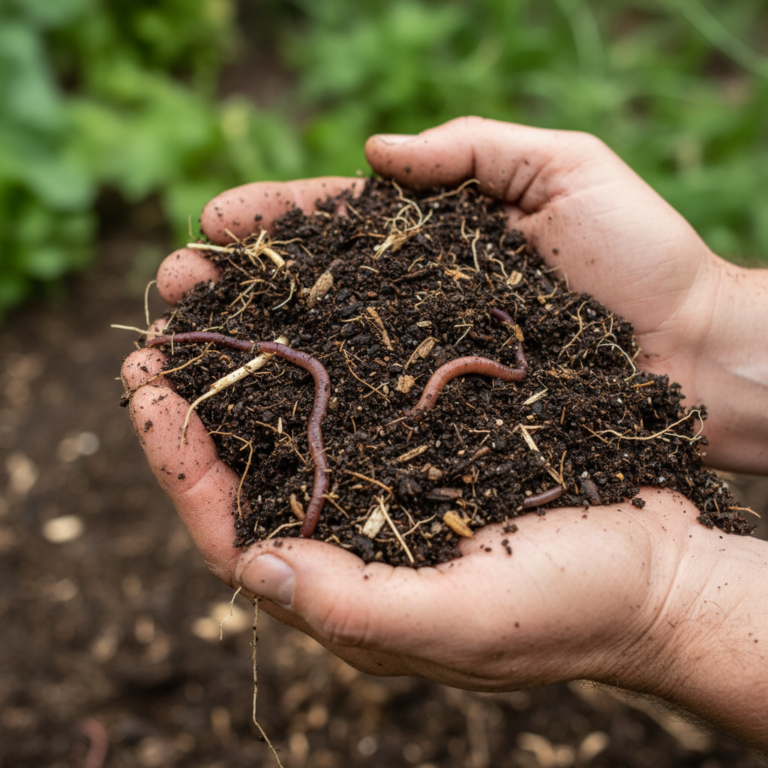
This is not the same as composting. You’re burying fresh, living plant material directly into the bed where you plan to grow food. The soil biology does the rest, breaking down the green matter fast and converting it into plant-available nitrogen, phosphorus, and trace minerals.
Think of it as making a deposit into your soil’s bank account — except instead of cash, you’re depositing carbon, nitrogen, and biology all at once.
Before you dig in (literally), it helps to understand what your soil already holds. Our guide to reading your dirt without a lab will help you identify any deficiencies before you choose your green manure mix.
The Best Green Manure Crops by Season
Not every plant makes a great green manure. The best ones grow fast, produce a lot of biomass, and — in the case of legumes — fix atmospheric nitrogen directly into the soil through root bacteria. Here’s what actually works:
Nitrogen-Fixing Legumes (The Heavy Lifters)
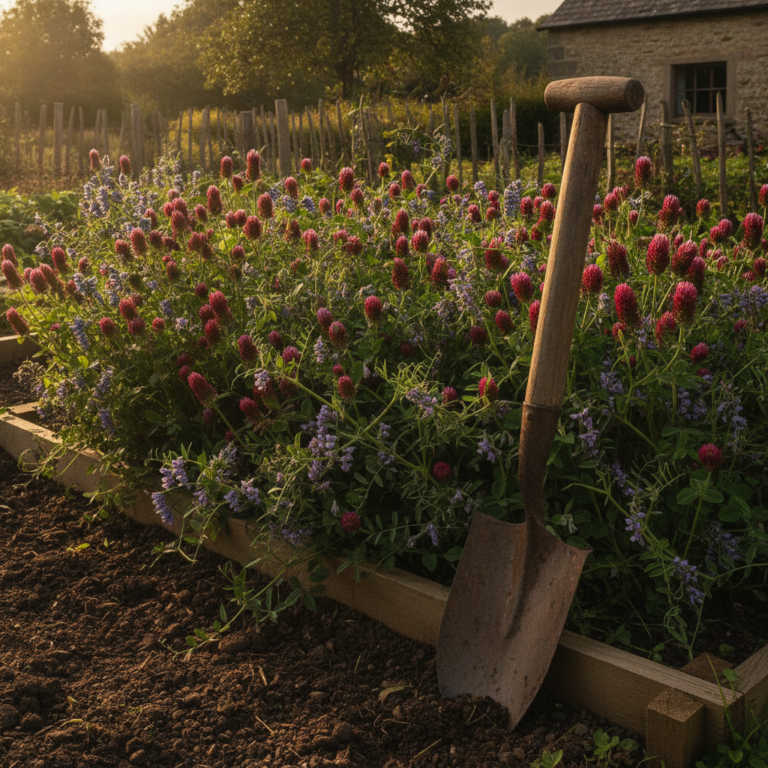
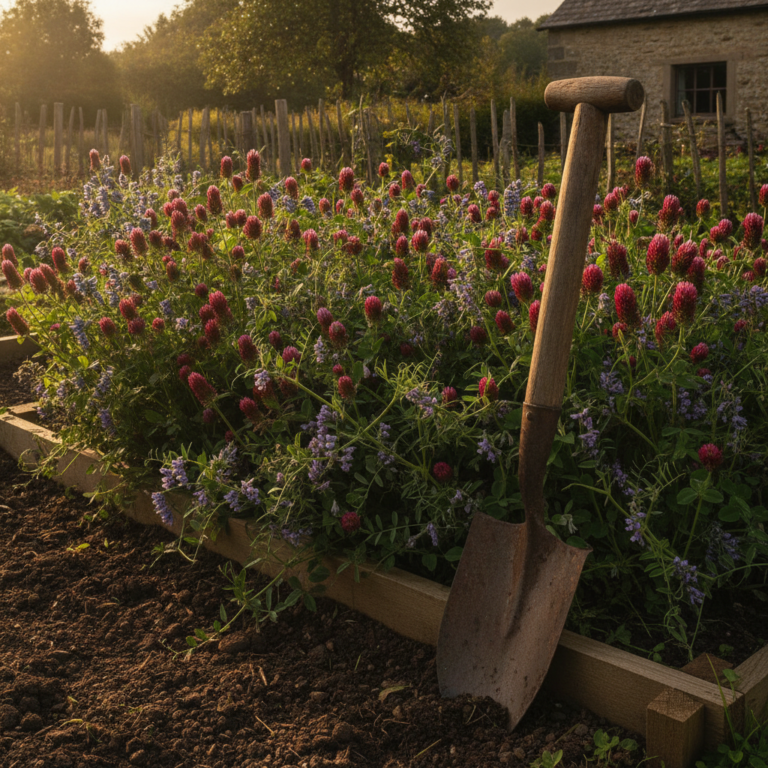
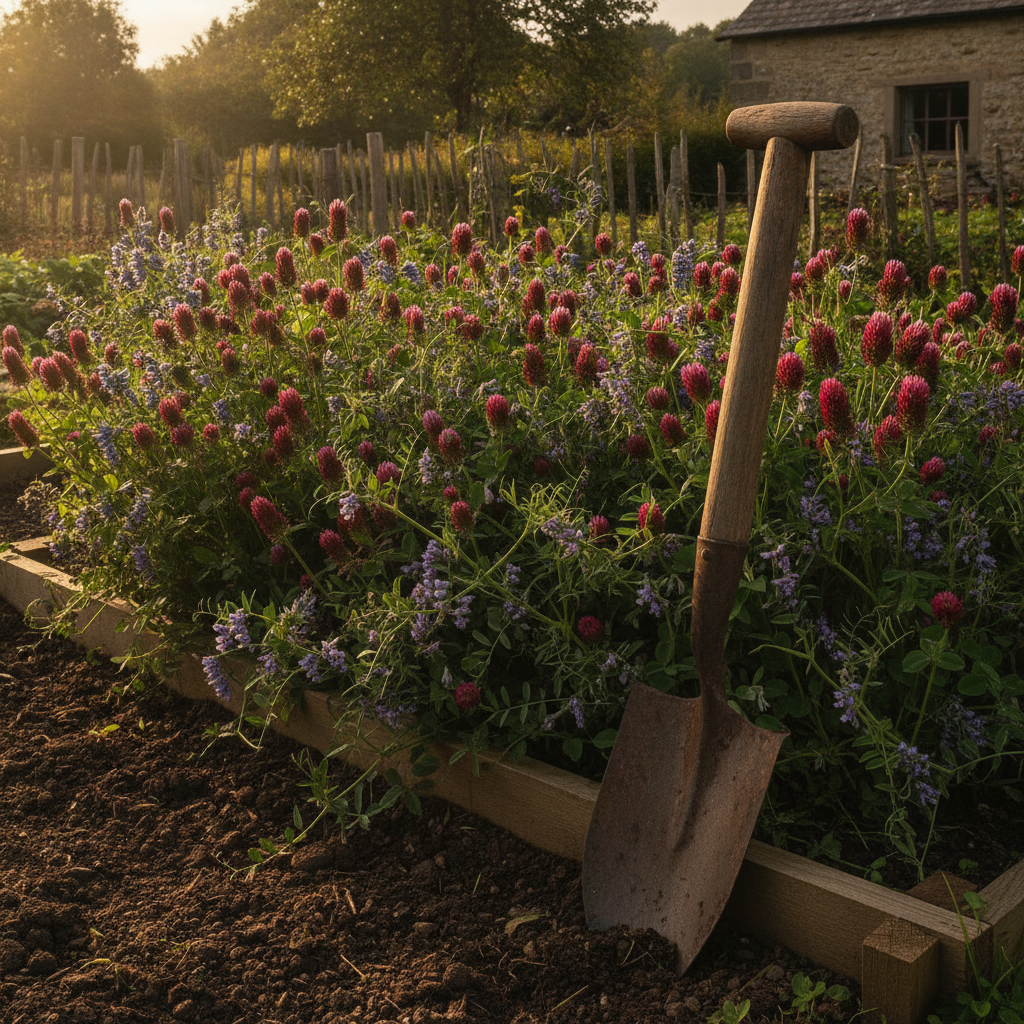
Crimson clover is one of the most reliable options for home gardeners. It fixes between 70 and 150 pounds of nitrogen per acre, grows happily in cool weather, and produces beautiful red flowers that attract pollinators before you turn it in. Sow in early spring or late summer.
Hairy vetch is a cold-hardy legume that fixes even more nitrogen than clover. It’s a bit scrambly and aggressive, which is why it’s perfect as a green manure — you don’t want it setting seed and taking over. Cut and bury it just before or right at first flower.
Field peas are an excellent spring choice. They grow fast, add a generous root mass to the soil, and can be turned in just six to eight weeks after planting. They also suppress weeds effectively while they grow.
Fenugreek is a lesser-known but powerful option that fixes nitrogen and adds aromatic compounds that may suppress certain soil pathogens. It’s fast-growing and easy to turn in.
Non-Legume Green Manures (For Carbon and Structure)
Buckwheat isn’t a legume, but it’s one of the fastest green manures available — ready to cut in just four to six weeks. It releases phosphorus from the soil in forms other plants can’t access, then makes that phosphorus available when it decomposes. Perfect for summer gaps in the planting calendar.
Phacelia is possibly the most underrated cover crop in the home garden. It grows thick, creates an incredible root network, and decomposes extremely quickly after you turn it in. Its lavender flowers are beloved by bees, so time your cut carefully.
Winter rye is the classic cold-season workhorse. Sow it in autumn, let it overwinter, and turn it in come spring. It adds enormous amounts of organic matter and suppresses weeds aggressively through allelopathic compounds in its roots.
The Timing Secret: When to Cut and Bury
This is where most gardeners get it wrong. They either wait too long — letting the crop go to seed and become woody — or they turn it in too early when there’s barely any biomass to work with.
The sweet spot is just at or before the first flower opens. At this stage, the plant is at peak biomass and the nitrogen is still locked in the leafy green tissue rather than redirected into seed production. The stems are still soft and will decompose rapidly once buried.
Here’s a simple rule to remember: flower bud stage = dig day.
After cutting, chop the material as finely as you can with a spade or sharp hoe. Then dig it in to a depth of four to six inches. Don’t bury it deeper — the decomposition process needs oxygen, and deeper burial slows everything down. Water the bed well after turning, and wait two to three weeks before planting into it. This waiting period lets the decomposing material stop competing with your food crops for nitrogen as it breaks down.
If you’re short on time, you can also simply chop and drop — cut the green manure at soil level and leave the biomass on the surface as a mulch. This is slower to break down but still adds significant organic matter over a full season.
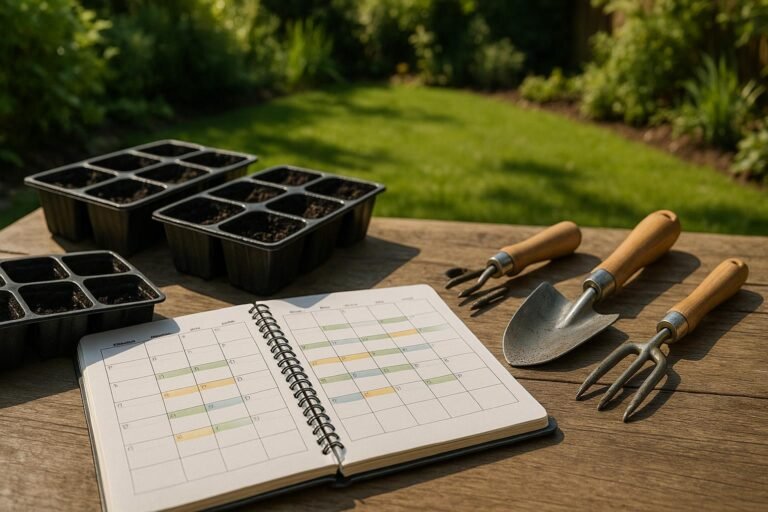
A Practical Green Manure Planting Calendar
Here’s how to work green manure crops into a real home garden rotation across the growing year:
Early Spring (March–April)
Sow field peas or phacelia in any beds that won’t be planted with food crops until late May or June. Turn in at flower bud stage, around six to eight weeks after sowing. Wait two weeks, then plant your summer crops.
Early Summer Gap (June–July)
After harvesting spring crops like lettuce or radishes, immediately sow buckwheat. It will be ready to turn in within five to six weeks — just in time to prep the bed for autumn planting. This is the fastest turnaround green manure available to home gardeners.
Late Summer (August)
Sow crimson clover or hairy vetch in beds you’re clearing from summer crops. Let it grow through autumn, turn it in before hard frost, and your spring bed will be loaded with nitrogen. Alternatively, overwinter hairy vetch and turn it in the following April.
Autumn (September–October)
Sow winter rye in any beds going fallow over winter. It will establish, suppress autumn weeds, protect soil from compaction during rain, and be ready to turn in come spring. This is the single most impactful thing you can do for an empty winter bed.
Matching this rotation to your local climate conditions makes a real difference. The 30-day microclimate-aware planting plan can help you tailor these timing windows to exactly where you garden.
Why Green Manure Beats Most Bagged Products
Store-bought soil amendments have their place. But they can’t replicate what a living root system does for soil biology. Green manure crops don’t just add nutrients — they physically restructure the soil as roots push through, create channels for water, feed mycorrhizal fungi, and support entire food webs of soil organisms that synthetic inputs often bypass entirely.
When you bury fresh green matter, you’re feeding bacteria and fungi that then become food for nematodes and soil insects, which feed beetles and birds, and whose waste products circle back as nutrients for your vegetables. That chain reaction simply doesn’t happen when you sprinkle pelletized fertilizer on the surface.
You’re also building long-term fertility rather than just solving a short-term deficiency. A bed that has received two or three cycles of green manure over a couple of seasons genuinely behaves differently. It holds moisture better. It drains better. It grows food more vigorously. And it costs you very little — seed is cheap, and your time investment is minimal.
If you’re new to observing what’s actually happening under your feet, start with our soil sense guide to understand what you’re working with before you plant your first cover crop.
Getting Started Without Overwhelm
You don’t need to overhaul your entire garden at once. Pick one empty bed. Sow buckwheat or field peas this season. Watch what happens. Then turn it in, wait two weeks, and plant something in that bed. Compare it to your other beds at season’s end.
That single experiment will teach you more about soil fertility than any amount of reading. And once you see how dark and crumbly that soil becomes — how enthusiastically your plants respond — green manure crops will become a permanent part of how you garden.
For gardeners who want to build skills progressively and track what’s working season by season, the layered learning approach offers a structured way to add techniques like this one without feeling scattered or overwhelmed.
Your grandparents knew this trick. They didn’t have a choice — synthetic nitrogen wasn’t available. But the results spoke for themselves then, and they still do today. The plow-under secret isn’t really a secret at all. It’s just been buried under decades of convenience culture. Time to dig it back up.