Green Manure Crops: The Plow-Under Secret
Green Manure Crops: The Plow-Under Secret Old Farmers Never Forgot
Before synthetic nitrogen ever came in a bag, farmers had a quiet secret. They grew entire fields of specific plants — not to harvest them, but to bury them. Green manure crops were the backbone of productive soil long before any chemical factory existed. If your garden soil feels tired, compacted, or hungry, this forgotten rotation trick might be exactly what your beds have been missing.
This post covers which plants work best as green manures, how to time your cut-and-bury for maximum nitrogen release, and how to build a practical seasonal calendar you can actually use this year. No synthetic inputs required.
What Are Green Manure Crops, Exactly?
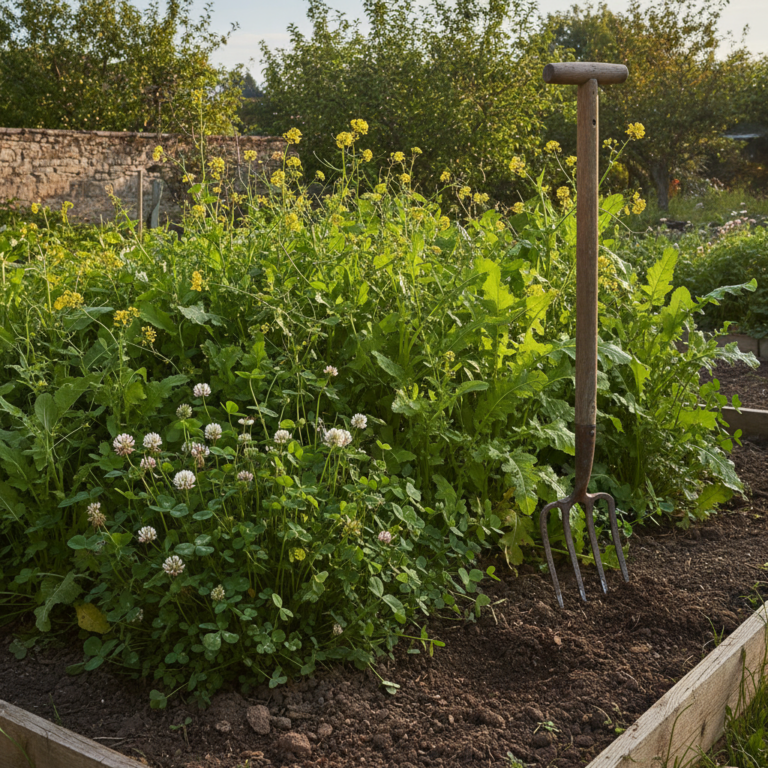
A green manure is any plant grown specifically to be chopped and dug back into the soil while it is still soft and green. It is not composted first. It is not dried out. You grow it, chop it, and bury it — all in one motion.
The result is a surge of fresh organic matter, living microbial activity, and a slow release of nitrogen as the material breaks down underground. Think of it as feeding your soil from the inside rather than sprinkling something on top.
This practice is ancient. Roman farmers wrote about it. Asian rice paddies relied on it for centuries. And your great-grandparents likely practiced some version of it before the fertilizer industry made everyone forget.
If you want to understand your soil before you start, take a few minutes to read Soil Sense Without the Lab: Read Your Dirt, Fix It Fast. Knowing your starting point makes every technique work harder.
Why Green Manure Crops Beat Most Store-Bought Soil Conditioners
Most bagged soil amendments deliver a single nutrient in a single form. Green manures do something far more complex. When you bury fresh plant material, you are feeding billions of soil microbes all at once. Those microbes multiply. They process nutrients. They build structure. They create the sticky compounds that hold soil particles together in clumps — what soil scientists call aggregation.
Bagged nitrogen can spike quickly and leach away just as fast. Green manure crops release nitrogen slowly, as microbial activity digests the buried material over weeks and months. That slow release matches the pace of plant uptake far better than any synthetic product.
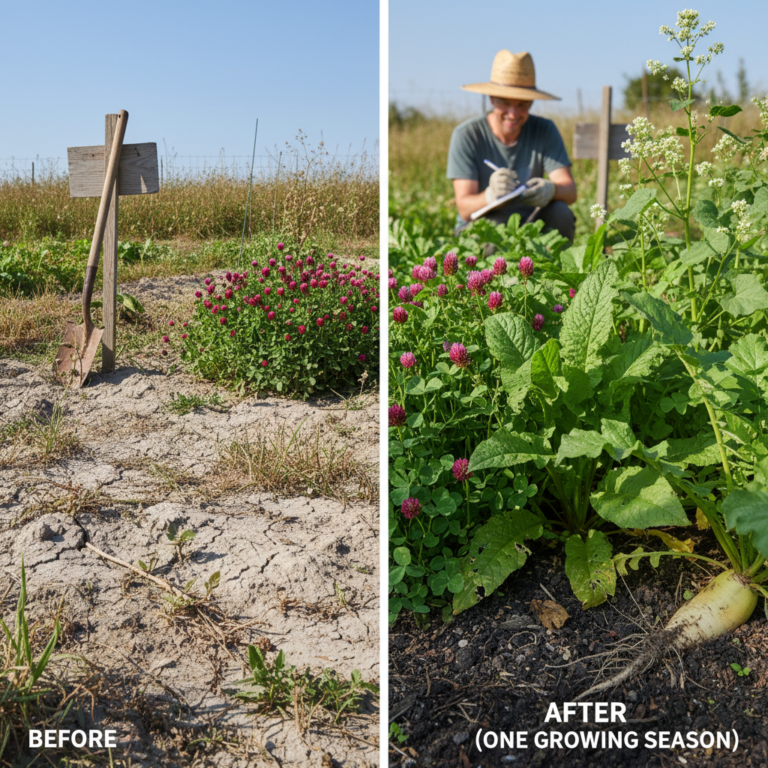
There is also the physical benefit. Deep-rooted green manures like daikon radish or tillage radish break up compacted layers with their roots. When those roots decay, they leave channels for water and air to move through — a benefit no amendment in a bag can replicate.
Additionally, dense green manure stands suppress weeds during their growing phase. You get weed control AND soil feeding in one step. That is a difficult combination to beat.
The Best Plants to Use as Green Manures
Not every plant works equally well. The best green manure crops fall into a few key categories.
Nitrogen-Fixing Legumes
These are the stars of the green manure world. Legumes form partnerships with soil bacteria called rhizobia. Together, they pull nitrogen directly from the air and fix it into the soil. When you bury a legume green manure, you are depositing free nitrogen that cost you nothing but a packet of seed.
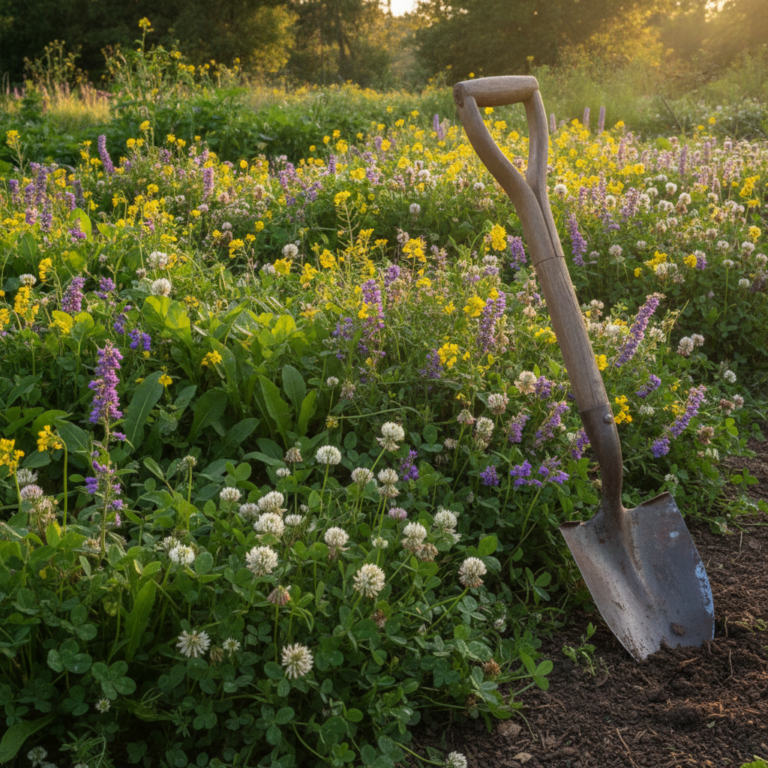
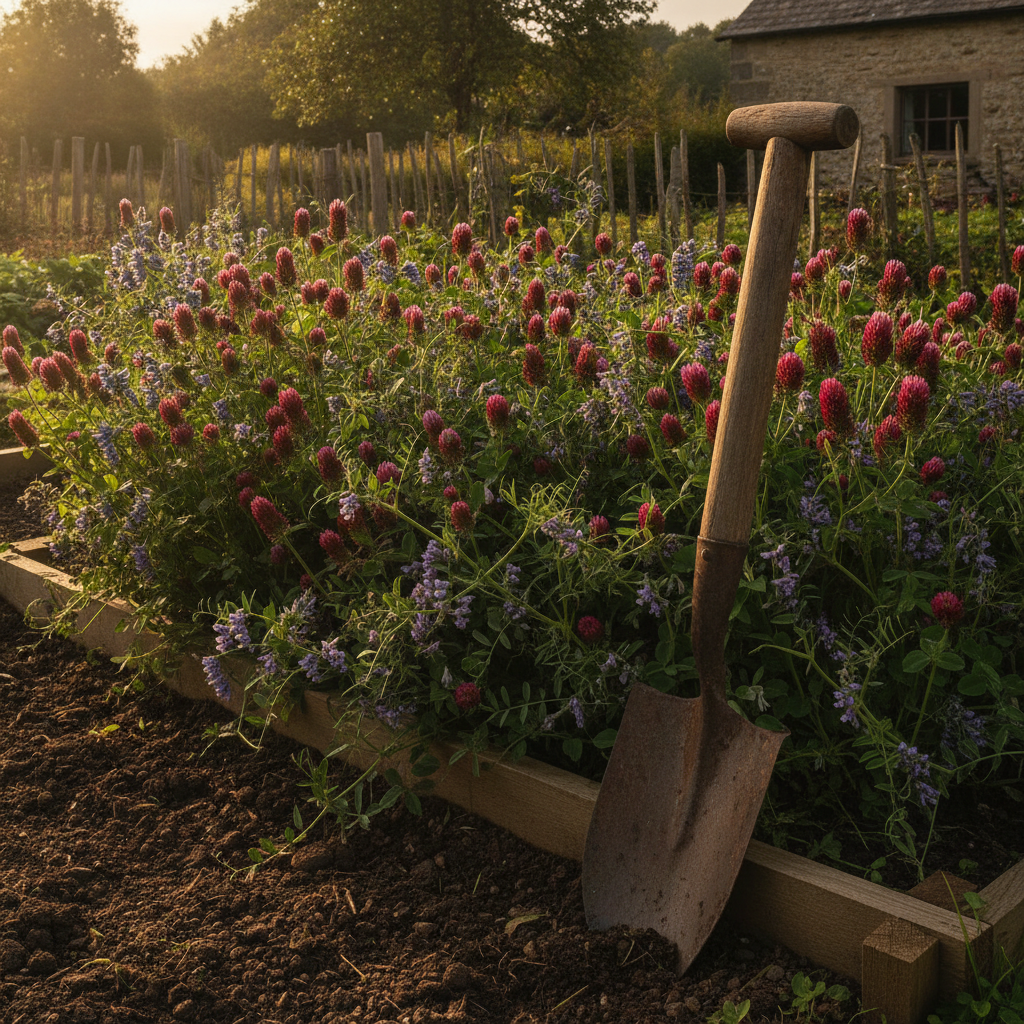
- Crimson clover — fast-growing, high nitrogen content, beautiful red flowers that pollinators adore before you cut it
- Hairy vetch — one of the highest nitrogen fixers available, excellent cold tolerance
- Field peas — quick to establish, good for spring or fall planting
- Fava beans — exceptional nitrogen fixer, tolerates cold and wet conditions
- Buckwheat — technically not a legume, but a rapid grower that mines phosphorus and suppresses weeds brilliantly
Deep-Rooted Brassica Types
Tillage radish, daikon, and mustard are powerful subsoil breakers. They punch through hardpan, scavenge nutrients from deep layers, and decompose rapidly when buried. Mustard also releases natural biofumigant compounds as it breaks down — a bonus for disease-suppressed beds.
Grasses and Grains
Cereal rye, oats, and phacelia add massive organic matter. They do not fix nitrogen the way legumes do. However, they build soil carbon and prevent erosion during off-seasons. They are often mixed with legumes for a balanced cover crop blend.
Timing the Cut: When to Chop and Bury
Timing your incorporation is arguably the most important step. Cut too early and you lose biomass. Cut too late and the plant becomes woody and slow to decompose — and it may go to seed, creating weed problems.
The sweet spot for most green manure crops is at first flower or just before. At this point, the plant is at its peak biomass. The tissue is still soft and high in nitrogen. Decomposition will happen quickly. Nitrogen release peaks within two to four weeks of burial under warm conditions.
Here is a practical rule: once you see the first flower buds opening, you have about three to five days to cut. Do not wait until full bloom.
After cutting, use a spade or broadfork to work the material eight to twelve inches deep. Water if conditions are dry. The soil needs moisture for microbial activity to kick into gear. Wait two to three weeks before transplanting into that bed. This resting period allows the initial nitrogen surge — which can be too intense for young roots — to stabilize.
If you are working this into a seasonal plan, the Climate-Proof Your Crops: A 30-Day, Microclimate–Aware Planting Plan is an excellent companion resource for timing your rotations around your specific growing conditions.
A Practical Green Manure Planting Calendar
Here is a simple framework you can adapt to your climate and garden beds.
Early Spring (Zones 5–8: March–April)
Sow field peas, oats, or phacelia as soon as the soil can be worked. These tolerate light frost. Cut and bury four to six weeks later when the first flowers appear. Plant your summer vegetables two to three weeks after incorporation.
Late Spring / Early Summer (May–June)
Use buckwheat in any gap between plantings. It germinates fast and reaches cutting stage in just four to six weeks. It is the perfect short-window green manure for raised beds between crop rotations.
Midsummer (July–August)
Sow crimson clover or buckwheat in beds that have finished their first crop. Let them grow through late summer, then cut and bury in early fall. This recharges beds for fall planting of garlic, brassicas, or winter greens.
Fall (September–October)
Hairy vetch and cereal rye are your best choices now. They establish before frost, overwinter in place, and can be cut and buried in early spring. This is the classic winter cover approach — and one of the most powerful nitrogen-building moves you can make.
Winter (Zones 7–10: November–February)
Fava beans planted in fall and overwintered deliver extraordinary spring nitrogen when turned under in late February or March. In mild climates, this is one of the highest-return green manure strategies available.
Small Spaces and Raised Beds: Green Manures Still Work
You do not need a field. Even a single four-by-eight raised bed benefits enormously from a green manure rotation. Simply plant one section at a time, keeping other sections productive. Rotate the green manure bed through your garden over the course of a season or a year.
Container gardeners can sow buckwheat in deep containers and chop the material to mix into their potting soil or compost pile. The principle scales down without losing effectiveness.
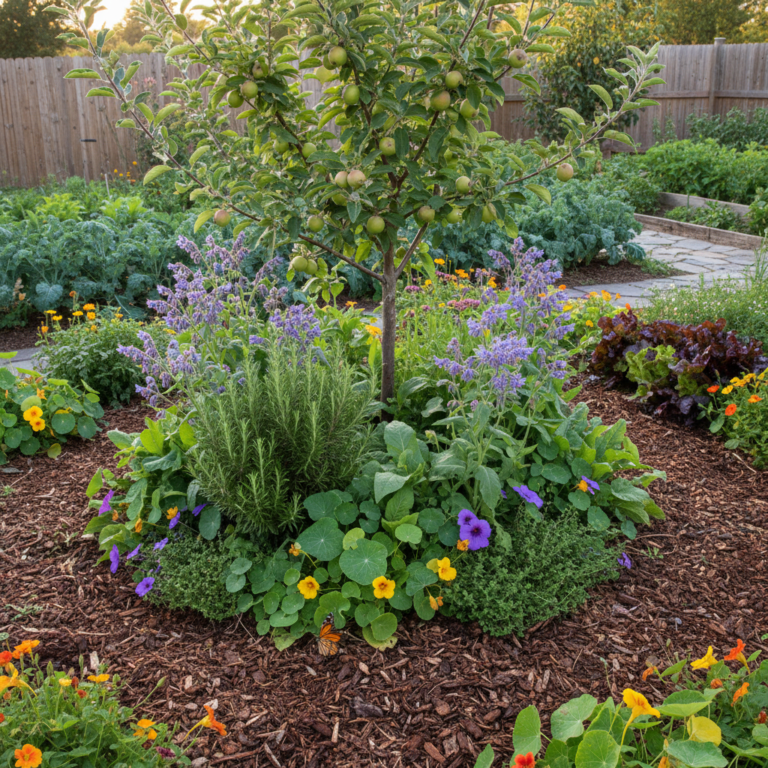
For more ideas on making the most of a compact growing space, see Microforest in Small Spaces: A Step-by-Step Plan for Edible, Biodiverse Gardens.
Common Mistakes to Avoid
A few missteps can reduce your results significantly. Here is what to watch for.
- Burying dry or mature material — Woody, seed-set plants decompose slowly and tie up nitrogen rather than releasing it. Always cut at first flower.
- Planting too soon after burial — The initial decomposition phase can temporarily deplete oxygen and produce acids that harm seedlings. Wait two to three weeks.
- Skipping moisture after incorporation — Dry soil slows decomposition dramatically. Water your buried green manure if rain is not coming.
- Using the same green manure family as your next crop — Do not follow mustard green manure with broccoli. They share disease families. Rotate plant families thoughtfully.
Your Soil Will Remember What You Do This Season
The biggest shift in thinking that green manure crops require is patience. You are not feeding plants directly. You are feeding the soil system that feeds your plants. The results compound over time.
Gardeners who incorporate green manures into their rotation consistently report fewer pest problems, better water retention, and stronger, more productive harvests after just two or three seasons. The soil biology that develops beneath the surface is the real engine of your garden’s productivity.
This is the knowledge that existed before synthetic inputs rewrote the rulebook. It is not complicated. It does not require expensive equipment. It requires a packet of seed, a spade, and a little patience — the same tools your grandparents used.
If you are ready to build your broader growing knowledge around techniques like this one, the Layered Learning: A Gardener’s Progressive System That Grows with You is a wonderful next step. It will help you weave forgotten methods like green manuring into a whole-garden approach that gets stronger with every season.
Start small. Pick one bed. Plant one green manure this season. Bury it at first flower. Then watch what your soil becomes. You might be surprised how quickly the earth remembers what it always knew how to do.