Green Manure Crops: The Plow-Under Secret
Long before synthetic nitrogen existed in a bag, farmers fed their soil the old-fashioned way. They grew green manure crops — specific plants raised not to eat, but to cut down and bury. This plow-under secret built some of the most productive soils in agricultural history. And the best part? You can use it in your backyard garden this season, no chemistry degree required.
If you’ve ever stared at a depleted, sandy, or compacted bed and wondered what your grandparents would have done, this is the answer. Green manure crops are one of the most underused techniques in the home garden — and one of the most powerful ones you’ll ever try.
What Are Green Manure Crops (And Why Did We Forget Them)?
A green manure crop is any plant grown specifically to be chopped and dug back into the soil before it sets seed. The goal isn’t harvest. The goal is soil feeding.
When you bury a mass of fresh, nitrogen-rich plant material, soil microbes go to work breaking it down. They release nutrients in plant-available forms. They build organic matter. They improve structure, drainage, and water retention all at once.
This isn’t a theory. It’s a practice that sustained agriculture for thousands of years. Roman farmers rotated lupins into their fields. Medieval European growers buried clover. Asian rice farmers alternated their paddies with leguminous green manures between seasons.
Then synthetic nitrogen arrived in the 20th century. It was faster and easier to pour fertilizer from a bag. The old rotation knowledge quietly faded away. But that shortcut came with a cost — degraded soil biology, depleted organic matter, and fields that need more and more input just to stay productive.
If any of that sounds familiar in your own garden, green manure crops might be exactly what your beds are missing. Before diving in, it also helps to understand what your soil is telling you right now — check out Soil Sense Without the Lab: Read Your Dirt, Fix It Fast for a practical starting point.
The Best Green Manure Crops for Home Gardeners
Not every plant makes an equally good green manure. The best ones are fast-growing, biomass-heavy, and — ideally — nitrogen-fixing. Here’s what to reach for:
Legumes: The Nitrogen Fixers
Legumes are the superstars of green manuring. They host bacteria in their root nodules that pull nitrogen from the air and fix it in the soil. When you dig them in, that nitrogen becomes available to your next crop.
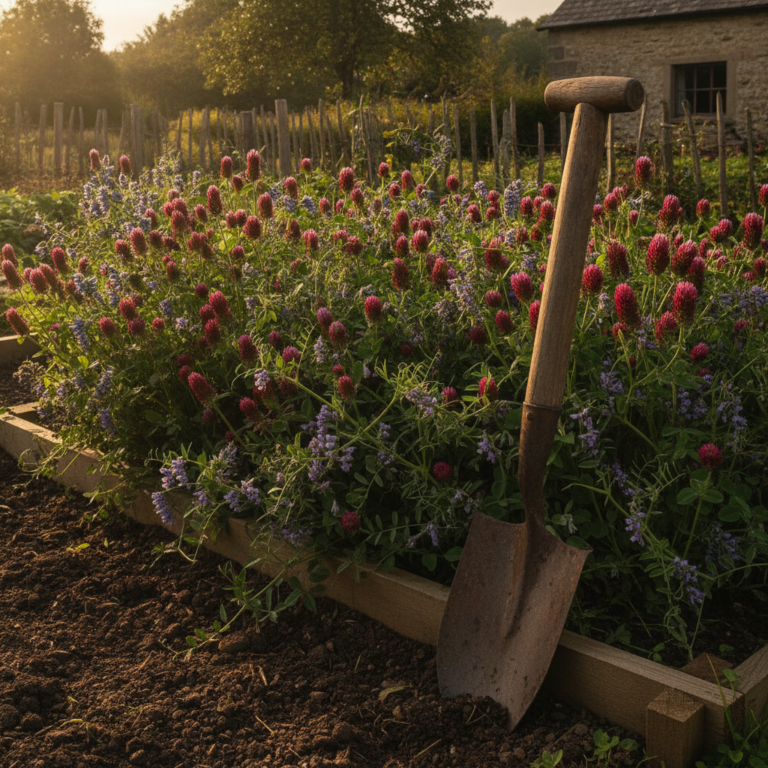
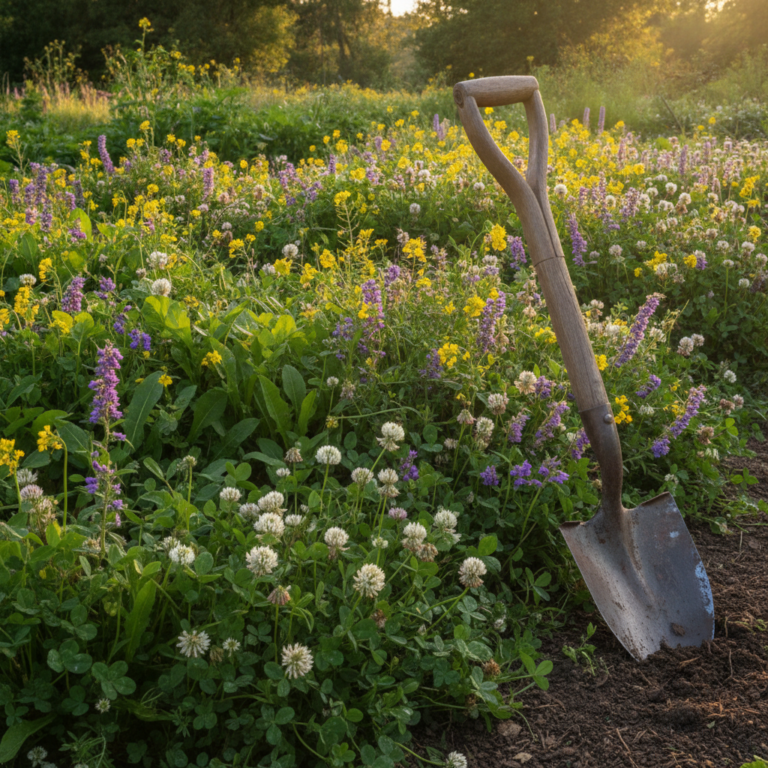
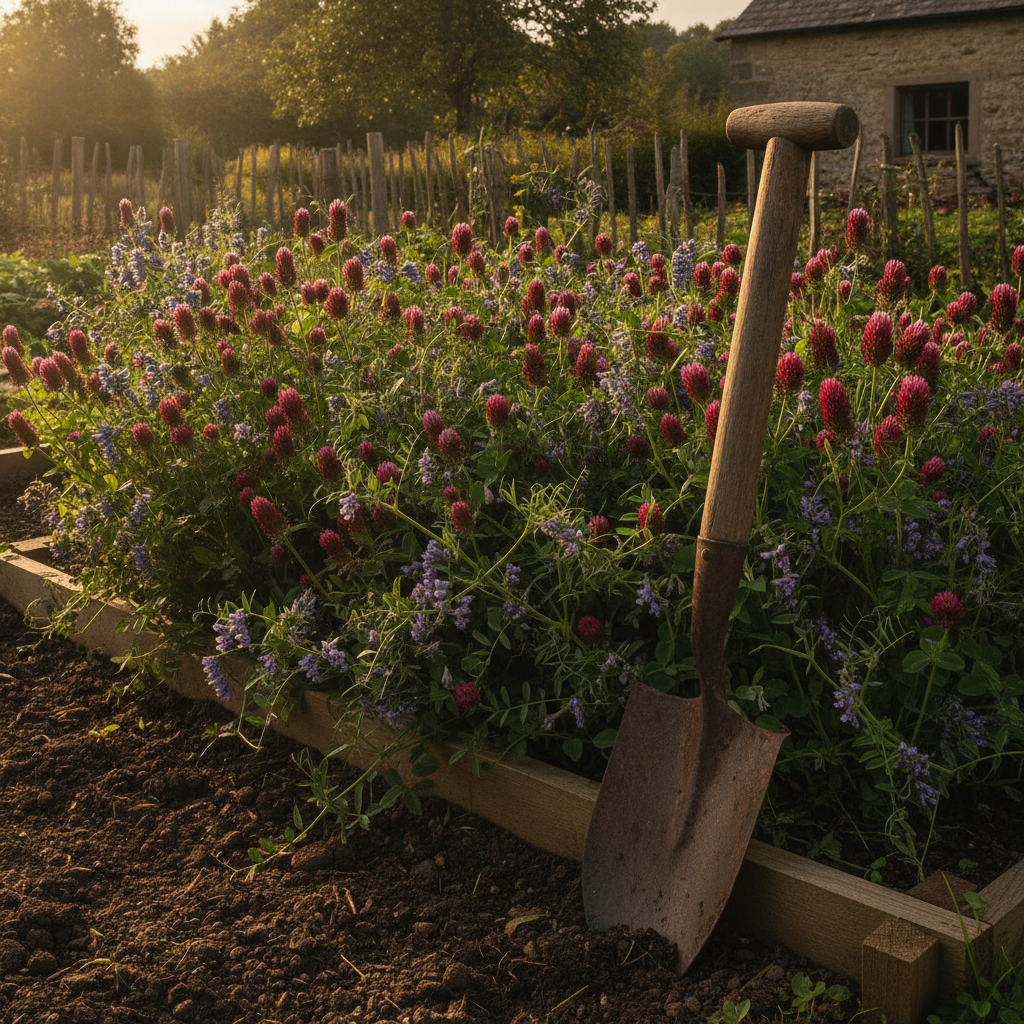
- Crimson clover — Fast-growing, beautiful, and incredibly nitrogen-rich. One of the best all-around green manures for home gardens.
- Hairy vetch — A powerhouse. Produces enormous biomass and fixes more nitrogen than almost any other cover crop.
- Field peas (Austrian winter peas) — Hardy and cold-tolerant, great for fall plantings.
- Fenugreek — Often overlooked, but fast-growing and excellent for warm-season gaps.
- Lupins — Deep-rooted, great for breaking up compaction while fixing nitrogen.
Brassicas: The Soil Fumigants
Brassicas don’t fix nitrogen, but they bring something else to the table. Their tissues contain glucosinolates — natural compounds that act as mild soil fumigants when broken down. This suppresses soil-borne diseases and nematodes.
- Mustard — The classic brassica green manure. Fast, cheap, and genuinely effective at cleaning up tired soil.
- Tillage radish — Grows a massive taproot that breaks hardpan and then melts away over winter, leaving channels for earthworms and roots.
Grasses and Grains: The Organic Matter Builders
Cereal grains and grasses don’t fix nitrogen, but they build incredible organic matter. They’re best mixed with legumes for a balanced green manure blend.
- Buckwheat — Fast-growing, smothers weeds, and releases phosphorus that was locked up in your soil.
- Oats or winter rye — Cold-hardy, great for fall planting, and produce masses of carbon-rich material to feed soil fungi.
How to Time the Cut-and-Dig for Maximum Nitrogen Release
Timing is everything with green manure crops. Cut too late and the plant material becomes woody and slow to break down. Cut too early and you leave yield on the table.
The golden rule is this: cut and bury just before or at first flower. At that stage, the plant has maximum nitrogen content and the tissue is still soft and easily decomposed by soil microbes.
Here’s your simple cut-and-dig process:
- Chop the crop low with a sharp hoe or scythe. Cut close to the soil surface.
- Let it wilt for a day or two. Wilting makes it easier to dig in and slightly slows decomposition, giving microbes a more even feast.
- Turn it under 4–6 inches deep. You don’t need to go deeper. Shallow incorporation decomposes faster and keeps the biologically active zone intact.
- Wait 2–4 weeks before planting. This is the patience part. Decomposing plant matter temporarily ties up nitrogen as microbes process it. Plant too soon and your seedlings may struggle. Wait, and they’ll thrive.
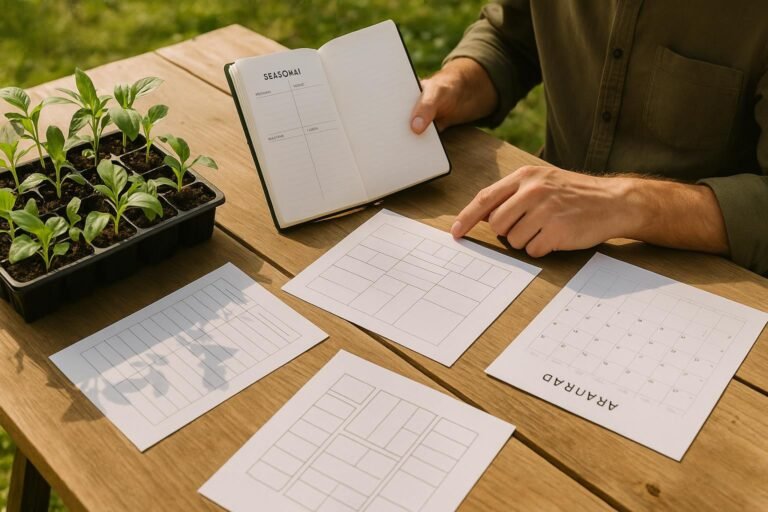
This waiting window is worth planning around. A good seasonal planting calendar helps enormously here — the approach in Climate-Proof Your Crops: A 30-Day, Microclimate–Aware Planting Plan pairs well with green manure rotation thinking.
A Practical Green Manure Planting Calendar
Here’s how to weave green manure crops into a four-season garden rotation. Adjust for your climate zone as needed.
Spring (March–May)
Sow: Crimson clover, fenugreek, or buckwheat into empty beds after last frost.
Cut and bury: 6–8 weeks after sowing, just at first flower.
Wait 2–3 weeks, then plant: Summer vegetables — tomatoes, squash, beans.
Summer Gap (June–July)
Sow: Buckwheat into beds that won’t be used until fall. It grows fast and smothers weeds beautifully.
Cut and bury: 35–40 days after sowing.
Wait 2 weeks, then plant: Fall brassicas or root vegetables.
Late Summer / Fall (August–October)
Sow: Hairy vetch, field peas, or winter rye after clearing summer crops.
Cut and bury: The following spring, just before the plants flower.
Wait 3–4 weeks, then plant: Your main summer crops again.
Winter (November–February)
In mild climates, let mustard or tillage radish overwinter and freeze back naturally. In cold climates, let winter rye stand and chop it down in early spring. The freeze-thaw cycle helps break down the roots without any digging at all.
If you’re newer to planning rotations like this, Smart Starts: A 4-Week Skill-Build Plan for Complete Garden Beginners gives you a solid foundation before adding advanced techniques like green manuring.
Why Green Manure Outperforms Most Store-Bought Soil Conditioners
Let’s be honest about what bagged soil amendments actually do. They add nutrients, yes. But they rarely feed soil biology in the same way living organic matter does.
When you bury a green manure crop, you’re not just adding nitrogen. You’re feeding billions of bacteria and fungi. You’re adding complex carbon compounds that build long-lasting humus. You’re improving aggregate structure so water moves through soil properly. You’re suppressing certain pathogens. And you’re doing all of it for the cost of a small seed packet.
Compare that to a bag of pelleted fertilizer. It delivers a narrow nutrient hit. It does nothing for soil biology. It may even disrupt it over time. The old farmers weren’t being primitive when they used green manures. They were being sophisticated in ways we’re only now scientifically confirming.
This is the same soil-first thinking behind techniques like biochar, compost tea, and rock dust. They all work on the same principle: feed the soil, and the soil feeds your plants.
Getting Started This Season
You don’t need a large garden or a special setup to try this. One raised bed. One packet of crimson clover seed. One empty gap in your rotation. That’s enough to start seeing results.
Sow densely — green manure crops should cover the soil completely, with no bare patches. Water them in well and let them grow. The hardest part is resisting the urge to plant something else in that bed right away. Trust the process.
By the time you dig them in and wait your 2–4 weeks, you’ll find darker, richer, more crumbly soil underneath. Your next crop will show you the difference in a way no soil test can fully capture.
Ready to go deeper into building a garden that runs on natural inputs and old-world wisdom? Layered Learning: A Gardener’s Progressive System That Grows with You maps out exactly how to stack these techniques season by season until they become second nature.
The plow-under secret isn’t really a secret at all. It’s just old knowledge waiting to be remembered — and your garden is ready for it.