Green Manure Crops: The Plow-Under Secret
Before the first bag of synthetic nitrogen ever hit a farm supply shelf, growers were already solving the fertility puzzle. They grew green manure crops — plants grown not to eat, but to bury. Chopped down at just the right moment and dug back into the soil, these living amendments fed the earth in ways that no bagged product has ever truly matched. If your garden soil feels tired, compacted, or pale, this forgotten technique might be exactly what it needs.
What Are Green Manure Crops, Exactly?
A green manure crop is any fast-growing plant you sow specifically to incorporate back into the soil while it’s still green and actively growing. The term “green manure” comes from old farming language — the green plant matter acts like manure, decomposing and releasing nutrients directly into the root zone.
This isn’t the same as letting weeds die in place. Timing is everything. You cut and bury these crops at a precise growth stage to capture maximum nitrogen and organic matter. Done right, a single round of green manure can add the equivalent of several inches of compost to your beds — for almost nothing.
Think of it as feeding your soil a meal it knows exactly how to digest.
Why Green Manure Crops Outperform Most Store-Bought Amendments
Bagged fertilizers and soil conditioners work on a simple input-output model. You add a nutrient, your plant uses it, and the soil itself changes very little. Green manure works differently. It feeds the whole soil ecosystem — the bacteria, fungi, earthworms, and microbes that are the real engine of plant growth.
Here’s what happens when you bury a green crop:
- Nitrogen floods the root zone. Legumes like clover and vetch fix atmospheric nitrogen in root nodules. When you cut and bury them, that nitrogen becomes available to your next crop.
- Organic matter builds structure. Decomposing plant material opens up clay soils and gives sandy soils the body they lack.
- Microbial populations explode. Fresh green matter is a feast for soil bacteria. More bacteria means more nutrient cycling for your vegetables.
- Compaction breaks down. Deep-rooted green manures like tillage radish punch through hardpan, leaving channels that air and water can follow.
Before you buy another soil amendment this season, take a look at what your beds actually need. Our guide Soil Sense Without the Lab: Read Your Dirt, Fix It Fast walks you through simple, no-equipment soil diagnostics that can help you decide if green manuring is the right next step.
The Best Green Manure Crops to Grow
Not all cover crops make equal green manures. The best ones are fast-growing, easy to cut before they set seed, and rich in either nitrogen or organic matter — ideally both.
Nitrogen Fixers (Legumes)
These are the workhorses of the green manure world. Legumes form partnerships with soil bacteria that pull nitrogen from the air and store it in root nodules. When you cut and bury the plant, all that stored nitrogen becomes available to your next planting.
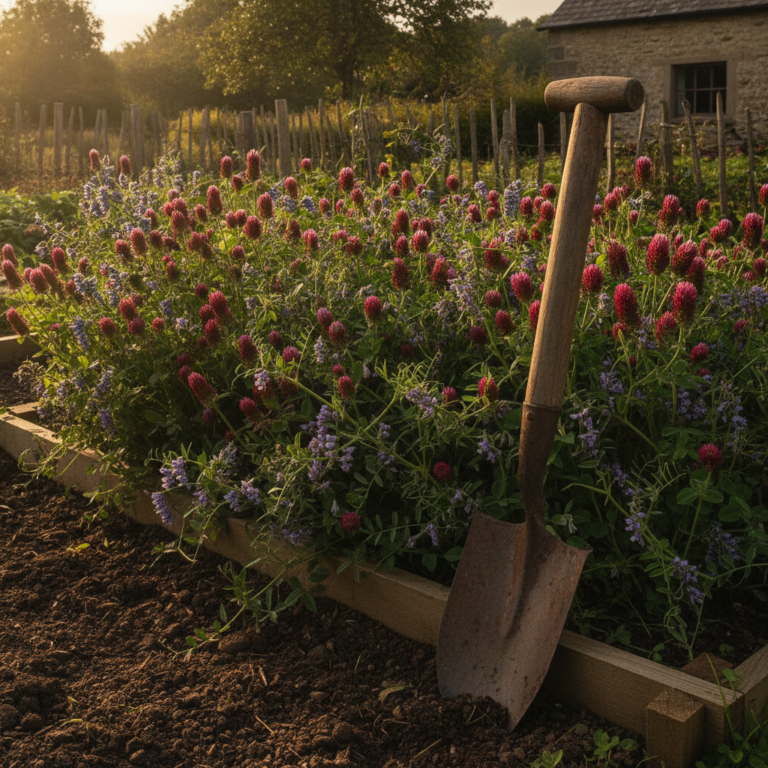
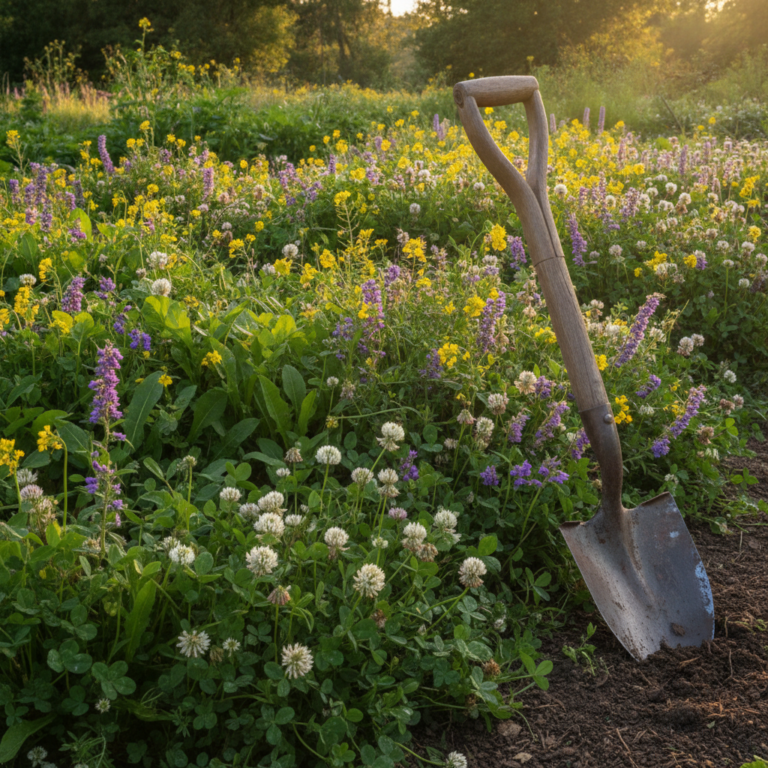
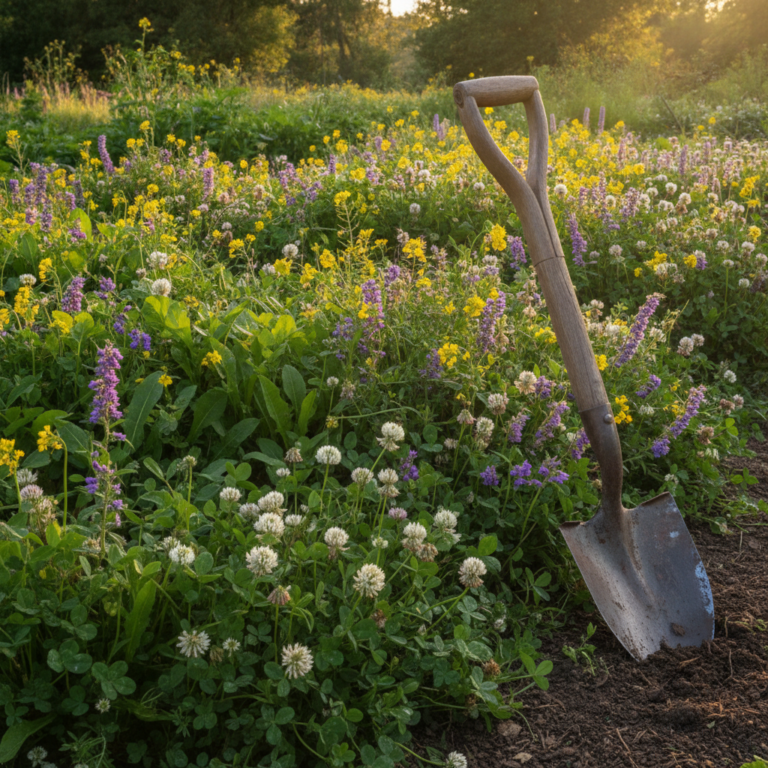
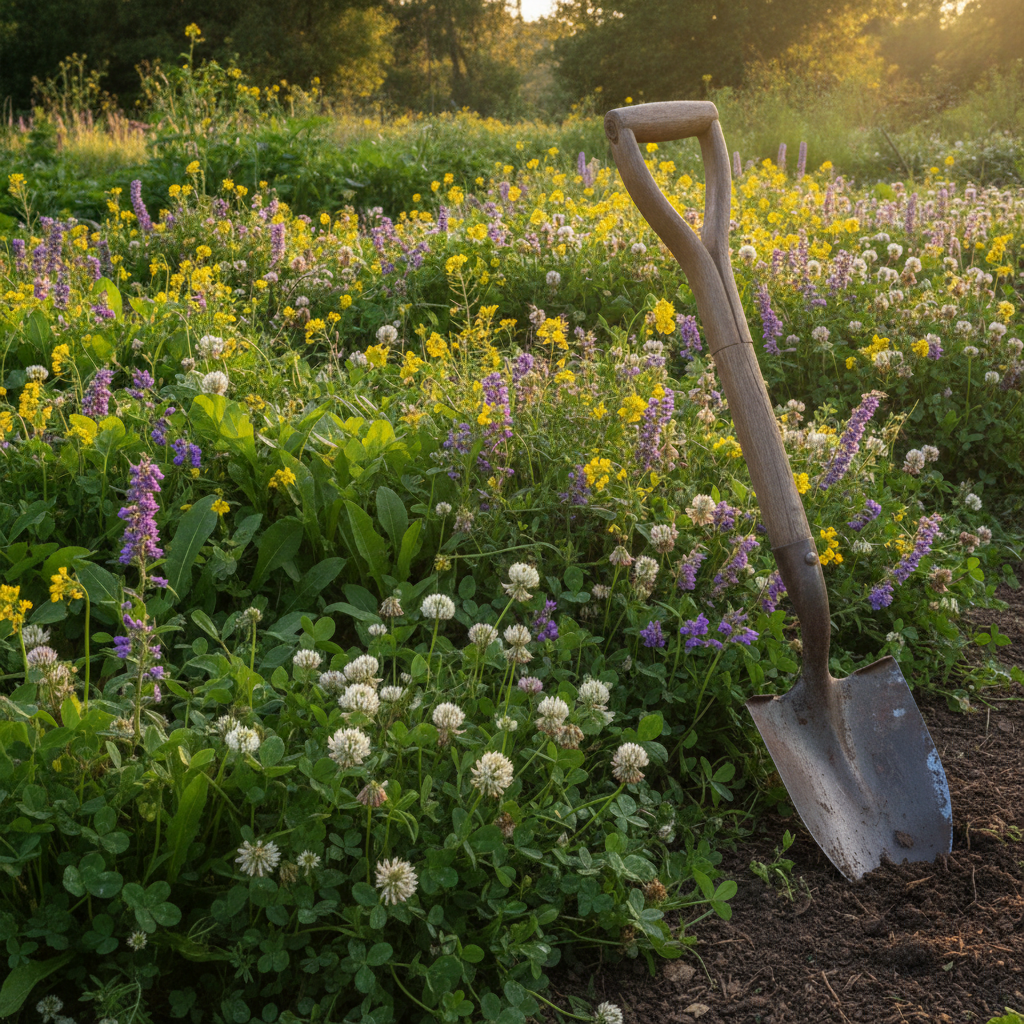
- Crimson Clover — Fast-growing, beautiful, and highly effective. Sow in early spring or late summer. Cut just as flowers begin to open.
- Hairy Vetch — A cold-hardy powerhouse. Excellent for fall sowing. Can fix up to 200 lbs of nitrogen per acre when properly timed.
- Field Peas — Ideal for spring. They grow quickly and are easy to incorporate before they get woody.
- Fenugreek — A lesser-known gem. Fast to establish, drought-tolerant, and beloved by old-world gardeners.
Organic Matter Builders (Non-Legumes)
These plants don’t fix nitrogen, but they build bulk and biomass quickly. Use them when your soil needs structure more than fertility.
- Buckwheat — The summer champion. Germinates in days, smothers weeds, and decomposes rapidly after cutting. Perfect between spring and fall plantings.
- Phacelia — Beloved by bees and beloved by soil. It breaks down fast and is safe to use before almost any food crop.
- Mustard — A biofumigant. The compounds it releases as it breaks down can suppress soil-borne diseases and pests.
- Oats — Great for fall. They winter-kill in cold climates, making spring incorporation effortless.
Timing the Cut: The Most Important Step
This is where most gardeners miss the mark. Cut too early and you get less nitrogen. Cut too late and the plants get woody, start seeding, and take forever to break down.
The golden rule: cut green manure crops at bud stage, just before or as flowers begin to open. This is when the plant holds its highest concentration of nutrients and nitrogen. The stems are still soft enough to decompose quickly once buried.
Here’s a simple timing guide:
- Legumes: Cut when 25–50% of flowers have opened. Root nodules are at their peak nitrogen content.
- Buckwheat: Cut at first flower — it spreads rapidly once it sets seed.
- Phacelia: Cut as buds open. It will have built strong root mass by this point.
- Mustard: Cut when flowers are just opening, before seed pods form.
After cutting, chop the material finely and dig or fork it into the top 6–8 inches of soil. Then wait. Give it 2–4 weeks to decompose before planting your next crop. In warm weather, decomposition happens faster. In cool weather, allow more time.
A Practical Green Manure Planting Calendar
You don’t need a farm to use this technique. Even a small raised bed can benefit enormously from a well-timed green manure rotation. Here’s how to fit it into a typical growing season.
Early Spring (March–April)
Sow field peas or crimson clover as soon as soil is workable. These tolerate cold and grow quickly. Cut them down in late April or early May — about 6 weeks before your main summer planting.
Early Summer Gap (May–June)
After a spring harvest, sow buckwheat in any empty bed. It establishes in 5–7 days and can be cut and turned in within 4–5 weeks. This is a perfect bridge between spring and summer crops.
Late Summer (July–August)
Sow phacelia or mustard after early summer harvests. These build organic matter and, in the case of mustard, can suppress soil diseases before fall planting.
Early Fall (September–October)
Sow hairy vetch or oats as a overwintering green manure. In cold climates, oats will winter-kill and be easy to incorporate in spring. Vetch survives cold and provides nitrogen-rich material for early spring digging.
Matching this calendar to your specific microclimate makes a big difference. The Climate-Proof Your Crops: A 30-Day, Microclimate-Aware Planting Plan is a brilliant companion resource for fine-tuning these timing decisions to your exact growing conditions.
Common Mistakes to Avoid
Even a simple technique can go sideways without the right information. Watch out for these:
- Letting crops set seed. Once they seed, they become weeds. Always cut at bud stage.
- Planting too thick. Dense stands can mat down and become anaerobic when buried. Aim for good but not overcrowded growth.
- Planting too close to transplant time. Give at least 2–4 weeks between incorporation and planting. Fresh green matter can temporarily lock up nitrogen during decomposition.
- Skipping inoculant for legumes. For first-time legume growers, a rhizobium inoculant powder dusted on seeds before sowing ensures nitrogen fixation actually happens.
Green Manure as Part of a Bigger System
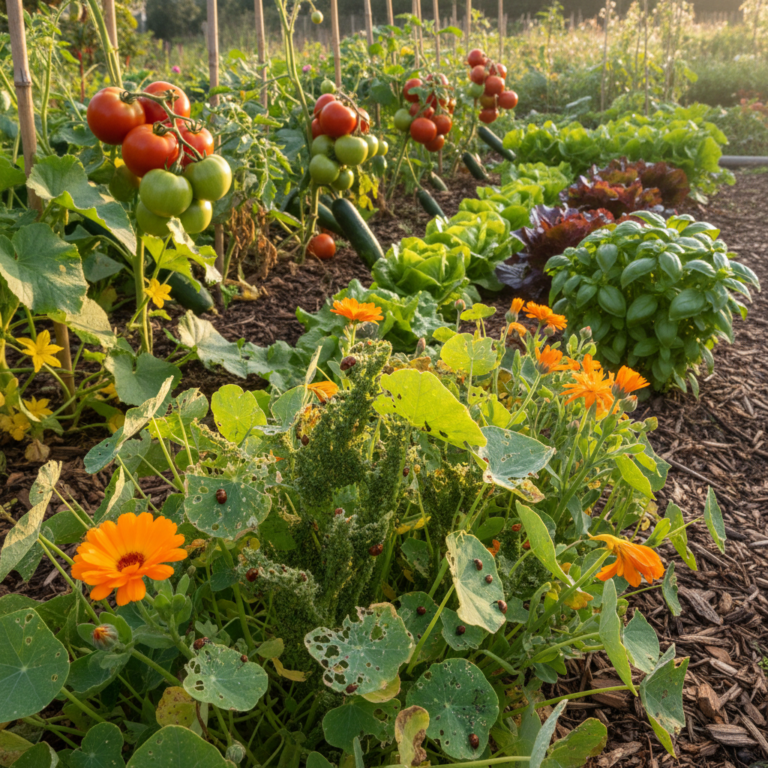
Green manure crops shine brightest when they’re part of a thoughtful, rotating garden system. Pair them with good compost, attentive crop rotation, and a few simple soil-building habits, and your beds will improve measurably every single season.
If you’re newer to thinking about your garden as a living system rather than just a collection of plants, Layered Learning: A Gardener’s Progressive System That Grows with You offers a beautifully structured way to build these skills one season at a time.
For gardeners working with smaller spaces who wonder whether these techniques scale down, the short answer is yes — absolutely. Even a single 4×8 raised bed benefits from a buckwheat or clover rotation between crops. The principles don’t change; only the quantities do. If you’re building a more layered edible garden, check out our Microforest in Small Spaces: A Step-by-Step Plan for Edible, Biodiverse Gardens for ideas on integrating soil-building plants into a productive, beautiful small-space design.
Start This Season — Even a Small Patch Counts
You don’t need to overhaul your whole garden. Pick one empty bed. Scatter some buckwheat or crimson clover seed. Water it in. Watch it grow. Cut it down six weeks later and dig it in. Then plant your next crop into that bed and watch what happens.
That’s how the old farmers learned. Not from a book — from paying attention to what the soil was telling them. Green manure crops are one of the simplest, most cost-effective ways to build living, breathing, productive soil from the ground up. Your grandparents knew it. Now you do too.
The only thing left to do is plant.