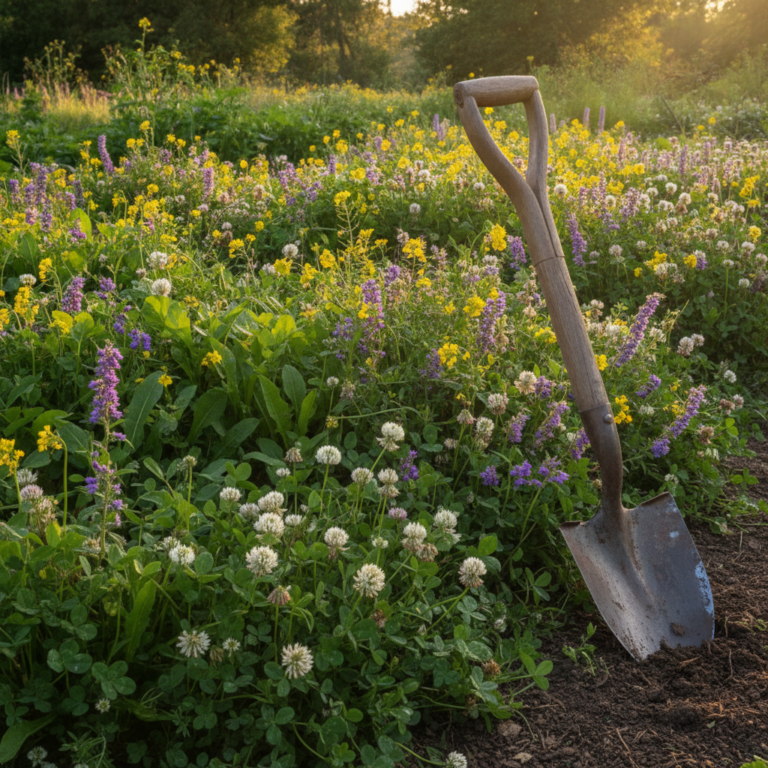
Green Manure Crops: The Plow-Under Secret
Long before a bag of synthetic nitrogen ever sat on a store shelf, farmers already knew how to feed their soil for free. They grew green manure crops — specific plants raised not to eat, but to chop down and bury alive. The living roots, stems, and leaves decomposed underground, releasing a slow, steady supply of nutrients. The result was rich, dark, biologically active soil that kept producing year after year. This old practice never disappeared, but most modern gardeners simply haven’t heard of it. That changes today.
What Are Green Manure Crops and Why Do They Work?
A green manure crop is any plant you grow specifically to dig back into the soil before it sets seed. The name can sound counterintuitive — you’re growing something to destroy it on purpose. But that’s exactly the point.
When you bury plant matter at the right moment, soil microbes get to work immediately. They break down the organic material and release nitrogen, phosphorus, and trace minerals directly where plant roots need them. You’re essentially running a composting process underground, without a bin.
The benefits go beyond nutrients alone. Green manures also:
- Loosen compacted soil with deep taproots
- Suppress weeds by outcompeting them during fallow periods
- Prevent erosion and nutrient leaching over winter
- Feed soil fungi and bacteria, boosting long-term soil health
- Add organic matter that improves water retention and drainage
If you’ve ever struggled to read what your soil actually needs, this post on Soil Sense Without the Lab: Read Your Dirt, Fix It Fast pairs perfectly with a green manure strategy.
The Best Green Manure Crops for Home Gardens
Not every plant works equally well as a green manure. The most effective choices fall into two broad categories: nitrogen-fixers and biomass builders. Ideally, you want crops that do both.
Nitrogen-Fixing Legumes
These plants form partnerships with soil bacteria called rhizobia. Together, they pull nitrogen directly from the air and store it in root nodules. When you turn the crop under, that stored nitrogen releases into the soil.
Top legume green manures:
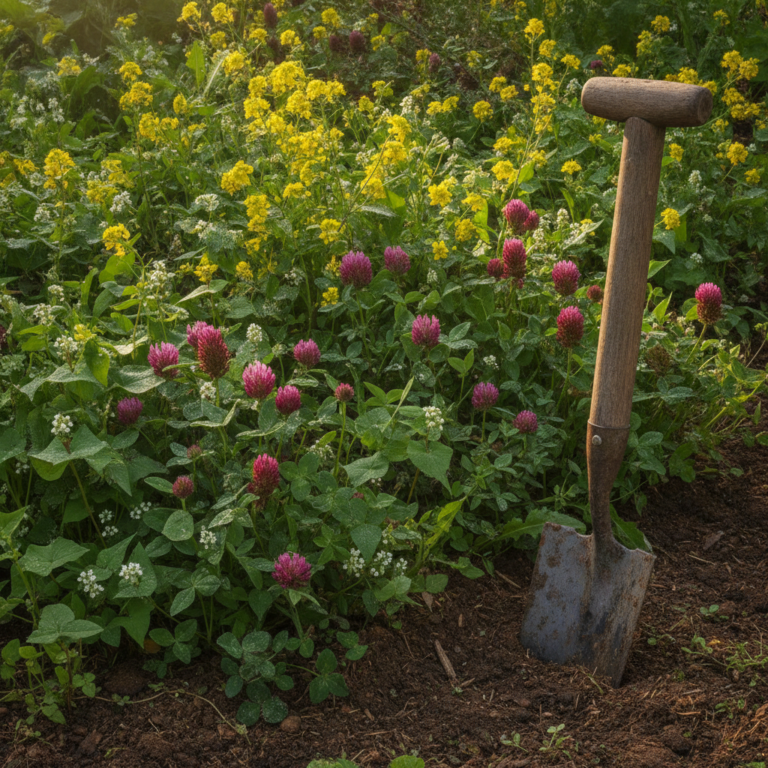
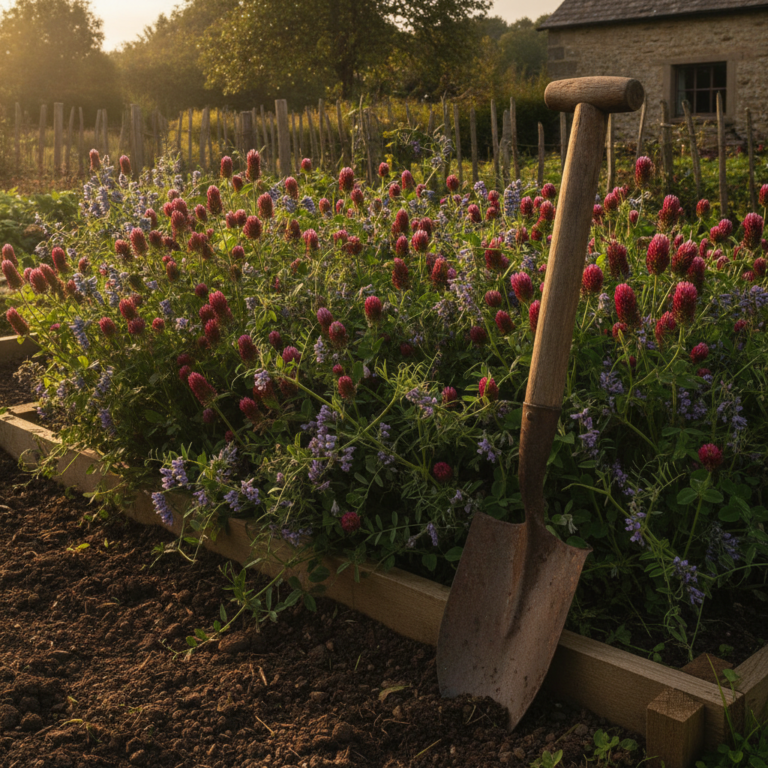
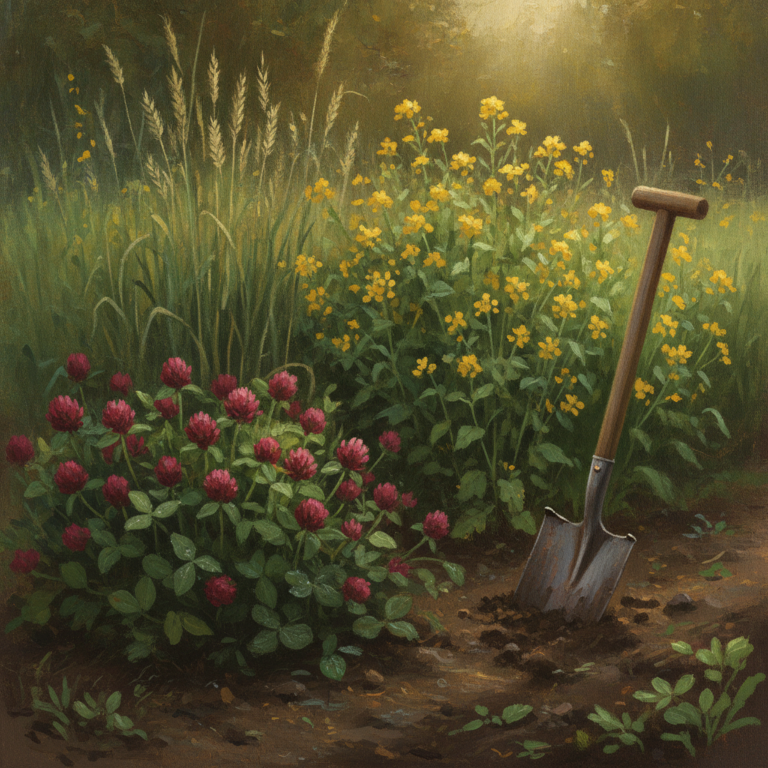
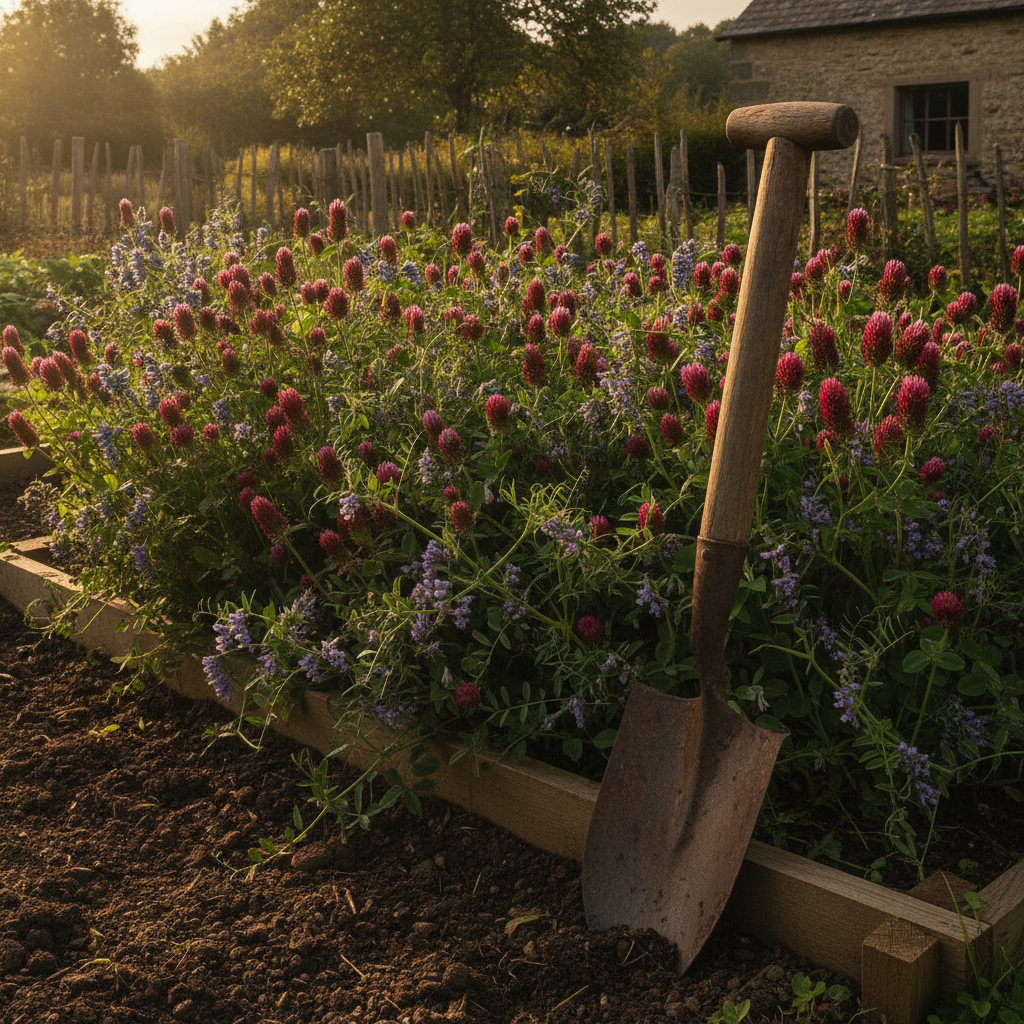
- Crimson clover — Fast-growing, beloved by pollinators, fixes 100–150 lbs of nitrogen per acre
- Hairy vetch — Cold-hardy, excellent for fall planting, very high nitrogen contribution
- Field peas — Dual purpose: eat the peas first, then turn the vines under
- Fava beans — Thrives in cool weather, deep roots break up clay subsoil
- Cowpeas — Summer-season workhorse for hot climates, drought-tolerant
Biomass Builders
These non-legumes don’t fix nitrogen, but they grow fast and produce enormous amounts of organic matter. They’re especially valuable for improving soil structure and feeding the microbial web.
Top biomass green manures:
- Buckwheat — Grows in poor soil, suppresses weeds aggressively, matures in just 5–6 weeks
- Winter rye — Exceptional cold tolerance, extensive fibrous roots improve soil structure
- Mustard — Biofumigant properties suppress soil-borne disease and nematodes
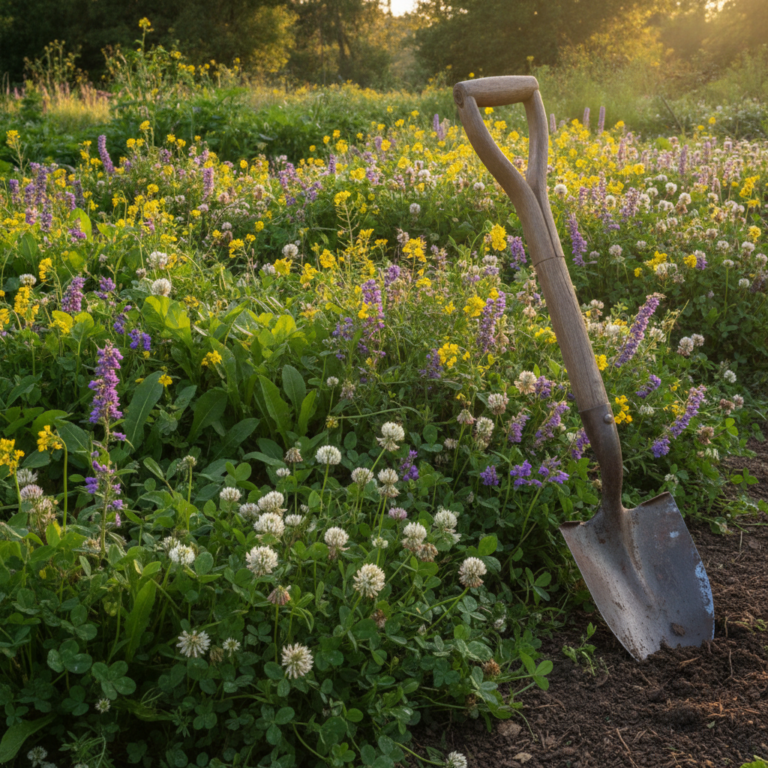
- Phacelia — Breaks down quickly after cutting, excellent bee forage before you plow
- Oats — Winter-kill in cold climates, leaving soft residue that’s easy to dig in spring
For best results, mix a legume with a biomass builder. Try hairy vetch with winter rye, or clover with oats. The combination gives you nitrogen plus structure-building organic matter in a single sowing.
How to Time the Cut-and-Dig for Maximum Nitrogen Release
Timing is everything with green manure crops. Cut too early and you lose bulk. Wait too long and the plants go woody and lignified, slowing decomposition for months.
The golden window is just before flowering — or right at the very start of bloom. At this stage, the plants are at peak nitrogen content and still soft enough to break down quickly. You want green, sappy tissue, not straw.
Step-by-Step Plow-Under Method
- Chop the plants low — Use a sharp spade, scythe, or string trimmer to cut everything down to a few inches. Don’t skip this step. Large uncut plants are harder to incorporate and decompose unevenly.
- Let it wilt for 1–3 days — A brief wilting period reduces the volume and starts breaking down cell walls before burial.
- Dig in 4–6 inches deep — Turn the material into the top layer of soil. Deeper isn’t better here. The soil microbes responsible for decomposition live in that upper zone.
- Wait 2–4 weeks before planting — Fresh green manure releases compounds that can temporarily inhibit germination. Give the soil time to settle. Mustard and rye need the longest waiting period.
If you’re working in a small raised bed or tight space, you can also chop and drop — cutting the plants and leaving them on the surface as a mulch layer rather than digging them in. The results are slower but still effective.
Planning your whole growing season around soil-building rotations? The Climate-Proof Your Crops: A 30-Day, Microclimate–Aware Planting Plan will help you sequence everything with your local conditions in mind.
A Practical Green Manure Planting Calendar
Here’s how to work green manure crops into your existing garden rotation, season by season. Adjust based on your last and first frost dates.
Early Spring (4–6 weeks before last frost)
Sow field peas, fava beans, or oats as soon as the soil is workable. These cold-tolerant crops establish quickly. Cut and dig them 6–8 weeks later, just as your main season vegetables go in.
Early Summer (after spring crops come out)
Sow buckwheat or cowpeas into any bed that won’t be replanted for 6–8 weeks. Buckwheat is especially useful here — it establishes in almost any soil and smothers summer weeds. Turn it under before it sets seed.
Late Summer (6–8 weeks before first frost)
This is the most important green manure window. After harvesting tomatoes, beans, or squash, sow a winter cover immediately. Hairy vetch with winter rye is the classic combination. It protects bare soil all winter, then gets turned under in spring.
Fall and Winter (for mild climates)
In USDA zones 7 and warmer, crimson clover and phacelia can overwinter and provide early spring nitrogen. Sow them in September or October for a lush spring green manure ready to plow under by April.
Tracking these rotations in writing makes a real difference. The Field Notes to Flourishing: Templates and Prompts to Track Growth, Mistakes, and Milestones offers templates specifically built for exactly this kind of multi-season planning.
Why Green Manures Outperform Most Store-Bought Soil Conditioners
Bagged fertilizers give plants a quick hit of isolated nutrients. But they do nothing for soil biology, structure, or long-term fertility. In fact, synthetic nitrogen applied year after year can actually suppress the microbial activity that healthy soil depends on.
Green manure crops work differently. They feed the whole system — not just the current crop. Every time you turn a cover crop under, you’re depositing organic carbon that feeds bacteria, fungi, earthworms, and nematodes. Those organisms, in turn, make nutrients available to your vegetables in forms they can actually use.
Think of it less like applying fertilizer and more like making a deposit in a soil bank. The returns compound over time. Gardeners who commit to regular green manure rotations often report dramatic improvements in soil texture, plant health, and yield — usually within just two or three seasons.
This principle connects directly to what traditional farmers understood intuitively: healthy soil grows healthy plants, and healthy soil is built with life, not chemistry.
If you’re just getting started with soil-building practices and want a structured approach to learning, the Smart Starts: A 4-Week Skill-Build Plan for Complete Garden Beginners is a great companion resource to work through alongside your first green manure experiment.
Getting Started This Season
You don’t need a large plot to make green manure crops work for you. Even a single 4×8 raised bed can benefit from a rotation of buckwheat or clover during a fallow period. Start small, observe the results, and expand the practice as your confidence grows.
Here’s your simple action plan:
- Identify one bed that will sit empty for 6 or more weeks this season
- Choose a green manure suited to your season — buckwheat for summer, vetch for fall
- Sow densely, thin only if needed, and water in well
- Cut and dig just before flowering
- Wait three weeks, then plant your next crop
That’s the whole practice. No special equipment. No amendments to buy. Just seeds, time, and the same quiet wisdom farmers relied on for thousands of years before anyone invented a fertilizer bag.
Your soil has been waiting for this.