Green Manure Crops: The Plow-Under Secret
Long before a bag of synthetic nitrogen ever sat on a store shelf, farmers already knew how to feed hungry soil. They grew green manure crops — specific plants raised not for eating, but for chopping down and burying. The decomposing roots and leaves pumped nitrogen, carbon, and living organic matter straight back into the ground. It was free, it was effective, and somewhere along the way, modern agriculture quietly forgot all about it. The good news? You can start using this buried secret in your own garden this season.
What Are Green Manure Crops, Exactly?
A green manure crop is any plant you grow specifically to dig back into the soil before it sets seed. The term “green” refers to the living plant material — not the color alone. You grow it, cut it at the right moment, and turn it under. As it breaks down, it releases nutrients, improves soil structure, and feeds the microbial life that makes everything else in your garden possible.
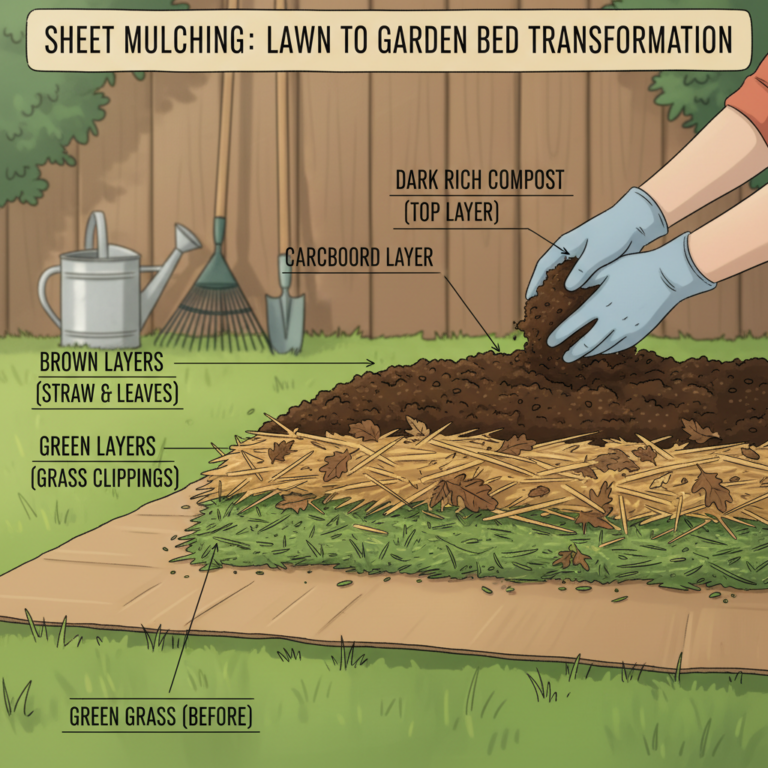
This is different from mulching or composting. With green manures, the plant feeds the soil in place, at the root zone, exactly where your future crops will need it most. Think of it as making a slow-release fertilizer deposit directly into your garden bank account.
If you’re still learning to read what your soil needs, check out Soil Sense Without the Lab: Read Your Dirt, Fix It Fast — it pairs perfectly with this approach.
The Best Green Manure Crops for Home Gardens
Not every plant makes a good green manure. The best ones grow fast, produce abundant biomass, fix nitrogen from the air, or break up compacted soil with deep roots. Here are the top performers.
Nitrogen-Fixing Legumes
These are the rockstars of the green manure world. Legumes form a partnership with soil bacteria called rhizobia. Together, they pull nitrogen from the air and lock it into the soil. When you dig them under, that nitrogen becomes available to your next crop.
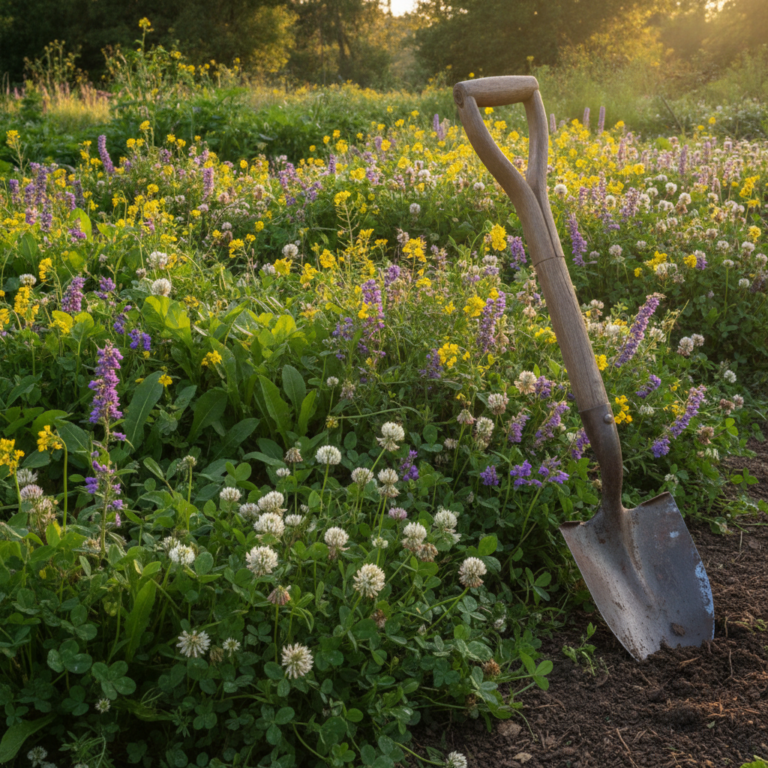
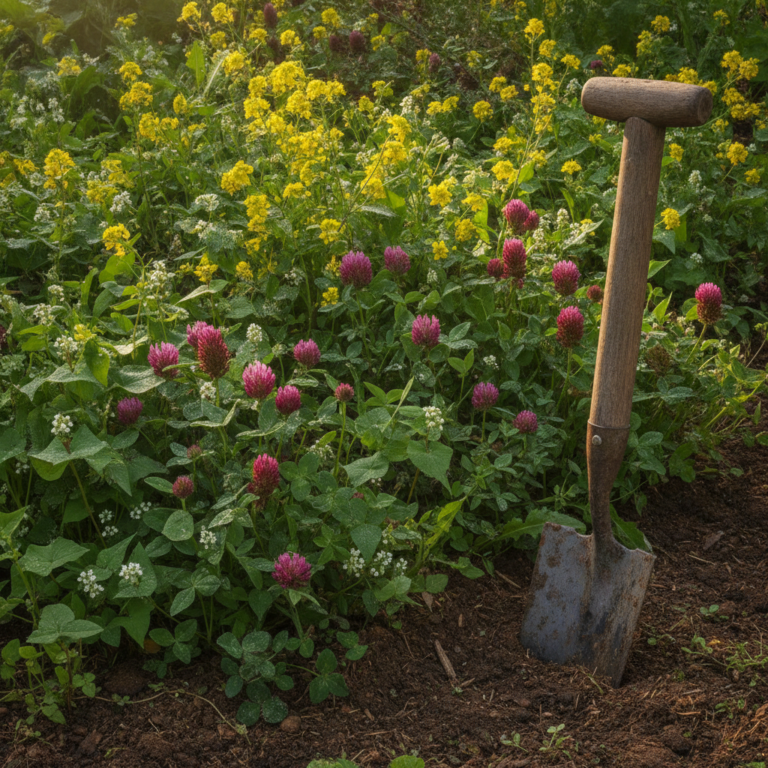
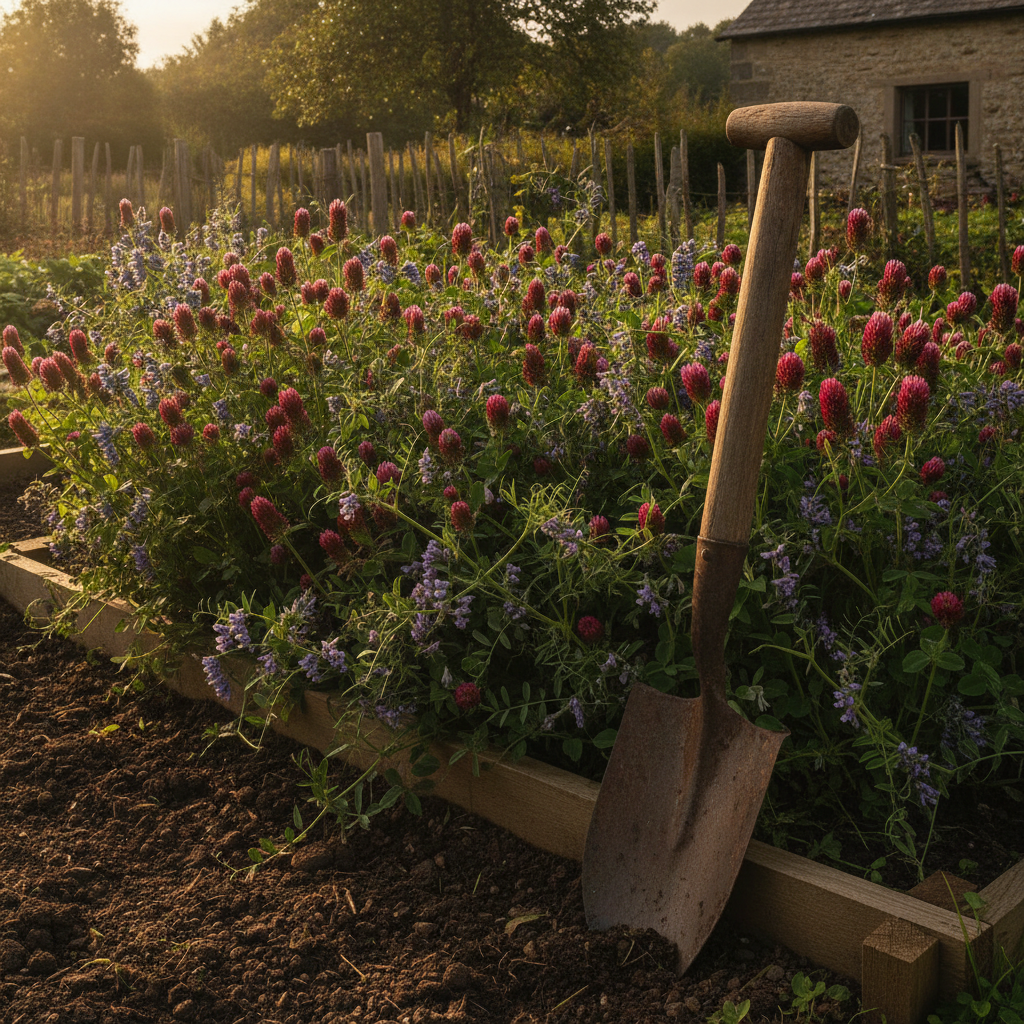
- Crimson clover — Fast-growing, cold-tolerant, beautiful in bloom. Fixes up to 150 lbs of nitrogen per acre.
- Hairy vetch — Hardy enough to overwinter in most zones. One of the highest nitrogen-fixers available to home gardeners.
- Field peas — Quick to establish in cool weather. Easy to turn under while still soft and green.
- Fava beans — Excellent for spring or fall. Their thick stems add serious organic matter alongside nitrogen.
Fast-Growing Biomass Builders
These aren’t nitrogen-fixers, but they produce so much organic matter so quickly that they dramatically improve soil texture and microbial activity.
- Buckwheat — Grows from seed to full size in 4–6 weeks. Ideal for summer gap periods. Also suppresses weeds aggressively.
- Mustard — Biofumigant properties mean it can suppress soil-borne pests and diseases while building organic matter.
- Phacelia — A wildflower that pollinators adore. Soft stems decompose quickly, making it ideal before a fast-turnaround bed.
- Oats — Winter-killed in colder zones, leaving a mat of organic matter that’s easy to work into the soil in spring.
Timing the Cut: When to Chop for Maximum Nitrogen Release
Here is where most gardeners go wrong. They either dig too early (before much biomass has formed) or too late (after the plant has gone to seed and nutrients have moved out of the leaves). The sweet spot is at early to full flower — just as blooms open but before seed pods develop.
At this stage, the plant is at peak nitrogen content. The stems are still soft enough to break down quickly. And you avoid accidentally seeding the green manure across your garden.
Chop the plants down with a spade or hoe. Let the cut material wilt for a day or two on the surface. Then dig or fork it into the top 6–8 inches of soil. Wait two to four weeks before planting your main crop. This gives the organic matter time to begin decomposing without competing with seedling roots for nitrogen — a process called “nitrogen drawdown.”
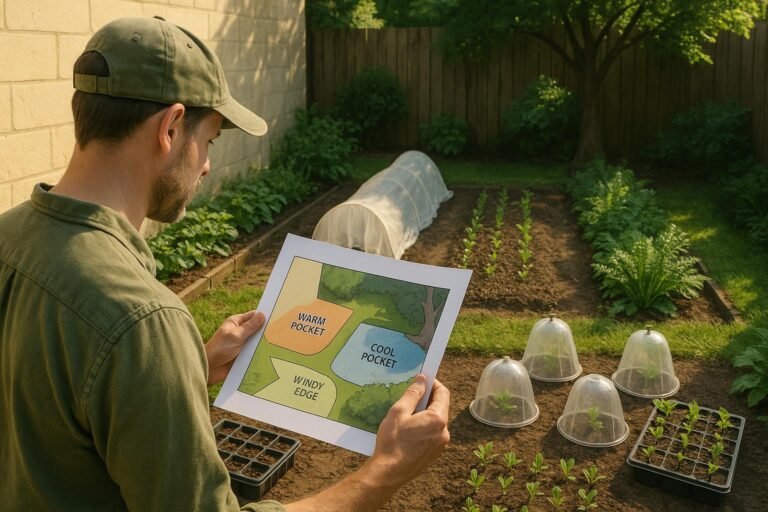
Timing also depends on your climate and planting windows. For a more complete picture of seasonal planning, Climate-Proof Your Crops: A 30-Day, Microclimate-Aware Planting Plan gives you a detailed framework for working with your local conditions.
Why Green Manure Crops Beat Most Store-Bought Soil Conditioners
Bagged amendments like blood meal, bone meal, or even high-quality compost are useful. But they come with limitations. They’re expensive. They’re often sourced from industrial systems. And they can’t replicate the full biological complexity that a living root system builds over weeks in the ground.
Green manure crops do something no bag of fertilizer can do. They grow living roots that open up compacted soil, exude sugars that feed beneficial fungi, and create physical channels for air and water. When you chop and bury them, you’re not just adding nutrients — you’re feeding the entire soil food web.
Studies comparing green manure rotations to synthetic nitrogen applications consistently show that soils managed with cover crops have higher organic matter, better water retention, and more diverse microbial communities within just two to three seasons. Your grandparents knew this intuitively. Science caught up later.
If you’re new to thinking about soil as a living system, you’ll find Garden Experiments: 3 Safe, Small-Scale Trials That Grow Your Gardening Confidence a great place to experiment with different soil-building approaches side by side.
A Practical Green Manure Planting Calendar
This calendar works for most temperate zones. Adjust timing by two to four weeks based on your first and last frost dates.
Early Spring (March–April)
Sow field peas or oats as soon as soil can be worked. These tolerate frost. Let them grow for 6–8 weeks, then chop and dig before your main summer crop transplants go in.
Late Spring to Early Summer (May–June)
Sow buckwheat or phacelia in beds that won’t be planted until midsummer. Both establish in weeks. Cut at first flower — typically 5–6 weeks after sowing.
Midsummer Gap (July–August)
After harvesting early crops like garlic or peas, immediately sow buckwheat or crimson clover. This fills idle beds and prevents nutrient leaching from bare soil. Dig under by early September.
Late Summer to Fall (August–October)
Sow hairy vetch, winter rye, or crimson clover after summer crops finish. These overwinter in most zones, fixing nitrogen through fall and spring. Cut and dig in April or early May.
Winter (November–February)
In mild climates, sow fava beans or mustard for a winter-active green manure. In cold zones, let winter-killed oats or buckwheat stubble protect the soil surface until spring tillage.
Getting Started This Season
You don’t need a large plot to make green manures work. Even a single raised bed rotated through a buckwheat or clover cycle once a year will show measurable improvement in soil texture and plant health within two seasons.
Start small. Pick one bed that’s currently empty or finishing up a crop. Broadcast a handful of clover or buckwheat seed, water it in, and watch what happens. In six weeks, you’ll have a lush stand of green growth ready to feed your soil for free.
As you build confidence, you can layer this technique into a full rotation system across your entire garden. For help planning that progression, Layered Learning: A Gardener’s Progressive System That Grows with You walks you through how to stack skills and techniques season by season.
The farmers who came before us weren’t working with less knowledge. In many ways, they were working with more — more patience, more observation, and a deeper trust in what the soil could do when given the right living inputs. Green manure crops were never a secret, really. They were just a practice we stopped passing down. Now you have it back.