Green Manure Crops: The Plow-Under Secret
Before the first bag of synthetic nitrogen ever hit a farm supply shelf, generations of growers were building extraordinarily fertile soil using nothing more than seeds, time, and a spade. They called it the plow-under method — and green manure crops were at the heart of it. If your soil feels tired, compacted, or just not performing the way you’d like, this forgotten technique might be exactly what your garden has been missing.
What Are Green Manure Crops and Why Did Farmers Swear By Them?
A green manure crop is any fast-growing plant you sow specifically to cut down and bury while it’s still young and green. You’re not harvesting the leaves or seeds. Instead, you’re using the whole living plant as a soil amendment — turning it directly into the earth before it goes to seed.
Farmers understood something that modern gardeners often overlook. Living organic matter is far more valuable than dead, dried material. Fresh green tissue breaks down quickly. It releases a surge of nitrogen, feeds soil bacteria and fungi, and improves soil structure almost immediately.
This isn’t a niche experiment. It’s one of the oldest and most reliable methods of soil improvement in human history. And it works just as beautifully in a backyard raised bed as it does across a full acre.
If you’re just getting started with understanding your soil’s needs, our guide on Soil Sense Without the Lab: Read Your Dirt, Fix It Fast will help you identify what your soil is lacking before you choose your first green manure crop.
The Best Green Manure Crops for Home Gardeners
Not every cover crop works equally well as a green manure. You want plants that grow fast, produce a lot of soft biomass, and ideally fix nitrogen from the air through their roots. Here are the top performers.
Nitrogen-Fixing Legumes
These are your heavy hitters. Legumes form a partnership with soil bacteria called rhizobia, which pull nitrogen from the atmosphere and store it in root nodules. When you bury the plant, all that stored nitrogen becomes available to your next crop.
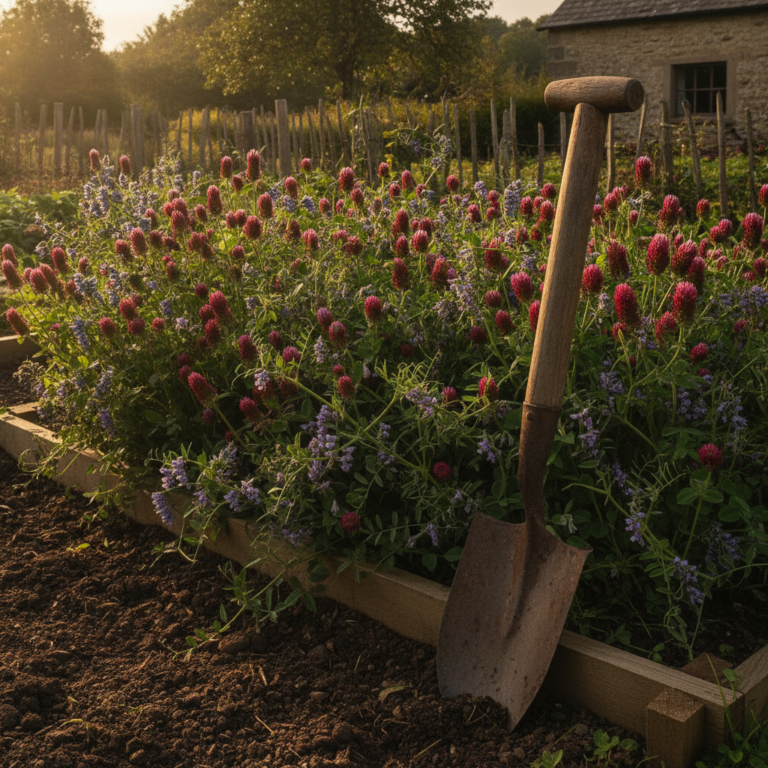
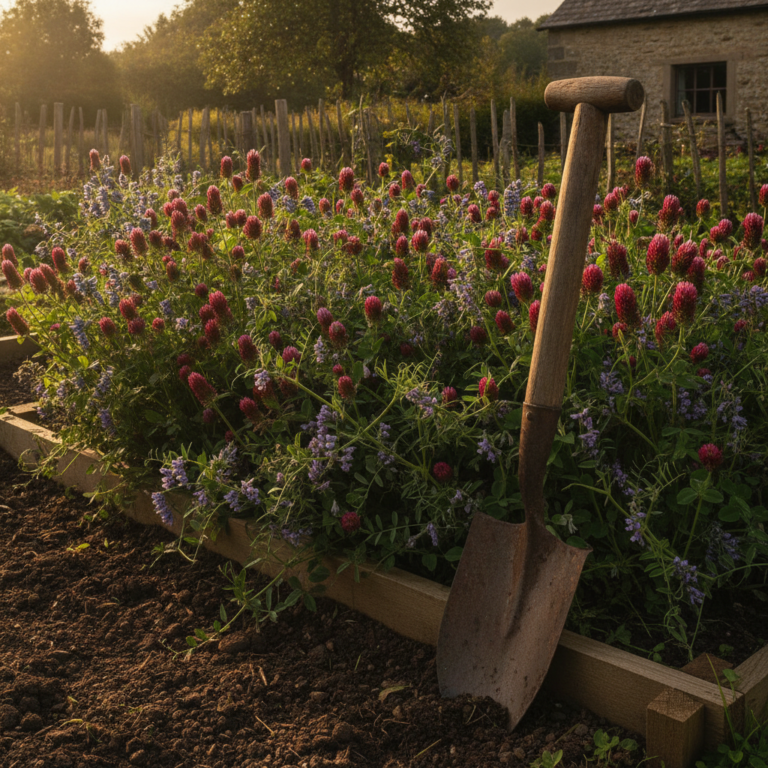
- Crimson Clover — Fast-growing, beautiful, and one of the highest nitrogen contributors. It establishes quickly in both spring and autumn.
- Hairy Vetch — Incredibly cold-hardy. It’s one of the best winter green manure crops for northern climates. It fixes impressive amounts of nitrogen and its soft vines are easy to cut and dig.
- Field Peas — A reliable spring choice. They grow quickly, fix nitrogen well, and break down fast after incorporation.
- Fava Beans — Excellent for autumn planting. Their deep roots also help break up compacted subsoil layers.
Non-Legume Green Manures
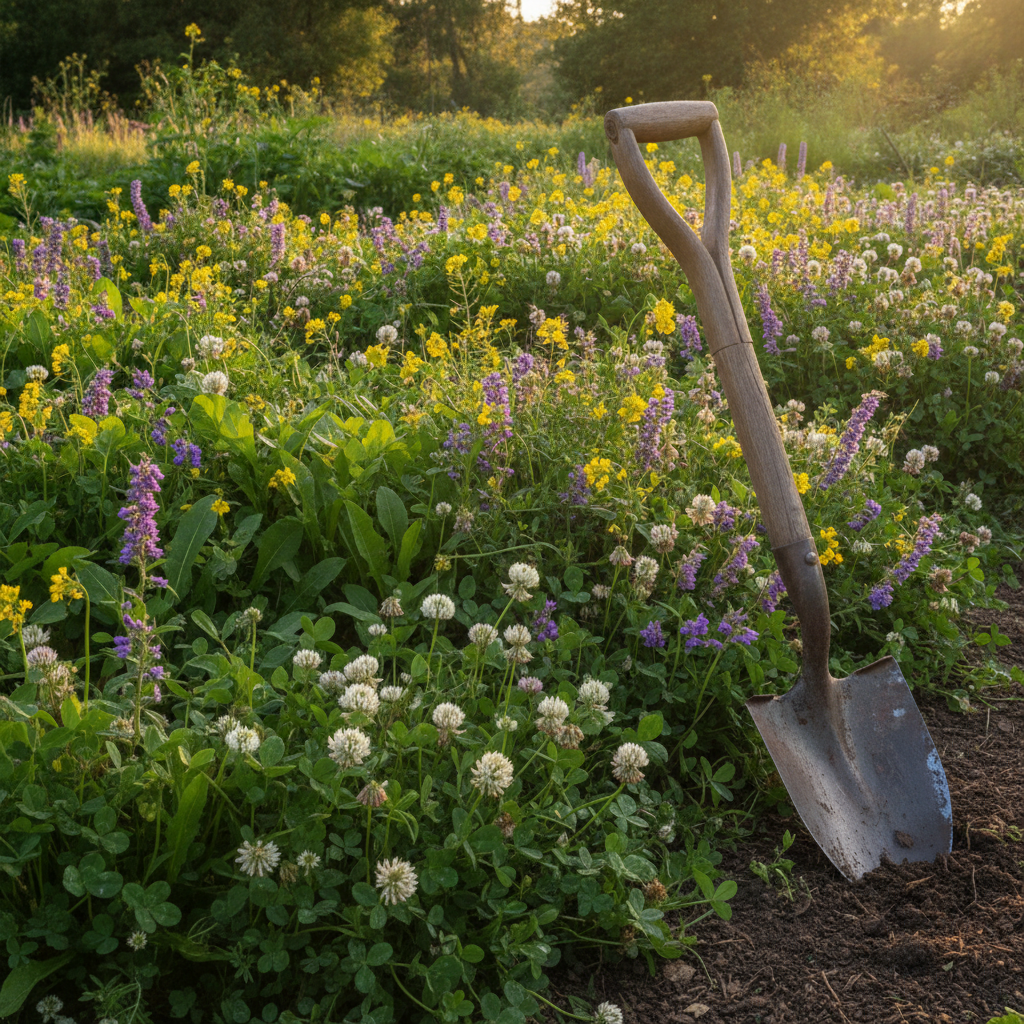
These plants don’t fix nitrogen, but they bring other crucial benefits. They grow extremely fast, smother weeds, add bulk organic matter, and some attract beneficial insects that stay in your garden long after.
- Buckwheat — Grows from seed to choppable size in just four to six weeks. It’s remarkable at scavenging phosphorus from deep in the soil and making it available at the surface.
- Phacelia — One of the best bee-attracting plants you can grow. Cut it just before full bloom for maximum soft tissue content.
- Mustard — Has a natural biofumigant effect. Compounds released as it breaks down can suppress soil-borne pathogens and nematodes.
- Oats and Rye — Ideal for autumn planting. They grow through cold weather, prevent erosion, and add significant organic matter in spring.
How to Time the Cut and Dig for Maximum Nitrogen Release
This is where most gardeners go wrong. They either cut too early when there isn’t enough biomass, or they wait too long and the plant becomes woody and slow to decompose. The timing window is specific — and once you understand it, everything clicks.
The golden rule is simple: cut and bury your green manure crops at the flower bud stage, just before full bloom. At this point, the plant is at peak nitrogen content. The tissue is still soft and succulent. It will break down within two to four weeks in warm soil.
Here’s the step-by-step process:
- Chop the plants down with a sharp hoe or spade at soil level. Don’t pull the roots out — let them decompose where they are. The root mass is also rich in nitrogen and improves soil structure.
- Leave the chopped material on the surface for two to three days if the weather is warm and dry. This wilts the tissue slightly and speeds initial decomposition.
- Dig or fork the material into the top six to eight inches of soil. You don’t need to go deeper than that. Most biological activity happens in the top layer.
- Water it in well if rain isn’t coming. Moisture activates the microbial breakdown process.
- Wait two to three weeks before planting. This is the critical step most people skip. Decomposing green material temporarily ties up nitrogen as microbes process it. Give the soil time to settle before putting in your next crop.
In warm summer conditions, two weeks is usually enough. In cool spring or autumn soil, give it three to four weeks. Your nose is a reliable guide — when the sharp, fermented smell fades and the soil smells sweet and earthy again, you’re ready to plant.
A Practical Green Manure Planting Calendar
The real magic of green manure crops is how neatly they fit into the gaps in your growing season. Every empty bed is an opportunity. Here’s a seasonal guide you can adapt to your climate and garden style.
Early Spring (March–April)
Sow field peas or crimson clover as soon as soil can be worked. These tolerate light frosts. Cut and bury four to six weeks later, then transplant tomatoes, squash, or peppers into the enriched bed.
Late Spring to Early Summer (May–June)
Buckwheat is your best friend here. Sow after last frost. In just four weeks it’s ready to cut. This is ideal for beds sitting empty between spring and summer plantings. Two successive buckwheat sowings before your autumn crops can dramatically improve a depleted bed.
Midsummer (July–August)
After harvesting early crops like garlic or peas, sow phacelia or mustard immediately. These fast-growing plants protect soil from summer sun, prevent weed germination, and add organic matter before autumn planting begins.
Autumn (September–October)
This is prime time for hairy vetch, winter rye, or fava beans. Sow these after summer crops finish. They’ll grow through autumn, overwinter, and be ready to cut and bury in early spring — just in time to prepare beds for summer vegetables.
Winter (November–February)
In mild climates, crimson clover and winter field peas can continue growing slowly. In colder areas, winter rye will keep soil covered and protected. Even a standing dead cover is better than bare ground through the freeze-thaw cycles of winter.
For a more complete seasonal planting framework that accounts for your specific climate zone, take a look at our Climate-Proof Your Crops: A 30-Day, Microclimate–Aware Planting Plan. Matching your green manure timing to your local microclimate makes a significant difference in results.
Why Green Manure Crops Outperform Most Bagged Soil Conditioners
A bag of granular fertilizer gives your soil a single dose of isolated nutrients. It’s a one-note solution. Green manure crops, by contrast, deliver something far more complex and lasting.
When you bury a fresh legume crop, you’re adding:
- Readily available nitrogen from root nodules and leaf tissue
- Carbon from stems and leaves, which feeds soil biology long-term
- Physical root channels that improve drainage and aeration
- Thousands of microbial colonies that came with the root system
- Trace minerals the plant scavenged from deep in the soil
No bag of fertilizer comes close to that kind of comprehensive soil nourishment. And the cost? A packet of clover seed or vetch. That’s it.
If you’re building a more complex growing system — including fruit trees, perennial herbs, or layered edible plantings — green manure crops integrate beautifully. Our guide on Microforest in Small Spaces: A Step-by-Step Plan for Edible, Biodiverse Gardens explores how these techniques work within layered food systems.
Common Mistakes to Avoid
Even simple techniques have a few pitfalls worth knowing about before you start.
Don’t let it go to seed. If you wait too long and your green manure sets seed, you’ve created a weed problem. Cut before full bloom, every time.
Don’t bury too deep. Six to eight inches is plenty. Burying green matter too deep slows decomposition dramatically because oxygen levels drop below that point.
Don’t skip the waiting period. Planting into freshly incorporated green manure can actually hurt your seedlings due to nitrogen immobilization and allelopathic compounds from decomposing tissue. Be patient. Two to three weeks makes all the difference.
Don’t ignore the roots. The root system of a legume green manure holds as much nitrogen as the top growth. Leave roots in place whenever possible.
Start Small, Build Confidence
You don’t need to rework your entire garden this season. Start with one bed. Sow buckwheat into it this month, cut and bury it in four weeks, wait two weeks, and then plant something into that bed. Compare that bed’s performance to your others. The results tend to be convincing on their own.
Gardening is as much about observation and tracking as it is about technique. If you’d like a structured way to record your soil experiments and see patterns over time, our Field Notes to Flourishing: Templates and Prompts to Track Growth, Mistakes, and Milestones gives you a ready-made framework for exactly that.
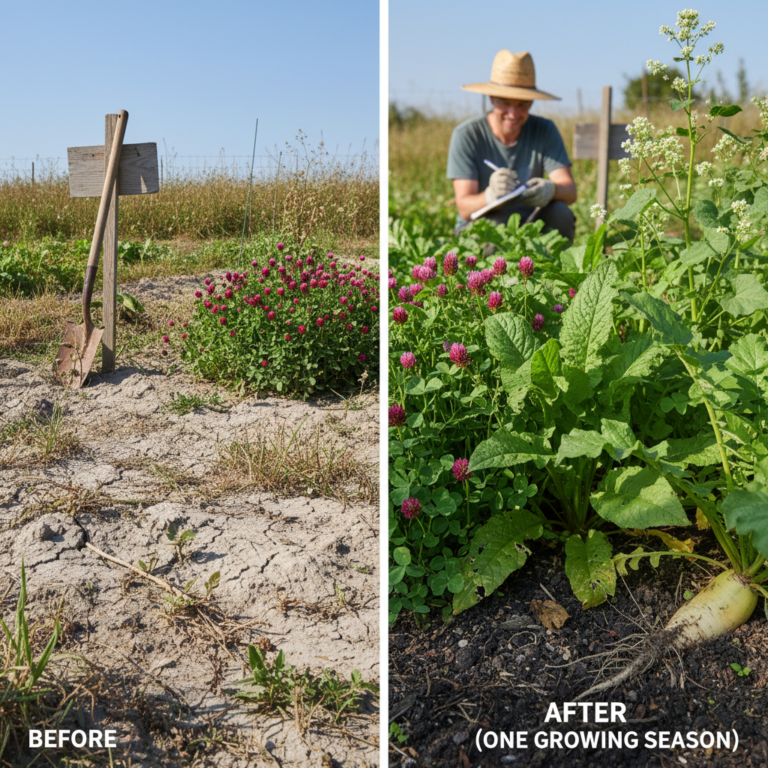
Your grandparents didn’t need a chemistry degree or an expensive soil test to grow extraordinary food. They had something better — a deep understanding of what the soil needed and the patience to give it. Green manure crops are one of the most powerful expressions of that knowledge. And the best part? Your soil will tell you it’s working within a single growing season.
Start this week. Sow something. Bury something. Let the soil do what it’s always known how to do.