Green Manure Crops: The Plow-Under Secret
Long before a bag of synthetic nitrogen existed, farmers already knew how to grow a soil that fed itself. They called it the plow-under secret — and it worked beautifully. By growing specific green manure crops and then chopping them into the earth at just the right moment, growers built deep, living soil without spending a cent on amendments. This technique is older than recorded agriculture. And somehow, most modern gardeners have never heard of it.
If you’re tired of buying bags of fertilizer that seem to vanish by midsummer, this post is for you. We’re going to cover exactly which green manure crops work best, how to time the cut-and-dig for maximum nitrogen release, and how to build a practical planting calendar you can start using this very season.
What Are Green Manure Crops — And Why Do They Work?
Green manure crops are plants grown specifically to be dug back into the soil — not harvested, not eaten, just buried. The goal is simple: feed the soil with fresh, living organic matter at its most nutrient-rich stage. Think of it as composting in place, without the pile.
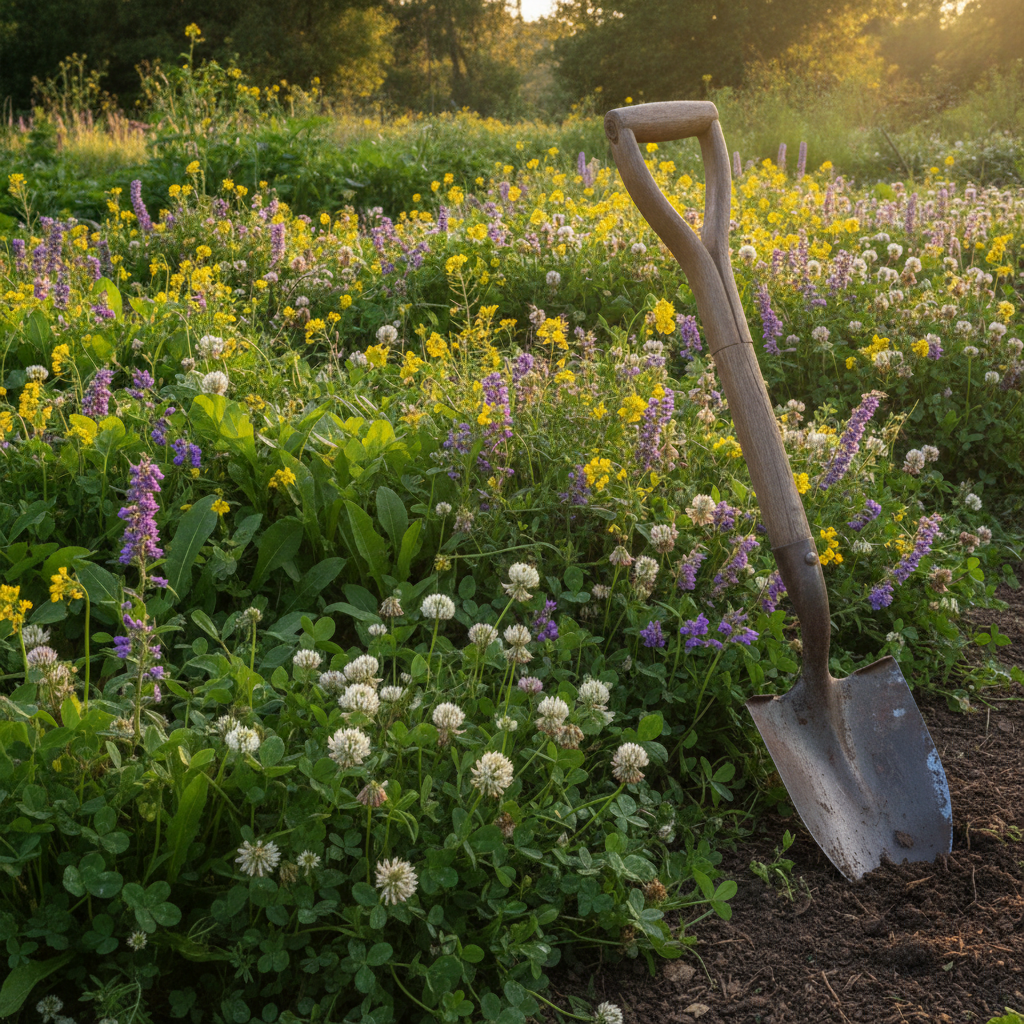
These crops work through several mechanisms at once. First, many of them — especially legumes like clover, vetch, and field peas — form a partnership with soil bacteria. Together, they pull nitrogen directly from the air and fix it into the root zone. When you dig them under, that stored nitrogen becomes available to your next planting.
Second, the decomposing plant material feeds soil fungi, bacteria, worms, and the entire underground food web. This improves soil structure, water retention, and long-term fertility in ways that synthetic fertilizers simply cannot replicate.
Third, growing a dense cover crop smothers weeds, protects bare soil from erosion, and prevents nutrient leaching over winter or between plantings. You get three benefits for the price of a seed packet.
If you’re still learning how to read what your soil actually needs before you plant, the guide Soil Sense Without the Lab: Read Your Dirt, Fix It Fast is a great place to start alongside this one.
The Best Green Manure Crops for Home Gardens
Not every plant works equally well as a green manure. The best choices depend on your season, your soil, and your goals. Here are the top performers, organized by what they do best.
Nitrogen-Fixers (Legumes)
These are the workhorses of the green manure world. Legumes form root nodules filled with nitrogen-fixing bacteria. When you dig them in, you’re adding a slow-release nitrogen hit that can feed your next crop for weeks.
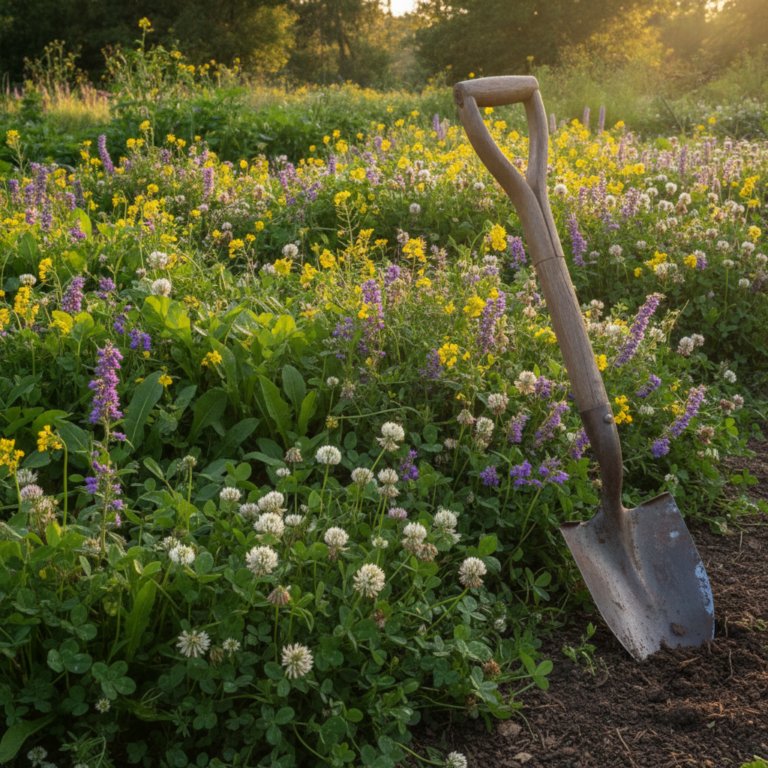
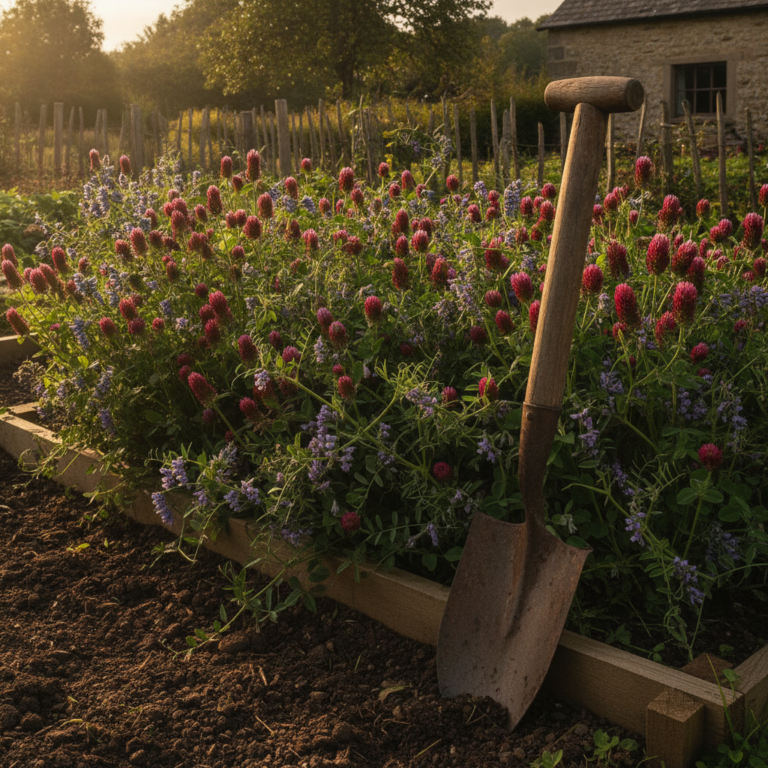
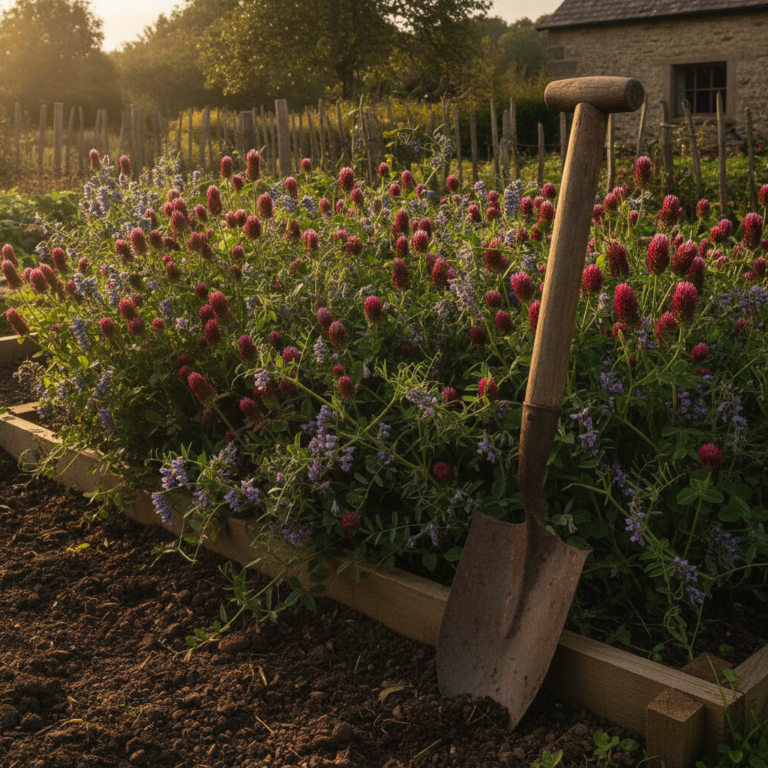
- Crimson clover — Fast-growing, beautiful, and highly effective. Sow in spring or early fall. Great before heavy-feeding crops like corn or brassicas.
- Hairy vetch — One of the most nitrogen-rich options available. Tolerates cold well and makes an excellent overwinter cover crop.
- Field peas (winter peas) — Easy to establish, fast to grow, and reliable in most climates. A classic beginner choice.
- Fenugreek — Often overlooked but excellent for quick summer fills between main crops. Adds nitrogen and organic matter fast.
Organic Matter Builders (Non-Legumes)
These crops don’t fix nitrogen, but they add enormous bulk and feed soil life with raw carbon material. They’re best used in combination with legumes or when your soil needs structure more than nitrogen.
- Buckwheat — Grows incredibly fast in warm weather. Ready to dig in within 5–6 weeks. Also releases phosphorus from the soil as it decomposes, making nutrients more available.
- Phacelia — Beloved by pollinators before you dig it in. Soft, quick to decompose, and brilliant for improving heavy clay soils.
- Oats — An excellent autumn green manure. Winter-kills in cold climates, so you barely have to dig — just let it collapse and work it in come spring.
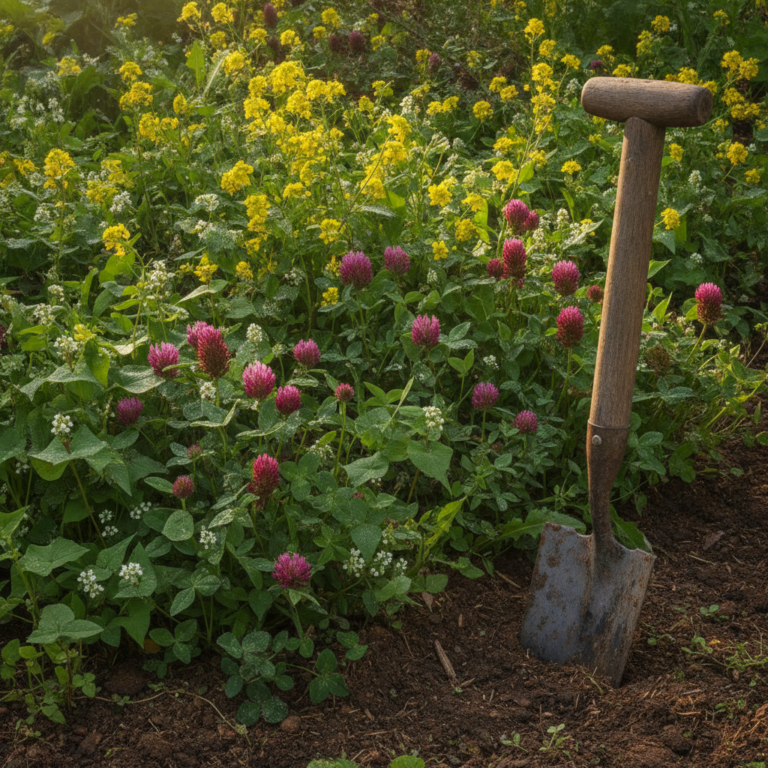
- Mustard — A powerful choice with a bonus: as it decomposes, it releases natural compounds that suppress soil-borne diseases and nematodes.
How to Time the Cut-and-Dig for Maximum Nitrogen Release
Here’s where most beginners leave results on the table. Timing the burial of your green manure crops is just as important as choosing the right plant.
The golden rule: dig in your green manure just before it flowers, or as the first flowers open. At this stage, the plant is at its peak nitrogen content. It hasn’t yet sent energy into seed production. The stems are still soft enough to break down quickly in the soil.
If you wait until the plant has gone to seed, several problems arise. The stems become woody and slow to decompose. Seeds may scatter and create a weed problem. And the nitrogen content has already dropped significantly as the plant redirected energy toward reproduction.
Once you’ve cut or chopped the crop down — a sharp spade, a hoe, or even a string trimmer works well — work it into the top 6–8 inches of soil. Then wait. Give the material at least two to four weeks to begin breaking down before planting your next crop. In warm, moist conditions, breakdown happens fast. In cool, dry weather, allow more time.
Watering the bed lightly after incorporation speeds decomposition. Soil microbes need moisture to get to work.
A Practical Green Manure Planting Calendar
The beauty of green manure crops is that they fit into the gaps in your existing garden rotation. Use this seasonal calendar as a starting framework and adapt it to your local climate.
Early Spring (March–April)
Sow field peas or crimson clover in any empty beds as soon as soil is workable. These crops establish quickly in cool weather. Dig them in 6–8 weeks later, around late May, before transplanting summer crops like tomatoes or squash.
Early Summer (May–June)
After harvesting spring greens or early crops, sow buckwheat or phacelia. Both thrive in warm weather. They’ll be ready to dig in within 5–6 weeks, leaving you time to replant for a fall harvest. This is also an ideal window to experiment, so consider pairing this practice with the ideas in Garden Experiments: 3 Safe, Small-Scale Trials That Grow Your Gardening Confidence.
Late Summer (July–August)
Sow mustard or a clover mix in beds cleared after garlic or early potatoes. Mustard has the added benefit of acting as a biofumigant — it suppresses soil pathogens as it breaks down. Dig in by early October.
Autumn (September–October)
Sow hairy vetch, winter field peas, or oats. These are your overwintering green manures. They protect bare soil through the coldest months. In cold climates, oats will winter-kill and lie flat for easy spring incorporation. Vetch will survive frost and can be dug in come early spring.
Winter (Planning Season)
This is the time to map your rotation for the following year. Which beds will receive legumes before your hungry brassicas? Where will buckwheat fill a summer gap? Planning this in advance — even sketching it out — dramatically improves your results. The Climate-Proof Your Crops: A 30-Day, Microclimate–Aware Planting Plan can help you layer green manure timing into your broader planting strategy.
Why Green Manure Outperforms Most Bagged Soil Conditioners
A bag of pelleted fertilizer gives your soil a one-time hit of specific nutrients. It doesn’t build structure. It doesn’t feed soil biology. And it’s gone within a season.
Green manure crops, by contrast, do something far more complex. They add a wide spectrum of nutrients, not just the N-P-K on a label. They feed billions of soil organisms that in turn make those nutrients available to your plants in the right forms and at the right times. They improve drainage in heavy soils and water retention in sandy ones. They bring up deep minerals through their roots and deposit them in the topsoil where your crops can reach them.
Over multiple seasons of consistent green manuring, the results are striking. Soil becomes darker, fluffier, and richer. Crops establish faster, resist drought better, and produce more. Weed pressure often decreases as soil biology becomes more balanced.
And you’ll notice something else: you stop needing to buy so much. That’s the part the old-timers understood completely.
For those just starting to build a more intentional garden practice overall, the Smart Starts: A 4-Week Skill-Build Plan for Complete Garden Beginners pairs well with this approach — helping you build the habits that make techniques like green manuring second nature over time.
Getting Started This Season
You don’t need a large plot or a lot of experience to begin. Even a single raised bed left empty between crops is an opportunity. Grab a packet of clover or buckwheat seed, clear the bed, scatter the seed, and rake it in lightly. Water once. Then watch.
In a few weeks, you’ll have a dense, living carpet growing in a space that would otherwise be doing nothing. When you dig it in and plant your next crop into that enriched soil, you’ll start to understand why farmers relied on this technique for centuries — and why it’s still one of the most powerful tools in the natural gardening toolkit.
Green manure crops aren’t a trend. They’re a return to something that actually worked.