Green Manure Crops: The Plow-Under Secret
Long before a bag of synthetic nitrogen existed, farmers already knew how to feed hungry soil. They grew green manure crops — plants raised not to eat, but to bury. Chopped and dug under at exactly the right moment, these living amendments released nitrogen, organic matter, and microbial fuel directly where roots needed it most. It was simple, effective, and almost completely free. Today, most gardeners have never heard of it. That’s a shame, because green manure crops may be the most powerful — and most overlooked — soil-building tool available to you this season.
What Are Green Manure Crops, Exactly?
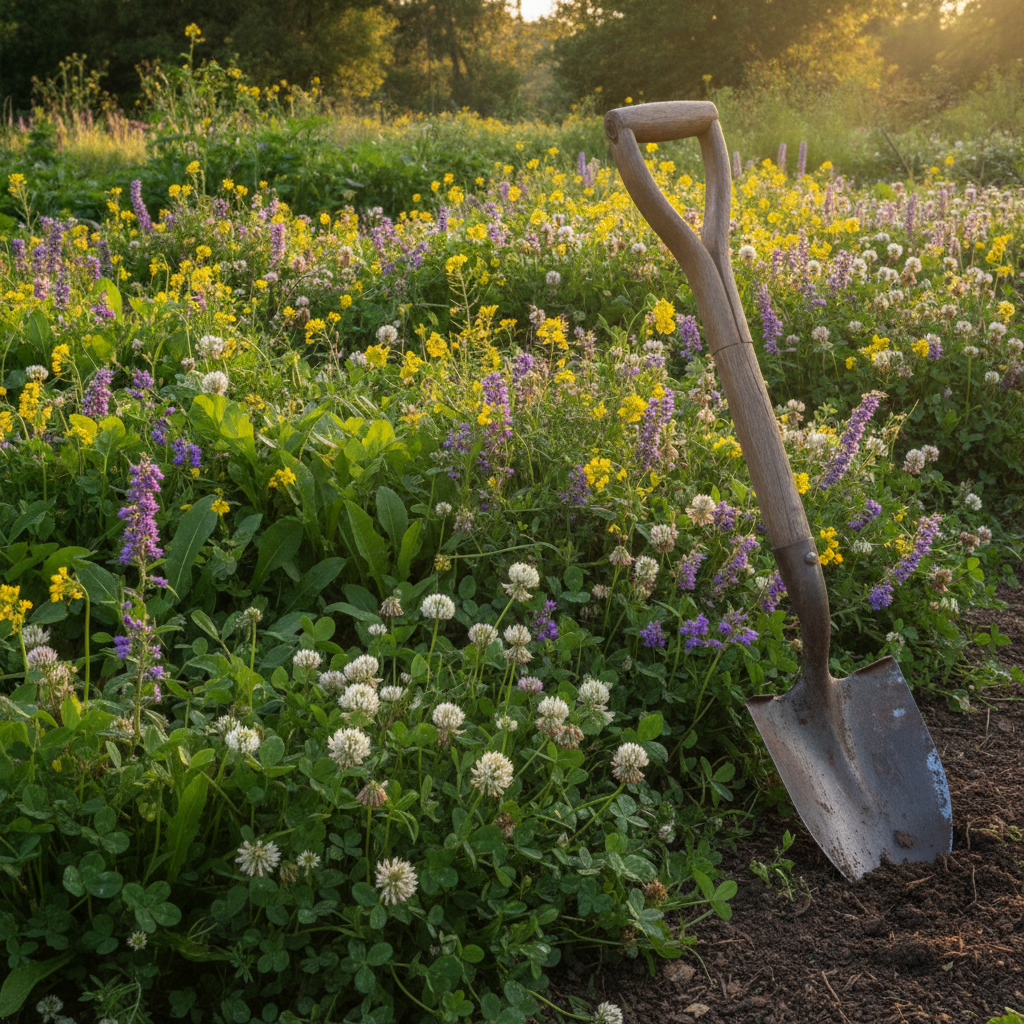
A green manure crop is any fast-growing plant that you intentionally cut down and turn into the soil while still green and leafy. The goal isn’t harvest. The goal is decomposition.
When you bury fresh plant material, soil microbes go to work immediately. They break down the soft tissue, releasing nutrients in plant-available forms. Legumes — like clover, vetch, and field peas — go one step further. They fix atmospheric nitrogen through root nodules, essentially pulling free fertilizer right out of the air.
Think of green manures as a living soil amendment. They cost almost nothing beyond the price of seed. They build structure, feed biology, suppress weeds, and prevent erosion — all at the same time.
If you’ve been reading about how to read your soil and fix problems fast, green manures are one of the most effective tools you can add to that toolkit. They don’t just mask deficiencies — they rebuild the soil from the inside out.
The Best Green Manure Crops for Home Gardeners
Not every plant works equally well as a green manure. You want fast growth, high biomass, and ideally nitrogen fixation. Here are the top performers for most home gardens.
Crimson Clover
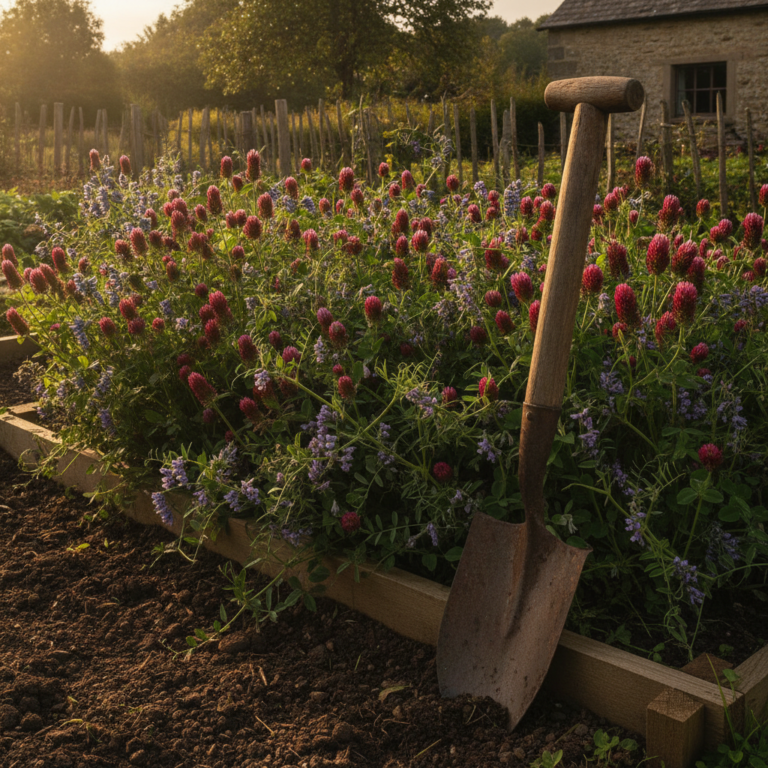
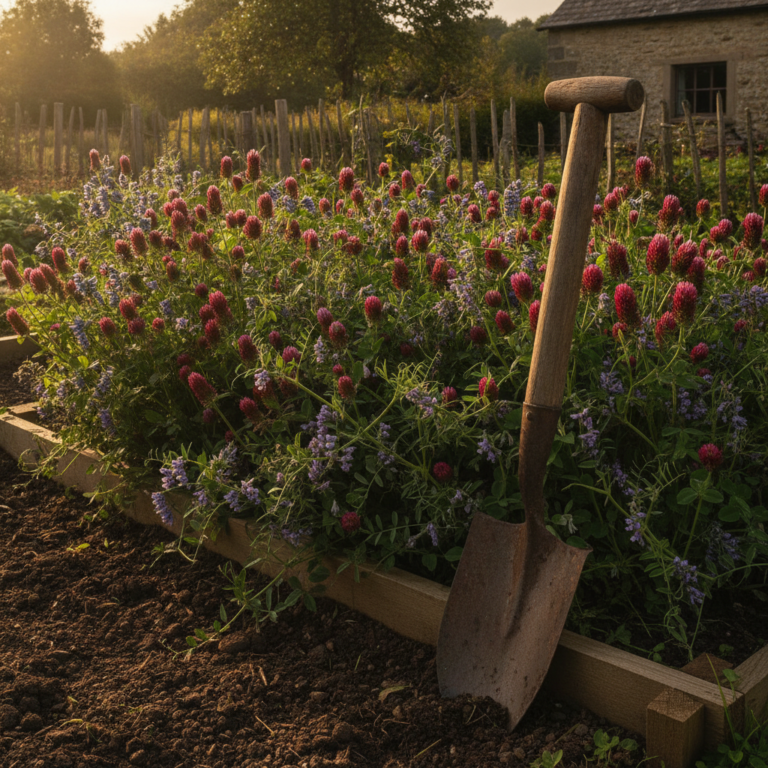
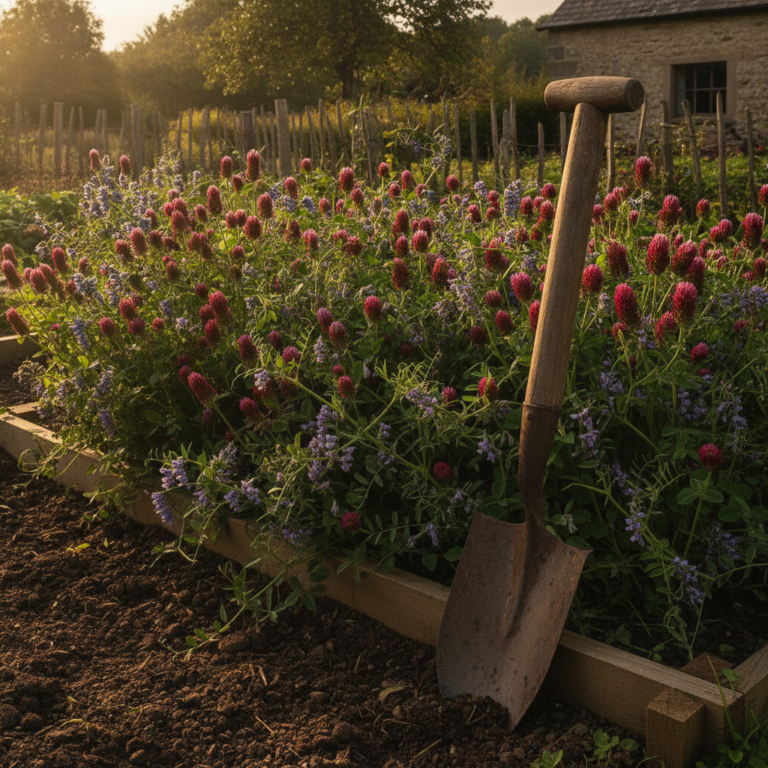
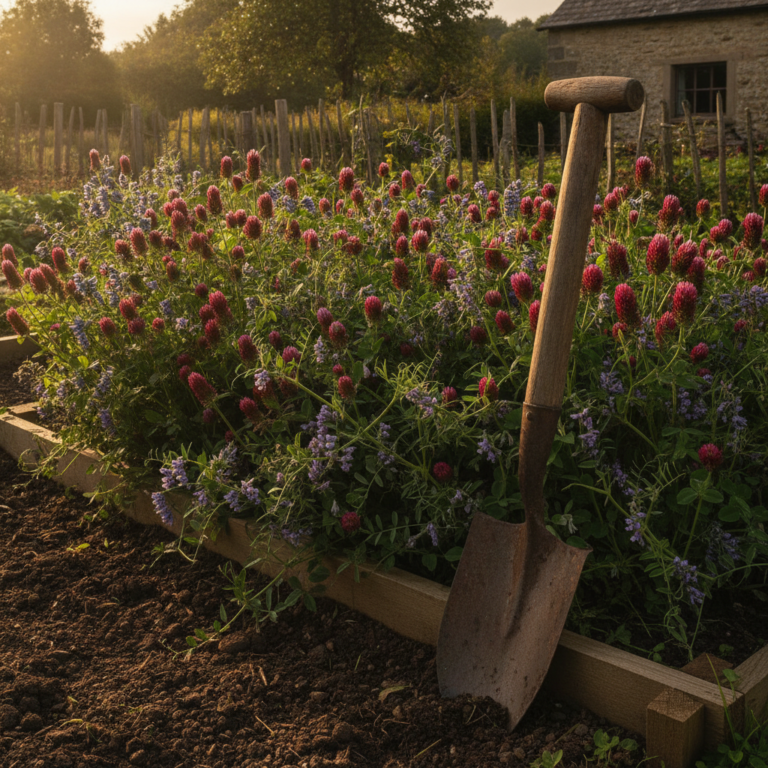
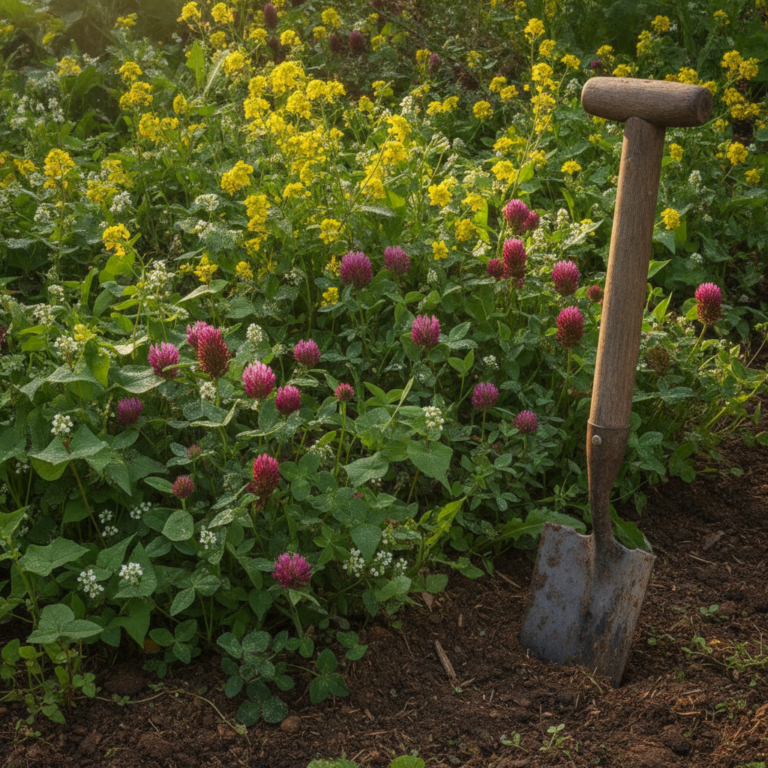
One of the best all-around choices. Crimson clover fixes up to 200 pounds of nitrogen per acre, grows quickly in cool weather, and produces gorgeous red blooms as a bonus. It’s a favorite for spring and fall plantings. Turn it under just as flowers open — that’s when nitrogen content peaks.
Hairy Vetch
Hairy vetch is a powerhouse. It fixes more nitrogen than almost any other cover crop — sometimes over 250 pounds per acre in good conditions. It’s winter-hardy in most climates and pairs beautifully with winter rye as a mixed green manure planting. It does get aggressive, so don’t let it go to seed.
Field Peas
Fast, easy, and nitrogen-fixing. Field peas work especially well in cooler spring or fall conditions. They also leave behind a fine, soft residue that breaks down quickly — ideal if you’re planting a main crop soon after turning them under.
Buckwheat
Not a nitrogen fixer, but buckwheat is exceptional at mining phosphorus from subsoil. It also suppresses weeds aggressively and decomposes rapidly. Use it in summer when legumes struggle in the heat. Turn it under before it sets seed — about four to six weeks after planting.
Mustard
Mustard is the biofumigant of the green manure world. Its roots and leaves release natural glucosinolates as they decompose, which can suppress soil-borne diseases and nematodes. It’s a smart choice for beds that have seen repeated plantings of the same crop.
Winter Rye
Not a legume, but incredibly useful. Winter rye adds enormous bulk organic matter, suppresses weeds better than almost anything else, and protects soil all winter long. Mix it with hairy vetch for a nitrogen-boosting combination that’s hard to beat.
Timing the Cut-and-Dig for Maximum Nitrogen Release
Here’s where most gardeners leave nitrogen on the table. Cutting too late — after plants have flowered fully and begun to set seed — means much of the nitrogen has already moved out of the leaves and into the seeds. You lose the benefit.
The sweet spot is just at flowering, or right before. At this stage, the plants are packed with soft, nitrogen-rich tissue. They break down fast, releasing nutrients within two to four weeks of being turned under.
Follow these timing guidelines:
- Legumes (clover, vetch, peas): Cut at first flower. This is peak nitrogen content.
- Buckwheat: Cut before seed sets, about 4–6 weeks after planting.
- Mustard: Cut just as flowers open.
- Winter rye: Cut in spring when plants are 12–18 inches tall, before seed heads form.
After cutting, chop the material finely with a spade or fork. The smaller the pieces, the faster decomposition happens. Turn everything 6–8 inches deep, water lightly, and wait at least two to three weeks before planting into that bed. This resting period allows nitrogen to become plant-available rather than being tied up in decomposing biomass.
If you’re planning your whole growing season around rotations like this, the 30-day microclimate-aware planting plan is worth reading alongside this post — it helps you sequence crops and cover crops based on your specific site conditions.
Why Green Manures Outperform Bagged Soil Conditioners
Bagged amendments have their place. But they can’t replicate what a living crop does to your soil biology. Here’s why green manures win in the long run.
They feed the whole soil food web. When you turn under fresh plant matter, you’re not just adding nutrients. You’re feeding fungi, bacteria, earthworms, and protozoa — the full chain of life that makes soil productive and resilient.
They improve structure. Decomposing roots and organic matter create channels, aggregates, and pore space. Water infiltration improves. Compaction decreases. No bag of fertilizer does that.
They’re site-specific. A crop grown in your garden pulls minerals from your subsoil and cycles them back to your surface layers. That’s a kind of nutrient recycling no outside amendment can replicate.
They cost pennies. A pound of crimson clover seed covers hundreds of square feet and costs a few dollars. Compare that to repeated bags of soil conditioner, and the economics are clear.
If you’re just getting started with natural soil-building strategies, it helps to have a broader framework. The layered learning approach to gardening seasons gives you a progressive system for adding techniques like this one over time, without feeling overwhelmed.
A Practical Green Manure Planting Calendar
Here’s how to work green manure crops into your growing year. This calendar works for most temperate climates — adjust a few weeks earlier or later based on your zone.
Late Winter / Early Spring (February–March)
Sow field peas or crimson clover as soon as the ground can be worked. These cold-tolerant crops establish quickly and will be ready to turn under by late April or early May — just in time for summer vegetables.
Late Spring (April–May)
Turn under spring legumes. Wait 2–3 weeks, then plant tomatoes, squash, peppers, or corn into that freshly fed bed. The timing is almost perfect.
Midsummer (June–July)
After early crops come out, sow buckwheat in any empty beds. It fills in fast, suppresses weeds through the heat, and can be turned under in 4–6 weeks. Follow with a second sowing if you have time before fall.
Late Summer / Early Fall (August–September)
Sow hairy vetch and winter rye together. This is the classic combination for a winter cover. The rye protects the vetch, and the vetch fixes nitrogen all fall and into early spring.
Spring (the Following Year)
Turn under your vetch-rye mix when rye is 12–18 inches tall. This single act can deliver more nitrogen to your soil than most gardeners apply in a full season of fertilizing.
Rotating green manures through your beds doesn’t require extra space. It simply requires planning. Empty beds between main crops are opportunities — not gaps. Every fallow week is a chance to build soil that will pay you back tenfold.
For gardeners who want to track which beds got which cover crops and when, keeping detailed notes is essential. The garden planning templates available here make that kind of seasonal tracking straightforward and genuinely useful.
Getting Started This Season
You don’t need to overhaul your whole garden to try green manure crops. Start with one empty bed. Toss down some crimson clover or buckwheat seed. Watch it fill in. Then dig it under before it flowers and see what your soil looks like six weeks later.
The difference will be visible — darker color, looser structure, more earthworm activity. And the crops you plant into that bed will tell you the rest of the story.
This is the kind of technique your grandparents’ generation relied on because it worked. It still works. It always will. Soil doesn’t change — and neither does the wisdom of feeding it with living things.
Start small. Stay curious. Let the soil show you what it’s capable of when you stop fighting it and start feeding it instead.