Green Manure Crops: The Plow-Under Secret
Long before nitrogen came in a plastic bag, farmers fed their fields with something far more elegant: green manure crops. They grew specific plants — clovers, vetches, mustards, buckwheat — and then chopped and buried them right before peak bloom. The decomposing roots and stems fed the soil food web, released locked-up nutrients, and left the ground richer than before. It cost almost nothing. It worked remarkably well. And somehow, most of us forgot all about it.
That ends today. This guide covers the best green manure crops for home gardens, the exact timing that maximizes nitrogen release, and a practical planting calendar you can start using this season — no synthetic inputs required.
What Are Green Manure Crops and Why Did Farmers Love Them?
A green manure crop is any plant grown specifically to be incorporated back into the soil while still green. Unlike compost or bagged fertilizer, green manures feed the ground from within. They work on multiple levels at once.
First, leguminous green manures — clovers, vetches, beans, peas — fix atmospheric nitrogen through root-nodule bacteria. When you bury the plant, all that stored nitrogen releases slowly as it decomposes. Second, non-legume green manures like rye, buckwheat, and phacelia add massive amounts of organic matter. They also break up compacted soil with their root systems. Third, almost all green manures smother weeds, protect bare soil from erosion, and attract beneficial insects before you cut them.
Before you dig into selecting your crops, it helps to understand your soil’s baseline. Check out Soil Sense Without the Lab: Read Your Dirt, Fix It Fast for a practical guide to reading what your garden is telling you right now.
The Best Green Manure Crops for Home Gardeners
Not all green manures perform equally in every garden. Here’s a breakdown of the most reliable options, what they offer, and where they shine.
Crimson Clover
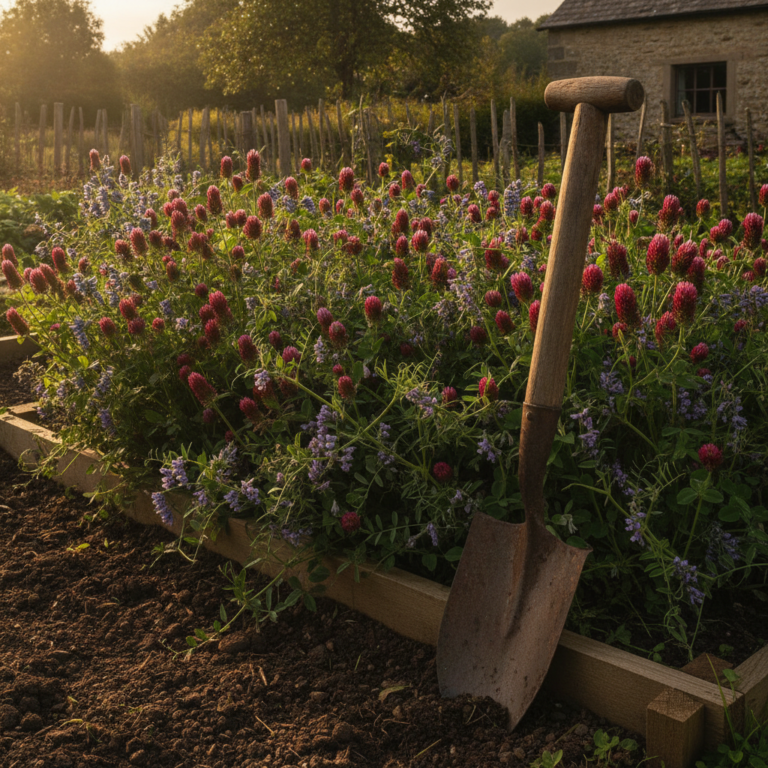
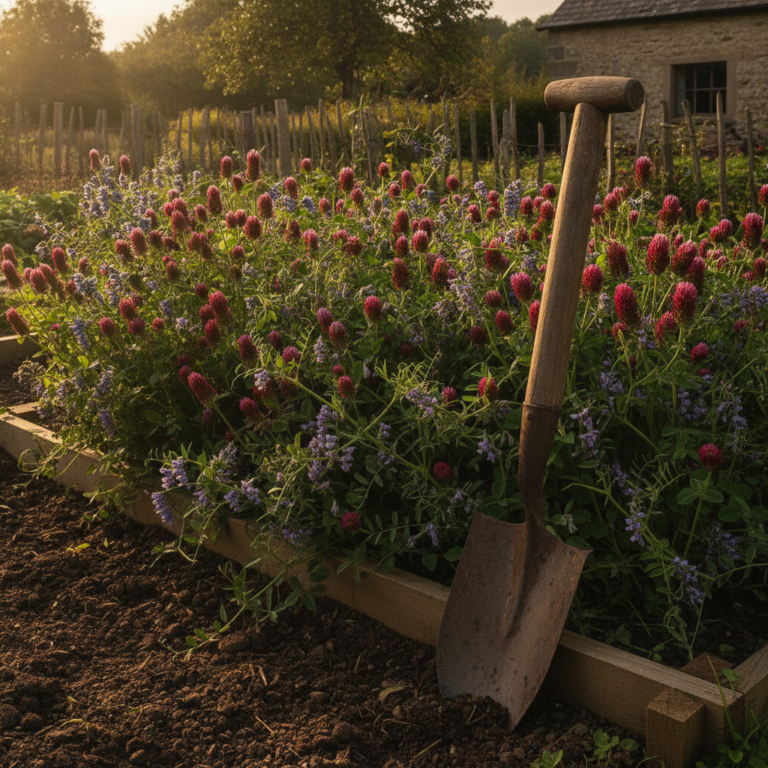
This is the workhorse of green manures. Crimson clover fixes between 100 and 150 pounds of nitrogen per acre under good conditions. It’s easy to establish, tolerates light frosts, and blooms into striking red flowers that pollinators adore. Cut and dig it just before full bloom — that’s when nitrogen content peaks in the stems and leaves. It grows well from late summer into fall, and again in early spring.
Field Peas and Vetch
These two are often grown together as a tandem crop. Field peas bulk up quickly and fix nitrogen fast. Hairy vetch is tougher and more cold-hardy, making it a solid choice for fall planting. Together they create a dense, weed-suppressing mat. Cut them when 50–75% of the flowers are open for the best balance of nitrogen content and decomposition speed.
Buckwheat
Buckwheat is a non-legume powerhouse. It doesn’t fix nitrogen, but it unlocks phosphorus that’s bound up in your soil — something synthetic fertilizers simply cannot do. It grows fast (ready to dig in just 35–40 days), crowds out weeds aggressively, and improves soil structure noticeably. Use it as a quick summer gap-filler between main crops. Cut it before seeds set, or you’ll be dealing with volunteers for years.
Winter Rye
Winter rye is the king of fall and winter green manures. It germinates in cold soil, survives hard freezes, and grows deep fibrous roots that break up compaction better than almost any other cover crop. It adds tremendous organic matter when dug in spring. It’s not a nitrogen fixer, but the sheer volume of organic matter it contributes is worth the trade-off. Allow three to four weeks between digging and planting your main crops to let decomposition begin.
Phacelia
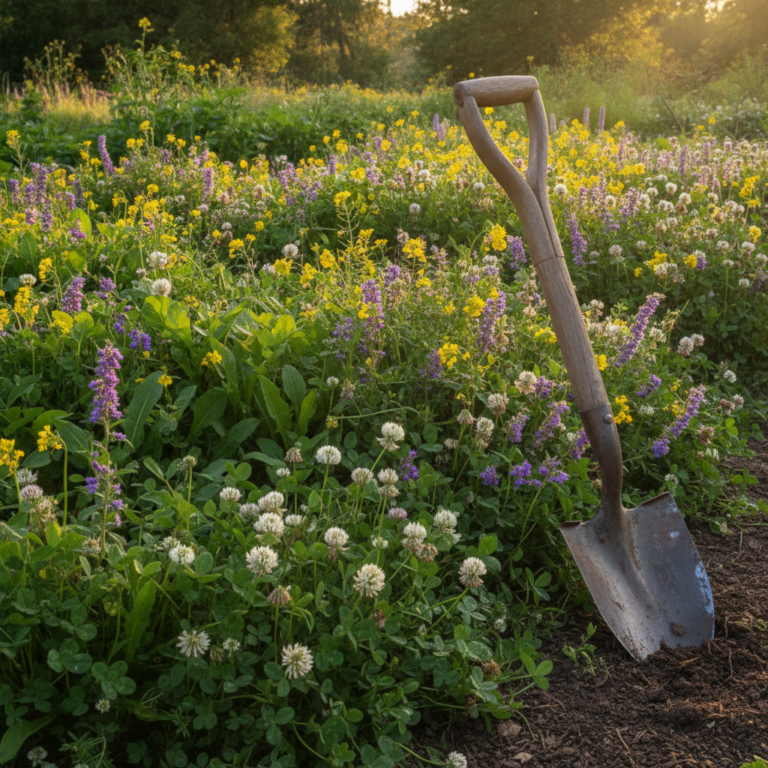
This one is underused and deserves far more attention. Phacelia is a rapid-growing, bee-beloved cover crop that produces silky lavender flowers. It decomposes extremely quickly after incorporation — faster than most other green manures — making it ideal when you need a fast soil-building window. It’s also slightly allelopathic before full decomposition, so time your planting accordingly.
Mustard
Mustard has a special talent beyond nitrogen: it acts as a natural biofumigant. As it decomposes, it releases compounds that suppress soil-borne fungal diseases and nematodes. If you’ve struggled with clubroot, verticillium wilt, or soil-borne pathogens, mustard as a green manure can dramatically reduce the problem. Dig it in while it’s still flowering for maximum effect.
Timing the Cut-and-Dig for Maximum Nitrogen Release
Here’s where most gardeners go wrong: they either wait too long or dig too early. Timing your green manure crops correctly is the single biggest factor in how much benefit you get.
The rule of thumb is simple: cut and incorporate at early to full flower, never after seed set. At flowering, the plant’s nitrogen, sugars, and proteins are at their highest concentration in the leaves and stems. Once seeds begin forming, the plant draws resources away from foliage and into seeds. You lose a significant portion of the nutrient value if you wait.
Cut the crop to the ground with shears, a scythe, or a rotary mower. Let it wilt for one to two days if the material is very lush — this speeds decomposition and prevents the mass from becoming slimy. Then dig or till it into the top six to eight inches of soil.
Wait two to four weeks before planting your main crops. This window matters. Decomposing green matter releases compounds that can temporarily inhibit germination. Patience here pays off. If you’re working within a tight planting window, consider transplanting seedlings rather than direct sowing immediately after incorporation.
For a broader seasonal strategy that integrates these timing windows with your full growing year, Climate-Proof Your Crops: A 30-Day, Microclimate–Aware Planting Plan is an excellent companion resource.
A Practical Green Manure Planting Calendar
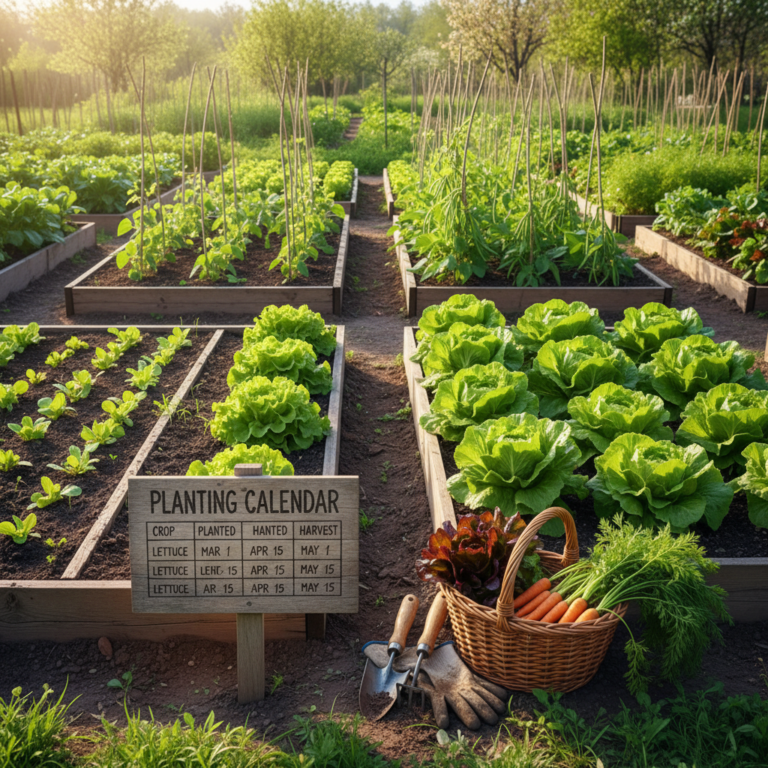
Here’s a simplified seasonal calendar you can adapt to your climate and growing zone.
Early Spring (March–April)
Sow crimson clover, field peas, or phacelia in any bed not yet planted. These will be ready to dig in four to eight weeks, just before your main summer crops go in. Phacelia is the fastest option if you’re pressed for time.
Late Spring to Early Summer (May–June)
Use buckwheat as a gap-filler in beds that will be planted in late summer or fall. It matures in just five to six weeks, leaving you plenty of time for a second rotation.
Late Summer (August)
This is a golden window for green manures. Sow mustard, phacelia, or a clover-vetch mix after early crops are cleared. These will grow through September, be cut and dug in October, and leave your beds beautifully conditioned for spring.
Fall (September–October)
Sow winter rye, hairy vetch, or a rye-vetch blend in beds that will rest over winter. These overwinter and are dug in during early spring, delivering a powerful soil boost before the main growing season kicks off.
Overwintering Bare Beds
Never leave soil bare over winter if you can help it. Even a light sowing of winter rye protects structure, prevents nutrient leaching from rain, and gives you a free dose of organic matter when spring arrives. This one habit alone transforms soil quality over multiple seasons.
Why Green Manure Crops Beat Bagged Amendments
Store-bought soil conditioners have their place. But they are static products. They don’t actively build soil structure. They don’t stimulate the soil food web the way fresh decomposing plant matter does. They don’t suppress weeds while they’re working. And they don’t improve water retention or aeration from the root level upward.
Green manure crops are living amendments. They interact with your soil biology in real time. They feed mycorrhizal fungi. They stimulate bacterial activity. They create channels for air and water movement as roots grow and then decompose. The result is soil that grows more alive with every rotation — not just soil that’s been fed.
If you’re new to thinking about rotations and building a longer-term plan for your growing space, The Skill-Driven Garden Roadmap: How to Pick Plants, Tools, and Tasks That Grow With You walks you through how to layer these practices into a sustainable garden system year by year.
Getting Started This Season
You don’t need to overhaul your entire garden to start using green manure crops. Begin with one bed. Sow crimson clover or buckwheat after your current crop is harvested. Watch it grow. Cut it at flower. Dig it in. Plant your next crop three weeks later.
The difference in that bed — the color, texture, and vitality of your soil — will be noticeable within one season. By year three, you’ll wonder how you ever gardened without it.
This is exactly the kind of old-time knowledge that deserves to come back. Your grandparents didn’t have bags of synthetic fertilizer — but their kitchen gardens were extraordinary. Green manure crops were a big part of why.
Start small. Stay consistent. Let the soil do the rest.