Green Manure Crops: The Plow-Under Secret
Before the first bag of synthetic nitrogen ever hit a store shelf, farmers were feeding their soil a different way. They grew green manure crops — specific plants chosen not for harvest, but for burial. Chop them down at just the right moment, dig them in, and the soil repaid you with remarkable fertility. It was quiet, unglamorous work. And it worked better than almost anything modern gardeners reach for today.
This post is your full guide to reviving that plow-under secret. You’ll learn which plants make the best green manures, how to time the cut-and-dig for maximum nitrogen release, and how to build a simple seasonal rotation you can start this year — even in a small backyard plot.
What Are Green Manure Crops, Exactly?
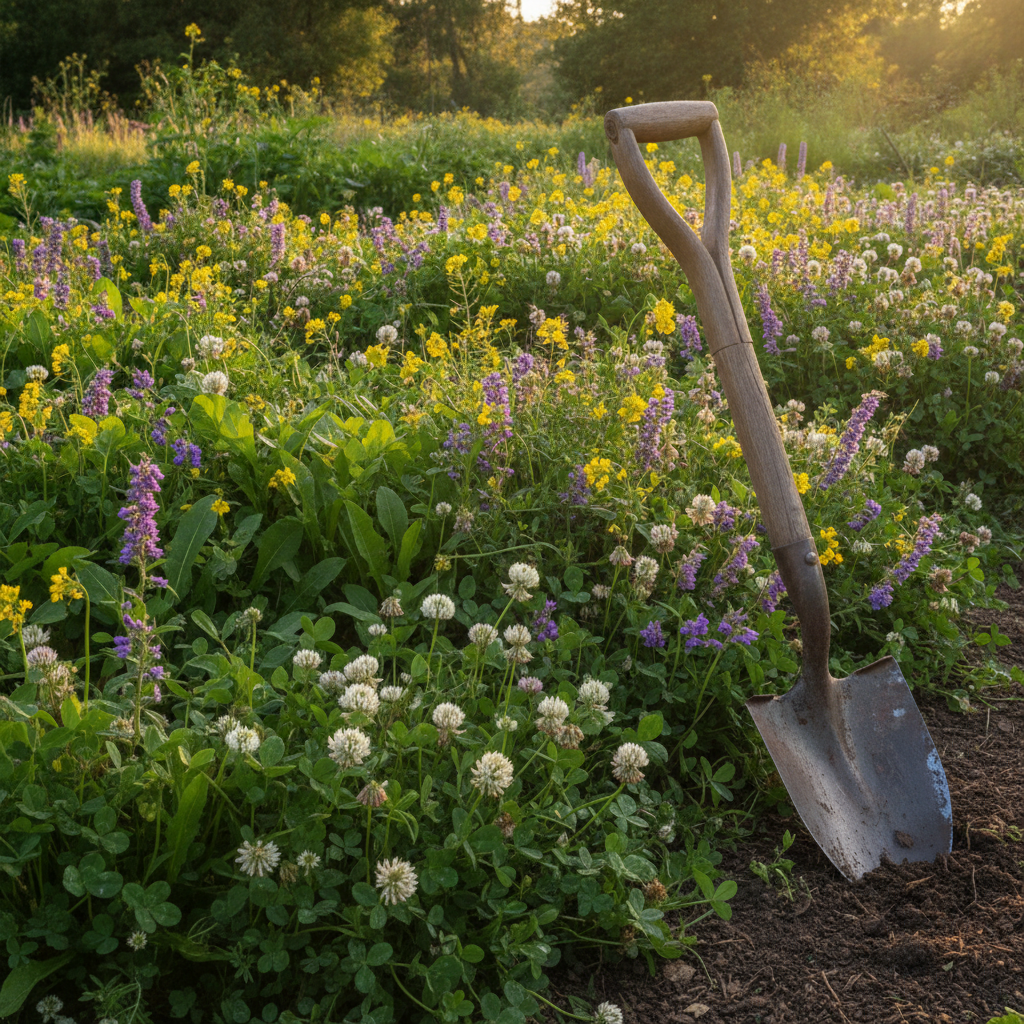
Green manure crops are fast-growing plants you grow specifically to chop down and turn into the soil while they’re still green and fresh. Unlike composting, there’s no pile, no waiting, no turning. You grow them in place, cut them at peak, and dig them directly into the bed where your vegetables will follow.
The science is straightforward. Living plant material — especially nitrogen-rich legumes — breaks down quickly once buried. Soil microbes go to work immediately. Within two to six weeks, that chopped biomass transforms into bioavailable nutrients your next crop can actually use.
This is fundamentally different from dry mulch or finished compost. You’re feeding the soil a fresh, enzyme-rich meal rather than a processed snack. The microbial response is faster, deeper, and more sustained.
Farmers understood this intuitively for thousands of years. Romans wrote about burying lupins before wheat. Chinese farmers rotated soybeans to restore rice paddies. Your grandparents may have called it “plowing under” without explaining why. Now you’ll know exactly why it works.
The Best Plants to Use as Green Manures
Not every plant makes a good green manure. The best choices are fast-growing, biomass-heavy, and ideally nitrogen-fixing. Here are the top performers for home gardeners.
Legumes: The Nitrogen Powerhouses
Legumes form symbiotic relationships with soil bacteria called rhizobia. Together, they pull nitrogen gas directly from the air and fix it into the soil. When you bury a legume crop, you’re releasing that stored nitrogen right where your vegetables need it.
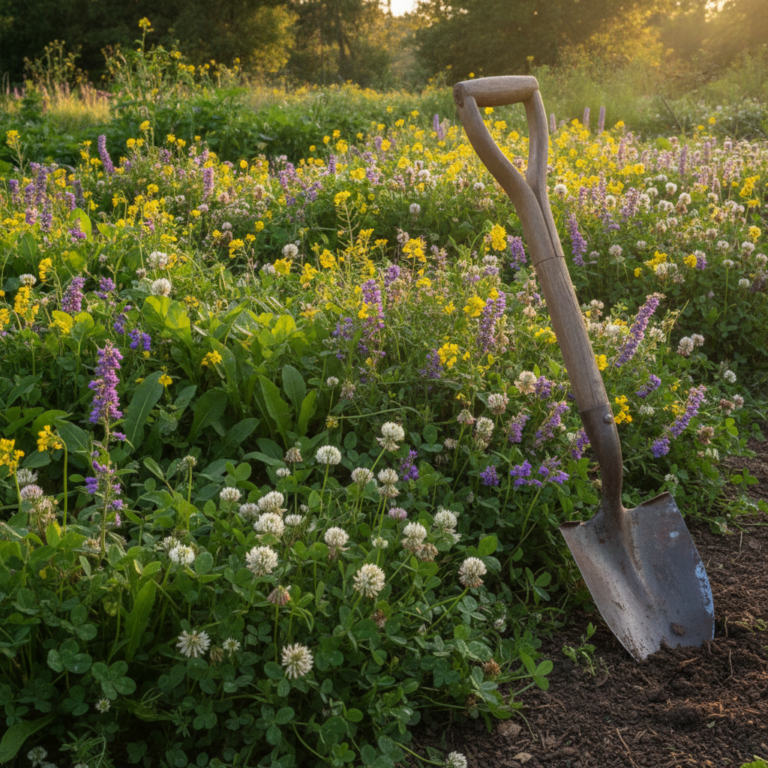
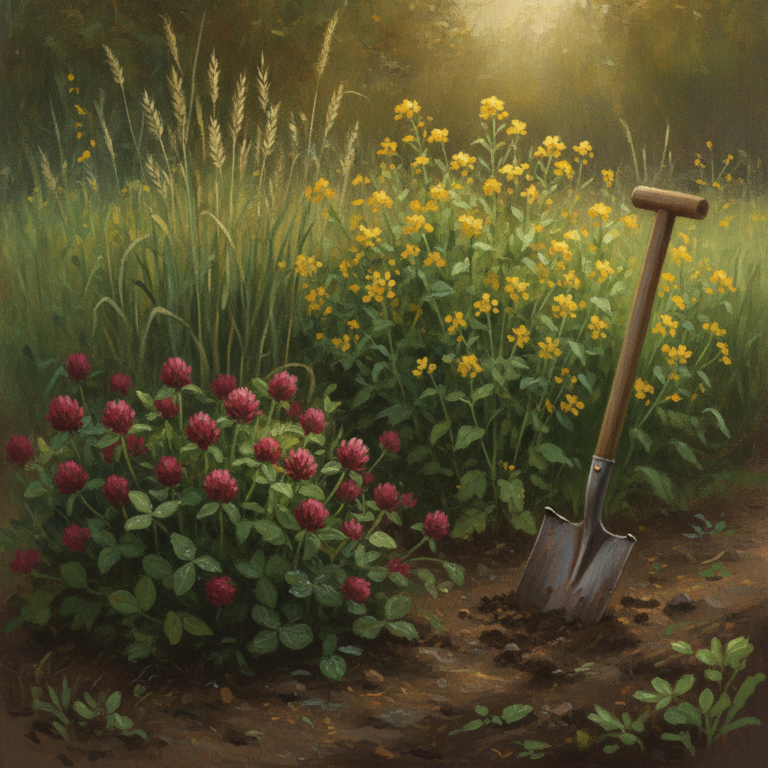
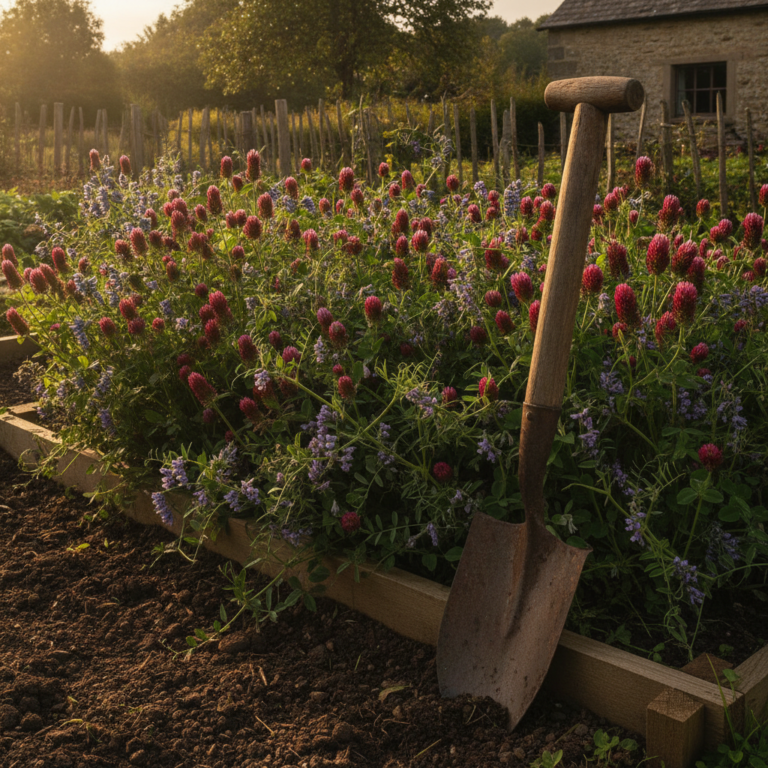
- Crimson Clover — Fast-growing, beautiful, fixes up to 150 lbs of nitrogen per acre. Easy to establish in spring or fall.
- Hairy Vetch — Hardy and vigorous. One of the highest nitrogen contributors. Excellent as a winter cover in zones 4–9.
- Field Peas — Grow quickly in cool weather. Tender stems break down fast after burial. Perfect for spring green manure rotations.
- Fava Beans — Cold-tolerant and deep-rooted. A powerhouse for spring soil prep in cooler climates.
Non-Legumes: Biomass Builders and Soil Openers
Non-legume green manures don’t fix nitrogen, but they build organic matter and improve soil structure dramatically.
- Buckwheat — Grows explosively in warm weather. Smothers weeds, attracts pollinators, and decomposes in just 2–3 weeks after burial. Mobilizes phosphorus from subsoil.
- Phacelia — One of the best bee plants you can grow. Adds excellent organic matter and breaks down quickly.
- Oats or Winter Rye — Exceptional biomass producers. Use them when you want to bulk up thin, sandy soils fast.
- Mustard — Acts as a mild biofumigant. Suppresses soil-borne pathogens while adding organic matter. Ideal before brassica or root vegetable beds.
For maximum impact, try mixing a legume and a non-legume together. A classic pairing is hairy vetch with winter rye — the rye supports the vetch as it climbs, and together they deliver both nitrogen and bulk organic matter.
Timing the Cut-and-Dig for Maximum Nitrogen
Here’s where many gardeners get it wrong. They either bury too early (when the plants haven’t built up enough biomass) or too late (when the stems have gone woody and tough). Timing is everything.
The ideal moment to cut and bury most green manure crops is just before or at the start of flowering. At this stage, the plants are at their peak of nitrogen content and the stems are still soft and tender. After flowering, carbon content rises sharply. The crop becomes harder to break down and releases nitrogen much more slowly.
A simple rule: when you see the first flower buds forming, reach for the spade.
How to Bury Them Properly
You don’t need special equipment. Here’s the basic process:
- Cut or knock down the crop at ground level with a hoe, scythe, or shears.
- Chop the stems into smaller pieces if they’re thick. Smaller pieces decompose faster.
- Dig or fork the material into the top 6–8 inches of soil. Don’t bury it too deep — the active zone of microbial life is in the upper soil layer.
- Water the bed lightly if conditions are dry.
- Wait 2–4 weeks before planting into that bed. This lets decomposition proceed without harming transplant roots.
If you’re a no-dig gardener, you can also use green manures as chop-and-drop surface mulch rather than burying them. The nitrogen release is slower but still effective, especially when combined with a top dressing of compost.
For a deeper understanding of how your soil is already performing before you start any rotation, check out Soil Sense Without the Lab: Read Your Dirt, Fix It Fast — it gives you a simple, tool-free way to assess what your beds actually need.
A Practical Green Manure Planting Calendar
One of the best things about green manure crops is how naturally they slot into the gaps in a normal planting year. You’re not adding extra work — you’re filling space that would otherwise grow weeds.
Early Spring (Zones 6–9: February–March | Zones 4–5: March–April)
Sow field peas or fava beans as soon as the soil can be worked. They’ll establish quickly in cool weather. Bury them 4–6 weeks later, just before your summer vegetables go in.
Late Spring to Early Summer (May–June)
Sow buckwheat or phacelia in any bed that won’t be planted until midsummer. These grow fast in warming temperatures. You can complete a full buckwheat cycle — sow, grow, bury, wait — in about 6–7 weeks.
Midsummer (July–August)
Sow buckwheat again in any beds cleared after garlic or early peas. A second fast rotation refreshes the soil before fall planting. This is also a good time to sow crimson clover in beds that will rest through fall.
Late Summer to Early Fall (August–September)
Sow your overwintering green manures now: hairy vetch, winter rye, or a vetch-rye mix. Let them establish through fall, overwinter, and cut them down in early spring just as they flower. This is the classic pre-season nitrogen boost for your main vegetable beds.
Fall (October–November)
In milder climates, mustard or phacelia can still establish before hard frost. Even if they don’t fully mature, they protect soil from erosion and add some organic matter when turned in spring.
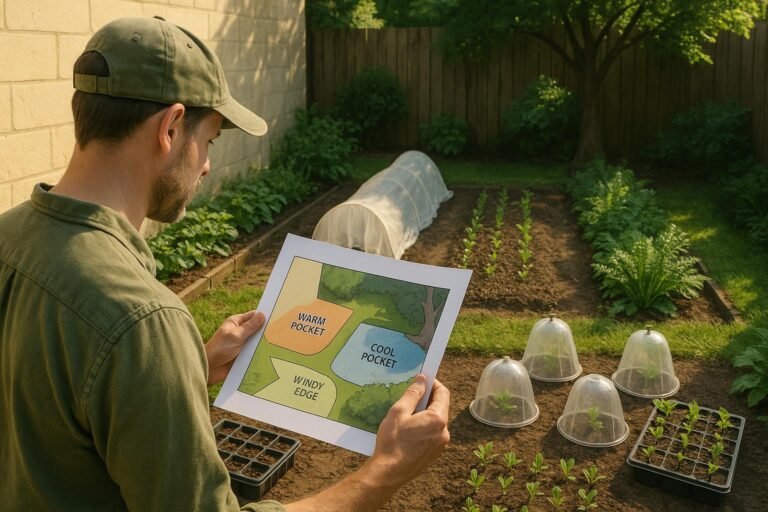
If you’re planning rotations across your entire growing space, pairing this calendar with a solid layout strategy makes the whole system click. The guide at Climate-Proof Your Crops: A 30-Day, Microclimate–Aware Planting Plan helps you factor in your specific conditions so nothing gets planted in the wrong spot at the wrong time.
Why Green Manures Outperform Most Store-Bought Soil Conditioners
Bagged fertilizers give you numbers: 10-10-10, or maybe a fancy slow-release formula. What they can’t give you is life. Green manure crops don’t just deposit nutrients — they feed the entire soil food web. Earthworms follow the organic matter. Bacteria and fungi populations surge. Soil structure improves through the root channels left behind.
The difference shows up in how plants grow. Soil fed with green manures tends to produce plants with deeper root systems, stronger cell walls, and better drought resistance. This isn’t magic. It’s biology working the way it was designed to.
There’s also an economic argument. A packet of clover or vetch seed costs very little. A season of regular green manure rotations can replace hundreds of dollars in amendments while building long-term fertility that compounds year after year.
For gardeners who are just building their practice and want to understand how techniques like this fit into a wider skill progression, Layered Learning: A Gardener’s Progressive System That Grows with You is an excellent companion read.
Common Questions and Mistakes
Can I use green manures in raised beds?
Absolutely. Smaller beds benefit enormously. Just scale down your sowings. A 4×8 raised bed can easily fit a full buckwheat or clover rotation between seasons.
Will green manures bring in pests?
Some green manures — especially mustard and phacelia — actually deter or disrupt pest cycles. Legumes in flower attract beneficial insects that prey on aphids and whitefly. The biodiversity benefit is real.
What if I buried them too late and the stems are tough?
Chop them as finely as possible and mix in some finished compost to boost microbial activity. Wait an extra week or two before planting. Tough stems break down — they just need a little more time.
Do I need to inoculate legume seeds?
If you’ve never grown legumes in that bed before, yes — inoculating seeds with rhizobia bacteria dramatically improves nitrogen fixation. Inoculant powder is inexpensive and widely available. Once rhizobia are established in your soil, subsequent legume crops will inoculate naturally.
Start This Season — Even in a Small Space
You don’t need a farm to benefit from green manure crops. A single raised bed, a cleared patch after spring garlic, or an empty container can host a buckwheat rotation this summer. The technique scales perfectly to whatever space you have.
Start with one bed. Sow buckwheat or crimson clover. Watch it grow. Bury it just before it flowers. Then plant into that bed two weeks later and notice the difference. One cycle won’t transform compacted clay into garden loam overnight — but it will start a biological process that builds, year after year, into something remarkable.
Your grandparents knew this. Farmers for thousands of years before them knew this. Now you do too. Pick up a packet of seeds and let your soil eat well this season.