Green Manure Crops: The Plow-Under Secret
Long before a bag of synthetic nitrogen ever sat on a store shelf, farmers were building some of the most fertile soil the world had ever seen. Their secret? Green manure crops — plants grown not to harvest, but to chop down and bury alive. If your garden soil feels tired, compacted, or chronically hungry, this forgotten rotation trick might be exactly what you’ve been missing.
What Are Green Manure Crops, Exactly?
A green manure crop is any plant grown specifically to be turned into the soil while it’s still green and growing. Think of it as a living soil amendment you grow yourself — for free.
The concept is beautifully simple. Certain plants accumulate nutrients, fix atmospheric nitrogen, loosen compacted layers, and feed the soil’s microbial community. When you cut them down and dig them in at the right moment, all of that stored energy releases directly into your growing zone.
This isn’t a niche technique. It’s one of the oldest soil-building strategies on earth. Farmers in ancient Rome used lupins this way. Chinese growers were plowing under azolla fern centuries before Western agriculture caught up. Your grandparents likely called it “cover cropping” or just “digging in the green stuff.”
Modern gardeners often overlook it because it requires a little patience and planning. But the payoff is enormous — and far more sustainable than reaching for a bag every season.
Why Green Manure Outperforms Most Store-Bought Amendments
Bagged fertilizers give your soil a quick hit. Green manure crops give it a slow, complete feast. Here’s why that matters.
First, living plant matter breaks down differently than processed amendments. It feeds a wider range of soil organisms — bacteria, fungi, earthworms, and nematodes — all at once. This diversity is what builds genuine, lasting fertility.
Second, many green manure plants are nitrogen fixers. Legumes like clover, vetch, and field peas form partnerships with Rhizobium bacteria in their root nodules. These bacteria pull nitrogen straight from the air and convert it into plant-available form. When you bury those roots, that nitrogen stays in your bed.
Third, deep-rooted green manures like daikon radish and phacelia break up hardpan, improving drainage and aeration far below what your spade can reach.
If you’re still learning to read what your soil is telling you, this post on diagnosing soil problems without a lab is a great companion read before you start your first green manure rotation.
The Best Green Manure Crops by Season
Choosing the right plant for the right time of year is everything. Here’s a practical breakdown.
Spring and Summer Green Manures
Buckwheat is a warm-season star. It grows fast — ready to cut in as little as 4–6 weeks. It suppresses weeds aggressively, attracts beneficial insects, and its decomposing matter releases phosphorus slowly into the soil. Perfect for filling a gap between spring and fall crops.
Cowpeas (black-eyed peas) thrive in heat and drought. They fix significant nitrogen — up to 250 lbs per acre in field conditions. For the home garden, even a small patch makes a measurable difference. Sow after your last frost, let them run for 6–8 weeks, then chop and dig.
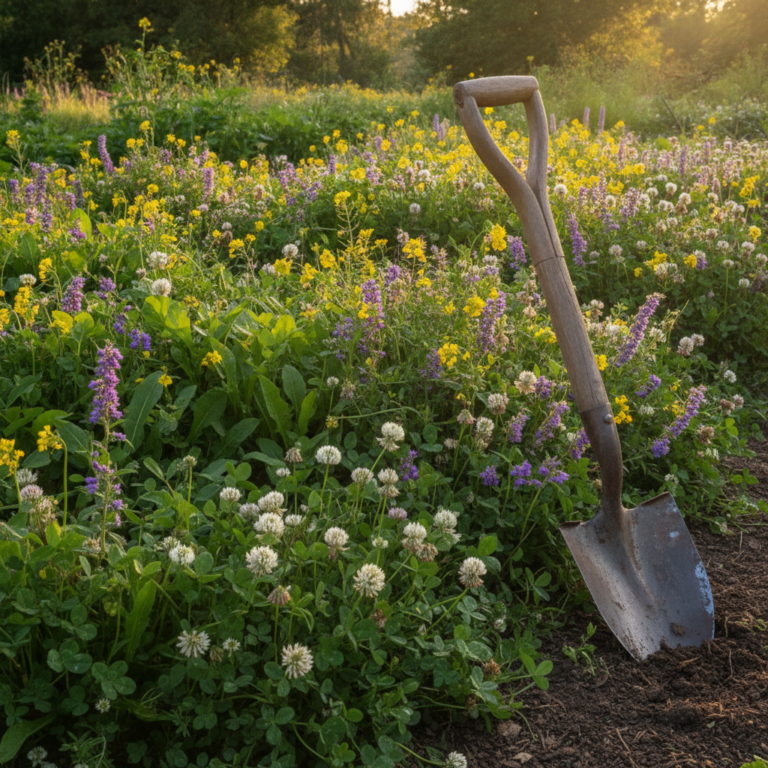
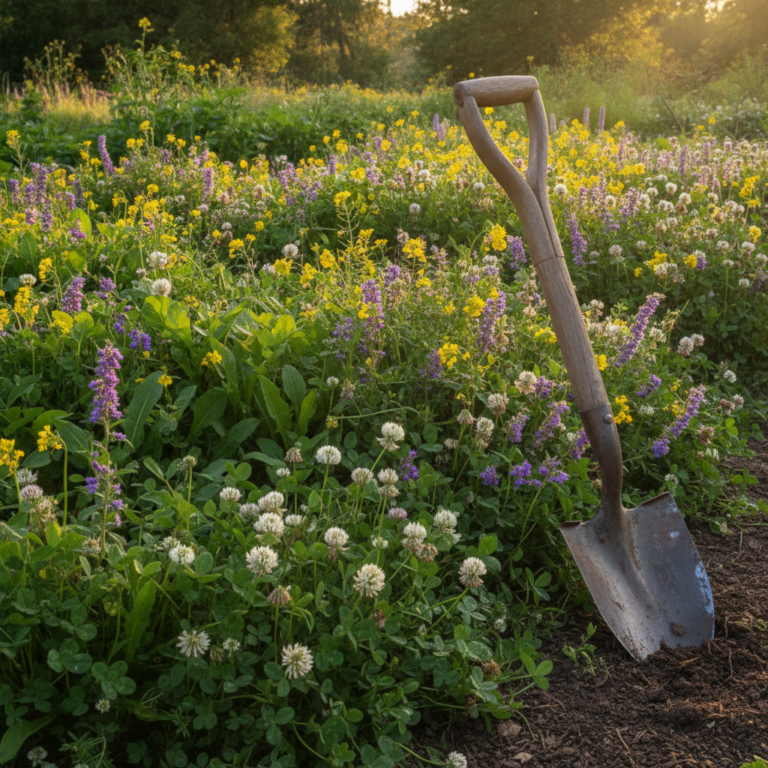
Phacelia is underused and underappreciated. It germinates quickly, produces masses of fine-textured organic matter, and its flowers attract pollinators like crazy. Cut it just before full bloom for maximum biomass.
Fall and Winter Green Manures
Hairy vetch is cold-hardy and one of the most powerful nitrogen fixers you can grow. Sow in late summer or early fall, let it overwinter, then turn it in the following spring. It pairs beautifully with winter rye for a dual-purpose cover.
Winter rye isn’t a nitrogen fixer, but it builds organic matter fast and suppresses weeds like a champion. Its dense root system prevents erosion and soil compaction all winter long.
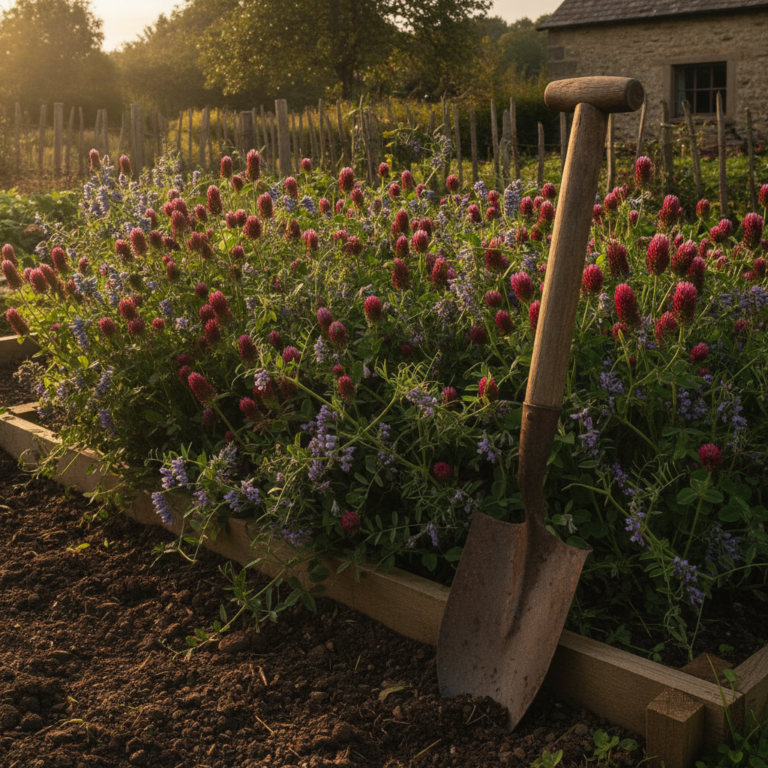
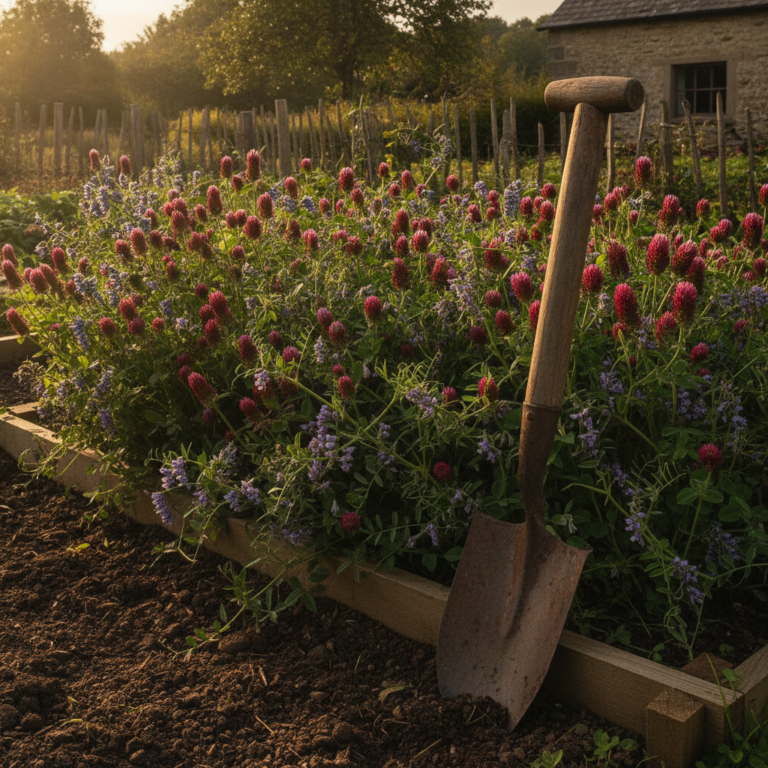
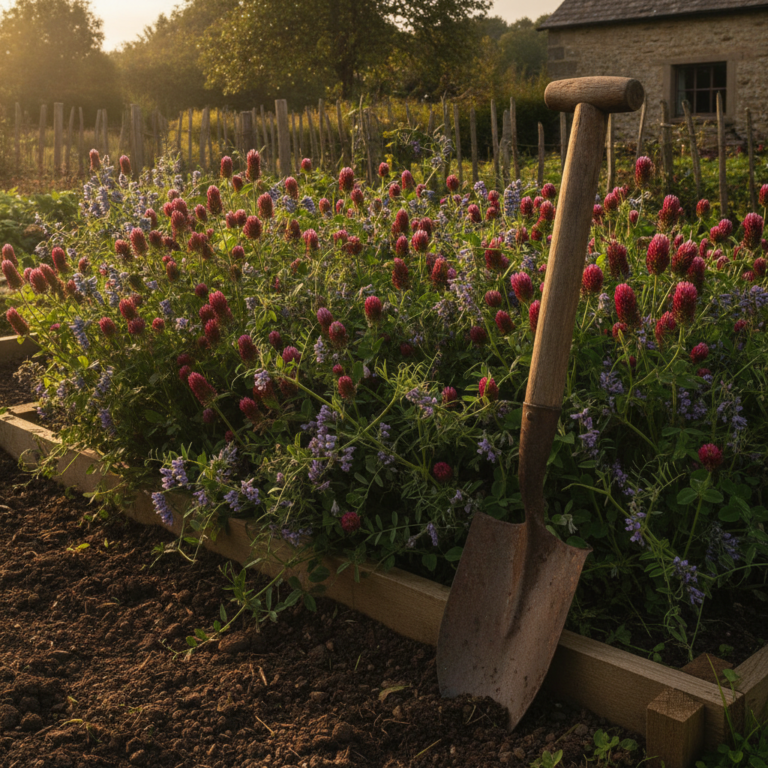
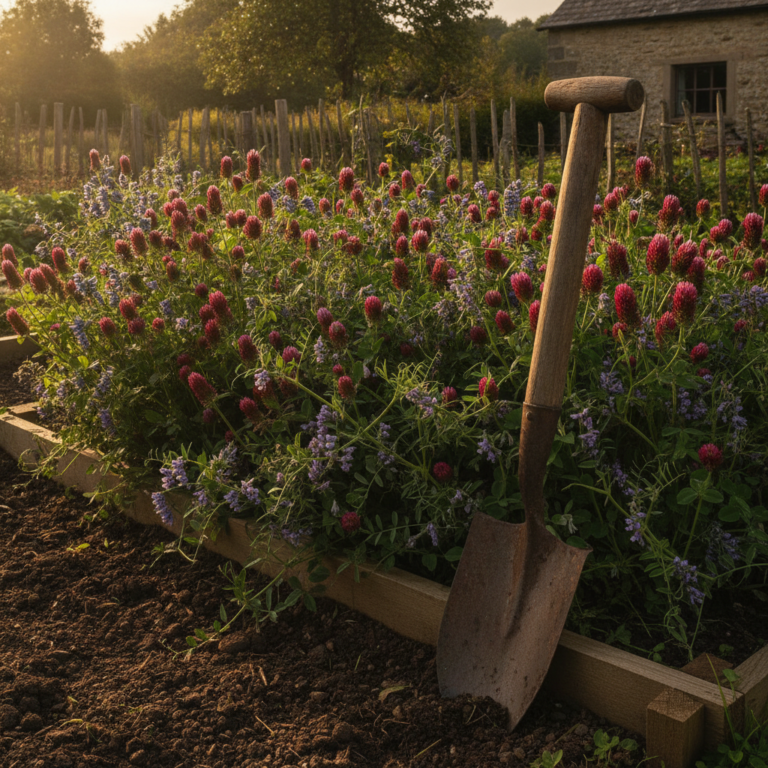
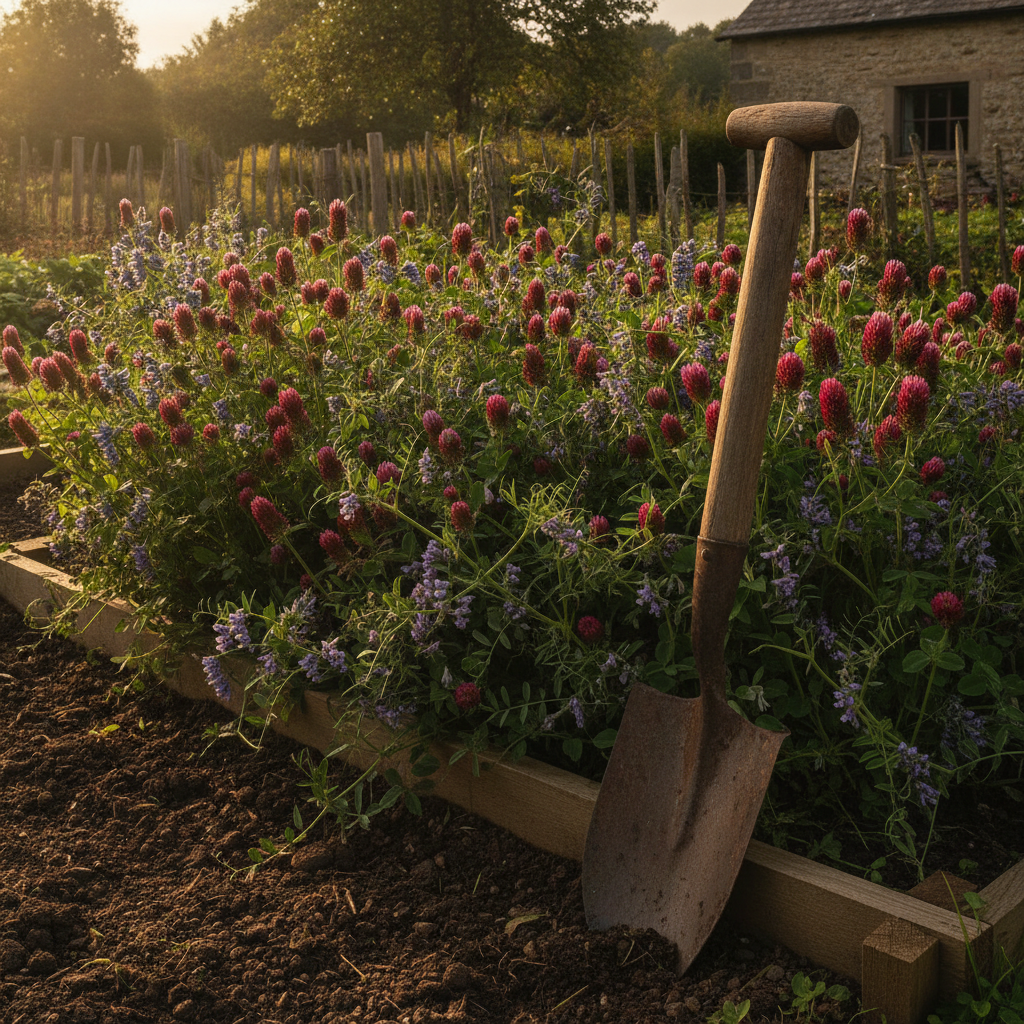
Crimson clover is beautiful, bee-friendly, and fixes good amounts of nitrogen. It’s slightly less cold-hardy than hairy vetch but handles mild winters well. Many gardeners grow it as much for its striking red blooms as for its soil benefits.
Field peas are another reliable fall option. They fix nitrogen, decompose quickly when turned in, and their soft tissue breaks down fast enough that you can follow them with a spring planting without much wait.
The Cut-and-Bury Timing Secret
This is where most first-timers get it wrong — and it’s the detail that separates a so-so result from a truly transformed bed.
The rule is simple: cut and bury green manure crops before they go to seed, ideally at early to full flower stage. Here’s why.
At flowering, plants have pumped maximum energy into their above-ground growth. Nitrogen and carbon are at their peak concentration. The tissue is still soft and moist, which means it breaks down quickly once buried.
If you wait until after seed set, two things happen. The plant starts pulling nutrients back into the seeds, reducing what’s available to the soil. And the fibrous, dry stems take much longer to decompose — potentially tying up nitrogen temporarily rather than releasing it.
After cutting, chop the material with a spade or shears into small pieces. Dig it in roughly 4–6 inches deep. Then wait. Most soft green manures like buckwheat and phacelia break down in 2–4 weeks. Tougher, woodier ones like winter rye can take 3–6 weeks before you should plant into that bed.
Patience here really pays off. Planting too soon after incorporation can cause nitrogen drawdown as microbes work to break down carbon-heavy material. A simple wait of 3–4 weeks sidesteps this entirely.
A Practical Green Manure Planting Calendar
Here’s a starting framework you can adapt to your climate and garden size. For a more detailed seasonal planning approach, check out this 30-day microclimate-aware planting plan — it pairs perfectly with a green manure rotation.
Early Spring (March–April)
- Sow field peas or crimson clover in empty beds
- Cut and bury after 6–8 weeks, before full flower
- Wait 3 weeks, then transplant summer crops
Early Summer (May–June)
- Sow buckwheat in gaps between plantings
- Cut at first bloom (4–6 weeks after sowing)
- Dig in and follow with a fall brassica transplant
Late Summer (August)
- Sow hairy vetch and winter rye together after summer crops clear
- Let overwinter
- Cut and bury the following April, 3–4 weeks before planting
Fall (September–October)
- Sow field peas or phacelia in any cleared beds
- Turn in before hard frost if mild climate, or leave as mulch in colder zones
If you’re just getting started and feel unsure about adding another layer to your garden planning, the 4-Week Beginner Garden Plan walks you through building these habits one step at a time — green manures included.
Tips for Small Garden Spaces
You don’t need a field to make green manures work. Even a 4×8 raised bed benefits enormously from a quick buckwheat rotation between crops.
Try this: when you pull out your garlic in July, immediately sow buckwheat in that bed. Six weeks later, chop and dig. By early September, your bed is recharged and ready for fall greens. That’s a complete soil-feeding cycle squeezed into 10 weeks.
In very small spaces, you can even grow green manure crops in large containers, then dump the chopped material directly into a raised bed or compost pile. It’s not quite the same as in-situ incorporation, but it adds real organic matter where you need it.
The Bottom Line: Grow Your Fertility
Green manure crops are one of the most powerful, low-cost tools in the old gardener’s toolkit. They rebuild what synthetic inputs deplete. They feed life rather than bypassing it. And they turn your garden’s quiet seasons into active fertility-building periods.
The knowledge was never lost — it was just buried under marketing for bags and bottles. But it’s still here, still works, and still outperforms most things you can buy at the garden center.
Start with one bed, one season, one crop. Try buckwheat this summer. Notice what changes in your soil by fall. That single experiment might just change how you garden forever.
Ready to dig deeper into soil-smart gardening? Explore how to read and fix your soil without a lab test — it’s the perfect next step alongside your first green manure rotation.