Green Manure Crops: The Plow-Under Secret
Long before the first bag of synthetic fertilizer rolled off a factory line, farmers knew exactly how to feed their soil for free. They grew green manure crops — specific plants raised not for eating, but for chopping down and burying. That single practice built some of the most fertile agricultural land in history. Today, most gardeners have never heard of it. That’s a shame, because this plow-under secret is one of the most powerful, lowest-cost things you can do for your garden.
Let’s bring it back.
What Are Green Manure Crops, Exactly?
A green manure crop is any fast-growing plant you grow specifically to dig back into the soil while it’s still green and leafy. You’re not waiting for it to dry out and compost. You’re burying living, nitrogen-rich biomass directly where your next crop will grow.
The key word here is living. Fresh green tissue breaks down fast. As it decomposes underground, it releases a burst of nutrients — especially nitrogen — feeds soil microbes, improves soil structure, and adds organic matter in one smooth motion.
Think of it as making compost right inside your beds, without the pile, the turning, or the waiting.
This is fundamentally different from mulching or topdressing. You’re feeding the soil from the inside. That’s the old-timer trick most modern gardeners skip entirely.
The Best Green Manure Crops to Grow
Not every plant makes an equally effective green manure. The best choices fall into two main groups: legumes that fix nitrogen, and fast-growing biomass builders that add organic matter quickly.
Nitrogen-Fixing Legumes
These are the stars of the green manure world. Legumes host Rhizobium bacteria in their root nodules. Those bacteria pull nitrogen from the air and store it in the soil. When you bury the plant, all that fixed nitrogen becomes available to your next crop.
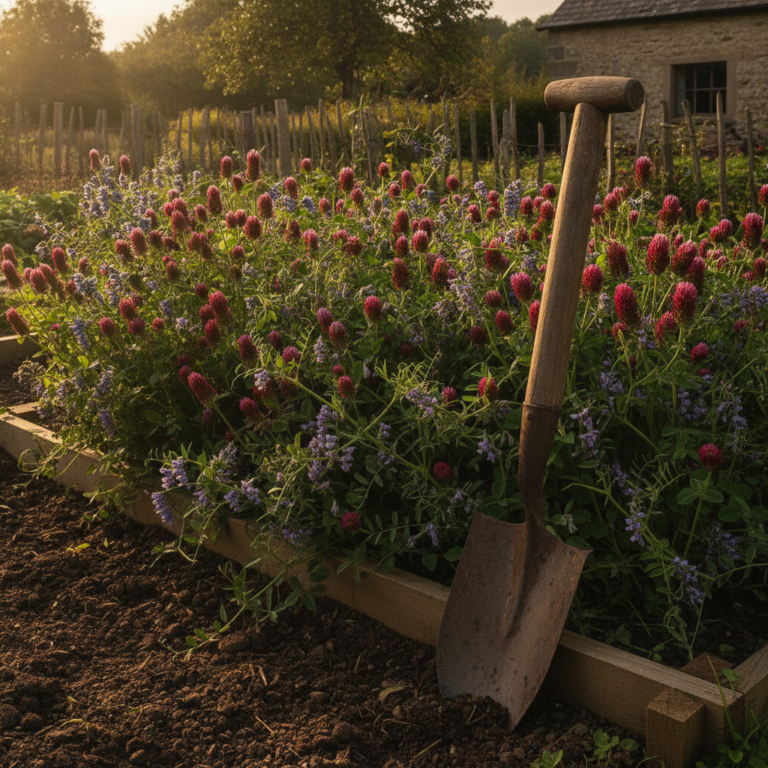
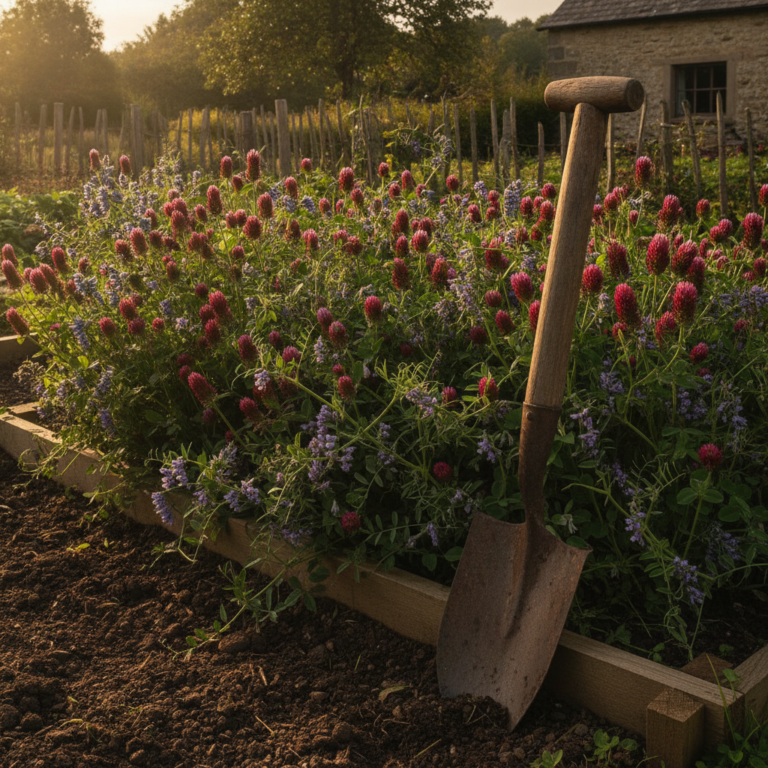
- Crimson clover — Fast to establish, beautiful in bloom, excellent nitrogen fixer. Great for spring or fall plantings.
- Fava beans (field beans) — Heavy feeders of atmospheric nitrogen. Ideal for a fall planting, wintered over, and dug in early spring.
- Hairy vetch — Extremely cold-hardy, fixes impressive amounts of nitrogen. Plant in late summer for a spring dig-in.
- Austrian winter peas — Another cold-hardy option, good for small beds. Easy to manage.
- Cowpeas (black-eyed peas) — Best for summer slots in warm climates. Fixes nitrogen fast.
Biomass Builders
These don’t fix nitrogen, but they build organic matter rapidly. They’re excellent at suppressing weeds, breaking up compacted soil with deep roots, and feeding soil biology.
- Buckwheat — Grows in six weeks, smothers weeds completely. Decomposes very fast after burial.
- Phacelia — A pollinator magnet and incredibly fast grower. Breaks down quickly and is easy on soil pH.
- Annual ryegrass — Deep fibrous roots improve tilth dramatically. Best chopped before it sets seed.
- Mustard — Has mild biofumigant properties. Suppresses soil-borne pathogens when dug in. A natural follow-up to a disease-prone crop.
If you want to read more about diagnosing what your soil actually needs before choosing your green manure, Soil Sense Without the Lab: Read Your Dirt, Fix It Fast gives you a practical, no-equipment approach to understanding your soil’s gaps.
How to Time the Cut-and-Dig for Maximum Nitrogen Release
Timing is everything with green manure crops. Get it right and you get a nutrient surge. Get it wrong and you get a soggy mat that ties up nitrogen instead of releasing it.
The Golden Rule: Dig Before Flowering
The best time to dig in your green manure is just as flowers begin to open — or ideally, just before. At this point, the plant has maximum biomass but hasn’t yet moved its stored nutrients into seeds. The tissues are still soft and succulent, which means they break down fast.
If you let the crop flower fully and go to seed, two things happen. First, nutrients shift away from the leaves and stems. Second, you risk the crop reseeding itself and becoming a weed problem next season.
The Two-Week Rule
After you chop and dig in your green manure, wait at least two weeks before planting your next crop. During this time, the decomposing plant matter actually creates a brief nitrogen drawdown as microbes get to work breaking it down. Planting too soon means your seedlings compete with that microbial activity.
Two weeks is the minimum. Three to four weeks is better, especially for legumes with heavy root mass.
Chop First, Then Dig
Don’t try to dig in whole plants. Use a sharp hoe or scythe to chop the plants into rough pieces first. Smaller pieces decompose much faster. Then turn the material into the top six to eight inches of soil using a fork or broadfork. You want the green matter evenly distributed, not buried in clumps.
If you’re working with compact soil or need to minimize digging, check out Tools That Grow with You: Durable Gear and Smart Maintenance for Every Skill Level for guidance on the right tools for this kind of work.
A Practical Green Manure Planting Calendar
Here’s how to weave green manure crops into your existing garden rotation. This calendar assumes a temperate climate with a spring-to-fall main growing season.
Early Spring (March–April)
As soon as soil can be worked, broadcast crimson clover or phacelia into any empty beds. These establish fast in cool weather. Dig them in by late May before planting summer crops.
Early Summer Gap (June)
If a bed becomes vacant after harvesting overwintered greens or spring brassicas, buckwheat is your answer. It establishes in a week and reaches full size in six weeks. Chop and dig it in by late July for a fall planting.
Late Summer (August)
Plant hairy vetch or Austrian winter peas in beds that will sit empty over winter. These overwinter, fix nitrogen all season, and are dug in come early spring — just before your first planting of the year.
Fall (September–October)
Fava beans planted now will push deep roots through winter, break up compacted soil layers, and deliver some of the highest nitrogen yields of any green manure. Dig them in March or April before the flowers fully open.
Pairing this rotation with a smart microclimates approach can push your results even further. Climate-Proof Your Crops: A 30-Day, Microclimate–Aware Planting Plan will help you match the right green manure to each zone in your garden.
Why Green Manure Beats Most Store-Bought Soil Amendments
Here’s the honest comparison. A bag of granular fertilizer gives you a defined nutrient ratio, applied once, absorbed once. There’s no long-term biological benefit. Your soil doesn’t improve structurally. The microbes don’t get fed. It’s a one-time transaction.
Green manure crops do all of this at the same time:
- Fix and release nitrogen slowly, in plant-available form
- Add bulk organic matter that improves water retention and drainage simultaneously
- Feed billions of soil bacteria and fungi, building long-term soil health
- Suppress weeds during their growth period
- Break up compaction with their root systems
- Cost almost nothing — most green manure seeds are inexpensive and go a long way
One season of consistent green manure rotation can visibly transform your soil’s texture, color, and biological activity. Your grandparents weren’t doing this because they lacked options. They were doing it because it worked reliably, year after year, without a receipt.
Start Small, See the Difference
You don’t need to overhaul your entire garden this season. Pick one bed that will sit empty for four to six weeks and run your first green manure experiment. Scatter some crimson clover or buckwheat seed, water it in, and watch what happens when you dig it under and plant into that bed two weeks later.
The difference in plant vigor is usually visible within the first few weeks. Once you see it, you’ll start planning your rotations around this technique automatically.
If you’re newer to thinking about garden rotations and planning systems, Garden Storylines: A Month-by-Month Narrative Approach to Grower Growth is a great companion for building the kind of seasonal awareness that makes green manure planning feel natural rather than complicated.
The plow-under secret isn’t complicated. It isn’t expensive. It just requires a shift in thinking — from feeding plants to feeding soil. Make that shift, and your garden will reward you with the kind of fertility your great-grandparents took for granted.
Start this season. Dig something in. Watch your soil come alive.