Green Manure Crops: The Plow-Under Secret
Long before a bag of synthetic nitrogen ever sat on a store shelf, farmers were quietly doing something remarkable. They were growing entire crops just to bury them. These were green manure crops — living plants grown specifically to be chopped down and dug back into the soil. The technique fed the earth from within, building fertility season after season without a single purchased amendment. And honestly? It still works better than most things you can buy today.
If you’ve been struggling with tired, compacted, or nutrient-poor soil, this old-time rotation trick might be exactly what your garden has been missing. Let’s dig into how it works, which plants to use, and how to time everything for maximum effect.
What Are Green Manure Crops — And Why Did Everyone Stop Using Them?
A green manure crop is any fast-growing plant you sow with the intention of cutting it down before it fully matures, then digging it straight into the soil. The buried plant matter breaks down rapidly, releasing nitrogen, organic carbon, and a cascade of micronutrients directly where your next crop will need them.
This is fundamentally different from composting. With compost, you break materials down outside the soil, then add the finished product. With green manure, the decomposition happens underground. The soil biology — your worms, fungi, and bacteria — does the work in place. The result is faster nutrient cycling and a genuine improvement in soil structure.
So why did this method fade out? Simple: synthetic nitrogen became cheap after World War II. Why grow a whole crop to bury when you could just pour a bag on the ground? But that shortcut has had consequences. Decades of skipping organic matter inputs have left millions of garden soils compacted, depleted, and dependent on external inputs just to function. Understanding what’s actually happening beneath your feet matters — and if you haven’t already, reading through Soil Sense Without the Lab: Read Your Dirt, Fix It Fast will give you a strong foundation before you plant your first green manure.
The Best Green Manure Crops for Home Gardeners
Not all cover crops make equally good green manures. The best ones grow fast, produce high biomass, and — ideally — fix atmospheric nitrogen through root nodule bacteria. Here are the top performers, organized by season.
Spring and Summer Green Manures
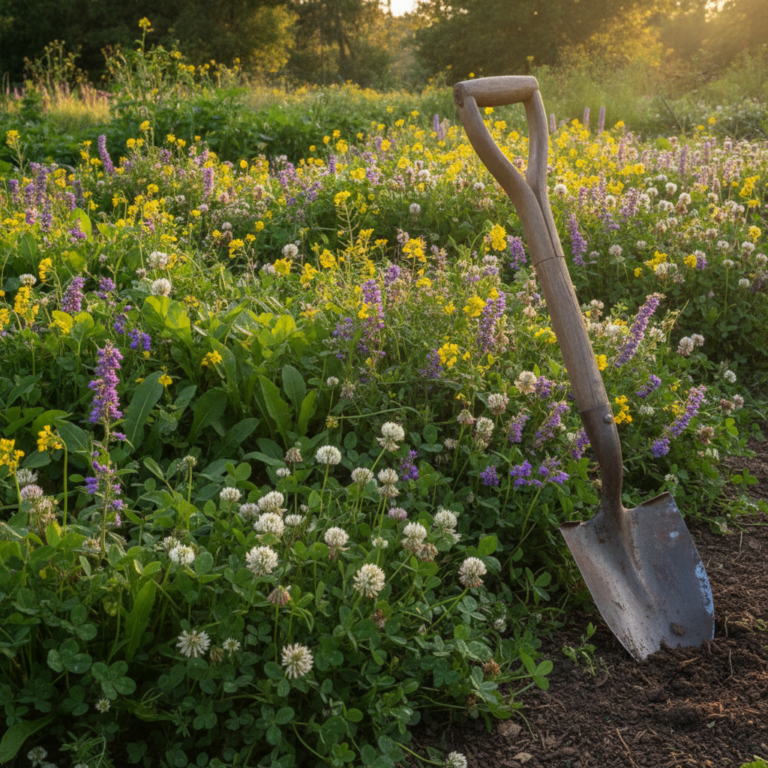
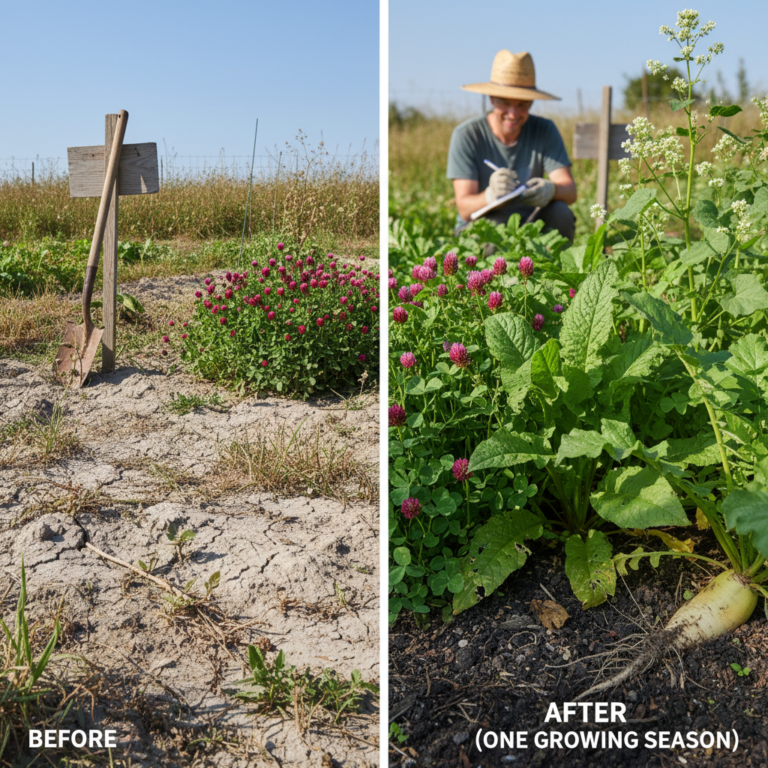
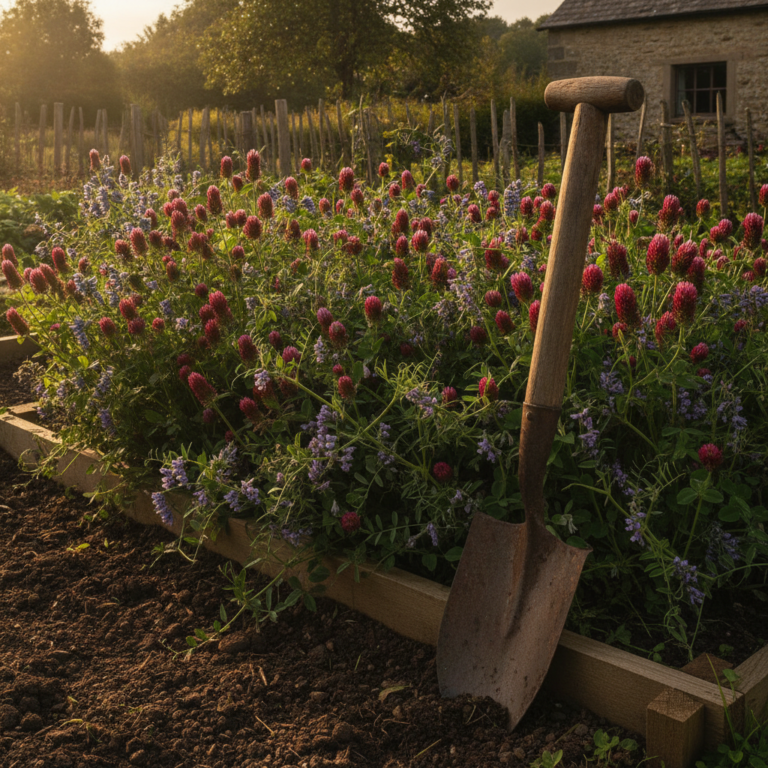
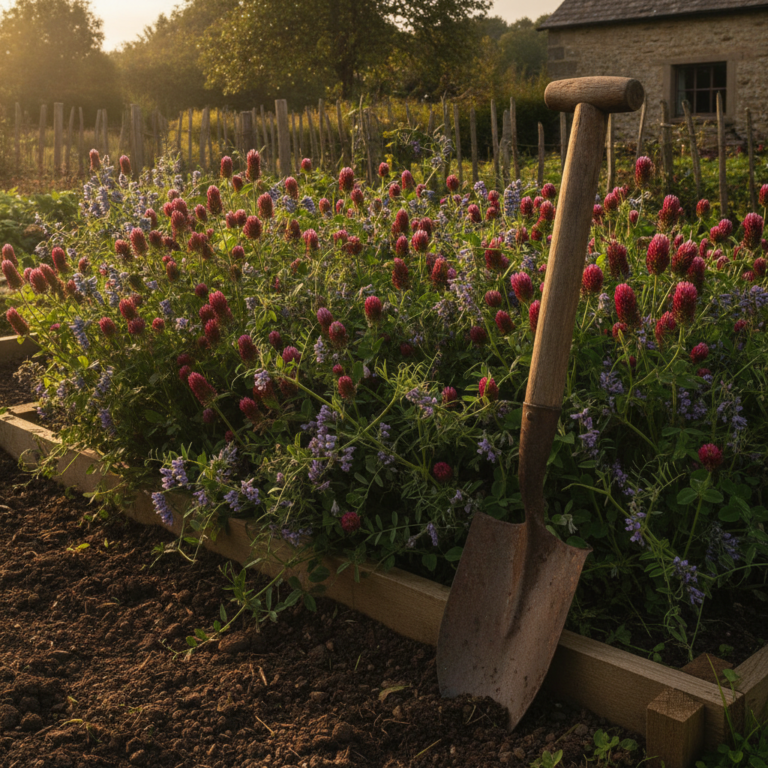
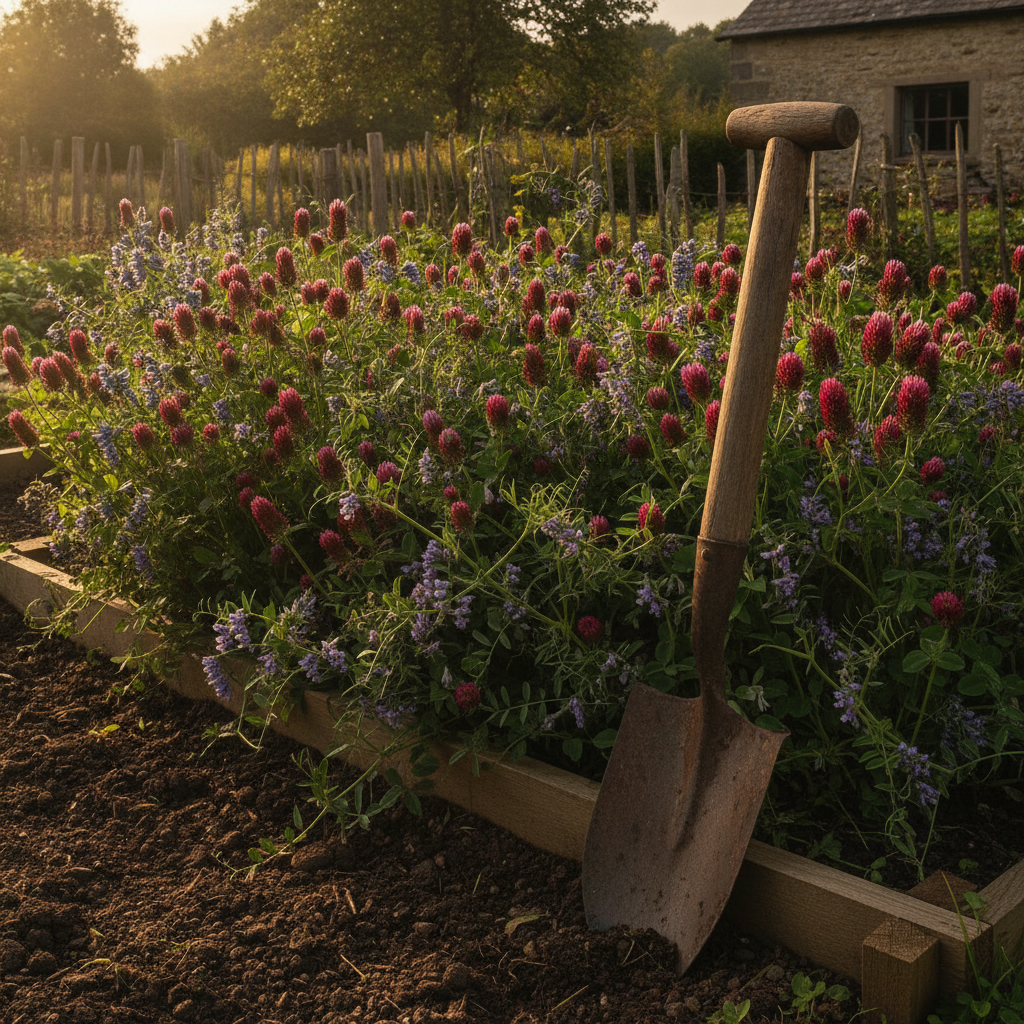
Crimson Clover is arguably the most reliable green manure for home gardeners. It’s a legume, which means it partners with Rhizobium bacteria to pull nitrogen straight from the air and lock it into the soil. It grows quickly, produces dense leafy matter, and has beautiful red flowers that pollinators adore before you cut it down.
Buckwheat isn’t a legume, but it’s outstanding at mining phosphorus from deep in the soil and making it available near the surface. It also smothers weeds aggressively. Buckwheat grows so fast — ready to cut in just 4–6 weeks — that you can fit it between main crops in the same season.
Field Peas are another legume workhorse. They’re frost-tolerant enough for early spring, fix generous amounts of nitrogen, and their thick stems add real bulk to the soil when turned under.
Late Summer and Fall Green Manures
Winter Rye is the gold standard for fall green manuring. It grows even in cold temperatures, produces enormous amounts of organic matter, and its deep roots break up compaction beautifully. It can be sown after summer crops come out and left to overwinter, then turned under in early spring.
Hairy Vetch pairs brilliantly with winter rye. It’s a legume that fixes nitrogen while rye adds the carbon bulk. Together they create a near-perfect nutrient balance when plowed under. This combination was a staple on traditional farms for very good reason.
Phacelia is less commonly known but deserves far more attention. It grows fast, produces silky purple flowers beloved by bees, and breaks down into the soil almost immediately after cutting. It’s also completely winter-killed in most climates, meaning it naturally dies back and you barely need to dig it in.
How to Time the Cut-and-Dig for Maximum Nitrogen Release
Timing is everything with green manure crops. Cut too early and you lose biomass. Cut too late — after flowering and seed set — and the plant matter becomes woody and slow to decompose. The sweet spot is just before or at first flower bud formation.
At this stage, the plant is at peak nitrogen content and the tissues are still soft and succulent. They’ll break down within two to four weeks under good soil conditions. Here’s the general rule:
- Cut to within 5–10 cm of the ground using a sharp spade or scythe.
- Chop the material finely before digging in. Smaller pieces decompose faster.
- Dig or fork it into the top 15–20 cm of soil. You’re not plowing a field — a sturdy garden fork works perfectly.
- Wait 2–4 weeks before planting your next crop. This allows the green matter to begin breaking down and prevents nitrogen immobilization, where soil microbes temporarily tie up nitrogen while processing carbon-rich material.
One practical note: if you’re short on time, a sharp spade and 30 focused minutes is all you need for a standard raised bed. If you want to make efficient use of your garden hours, the approach outlined in The 60-Minute Garden: Quick, High-Impact Tasks for Beginners and Seasoned Growers pairs naturally with a green manure rotation.
Why Green Manures Outperform Most Bagged Soil Conditioners
Here’s something the fertilizer aisle won’t tell you. A bag of granular nitrogen releases nutrients in a rush that plant roots often can’t fully absorb. Much of it leaches away in rain or irrigation water. Green manure, by contrast, releases nutrients slowly as the organic matter decomposes. This slow, steady release matches how plants actually feed.
Beyond nitrogen, green manure crops deliver something no bag ever can: living organic matter that feeds the entire soil food web. Earthworms multiply. Fungal networks expand. Water retention improves. Compaction decreases. The soil becomes genuinely alive rather than just chemically available.
Studies on traditional farming rotations have consistently shown that plots maintained with regular green manuring have higher soil organic matter, better aggregate stability, and greater long-term productivity than plots maintained on synthetic inputs alone. Your grandparents and great-grandparents understood this intuitively. We’re just rediscovering the science behind what they practiced.
For gardeners building a more complete regenerative system, pairing green manures with perennial plantings creates compounding benefits over time. The The Perennial Playbook: Build a Low-Input Garden That Keeps Flourishing With You is an excellent companion read on that front.
Your Practical Green Manure Planting Calendar
This seasonal calendar gives you a working framework you can adapt to your climate and bed rotation. Remember: you don’t need to green manure every bed. Even one or two rotations per season makes a measurable difference.
Early Spring (March–April)
Sow field peas or crimson clover as soon as the soil can be worked. These tolerate light frost. Allow 6–8 weeks of growth, then cut and dig before transplanting summer crops in late spring.
Late Spring to Early Summer (May–June)
Sow buckwheat in any bed that sits empty between early and late plantings. It fills a 4–6 week gap perfectly. Cut when the first white flowers appear and dig in immediately.
Midsummer (July)
After early crops like garlic, spring brassicas, or peas come out, sow phacelia or a buckwheat/clover mix. These grow through summer heat and can be cut and dug by late August, leaving beds ready for fall crops.
Late Summer to Fall (August–October)
This is the most powerful window. After your main summer crops finish, sow winter rye and hairy vetch together. Let them grow through fall and overwinter. Turn them under in early spring, 3–4 weeks before your first planting. This is the classic pre-season soil-building rotation that old-time farmers swore by.
A Note on Climate Adjustment
These dates assume a temperate northern hemisphere climate. If you’re in a warmer zone or the Southern Hemisphere, simply shift the seasons accordingly. For detailed guidance on working with your specific local conditions, Climate-Proof Your Crops: A 30-Day, Microclimate–Aware Planting Plan walks you through how to read and adapt to your exact garden environment.
Getting Started This Season
You don’t need a large plot, expensive equipment, or years of experience to start using green manure crops. One raised bed, one packet of crimson clover seed, and a garden fork is all it takes to begin rebuilding your soil the way it was done for centuries before synthetic chemistry arrived.
Start small. Watch what happens. Notice how the soil smells different after you turn in a lush stand of vetch — earthy, rich, alive. Notice how your next crop pushes through with more vigor. That’s not magic. That’s biology working the way it always has, once you give it the right ingredients.
The old farmers knew something important: healthy soil grows itself, as long as you feed it well. Green manuring is how they did it. It’s how you can do it too — starting right now, this season, with whatever bed is sitting empty in your garden today.