Green Manure Crops: The Plow-Under Secret
Long before synthetic nitrogen came in a bag, farmers knew a quiet secret: green manure crops could feed the soil better than almost anything else. They grew specific plants — clover, vetch, buckwheat, rye — not to harvest, but to chop down and bury. The decomposing roots and leaves fed the next crop directly. It was free, it was effective, and it worked with nature rather than against it. This old-time rotation trick is making a serious comeback, and for good reason.
If you’ve been struggling with tired, thin, or compacted soil, this might be the most practical thing you read all season. Let’s dig in — literally.
What Are Green Manure Crops, Exactly?
A green manure crop is any plant grown specifically to be turned back into the soil while still green. The goal isn’t harvest. The goal is soil improvement. Think of it as growing your own fertilizer right in the bed.
These plants do several jobs at once. Legumes fix atmospheric nitrogen into the soil. Fast-growing grasses suppress weeds and prevent erosion. Deep-rooted species break up compaction and pull minerals up from lower soil layers. When you chop and bury them, all that stored energy and nutrition feeds the microbial life that, in turn, feeds your vegetables.
Before you can choose the right green manure, it helps to understand your soil’s current condition. Check out Soil Sense Without the Lab: Read Your Dirt, Fix It Fast — a practical guide for diagnosing what your soil actually needs before you plant anything.
The Best Green Manure Crops for Home Gardens
Not all cover crops work the same way. Here’s a breakdown of the most effective options for small-scale home gardeners.
Crimson Clover
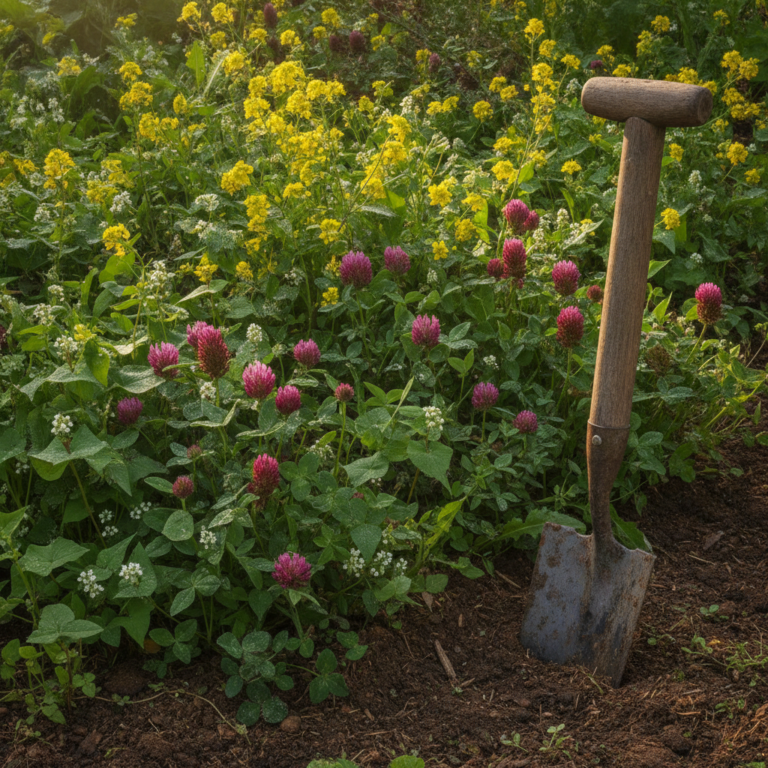
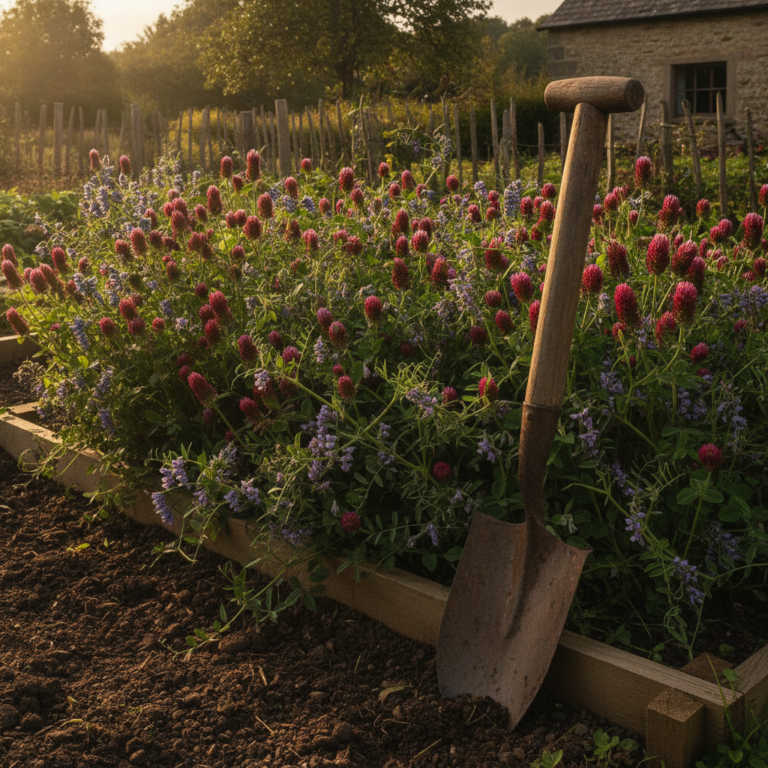
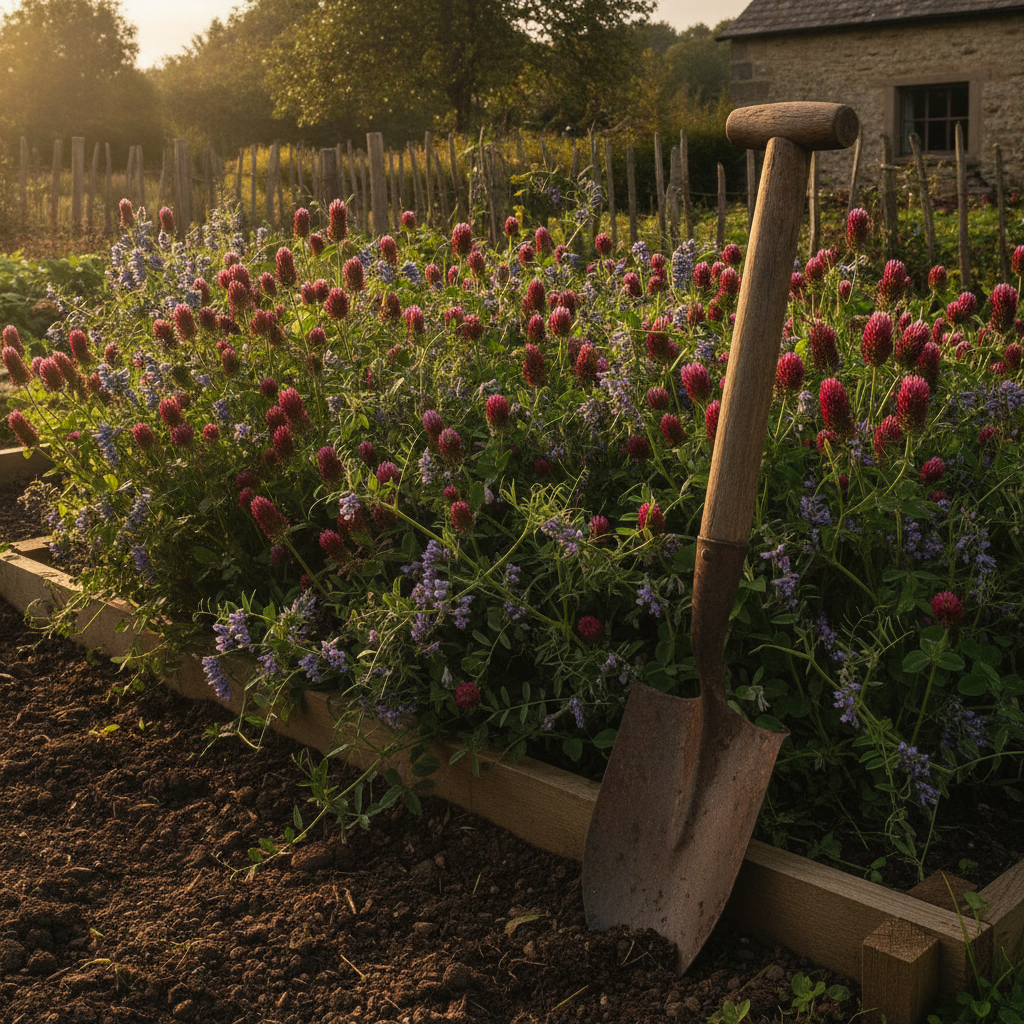
This is the workhorse of nitrogen fixers. Crimson clover establishes fast, looks beautiful, and fixes between 70–150 lbs of nitrogen per acre when plowed under at peak bloom. It grows well in cool weather and can be sown in spring or fall. Dig it in just as the flowers open — that’s when nitrogen content peaks.
Hairy Vetch
Hairy vetch is remarkably winter-hardy and fixes even more nitrogen than clover. It’s especially useful if you want to prep a bed through winter and turn it in early spring. The vines sprawl low and smother weeds effectively. Bury it at flowering, before seeds set, to avoid unwanted volunteers.
Winter Rye
Winter rye won’t fix nitrogen, but it excels at everything else. It breaks up clay soil with its fibrous roots, suppresses persistent weeds, prevents nutrient runoff, and adds enormous bulk of organic matter when turned under. It’s also nearly impossible to kill, making it perfect for beginners.
Buckwheat
A summer star, buckwheat grows explosively fast — ready to turn under in just 4–6 weeks. It scavenges phosphorus from the soil and makes it available to the next crop. It also attracts beneficial insects, adding a bonus layer of garden support. Use it in summer gaps between main crops.
Fenugreek
Less common but worth growing, fenugreek is a fast-fixing legume that thrives in warm soils. It has deep roots that improve drainage and adds a pleasant aromatic quality to the soil. Your grandparents may have grown it without even knowing the science behind why it worked.
How to Time the Cut-and-Dig for Maximum Nitrogen Release
Timing is everything with green manure crops. Turn them under too early and you’ve wasted weeks of growth. Too late, and the plants have set seed, become woody, and lost much of their nitrogen value.
The golden rule: incorporate at early flowering, before seeds develop. This is when the plant’s nitrogen content is highest and the tissue is still soft enough to break down quickly in the soil.
Here’s the simple process:
- Cut or mow the crop close to the soil surface.
- Let it wilt for 1–2 days on the surface. This prevents the green matter from creating a slimy anaerobic layer when buried.
- Chop it into the top 6–8 inches of soil with a spade or broadfork. You don’t need deep burial — surface incorporation works well.
- Wait 2–4 weeks before planting. The decomposition process needs time. Plant too soon and you risk nitrogen immobilization, where soil microbes briefly tie up nitrogen as they break down carbon-heavy material.
For best results, water the bed after incorporation if rain isn’t coming. Moisture accelerates microbial activity and speeds up decomposition considerably.
Why Green Manure Outperforms Most Store-Bought Soil Conditioners
Bagged fertilizers deliver a one-dimensional hit — usually a single nutrient, often in a form that leaches away quickly. Green manure crops work differently. They feed the soil ecosystem, not just the plant.
When organic matter decomposes, it feeds bacteria and fungi. Those organisms, in turn, bind soil particles into aggregates — creating that crumbly, well-aerated texture that lets roots breathe and water penetrate evenly. This is living soil architecture, and no bag of synthetic fertilizer builds it.
Additionally, the root channels left behind by vetch or rye create permanent pathways for water and air. Deep-rooted green manures essentially till the subsoil for free, reducing the need for mechanical disruption that damages soil structure over time.
If you’re thinking about layering these techniques into a broader no-dig or low-input system, the Perennial Playbook: Build a Low-Input Garden That Keeps Flourishing With You pairs beautifully with a green manure rotation.
A Practical Green Manure Planting Calendar
Here’s a simple, seasonal framework you can start using this year. Adjust timing based on your local frost dates and climate zone. If you need help understanding your specific microclimate, Climate-Proof Your Crops: A 30-Day, Microclimate-Aware Planting Plan is an excellent companion resource.
Spring (March–May)
- Sow: Crimson clover, fenugreek, or phacelia in empty beds after last frost.
- Turn under: Any overwintered hairy vetch or winter rye before it seeds.
- Wait 2–3 weeks, then plant your summer vegetables.
Early Summer (June–July)
- Sow: Buckwheat in any gap beds or spaces that won’t be planted until fall.
- Turn under: Buckwheat after 4–5 weeks, or when it begins to flower.
- Repeat with a second succession if the gap is long enough.
Late Summer (August–September)
- Sow: Hairy vetch or crimson clover into beds being cleared of summer crops.
- Let these establish fully before first frost — they’ll overwinter and be ready to turn in early spring.
Fall/Winter (October–February)
- Sow: Winter rye into any open beds. It can germinate in cold soil and will hold nutrients through winter.
- No need to turn under until early spring. It will continue protecting and improving the soil all season long.
Common Mistakes to Avoid
A few missteps can undermine an otherwise excellent green manure rotation. Watch for these:
- Letting plants go to seed. Buckwheat and vetch especially self-seed aggressively. Always turn under before seed heads form.
- Planting too soon after incorporation. Give the soil at least two weeks — ideally three to four — before setting out transplants or direct sowing.
- Skipping the wilt period. Fresh-cut green material can form an anaerobic layer that slows decomposition. Let it wilt on the surface first.
- Neglecting water after digging in. Dry soil dramatically slows decomposition. A good soak after incorporation makes a real difference.
Start Small, See for Yourself
You don’t need to overhaul your entire garden to try this. Pick one empty bed, sow a quick round of buckwheat or clover, and watch what happens to the soil structure after you turn it under. The difference in texture, color, and plant vigor in subsequent crops will convince you faster than any study or statistic could.
The farmers who relied on green manure crops for generations weren’t being primitive — they were being smart. They understood that healthy soil grows healthy plants, and healthy plants start with feeding what’s underground first.
If you’re ready to take a more systematic approach to building your garden knowledge alongside your soil, the Layered Learning: A Gardener’s Progressive System That Grows with You is a wonderful next step. These techniques compound when you build them deliberately, season by season.
Your grandparents knew this secret. Now you do too. Go bury something beautiful.