Green Manure Crops: The Plow-Under Secret
Before the first bag of synthetic nitrogen ever hit a farm store shelf, growers already knew how to feed their soil for free. They grew green manure crops — specific plants cultivated not to eat, but to chop down and bury alive. That single act of digging living plant matter into the earth could transform exhausted, depleted ground into something dark, crumbly, and genuinely alive. Today, most gardeners have never heard of this technique. But it may be the most powerful soil-building move you can make this season.
What Are Green Manure Crops, Exactly?
A green manure crop is any fast-growing plant that you deliberately cut down and incorporate into the soil before it sets seed. The goal is not harvest. The goal is decomposition — releasing nitrogen, organic matter, and microbial fuel directly where your vegetables will grow next.
Think of it as brewing compost in place, underground, without bins or turning or waiting. The soil does the work. You just supply the raw ingredients.
This practice goes back thousands of years. Roman farmers used lupins. Chinese farmers used water hyacinth. Traditional European smallholders rotated clover into every third or fourth bed as a matter of course. They didn’t have soil test kits or NPK ratios. They simply observed that land rested under certain plants came back stronger.
Modern research has since confirmed what those farmers knew by feel: certain green manure crops can fix between 100 and 200 pounds of nitrogen per acre. That’s meaningful nutrition — and it costs almost nothing.
The Best Green Manure Crops for Home Gardens
Not all cover crops work equally well as green manures. Some are better at fixing nitrogen. Others add bulk and organic matter. A few do both. Here’s what actually works in a typical home garden setting.
Legumes: The Nitrogen Fixers
Legumes are the superstars of the green manure world. Their roots form partnerships with Rhizobium bacteria, pulling nitrogen from the air and storing it in root nodules. When you dig the plant under, that stored nitrogen releases into the soil.
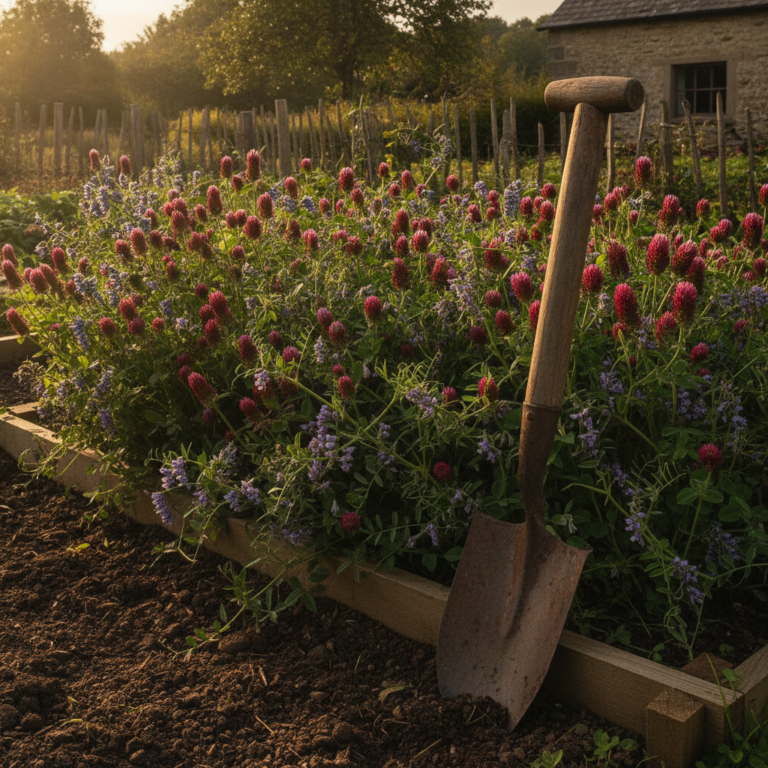
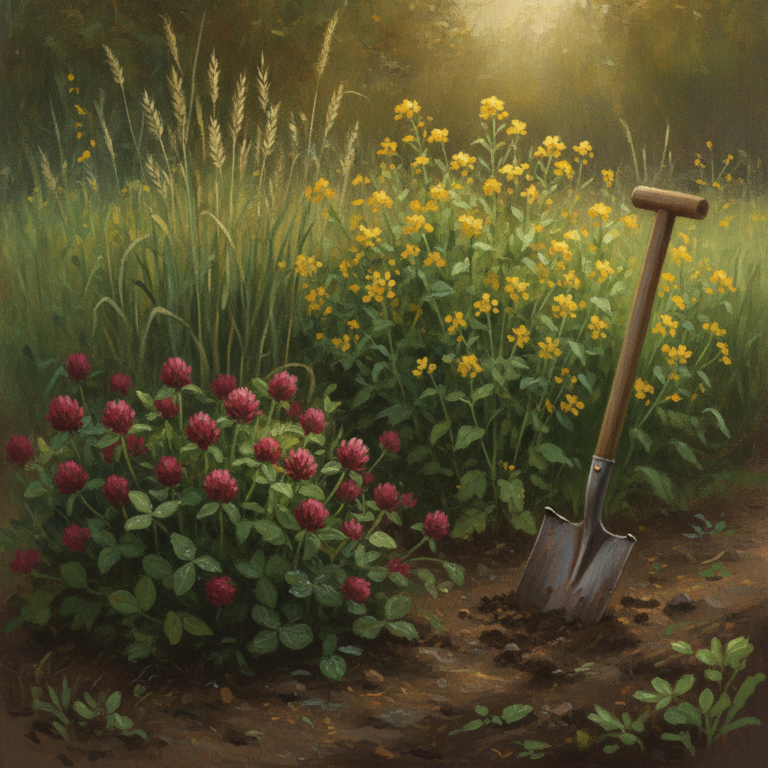
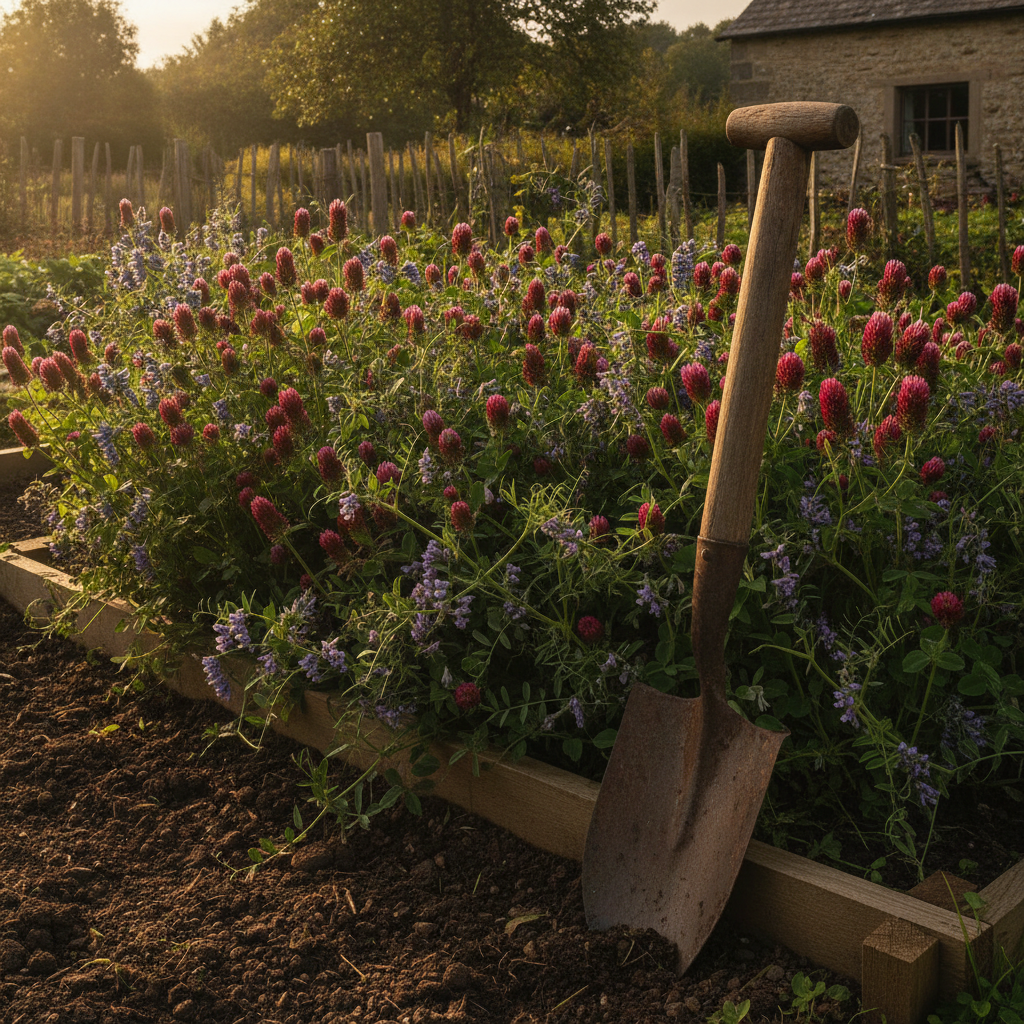
Crimson clover is one of the most reliable choices. It establishes quickly, survives light frosts, and produces an impressive root mass. Sow it in early spring or late summer. Cut and incorporate just as the flowers begin to open — that’s the peak nitrogen moment.
Field peas are equally powerful and fast. They’re ready to turn under in as little as 60 days. In cooler climates, they make an ideal late-winter green manure crop planted in February or March.
Hairy vetch is tougher and more cold-hardy than most legumes. It’s excellent for fall planting in zones 5 through 9. Let it overwinter, then dig it in during early spring before planting tomatoes or corn — heavy nitrogen feeders that will reward you generously.
Fava beans are a gardener’s best friend in mild winter climates. They fix nitrogen, produce edible beans if you choose, and their large leaf mass adds significant organic matter when turned in.
Non-Legumes: Bulk, Biology, and Weed Suppression
Not every green manure crop fixes nitrogen. Some work differently — smothering weeds, feeding soil fungi, or breaking up compacted layers with deep roots.
Buckwheat is extraordinarily fast, growing to 18 inches in just 4 to 6 weeks. It suppresses weeds aggressively and attracts beneficial insects while it grows. Its decomposition releases phosphorus — often a limiting nutrient in backyard soils. Cut it before it flowers fully to prevent unwanted seeding.
Mustard family crops — including white mustard and oilseed radish — are biofumigants. Their root exudates suppress soil pathogens and nematodes naturally. Oilseed radish also drills deep into compacted soil, leaving channels that improve drainage long after it decomposes.
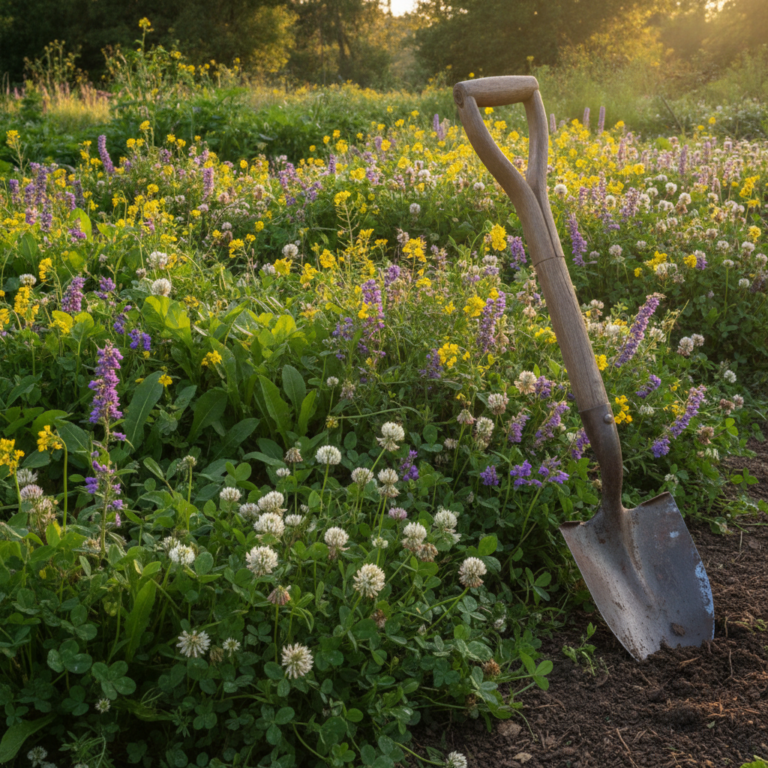
Phacelia is an underused gem. It’s not a legume, but it decomposes rapidly and feeds soil microbes with a rich blend of carbon compounds. It also produces beautiful lavender flowers that pollinators love before you cut it down.
Timing the Cut: When to Chop and Bury for Maximum Effect
Timing your green manure incorporation is just as important as choosing the right crop. Cut too early and you lose biomass. Wait too long and the plants get woody, slow to decompose, and potentially go to seed.
The general rule: cut green manure crops just before or at the start of flowering. This is the biological sweet spot. The plant’s nitrogen is at its highest concentration. The tissue is still soft and green, meaning it breaks down within two to four weeks rather than months.
After cutting, chop the foliage roughly with a spade or shears. Then dig everything 4 to 6 inches into the soil — deep enough to avoid drying out, shallow enough to stay in the active decomposition zone.
Here’s the part most gardeners get wrong: they plant immediately after turning. Don’t. Wait at least two to three weeks. Decomposing plant matter temporarily ties up available nitrogen in a process called immobilization. If you plant straight away, your seedlings may actually look worse, not better.
Patience pays. After three weeks, the biology shifts. Nitrogen releases. Microbes multiply. Your soil will be measurably richer than before you started.
If you want to understand your soil’s baseline before you begin, Soil Sense Without the Lab: Read Your Dirt, Fix It Fast gives you a practical no-equipment method for assessing what your ground actually needs right now.
A Practical Green Manure Planting Calendar
Here’s how to work green manure crops into a typical growing year. Adjust for your climate zone, but the rhythm holds nearly everywhere.
Late Winter / Early Spring (February–March)
Sow field peas or fava beans as soon as the ground can be worked. These cold-tolerant legumes establish quickly and will be ready to turn under by late April or early May — just in time for summer crop planting.
Late Spring (April–May)
After turning in your winter green manure, wait three weeks, then plant your main summer crops. Meanwhile, sow buckwheat in any open beds you won’t plant until midsummer. It suppresses early weeds and improves soil structure in just six weeks.
Midsummer (June–July)
After harvesting early spring crops like lettuce or peas, sow phacelia or crimson clover into the empty space. These will grow through summer and can be turned under in late August before fall planting.
Late Summer / Early Fall (August–September)
This is the most important green manure window of the year. Sow hairy vetch, winter rye, or a legume-grass mix into beds you’ve finished harvesting. These overwinter, protect bare soil from erosion, and get incorporated in spring. This single practice alone can dramatically reduce how much external fertilizer you ever need.
Winter (October–January)
Let your overwintering green manures do their quiet work. Monitor for winter kill in colder zones. In mild climates, fava beans and winter peas can continue growing slowly through mild spells.
If you’re planning your garden’s layout across different beds and seasons, Climate-Proof Your Crops: A 30-Day Microclimate–Aware Planting Plan pairs beautifully with this rotation approach. Understanding which beds warm up earliest will help you time your green manure sowings perfectly.
Why Green Manure Crops Outperform Bagged Fertilizers
A bag of balanced fertilizer delivers nutrition in a single dose. It doesn’t feed soil biology. It doesn’t improve structure. It doesn’t suppress weeds or break up hardpan.
Green manure crops do all of these things simultaneously. They are not amendments — they are living systems that rebuild the entire soil ecosystem from the ground up.
Organic matter from incorporated plants feeds bacteria, fungi, earthworms, and the entire underground food web. Those organisms in turn release nutrients slowly and steadily — the way plant roots evolved to receive them. No flush, no crash, no dependency on next year’s purchase.
There’s also a weed suppression benefit that most gardeners underestimate. A thick stand of clover or buckwheat shades out weed seeds during the weeks your beds would otherwise sit bare. By the time you turn it under, you’ve also eliminated a full generation of weed pressure.
For gardeners working with small or constrained spaces, this technique adapts beautifully. Even a single raised bed can be rotated through a green manure cycle during the off-season. And if you’re building a more complex edible garden system, Microforest in Small Spaces: A Step-by-Step Plan for Edible, Biodiverse Gardens shows how green manuring fits into a layered, perennial-friendly design.
Getting Started This Season
You don’t need a large garden to make green manure crops work for you. Start with one bed. Choose a fast and forgiving crop — crimson clover or buckwheat are the best first choices for most gardeners.
Sow thickly. Water once to establish. Then mostly leave it alone. In six to eight weeks, you’ll have a thick mat of living biomass ready to transform your soil.
Cut it. Chop it. Bury it. Wait three weeks. Then plant.
That’s the whole technique. Four steps. Zero bags. No synthetic inputs. And a soil at the end of it that your grandparents would have recognized as genuinely healthy — dark, loose, alive, and ready to grow food.
This is one of those old-time secrets that works precisely because it works with nature rather than around it. The soil knows what to do with living organic matter. It’s been doing it for millions of years. Your job is simply to keep giving it the raw material it needs.
Start small, observe what happens, and let the results convince you. That’s how every experienced soil builder began — one turned-under clover crop at a time.