Green Manure Crops: The Plow-Under Secret
Long before nitrogen came in a plastic bag, farmers had a smarter system. They grew green manure crops — specific plants chosen not to harvest, but to chop and bury. These living amendments fed the soil from the inside out, building fertility season after season without costing a cent. If you’ve ever felt frustrated by bags of fertilizer that seem to do little, this old-time trick might be exactly what your garden has been missing.
What Are Green Manure Crops, Exactly?
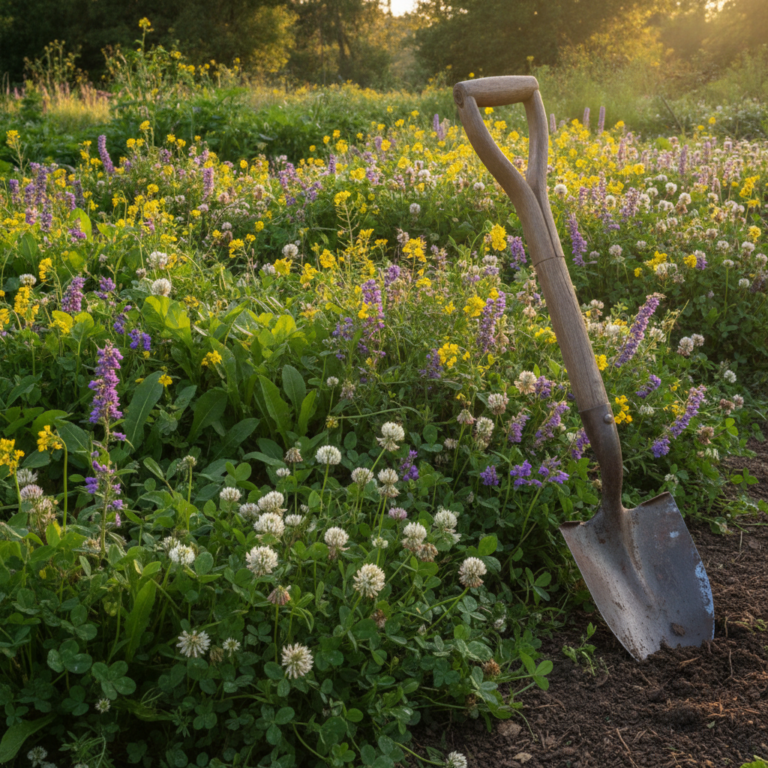
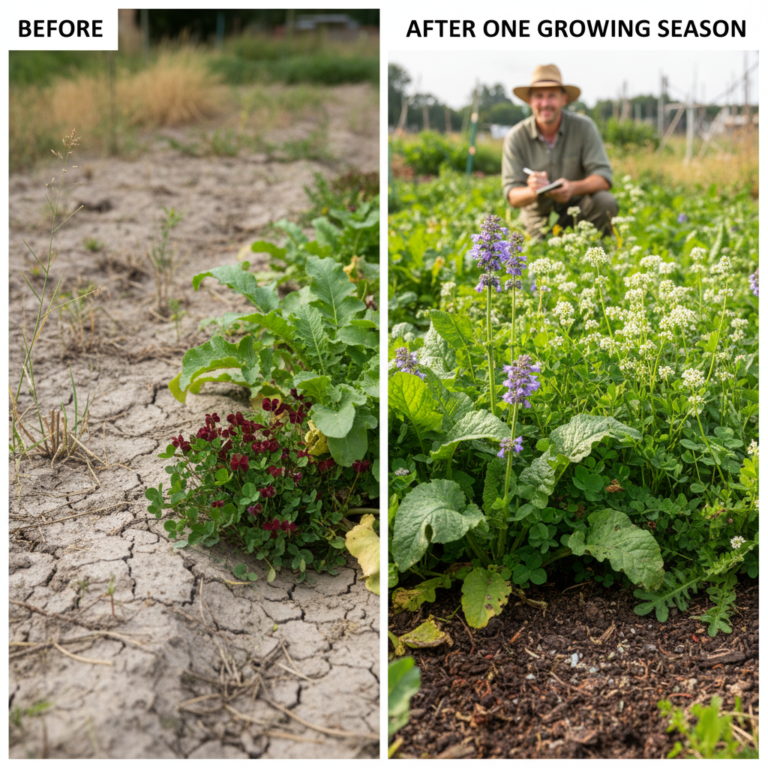
Green manure crops are fast-growing plants you sow into empty beds, then cut down and dig into the soil while still green and lush. The buried plant material breaks down quickly, releasing nutrients directly where roots need them. Think of it as composting in place — no bins, no turning, no waiting.
This isn’t a new idea. It’s an ancient one. Roman farmers wrote about burying lupins. Chinese farmers used milk vetch for centuries. Your grandparents likely called it “plowing under” and did it without thinking twice. Modern agriculture replaced it with synthetic nitrogen. But for home gardeners, green manures remain one of the most powerful tools available.
The best part? They also suppress weeds, break up compaction, protect bare soil from erosion, and feed soil biology in ways bagged amendments simply cannot match. Before you invest in another bottle of liquid fertilizer, read on.
The Best Green Manure Crops to Grow This Season
Not all cover crops make equally good green manures. The ones listed here were chosen by pre-industrial farmers for exactly one purpose: maximum soil return when dug under.
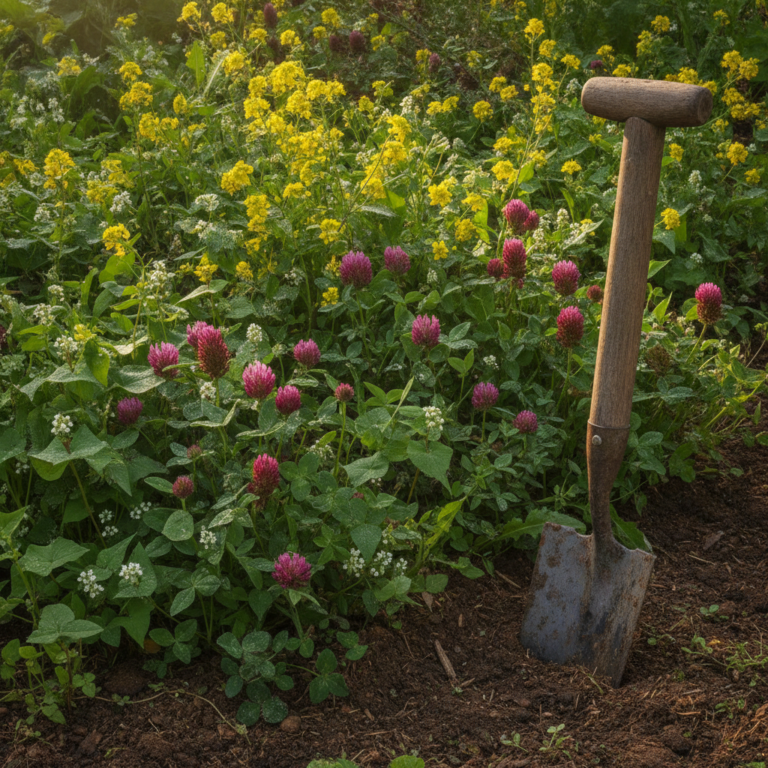
Crimson Clover (Trifolium incarnatum)
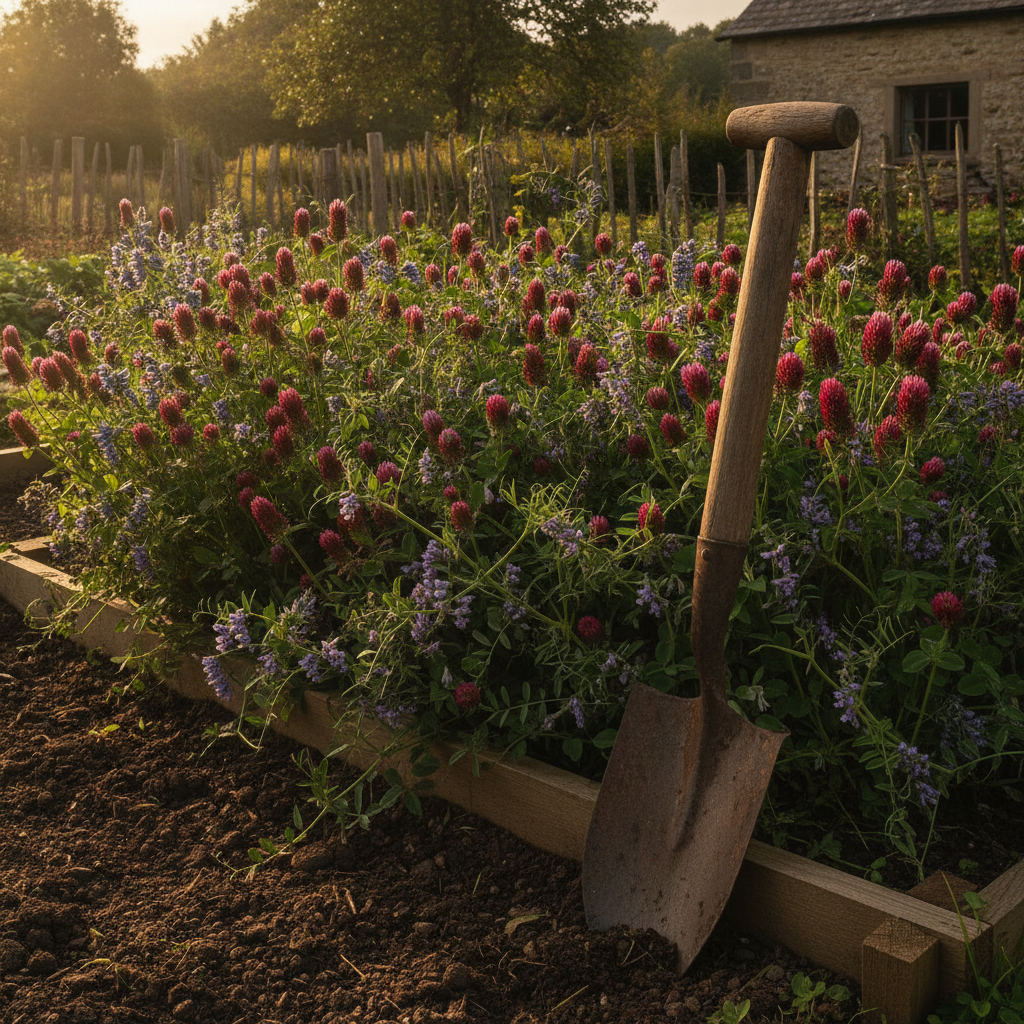
Crimson clover is one of the most reliable nitrogen-fixers you can grow. It works with soil bacteria to pull nitrogen from the air and store it in root nodules. When you chop and bury it before flowering, that nitrogen floods the surrounding soil. Expect to add 70–200 lbs of nitrogen per acre equivalent. For home beds, that translates to genuinely lush growth in whatever follows.
Clover is also fast. Sow in late summer or early autumn, and it’s ready to cut within 6–10 weeks. It handles light frost, making it ideal for shoulder-season bed rotation.
Field Mustard (Sinapis arvensis)
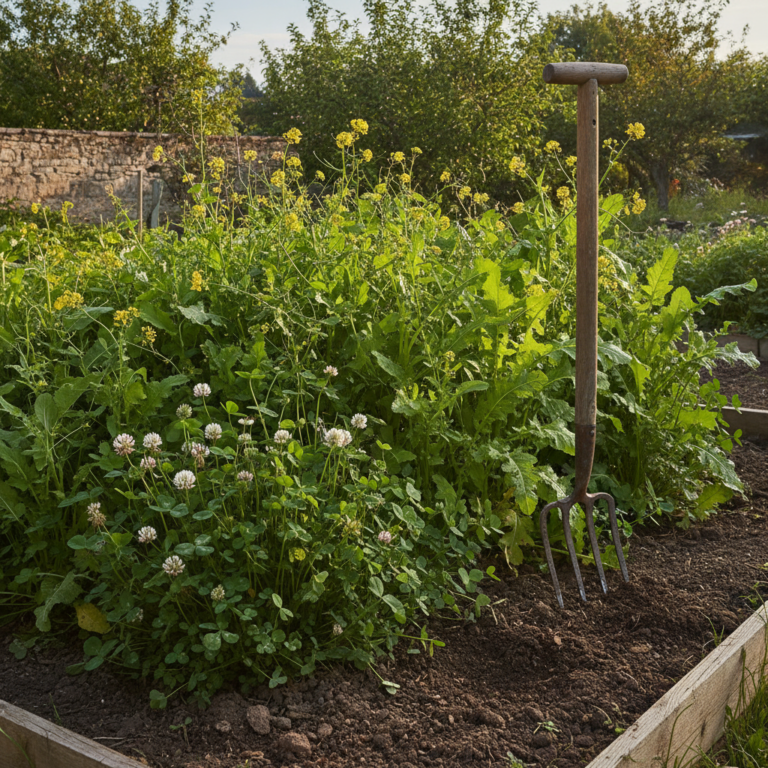
Mustard is a powerhouse for breaking up compaction and fighting soil pathogens. Its roots penetrate hard layers, and when dug under, the glucosinolates in its tissues act as a natural biofumigant — suppressing some nematodes, fungi, and weed seeds. Old farmers called this “cleaning the soil.” Science has since confirmed they were right.
Mustard grows fast — sometimes ready within 4 weeks. It’s best used in autumn before brassica crops the following spring.
Hairy Vetch (Vicia villosa)
Hairy vetch is the heavy lifter. It fixes more nitrogen than almost any other common cover crop — sometimes exceeding crimson clover. It’s also winter-hardy, meaning you can sow it in autumn and let it overwinter. By late spring, you’ll have a thick mat of lush biomass ready to plow under before your summer vegetables go in.
Pair vetch with winter rye as a companion cover crop. The rye provides structure, and the vetch climbs through it. Together, they’re a weed-smothering, soil-feeding duo that old market gardeners swore by.
Buckwheat (Fagopyrum esculentum)
Buckwheat is the summer specialist. It germinates in warm soil and grows so fast — reaching flowering stage in just 30–40 days — that you can fit two or three rotations into a single season. It’s exceptional at scavenging phosphorus from deep soil layers and making it available near the surface when dug under. It also attracts beneficial insects during its brief flowering window.
Use buckwheat to fill any gap in your rotation. It’s the perfect placeholder between spring crops and autumn plantings. If you’re building a more complex garden plan, pairing this technique with a 30-day microclimate-aware planting plan helps you slot green manure windows into your schedule without losing growing space.
Phacelia (Phacelia tanacetifolia)
Phacelia doesn’t fix nitrogen, but it decomposes faster than almost any other green manure — within two to three weeks of being dug under. It’s also strikingly beautiful in flower, attracting bees and hoverflies. Its soft, fern-like stems break down without creating the thick, slimy mat that some dense covers produce. For gardeners in colder zones, phacelia is a spring staple before summer crops.
How to Time the Cut-and-Dig for Maximum Nitrogen Release
Timing is everything with green manures. Cut too early, and you lose biomass. Cut too late — especially once plants go to seed — and you risk adding weed pressure or letting nutrients lock into woody tissue.
The golden rule is simple: chop and dig just before or at the first sign of flowering. At this stage, the plant holds maximum nitrogen in soft, easily decomposable tissue. Dig it in, and soil bacteria get to work within days.
After turning under your green manure crops, wait at least two to three weeks before planting. This gives the decomposing material time to release nutrients and avoids the brief nitrogen drawdown that fresh green matter can cause as it breaks down. If you’re unsure whether your soil is ready, the post on reading your dirt without a lab walks you through simple hands-on diagnostics.
Cut-and-Dig Method (Step by Step)
- Mow or cut plants to ground level using a scythe, shears, or even a string trimmer.
- Let the cut material wilt for 24–48 hours. This prevents the cut stems from re-rooting.
- Turn the material into the top 6–8 inches of soil with a fork or spade. You don’t need to bury it deeply.
- Water lightly if conditions are dry to activate microbial breakdown.
- Wait 2–3 weeks, then plant.
That’s the whole system. It’s genuinely that simple — and yet it outperforms most commercial soil conditioners when done consistently season after season.
A Practical Green Manure Planting Calendar
Here’s a straightforward seasonal guide you can follow starting this year. Adjust by 2–3 weeks based on your local climate zone.
Spring (March–May)
- Sow: Phacelia, crimson clover, field mustard
- Cut and dig: 4–6 weeks after sowing, before main summer crops go in
- Best followed by: Tomatoes, squash, corn, peppers
Summer (June–August)
- Sow: Buckwheat (in any empty bed or gap)
- Cut and dig: At first flower bud (30–40 days)
- Best followed by: Autumn brassicas, root vegetables
Autumn (August–October)
- Sow: Hairy vetch, winter rye, crimson clover
- Cut and dig: In early to mid-spring, before soil temperatures exceed 15°C (59°F)
- Best followed by: Any spring vegetable crop
Running this rotation consistently — even on just one or two beds per season — builds extraordinary soil over three to five years. You’ll notice the difference in your hands before you notice it in your harvest: darker color, better structure, that distinctive earthy smell that means life is thriving underground.
If you’re newer to garden planning and want to build these rotations into a broader learning system, the Layered Learning gardening system offers a progressive framework that makes seasonal techniques like this much easier to track and repeat.
Why Green Manures Outperform Bagged Amendments
Synthetic nitrogen gives plants a quick hit. Green manure crops give the soil a sustained, slow-release feast. The difference isn’t just about nutrients. It’s about the living ecosystem beneath your feet.
When you bury fresh plant matter, you’re feeding bacteria, fungi, nematodes, earthworms, and dozens of other organisms. These creatures process nutrients into forms plants absorb most efficiently. They build soil structure. They create the invisible infrastructure that makes truly productive soil possible. No bag of fertilizer replicates that complexity.
Over time, gardeners who use green manures consistently report needing fewer amendments overall. Their soil retains moisture better, drains faster in heavy rain, and supports crops with noticeably less intervention. That’s not magic. That’s biology working the way it always has — the way farmers understood for thousands of years before a chemical company told them there was an easier way.
Your soil already wants to be fertile. Green manure crops are simply the fastest, cheapest way to help it get there.
Getting Started This Season
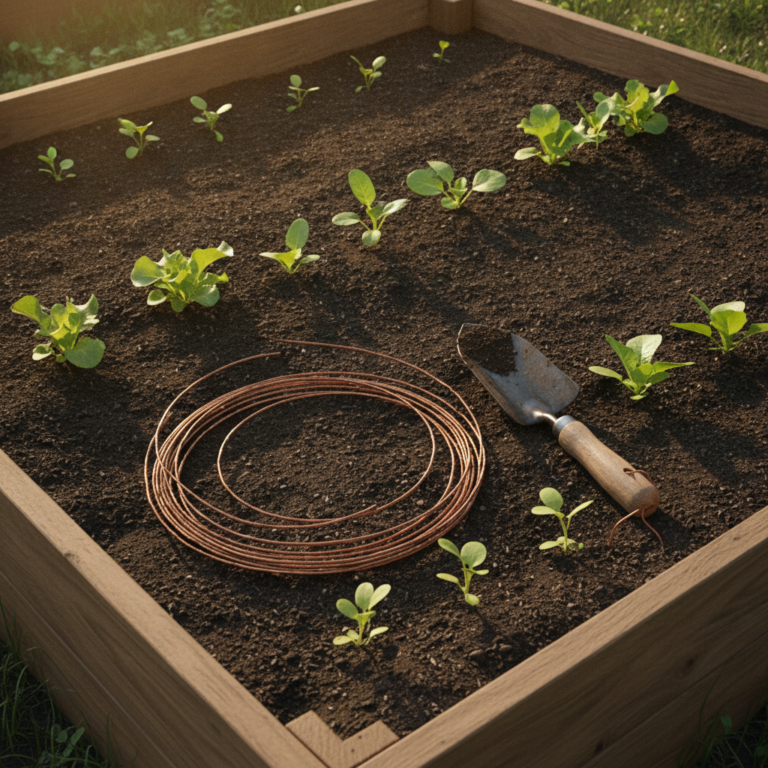
You don’t need a whole farm to begin. Start with one empty bed between harvests. Scatter a packet of crimson clover or phacelia seed. Water it in. Watch it grow. Then, in four to six weeks, cut it down and dig it under. Plant something into that bed a few weeks later and observe what comes up.
That single experiment will tell you more than any article can. It’s the kind of hands-on learning that sticks — and if you want to document what you observe, the Garden Journaling for Mastery template kit gives you ready-to-use prompts to track exactly how your soil responds over time.
This is one of those techniques that gardeners tend to wish they’d started sooner. The good news is that the best time to start is always right now — with whatever beds are empty, whatever season is turning, and whatever seeds you can get your hands on this week.
Your grandparents knew this. Now you do too.