Green Manure Crops: The Plow-Under Secret
Green Manure Crops: The Plow-Under Secret Old Farmers Swore By
Before a single bag of synthetic nitrogen existed, farmers kept their soil rich with a remarkably simple trick. They grew green manure crops — specific plants raised purely to be cut down and buried while still green and full of life. No bags, no bills, no mystery chemicals. Just living plants turned back into the earth at exactly the right moment. This ancient practice built some of the deepest, most fertile topsoil in farming history. And today, most home gardeners have never even heard of it.
That’s about to change. In this post, you’ll learn exactly which green manure crops work best, how to time the cut-and-dig for maximum nitrogen release, and how to fit this forgotten rotation trick into your own garden calendar — starting this season.
What Are Green Manure Crops and Why Did Farmers Love Them?
A green manure crop is any plant grown specifically to be incorporated into the soil before it sets seed. The goal is not harvest. The goal is soil improvement. You grow the plant, chop it down while it’s still lush and actively growing, then dig or till it into the top few inches of soil.
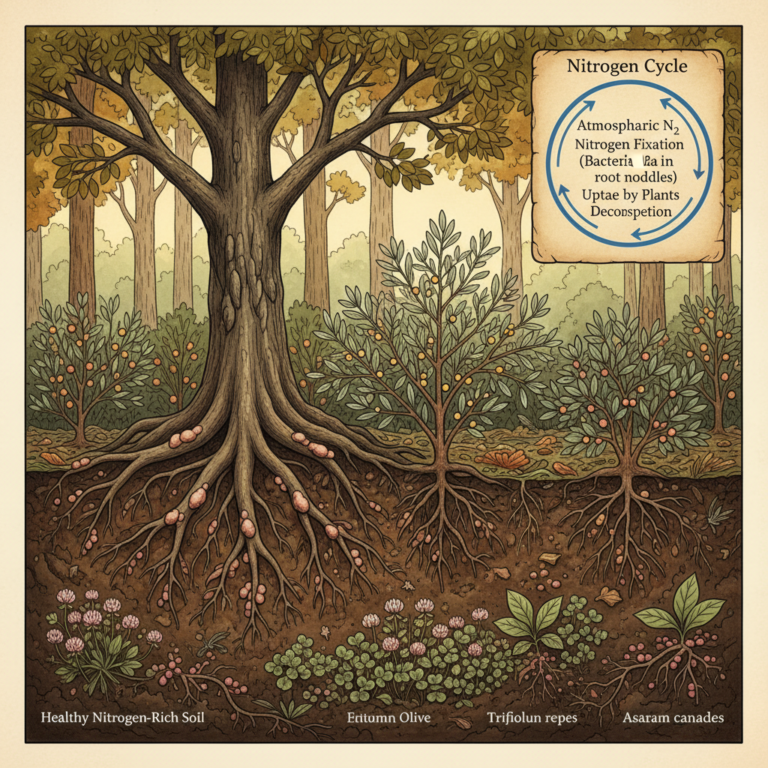
As that plant matter breaks down, something remarkable happens. It releases nitrogen, organic acids, and sugars that feed soil bacteria and fungi. Those microorganisms then make nutrients available to your next crop. It’s a living fertility cycle that costs almost nothing to run.
Farmers before the 20th century understood this deeply. They rotated green manure crops through their fields the way we rotate vegetables today. Soil didn’t wear out. Yields stayed high. And all of it happened without a single trip to the garden center.
If you want to understand your soil’s current condition before starting this practice, reading your dirt with this soil diagnostics guide is an excellent first step.
The Best Green Manure Crops for Home Gardeners
Not every plant makes a good green manure. The best ones are fast-growing, nitrogen-fixing or nutrient-dense, and easy to cut and dig. Here are the top performers worth knowing.
Crimson Clover
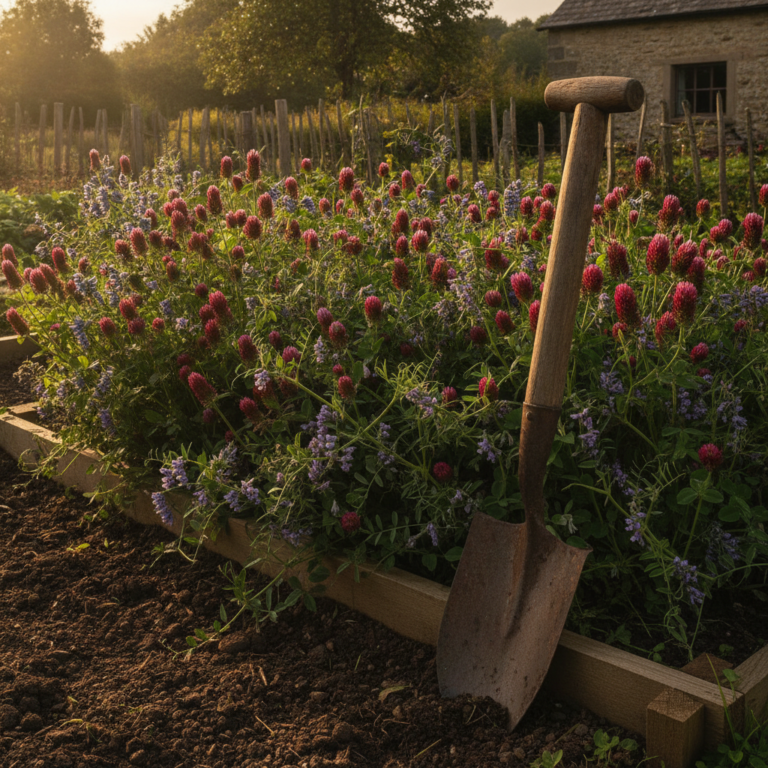
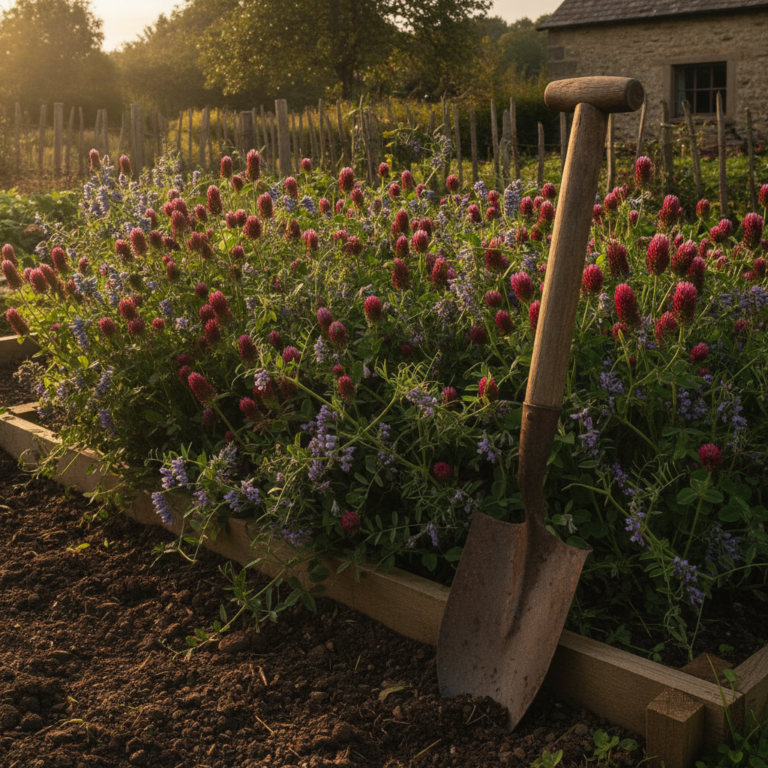
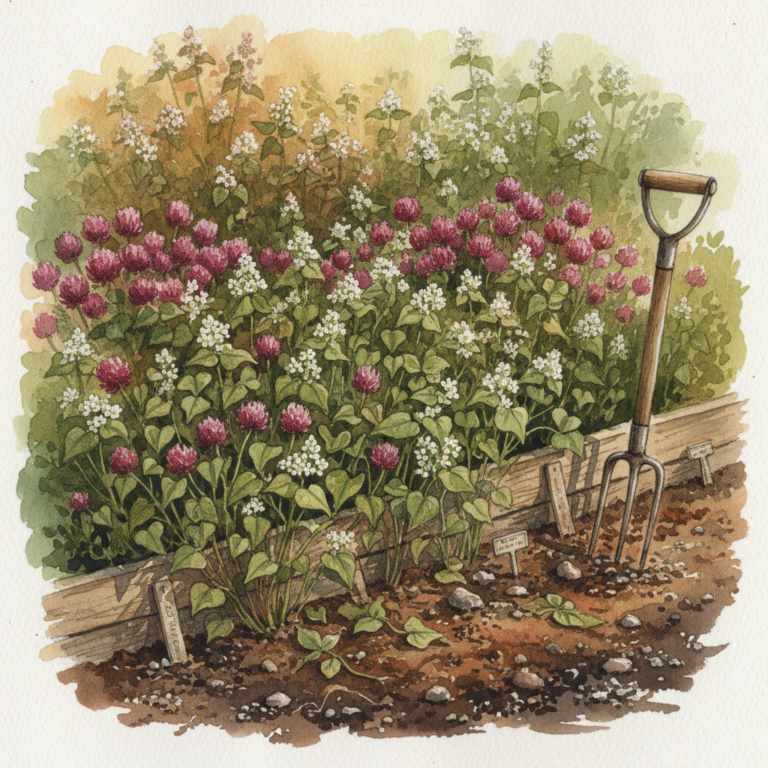
Crimson clover is arguably the most reliable green manure crop for home gardens. It fixes atmospheric nitrogen through a partnership with soil bacteria called rhizobia. One well-grown crop can add the equivalent of 100–150 pounds of nitrogen per acre to your soil. For a small raised bed, that’s transformative. It’s also beautiful — vibrant red blooms that attract pollinators before you cut it down.
Best planted: Early spring or late summer.
Cut-and-bury timing: At early flower bud stage, before full bloom.
Hairy Vetch
Hairy vetch is a cold-hardy legume that overwinters in most climates. It’s one of the highest nitrogen-fixing green manures available, sometimes fixing up to 200 pounds of nitrogen per acre. It grows aggressively and suppresses weeds like a living mulch. Many farmers call it the workhorse of winter cover crops.
Best planted: Late summer to early fall.
Cut-and-bury timing: In spring, just as flowers begin to open.
Buckwheat
Buckwheat isn’t a legume, so it doesn’t fix nitrogen. However, it does something equally valuable — it scavenges phosphorus from deep in the soil and makes it available near the surface. It also suppresses weeds ferociously, grows in poor soils, and matures in just 30–40 days. It’s the perfect quick-turnaround green manure between summer crops.
Best planted: Late spring through midsummer.
Cut-and-bury timing: At early flower stage, before seed sets.
Winter Rye
Winter rye is not a nitrogen fixer, but it produces an enormous amount of organic matter. A single crop can add several tons of biomass per acre. That bulk feeds soil fungi, improves drainage in clay soils, and builds water retention in sandy soils. It’s also extraordinarily cold-hardy.
Best planted: Early to mid-fall.
Cut-and-bury timing: Early spring, before stems become woody.
Field Peas
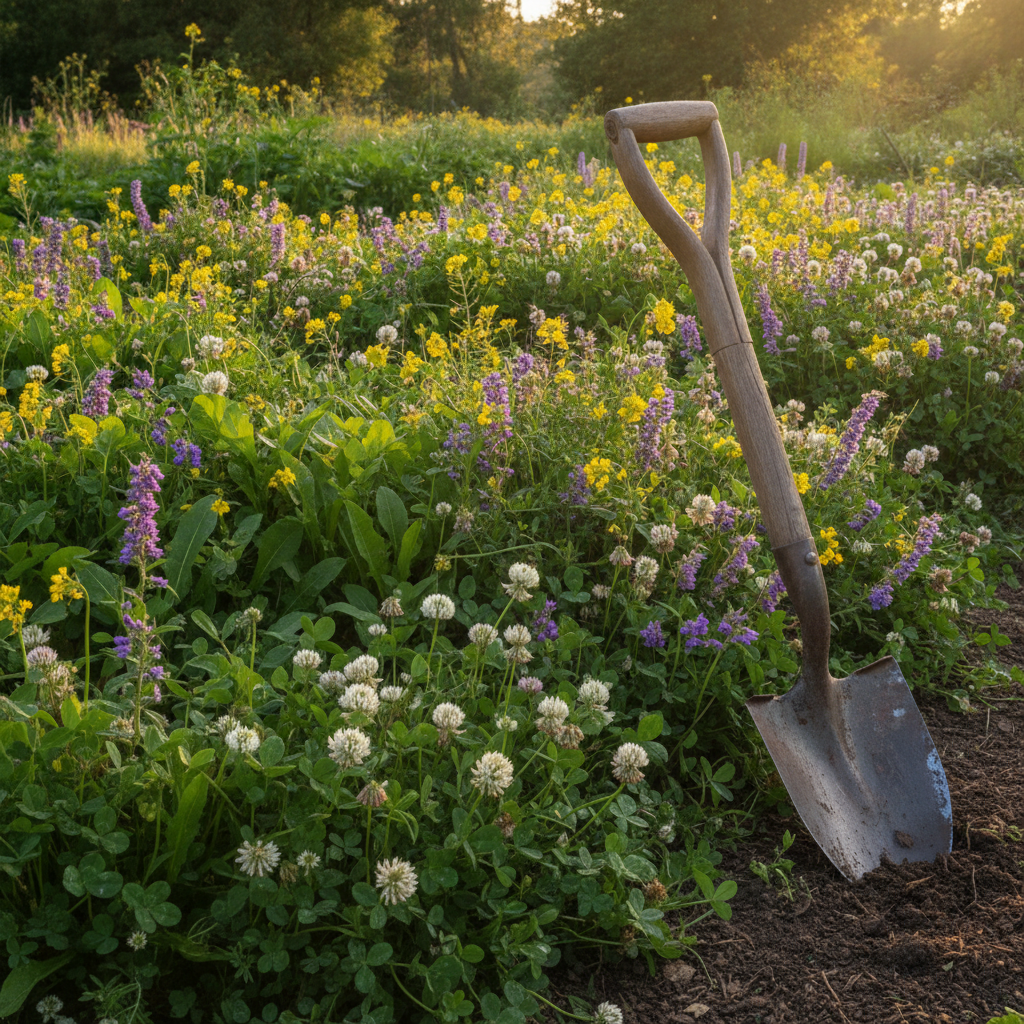
Field peas (also called Austrian winter peas) are another excellent nitrogen-fixing green manure. They’re often sown with hairy vetch or oats for a powerful combination crop. The peas fix nitrogen while the oats provide structure and extra biomass. Together, they create a dense, weed-suppressing mat that transforms tired soil quickly.
Best planted: Early spring or early fall.
Cut-and-bury timing: When flowering begins, typically 60–75 days after planting.
The Cut-and-Bury Timing Secret
Timing your green manure chop-and-dig is where most beginners make mistakes. Cut too early and you lose biomass. Cut too late and the plant becomes woody and slow to break down. Worse, if you let it seed, you’ve created a weed problem instead of solving a fertility problem.
The golden rule is: cut at early flower bud stage. At this point, the plant is at its peak nitrogen content. Stems are still soft and break down quickly. Roots are well established and add organic matter deeper in the soil profile.
After cutting, chop the material into smaller pieces with a spade or garden fork. Then dig it into the top 6–8 inches of soil. Cover it completely. If green material pokes out, it dries out and doesn’t decompose properly.
Here’s the critical waiting period most people skip: wait 2–4 weeks before planting your next crop. Decomposing green material temporarily ties up nitrogen in a process called nitrogen immobilization. Plant too soon and your seedlings will struggle. Wait patiently and the soil rewards you with a nutrient flush exactly when your next crop needs it.
This kind of careful timing pairs well with a structured planting approach. The 30-day microclimate-aware planting plan can help you slot green manure rotations into your broader seasonal schedule.
A Practical Green Manure Planting Calendar
Here’s a simple seasonal framework you can adapt to your climate and garden size.
Spring (March–May)
- Sow crimson clover or field peas in empty beds immediately after last frost.
- Let grow for 45–60 days, then cut and dig at flower bud stage.
- Wait 3 weeks, then plant summer vegetables like tomatoes, squash, or beans.
Early Summer (June–July)
- After an early harvest clears a bed, sow buckwheat immediately.
- Buckwheat matures in 30–40 days. Cut before seed sets.
- Dig in and wait 2 weeks before planting a fall crop.
Late Summer to Fall (August–October)
- Sow hairy vetch, winter rye, or field peas after summer crops finish.
- Let overwinter. The crop protects bare soil from erosion and leaching.
- Cut and dig in early spring before soil planting begins.
Winter (November–February)
- In mild climates, winter rye and hairy vetch continue growing slowly.
- In cold climates, they go dormant but protect the soil structure beneath snow.
- No action needed. Let the soil rest and the roots do their work underground.
If you’re newer to structured garden planning, the 4-week beginner garden plan offers a gentle on-ramp that fits green manure rotations naturally into your workflow.
Why Green Manures Outperform Store-Bought Soil Conditioners
Walk into any garden center and you’ll find bags of granular fertilizer promising instant results. They’re convenient, no question. But they can’t replicate what green manure crops do at the biological level.
Synthetic nitrogen feeds plants, but it doesn’t feed soil life. Over time, soils amended only with synthetic fertilizers become biologically depleted. Microbial populations shrink. Soil structure weakens. You need more inputs each year to get the same results.
Green manure crops do the opposite. They add carbon and nitrogen simultaneously. They feed mycorrhizal fungi and beneficial bacteria. Their root channels improve drainage and aeration. Their decomposing matter creates humus — the stable, spongy material that makes great garden soil feel like great garden soil.
In short, green manures build soil from the inside out. Bagged amendments feed from the outside in. The difference compounds over years. Gardeners who use green manure rotations consistently report that their beds get easier to work and more productive each season — not harder and more dependent on inputs.
This philosophy of building rather than buying ties directly into the broader concept of low-input gardening. The perennial garden playbook explores how to extend this thinking across your entire garden system.
Getting Started This Season
You don’t need to overhaul your whole garden at once. Start with one empty bed after a harvest clears it. Scatter buckwheat or crimson clover seed, water it in, and watch what happens over the next six weeks. Notice how the soil looks and smells when you dig that lush green growth back in. Notice how the next crop you plant in that bed performs.
That small experiment will teach you more than any bag of fertilizer ever could. And once you see it work, you’ll wonder why anyone bothers with anything else.
Green manure crops are free fertility, made from sunlight and air, grown right in your own backyard. Your grandparents’ grandparents knew this. Now you do too.
Ready to track your results? Download the garden journaling template kit to record your green manure experiments, timing notes, and soil observations season by season.