Green Manure Crops: The Plow-Under Secret
Green Manure Crops: The Plow-Under Secret That Built the World’s Best Soils
Before the first bag of synthetic nitrogen ever hit a farm store shelf, farmers were already growing lush, productive gardens. Their secret? Green manure crops — living plants grown not to eat, but to chop down and bury. This age-old rotation trick fed the soil from the inside out, building fertility season after season without spending a single dollar on amendments. If you’ve been struggling with tired, compacted, or nutrient-depleted soil, this might be the most powerful forgotten technique you’ll ever try.
What Are Green Manure Crops, Exactly?
A green manure crop is any fast-growing plant you sow specifically to dig back into the soil before it sets seed. The buried plant matter decomposes rapidly, releasing nitrogen, carbon, and a cascade of trace minerals directly where your vegetables need them most — in the root zone.
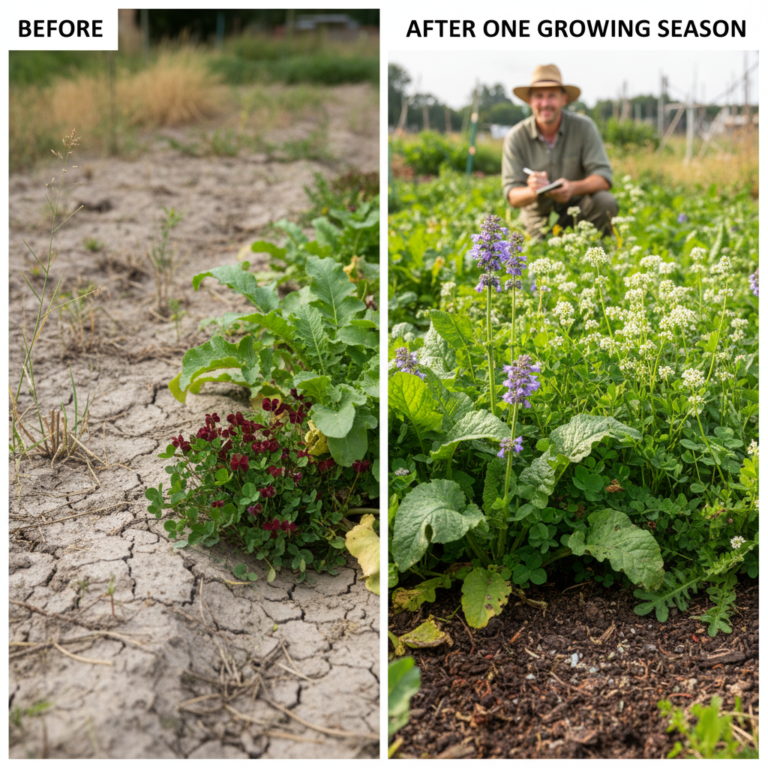
This is fundamentally different from compost or mulch. You’re not moving organic matter from somewhere else onto your beds. Instead, you’re growing fertility in place, using the soil’s own biology to break it down. The result is richer, more biologically active dirt that holds moisture better and feeds crops longer than any bagged product can match.
Think of it as the difference between giving your soil a meal and teaching it to feed itself. Once you understand how green manures work, you’ll never look at an empty bed the same way again. If you’re still learning to read what your soil actually needs, the post Soil Sense Without the Lab: Read Your Dirt, Fix It Fast is a brilliant place to start.
The Best Plants to Use as Green Manures
Not every plant works equally well. The most effective green manures fall into two broad categories: nitrogen fixers and biomass builders. Many of the best options do both.
Nitrogen-Fixing Legumes
These are the workhorses of the green manure world. Legumes form a relationship with soil bacteria called rhizobia, which pull nitrogen directly from the air and store it in nodules on the plant’s roots. When you bury the plant, all that stored nitrogen becomes available to your next crop.
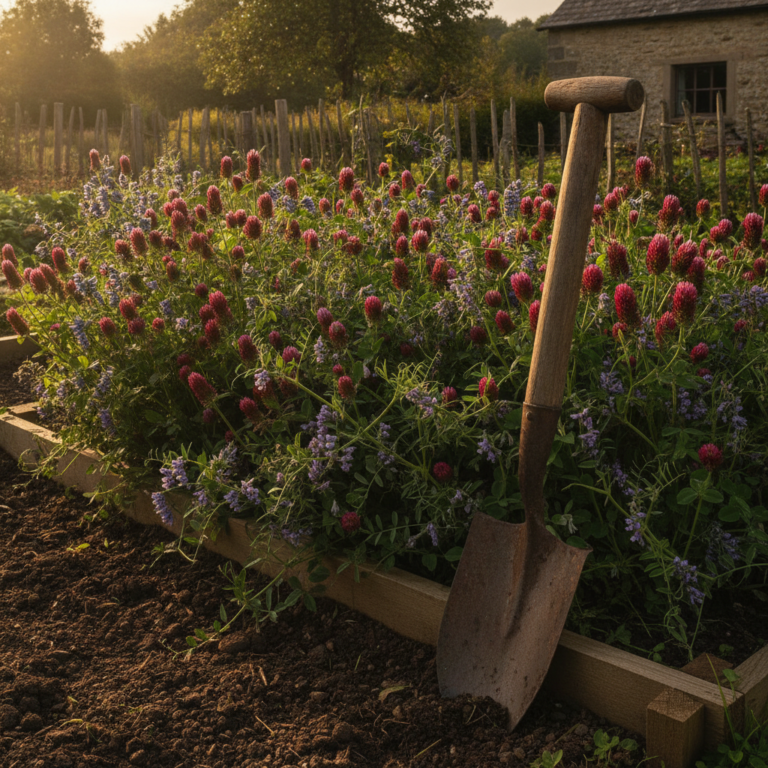
- Crimson clover — Fast-growing, beautiful, and one of the highest nitrogen contributors. Perfect for spring or fall planting.
- Hairy vetch — Tough and winter-hardy. Excellent for early spring burial before summer crops.
- Field peas (winter peas) — Quick to establish. Ideal for short shoulder seasons between main crops.
- Fenugreek — Underused and underrated. Grows fast, fixes nitrogen, and improves soil texture remarkably.
- Lupins — Deep-rooted and excellent on poor, acidic soils. They break up subsoil compaction while feeding the topsoil.
Biomass Builders
These plants don’t fix nitrogen, but they grow massive amounts of organic matter quickly. They also have deep taproots that break up compaction and bring subsoil minerals to the surface.
- Buckwheat — The fastest green manure available. Ready to cut in just 4–6 weeks. Smothers weeds aggressively and attracts beneficial insects.
- Phacelia — Often called the “perfect cover crop.” Grows lush, decomposes quickly, and is beloved by pollinators.
- Mustard — Acts as a natural biofumigant, suppressing soilborne pathogens and nematodes as it decomposes. A two-for-one benefit.
- Oats — A workhorse for autumn planting. They winter-kill in colder zones, leaving a soft mulch mat ready to dig in spring.
For gardeners working in tight or unconventional spaces, pairing green manures with layered planting strategies can multiply your results. The Microforest in Small Spaces: A Step-by-Step Plan for Edible, Biodiverse Gardens post explores how to layer plants for maximum benefit in minimum ground.
Timing the Cut-and-Bury for Maximum Nitrogen Release
Here’s where most beginners go wrong: they either cut too early, before the plant has built up enough biomass, or too late, after it has begun to set seed and the stems have turned woody and slow to decompose.
The golden window is just as the plant reaches early flower stage — or in the case of grasses and cereals, just before heading. At this point, the stems are still soft and green, the nitrogen content is at its peak, and the carbon-to-nitrogen ratio is low enough that breakdown happens quickly.
Here’s a simple rule of thumb:
- Cut when 10–20% of the flowers are open (for legumes and phacelia).
- Cut when buckwheat or oats reach about knee height.
- Never wait until the plant sets seed — you’ll create a weed problem instead of a fertility solution.
After cutting, chop the material finely with a spade or mower. Then dig or fork it into the top 6–8 inches of soil. Wait at least 2–3 weeks before planting into the bed. This waiting period lets decomposition get underway. Planting too soon into fresh-turned green manure can actually tie up nitrogen temporarily as soil microbes consume it.
Timing your garden tasks efficiently makes all the difference. If you enjoy maximizing short windows of garden time, the The 60-Minute Garden: Quick, High-Impact Tasks for Beginners and Seasoned Growers is packed with strategies for getting more done in less time.
A Practical Green Manure Planting Calendar
One of the reasons this technique fell out of fashion is that it requires planning ahead. You need an empty bed — even briefly — to grow a green manure. But once you build the rhythm into your rotation, it becomes second nature.
Spring (March–May)
Sow phacelia, field peas, or crimson clover as soon as the soil can be worked. These will be ready to cut and bury in 6–10 weeks, perfectly timed before summer crops go in.
Early Summer (May–June)
Sow buckwheat into any bed that finishes early spring crops like spinach or radishes. It grows so fast you’ll have it buried and ready for a late summer planting in under two months.
Late Summer (July–August)
After harvesting garlic or early potatoes, sow mustard or phacelia. These will build biomass through September before you chop and turn them under ahead of autumn planting.
Autumn (September–October)
Sow hairy vetch, winter peas, or oats (or a mix of all three) into any bed you’re resting over winter. In cold climates, oats will winter-kill and leave a soft mat. Vetch and peas will survive and be ready for a spring burial — delivering a huge nitrogen boost just when your hungry summer crops need it most.
Winter (November–February)
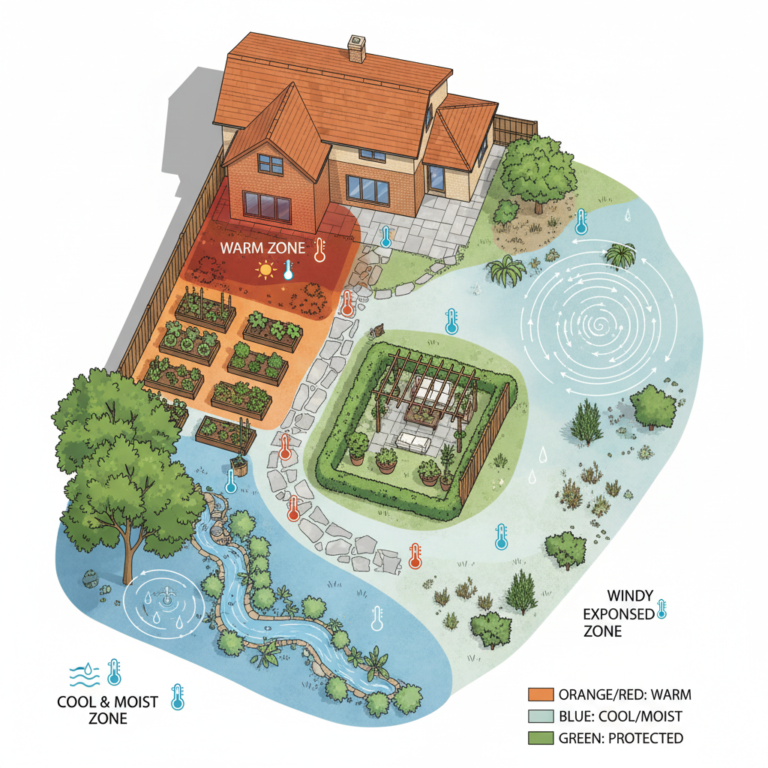
Plan your rotations on paper. Decide which beds will grow green manures next season and which will follow them. This planning step is where the real magic lives. The post Climate-Proof Your Crops: A 30-Day, Microclimate–Aware Planting Plan can help you align your planting decisions with your garden’s specific conditions.
Why Green Manures Outperform Bagged Soil Conditioners
It’s a fair question: why go to the effort of growing a crop you won’t eat when you could just buy a bag of pelleted chicken manure or blood meal?
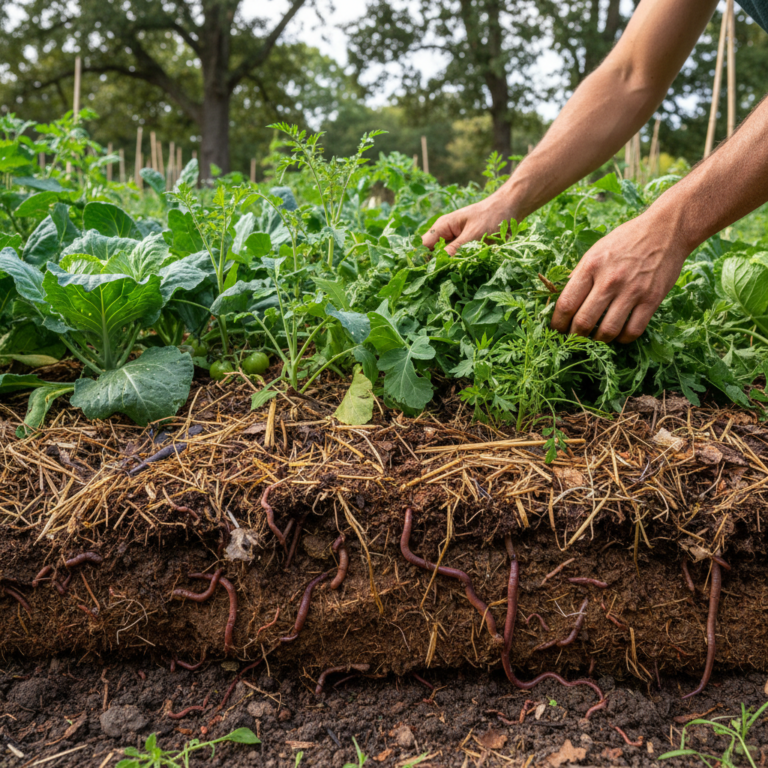
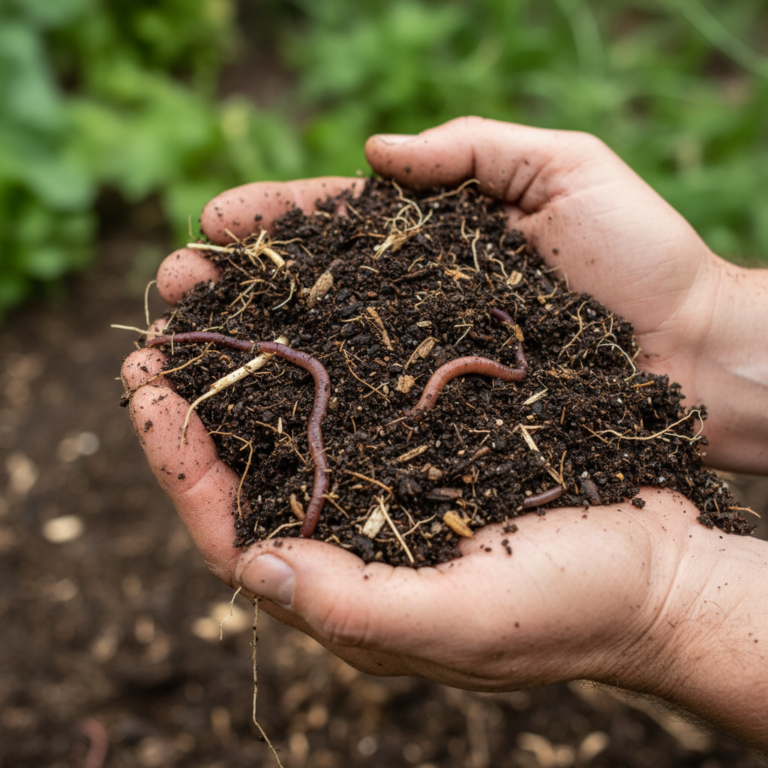
The answer comes down to biology. Green manure crops don’t just add nutrients — they feed the entire soil food web. Living roots release exudates that attract bacteria and fungi. The decaying plant matter feeds earthworms, beetles, and microbes in layers. That biological activity is what makes soil genuinely fertile, not just chemically enriched.
Store-bought amendments deliver a quick nutrient hit. Green manures build lasting soil structure, water retention, and microbial diversity. They also cost almost nothing — a small seed packet covers a large bed for an entire season.
Furthermore, green manure crops suppress weeds by smothering bare ground. They protect soil from erosion and compaction during rain. Some, like mustard and buckwheat, actively suppress pest populations. You get fertility, weed control, and pest management in a single low-cost planting.
Starting Small and Building Confidence
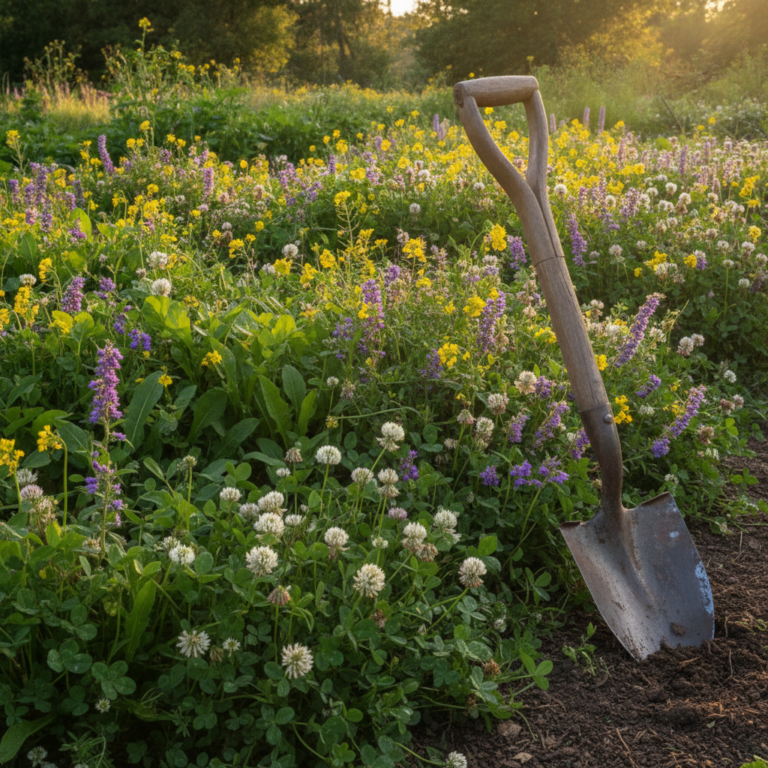
You don’t need to overhaul your entire garden to try this. Start with one empty bed this season. Scatter a packet of crimson clover or phacelia, water it in, and watch what happens. Six weeks later, you’ll have a thick, flowering mat of green that’s ready to dig under.
That one bed will teach you more about soil fertility than a year of reading. And when your following crop grows noticeably stronger and greener in that same spot, you’ll be quietly hooked.
If you want a structured way to build these new skills step by step, the Smart Starts: A 4-Week Skill-Build Plan for Complete Garden Beginners walks you through exactly how to layer new techniques without overwhelm.
The Takeaway
Green manure crops are one of the oldest, most reliable ways to build soil fertility from the ground up — literally. They cost almost nothing, they work with natural biological processes, and they leave your soil richer, more alive, and more productive with every cycle.
Your grandparents’ generation didn’t grow them because they lacked better options. They grew them because they worked — better than almost anything that came after. This season, give at least one bed the old-fashioned treatment. Grow something to bury. The soil will thank you in ways a bag of fertilizer never could.