Willow Water: Nature’s Forgotten Rooting Hormone
Before rooting gels came in plastic bottles and synthetic hormones lined garden center shelves, your great-grandmother walked out to the willow tree and snapped off a few branches. She knew something that modern gardening has quietly forgotten: willow water rooting hormone is one of the most powerful, free, and completely natural propagation tools available to any gardener. And it grows right in your backyard.
Today, we’re bringing that knowledge back. If you’ve ever struggled to root cuttings, lost expensive plants in propagation, or simply want to grow more with less, this ancient technique is about to change your gardening life.
What Is Willow Water Rooting Hormone?
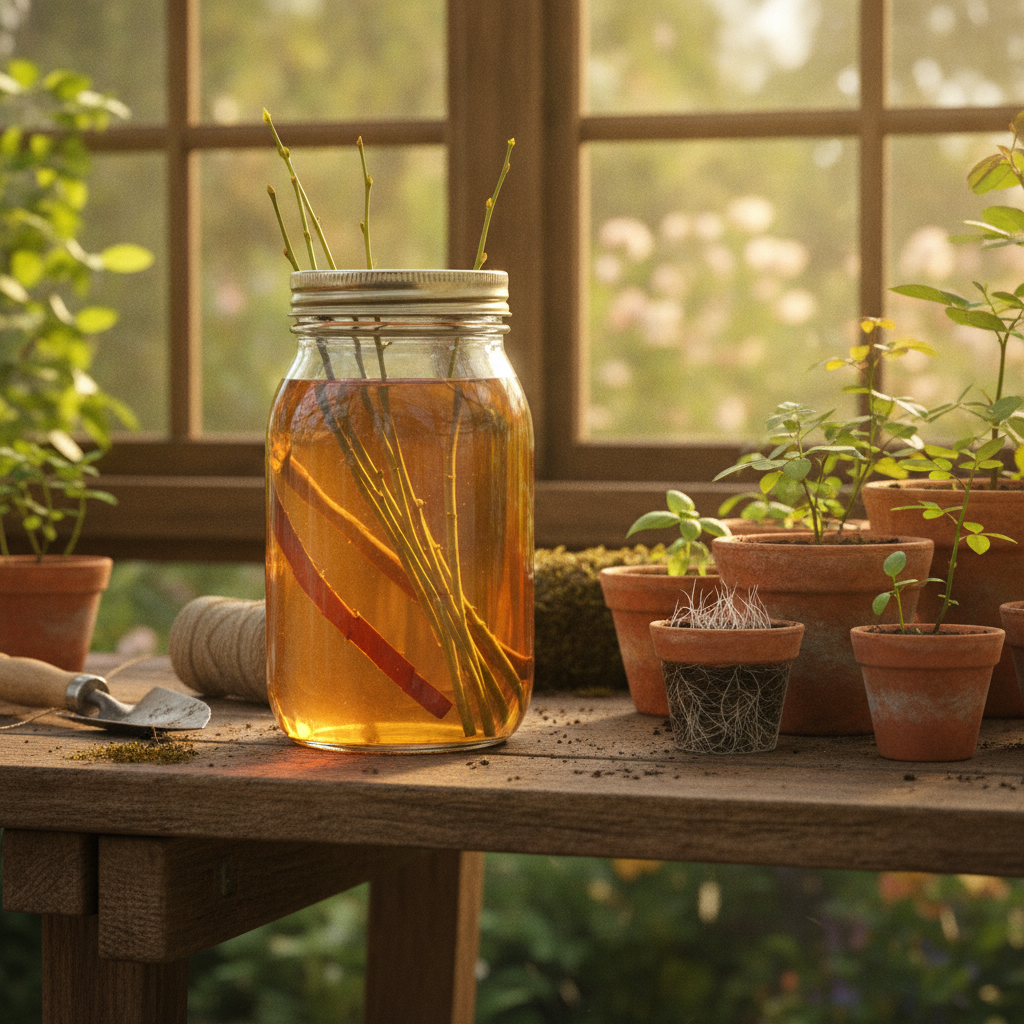
Willow water is exactly what it sounds like — water infused with willow twigs or bark. But don’t let the simplicity fool you. Inside those slender branches lies a remarkable chemistry that plant scientists have spent decades studying.
Willow bark contains two key compounds that make it extraordinary for plant propagation:
- Salicylic acid (SA) — a natural plant hormone that triggers immune responses and activates root development
- Indolebutyric acid (IBA) — one of the most effective rooting hormones known to science, and the same compound found in most commercial rooting products
When you soak willow stems in water, these compounds leach out and create a biologically active solution. Soak your cuttings in that solution, and you’re essentially bathing them in nature’s own rooting formula.
The science is solid. Multiple horticultural studies have confirmed that willow extract significantly increases rooting success rates in a wide variety of plants. Your great-grandmother didn’t know the chemistry. She just knew it worked.
Why Modern Gardeners Stopped Using It
When synthetic rooting hormones hit the market in the mid-20th century, they came with confident packaging and a sense of technological progress. Willow water felt old-fashioned by comparison. Why forage for twigs when you could buy a tidy powder?
The answer, as with so many things in traditional gardening, is that the old way is often better — and almost always cheaper. Commercial rooting hormones can cost $10 to $20 per bottle. Willow trees are free. They grow in almost every climate and are among the fastest-growing trees on earth.
Beyond cost, willow water offers something synthetic products can’t easily replicate: a full spectrum of naturally occurring compounds that work synergistically. You’re not just delivering one isolated hormone. You’re giving cuttings a complex botanical signal that tells them to root — and to root fast.
If you’re already thinking about building a more self-sufficient garden, you’ll love pairing this knowledge with a deeper look at your soil. Understanding what’s already happening underground can transform how you propagate and plant. Soil Sense Without the Lab: Read Your Dirt, Fix It Fast is a great companion to today’s lesson.
How to Make Willow Water at Home
Making willow water is almost embarrassingly simple. Here’s everything you need to know.
What You’ll Need
- Fresh willow twigs or branches (any willow species works — weeping willow, pussy willow, crack willow, etc.)
- A clean glass jar or bucket
- Clean water (rainwater or filtered water is ideal)
- A sharp knife or pruning shears
Step-by-Step Method
Step 1: Harvest your willow. Cut young, green stems — ideally first or second-year growth. These are the most hormone-rich parts of the plant. You only need a handful of stems, roughly the diameter of a pencil.
Step 2: Chop into small pieces. Cut the stems into 1–2 inch sections to expose as much surface area as possible. The more surface area, the more compounds leach into the water.
Step 3: Soak in water. Place your chopped willow pieces into your jar and cover with clean water. Use roughly a loose handful of willow per litre of water.
Step 4: Wait. Let the mixture steep for 24 to 48 hours at room temperature. For a stronger brew, steep for up to a week in a cool spot — similar to making a cold-brew tea.
Step 5: Strain and use. Remove the willow pieces. Your golden-amber willow water is ready to use immediately.
Store any leftover willow water in the fridge for up to two months. The active compounds remain potent when kept cool and away from direct sunlight.
How to Use Willow Water for Propagation
There are two main ways to use your willow water rooting hormone, and both are effective. The method you choose depends on what you’re propagating and how patient you are.
The Soaking Method
This is the most powerful approach. Before potting your cuttings, soak the cut end in willow water for 24 hours. Use a small glass or jar — you don’t need much. After soaking, plant your cuttings in moist propagation mix as normal.
This method delivers the highest concentration of rooting compounds directly to the cut end, right where root initiation happens.
The Watering Method
If you’ve already potted your cuttings, simply water them with willow water instead of plain water for the first few weeks. This delivers a gentler, ongoing dose of salicylic acid and IBA to the developing root zone.
This method is also excellent for transplants that need to establish quickly. Watering stressed seedlings with willow water gives them a resilience boost that plain water simply can’t provide.
What Plants Does It Work On?
The short answer: most of them. Willow water has shown excellent results with:
- Roses and woody shrubs
- Tomatoes and peppers (for transplant success)
- Fruit tree cuttings
- Herbs like rosemary, lavender, and sage
- Ornamental perennials
- Berry bushes — currants, gooseberries, elderberries
If you’re expanding your food garden with propagated plants, it pairs beautifully with planning a layered edible landscape. Microforest in Small Spaces: A Step-by-Step Plan for Edible, Biodiverse Gardens is packed with propagation-friendly planting ideas.
Tips to Maximise Your Results
Like any technique, willow water works best when you give it the right conditions. Here are a few hard-won tips to get the most from every batch.
Harvest in spring or early summer. Willow stems are most hormone-rich when the plant is in active growth. This is when IBA and salicylic acid concentrations peak in the bark and cambium layer.
Use young growth. First-year green shoots are far more potent than old, woody stems. Look for flexible green twigs rather than mature brown branches.
Make cuttings cleanly. Always use a clean, sharp blade. A ragged cut surface has a harder time initiating roots — and a higher risk of rot. Good tools matter more than most gardeners realise. Tools That Grow with You: Durable Gear and Smart Maintenance for Every Skill Level will help you keep your kit in top shape.
Combine with good propagation mix. Willow water supercharges rooting, but it can’t overcome poor drainage or waterlogged media. Use a light, well-draining mix — perlite and coco coir is ideal for most cuttings.
Keep humidity high. For softwood and semi-hardwood cuttings, cover your propagation tray with a humidity dome or a clear plastic bag. This reduces moisture loss from leaves before roots can form to supply water.
A Note on the Science Behind the Magic
Salicylic acid, the compound that gives willow water its rooting power, is the same molecule that aspirin is derived from. It was first isolated from willow bark in the 19th century. Indigenous cultures around the world had been using willow for medicinal and agricultural purposes for thousands of years before that discovery.
In plants, salicylic acid acts as a signalling molecule. It tells cells to activate defensive and regenerative processes — including the formation of new root tissue. When a cutting is under the stress of separation from its parent plant, a dose of salicylic acid essentially says: build roots now, survive this.
This is why willow water isn’t just a folk remedy. It’s a botanically sophisticated tool that works with a plant’s own biology. Modern synthetic rooting hormones often work on the same pathways — they just come with more packaging and a higher price tag.
If you love running small experiments in the garden, try testing willow water against plain water with identical cuttings. Track your results over several weeks. Gardeners who approach the plot with curiosity and good records always learn faster. Garden Experiments: 3 Safe, Small-Scale Trials That Grow Your Gardening Confidence will show you exactly how to set those trials up.
Making Willow Water Part of Your Garden Rhythm
The beauty of willow water rooting hormone is how easily it fits into a natural garden rhythm. Every time you prune a willow — or harvest branches from a neighbour’s tree — you have the raw material for your next batch. Keep a small jar steeping on your potting bench through the growing season and you’ll never run out.
Over time, this kind of small, consistent practice adds up to real garden abundance. You propagate more plants for free. You share cuttings with friends. You expand your food forest without spending a cent on rooting products.
That’s the spirit behind so much traditional gardening knowledge — building resilience through observation, recycling what the land provides, and trusting in processes that have worked for centuries. Your great-grandmother knew that. Now you do too.
Ready to start propagating? If you’re planning what to grow and share this season, browse heirloom seeds and organic growing supplies to fill your garden with plants worth propagating and passing on.
The willow tree has been waiting for you to remember. Go make your first batch this weekend.