Fish Bone Meal: Slow-Release Phosphorus Power
Fish Bone Meal: The Slow-Release Phosphorus Secret Your Great-Grandmother Swore By
Long before garden centers lined their shelves with synthetic fertilizers, home gardeners buried fish scraps and bones directly into their planting beds. This simple, ancient practice created fish bone meal — a slow-release phosphorus powerhouse that fed crops for seasons at a time. If your soil feels tired, your root vegetables are stunted, or your flowers refuse to bloom, the old-timers had a remedy. And it smelled like fish.
Today, we’re reviving that remedy. This post walks you through exactly how to make and use fish bone meal at home — using methods that predate the chemical agriculture era by centuries.
Why Phosphorus Matters More Than You Think
Phosphorus is the quiet engine of plant growth. It drives root development, flower formation, fruit set, and the transfer of energy throughout the plant. Without it, even well-watered, sun-drenched plants stall out.
Most modern gardeners reach for synthetic phosphate fertilizers. Those products work fast — but they come at a cost. Mined phosphate is a finite resource. Its extraction causes significant environmental damage. And synthetic formulas often release so quickly that excess phosphorus leaches into waterways, causing algae blooms and long-term ecological harm.
Fish bone meal releases phosphorus slowly. Soil microbes break it down over weeks and months. This matches the natural pace of plant uptake and builds long-term soil health rather than creating a short-term spike. Before you even test your soil, it helps to know what you’re working with — check out Soil Sense Without the Lab: Read Your Dirt, Fix It Fast for a beginner-friendly guide to understanding what your garden actually needs.
What Your Great-Grandmother Was Actually Doing
Traditional gardeners — especially those living near coastlines or rivers — never wasted a fish. Heads, spines, tails, and organs were buried near fruit trees, worked into vegetable beds, or composted into a dark, crumbly amendment. Some cultures, including Indigenous farming communities in North America, buried whole fish beneath corn plantings. The practice is ancient, proven, and surprisingly easy to replicate today.
The bones are the real prize. Fish flesh breaks down quickly and releases nitrogen. But the bones hold calcium phosphate — the same compound found in commercial bone meal. As the bones slowly decompose in your soil, they release phosphorus and calcium in a form that plant roots can gradually access.
This is buried soil science at its most elegant: nothing goes to waste, nothing harms the ecosystem, and the soil gets richer every season.
How to Make Fish Bone Meal at Home
Making your own fish bone meal is a straightforward process. You don’t need special equipment, and you can use scraps from your own kitchen. Here’s how to do it.
Step 1 — Collect Your Fish Scraps
Save fish heads, spines, tails, and frames after cooking or filleting. Canned fish bones work well too. Avoid heavily salted or pickled fish — excess salt can damage soil biology. Freshwater and saltwater fish both work equally well.
Step 2 — Dry or Cook the Bones
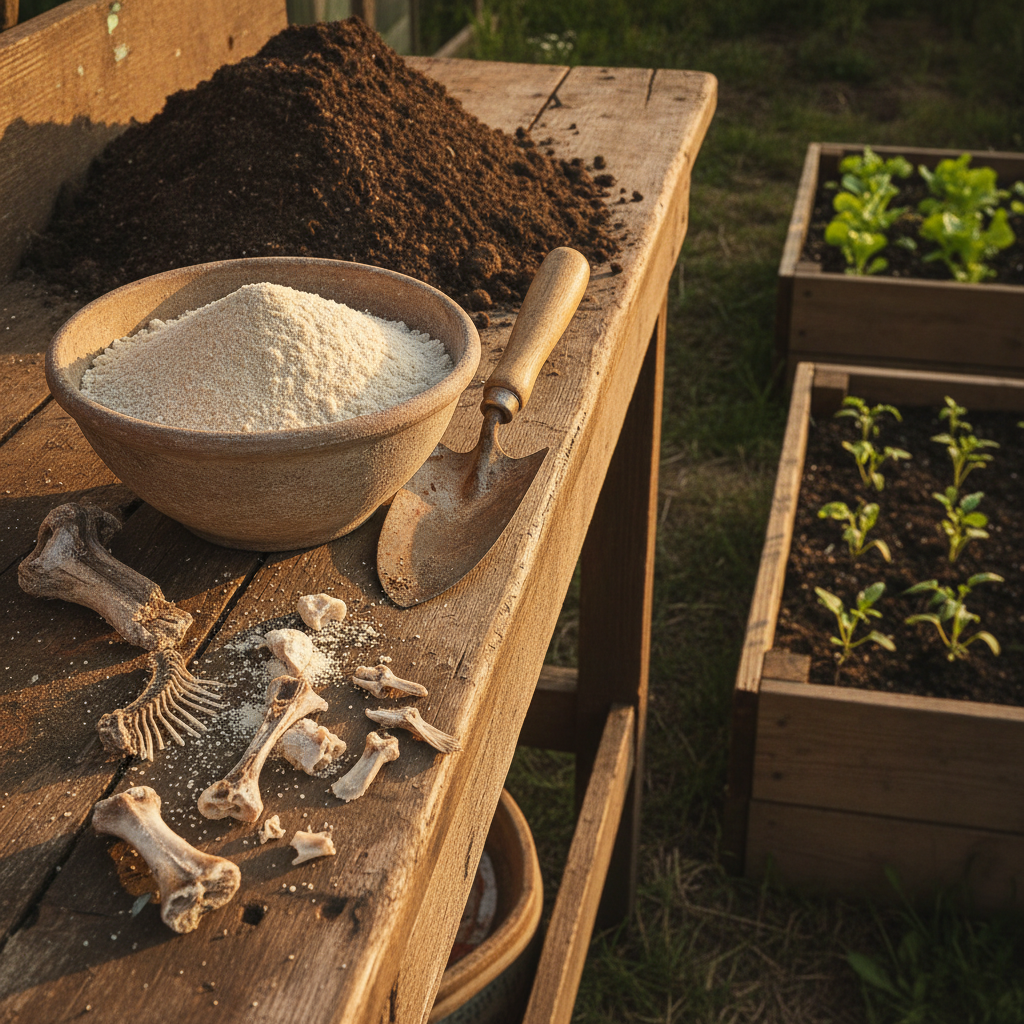
You have two main options here. The first is slow-drying: spread the bones on a baking sheet and bake at a low temperature (around 250°F / 120°C) for two to three hours until completely dry and brittle. The second is sun-drying: lay bones on a mesh rack in direct sunlight for several days, turning occasionally, until they crack easily.
Drying is important. Wet bones attract pests and take much longer to break down in useful ways. Dry bones grind easily and store safely.
Step 3 — Grind Into Meal
Once fully dry, grind the bones into a coarse powder using a mortar and pestle, a coffee grinder dedicated to garden use, or even a hammer and a heavy-duty bag. You don’t need a perfectly fine powder. Coarse granules still release nutrients slowly — they simply take a little longer to break down.
Step 4 — Store It Properly
Store your finished fish bone meal in a sealed glass jar or airtight container. Keep it in a cool, dry place. Properly dried and stored meal will last for six to twelve months without losing potency. Label your jar with the date and contents.
How to Apply Fish Bone Meal in Your Garden
Now comes the rewarding part. Fish bone meal is versatile. You can use it in several ways depending on your garden setup and timing.
Broadcast and Dig In
Sprinkle your meal evenly over a bed — roughly one to two tablespoons per square foot — and work it into the top four to six inches of soil. Do this two to four weeks before planting to give decomposition a head start. This method works beautifully for vegetable beds, raised beds, and annual flower borders.
Planting Hole Boost
Add a tablespoon of fish bone meal directly to each planting hole. This gives transplants an immediate, localized source of slow-release phosphorus right where roots will grow. Tomatoes, peppers, squash, and fruit trees respond especially well to this approach.
Compost Accelerator
Mix fish bone meal into your compost pile as an activator. It adds nitrogen and phosphorus while stimulating microbial activity. A handful per layer is enough. Your finished compost will be richer and more biologically active. If you’re building toward a food-producing ecosystem in a small space, pairing fish bone meal amendments with thoughtful plant selection makes a real difference — Microforest in Small Spaces is a fantastic companion resource for layering nutrients and plants together.
Top Dressing for Perennials
Scratch a light application of fish bone meal into the soil around established perennials, fruit bushes, and trees each spring. This quiet, slow feeding supports long bloom cycles and healthy root systems without risk of burning. For perennial-focused gardeners, this pairs well with the strategies in The Perennial Playbook: Build a Low-Input Garden That Keeps Flourishing With You.
What Plants Benefit Most from Fish Bone Meal
Phosphorus-hungry plants respond most dramatically to this amendment. Here’s a quick guide to who loves it most:
- Root vegetables — carrots, parsnips, beets, and turnips develop stronger, larger roots
- Fruiting vegetables — tomatoes, peppers, cucumbers, and squash set more fruit
- Flowering plants — roses, dahlias, and sunflowers produce more abundant blooms
- Fruit trees and berry bushes — improved fruit set and root establishment in young trees
- Legumes — beans and peas fix nitrogen more efficiently when phosphorus is available
If you’re still figuring out which crops suit your climate and skill level, the Plant Selection Spectrum: A Tiered Crop Guide can help you match your ambitions to your conditions before you invest in soil amendments.
For high-quality organic seeds to pair with your newly enriched soil, True Leaf Market carries an excellent range of heirloom and non-GMO vegetable seeds well-suited to naturally amended garden beds.
Common Mistakes to Avoid
A few missteps can reduce the effectiveness of your fish bone meal or cause problems in the garden. Watch out for these.
Using undried bones. Fresh, wet bones decompose slowly on the surface and attract animals. Always dry thoroughly before applying or storing.
Over-applying. More is not always better. Excess phosphorus can interfere with the plant’s ability to absorb zinc and iron. Stick to recommended amounts and work slowly over multiple seasons.
Skipping the soil test. If your soil is already phosphorus-rich, adding more can create imbalances. Test your soil first or observe plant symptoms before reaching for any amendment.
Ignoring soil pH. Phosphorus is most available to plants in slightly acidic to neutral soil — roughly pH 6.0 to 7.0. In very acidic or very alkaline conditions, phosphorus becomes locked up and unavailable even if it’s present. Correct pH issues first for best results.
The Bigger Picture: Why This Matters Now
Global phosphate reserves are shrinking. Some estimates suggest we could face serious shortages within the next century. Meanwhile, fish processing generates enormous quantities of waste bones that are largely discarded or sent to landfills.
Making fish bone meal at home closes a nutrient loop that industrial agriculture broke. You’re transforming kitchen waste into concentrated soil fertility. You’re feeding your plants without contributing to phosphate mining or synthetic runoff. And you’re connecting to a chain of gardeners stretching back thousands of years who understood that nothing edible should ever be wasted.
That’s not nostalgia. That’s smart soil science.
Start Small, See the Difference
You don’t need to overhaul your entire garden to try this. Start with a single raised bed or one planting row. Apply your homemade fish bone meal, plant your crops, and compare results against an unamended row. The difference in root development and flower set often becomes visible within a few weeks.
If you enjoy tracking observations like this, the journal templates in Garden Journaling for Mastery make it easy to record what you applied, when, and what changed. This kind of data — even informal notes — builds the gardening intuition that no book can fully teach.
Your great-grandmother knew what she was doing. Now so do you.