Root Cellar Design: Store Harvests Without Electricity
Building a root cellar design transforms how you preserve your food forest harvests year-round. This ancient storage method harnesses natural temperature regulation to keep vegetables, fruits, and root crops fresh for months without any electricity. Whether you’re growing a small backyard garden or managing a full permaculture system, understanding proper root cellar construction opens up possibilities for true food independence.
The beauty of root cellars lies in their simplicity. By working with natural underground temperatures and carefully managing airflow, you create the perfect environment for long-term food storage. Let’s explore how to design and build these remarkable storage systems that have sustained families for generations.
Understanding Root Cellar Design Fundamentals
A successful root cellar design depends on four critical factors: temperature, humidity, ventilation, and darkness. Underground temperatures remain remarkably stable throughout the year, typically hovering between 50-55°F at depths of 6-10 feet. This natural cooling eliminates the need for refrigeration while preventing freezing.
Humidity control proves equally important. Most root vegetables thrive in 85-95% humidity environments, which prevents them from drying out while maintaining their crisp texture. Too much moisture, however, encourages mold and rot, making proper ventilation essential.
The ideal root cellar maintains these conditions through thoughtful placement and construction. Consider your local microclimate patterns when selecting your site, as factors like soil drainage and sun exposure significantly impact performance.
Choosing the Perfect Location
Location determines your root cellar’s success more than any other factor. Start by identifying areas with excellent natural drainage. Avoid low-lying spots where water collects, as moisture infiltration ruins stored crops quickly.
North-facing slopes offer ideal conditions in most climates. These areas receive minimal direct sunlight, keeping soil temperatures consistently cool. Additionally, natural hillsides provide easier excavation opportunities compared to flat ground.
Consider proximity to your main growing areas. Just as you learned in reading your soil conditions, understanding your land’s characteristics helps optimize placement. Position your storage close enough for convenient harvest transport but far enough from septic systems or water wells to prevent contamination.
Construction Methods That Work
Three main construction approaches suit different situations and budgets. The traditional excavated cellar requires digging a complete underground room, typically 8×10 feet with 7-foot ceilings. This method provides maximum storage capacity and excellent temperature stability.
For smaller properties, consider a semi-underground design. Excavate 3-4 feet down, then build walls extending 2-3 feet above ground level. Cover the entire structure with earth berming for insulation. This approach reduces excavation while maintaining good performance.
Basement conversions offer the easiest entry point for many homeowners. Dedicate a corner of your existing basement for root storage, installing proper ventilation and humidity controls. While less ideal than purpose-built structures, basement cellars still provide significant storage benefits.
Mastering Ventilation for Root Cellar Design
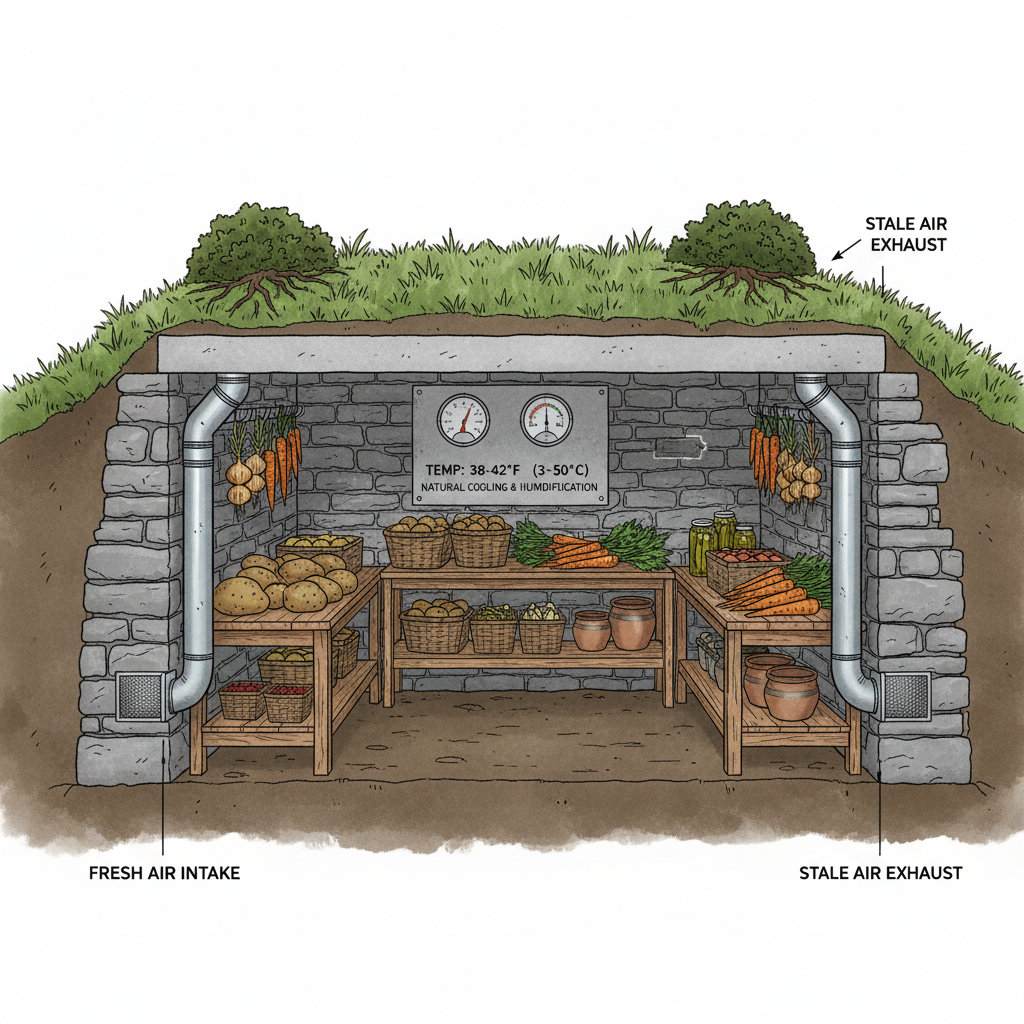
Proper ventilation prevents your carefully stored harvests from rotting. Install two ventilation pipes: one intake near the floor and one exhaust near the ceiling. This creates natural air circulation as warm air rises and exits while cool air enters at the bottom.
Size these pipes appropriately for your cellar volume. Generally, use 4-6 inch diameter pipes for smaller cellars (under 100 square feet) and 6-8 inch pipes for larger spaces. Include adjustable dampers to control airflow based on seasonal conditions.
Position intake pipes to draw air from shaded areas, avoiding direct sun exposure that would warm incoming air. Extend exhaust pipes well above ground level to create proper draft pressure for continuous air movement.
Humidity Control Strategies
Managing humidity requires balancing moisture retention with air circulation. Dirt floors naturally regulate humidity better than concrete, as soil absorbs and releases moisture gradually. If you must use concrete, cover it with several inches of gravel or sand.
Install simple humidity monitoring with analog gauges that don’t require electricity. Aim for 85-90% humidity for most root vegetables, 90-95% for carrots and beets, and slightly lower levels (80-85%) for apples and cabbage.
When humidity drops too low, place shallow pans of water strategically around the cellar. Conversely, if moisture levels climb too high, increase ventilation or add moisture-absorbing materials like lime.
Storage Systems and Organization
Effective storage systems maximize your cellar’s capacity while maintaining proper air circulation around stored crops. Build sturdy wooden shelving using naturally rot-resistant woods like cedar or redwood. Avoid treated lumber, as chemicals can contaminate food.
Create different zones for different crop types. Root vegetables like potatoes, carrots, and turnips store best in bins with excellent air circulation. Use wooden crates or wire baskets that allow airflow while containing crops securely.
Designate hanging areas for crops that prefer this storage method. Onions, garlic, and herbs dry and store beautifully when bundled and hung from ceiling hooks or drying racks.
Crop-Specific Storage Requirements
Different crops have unique storage needs within your root cellar design. Potatoes require complete darkness to prevent sprouting and solanine development. Store them in ventilated boxes or bins, checking regularly for sprouting or soft spots.
Apples produce ethylene gas that accelerates ripening in other crops. Store them separately in perforated plastic bags or ventilated containers. Similarly, keep onions away from potatoes, as onions absorb moisture and may cause potatoes to sprout prematurely.
Root vegetables like carrots, beets, and turnips store excellently in slightly moist sand or peat moss. Layer them in boxes with these materials, ensuring vegetables don’t touch each other directly.
Seasonal Management and Maintenance
Your root cellar requires different management strategies throughout the year. During summer, minimize opening the cellar during warm days to maintain cool temperatures. Instead, check stored crops during cooler morning or evening hours.
Fall preparation involves thorough cleaning and inspection before the harvest season. Remove any remaining old crops, clean shelving, and test ventilation systems. This preparation ensures optimal conditions for your incoming harvest.
Winter management focuses on preventing freezing while maintaining proper humidity. Monitor temperature closely during extreme cold snaps, adjusting ventilation to prevent frozen pipes or crops.
Spring cleaning prepares your cellar for the next growing season. Remove any remaining stored crops, deep clean all surfaces, and perform maintenance on ventilation systems and structural elements.
Troubleshooting Common Issues
Temperature fluctuations often indicate ventilation problems or insufficient insulation. Check that exhaust and intake vents remain unobstructed by debris, snow, or vegetation. Ensure earth berming provides adequate insulation thickness (minimum 2 feet).
Excessive moisture typically results from poor drainage or inadequate ventilation. Improve drainage around your cellar exterior and increase air circulation. Consider installing French drains if groundwater infiltration persists.
Crop spoilage usually stems from harvesting crops at the wrong time or storing damaged vegetables. Only store mature, unblemished crops, and remove any showing signs of decay immediately to prevent spread.
Integration with Your Food Forest System
Root cellars complement food forest design beautifully by extending your harvest season and reducing food waste. Plan your food forest plantings to include storage crops alongside fresh eating varieties.
Consider root cellar placement when designing your overall garden layout. Position it conveniently to your main growing areas while ensuring proper drainage and access. This integration creates efficient harvest-to-storage workflows that save time and effort.
Storage crops often require different growing techniques compared to fresh eating varieties. Quality storage seeds bred for long-keeping characteristics ensure your root cellar stays full of nutritious food throughout the dormant season.
Building Your Food Storage Independence
A well-designed root cellar represents true food security without ongoing energy costs. These storage systems work reliably year after year with minimal maintenance, providing fresh vegetables when gardens lie dormant under snow.
Start small if you’re new to root storage. Even a simple excavated area covered with hay bales and tarps can store several weeks’ worth of vegetables. As you gain experience and confidence, expand to more sophisticated designs.
Remember that root cellar design connects directly to your overall garden planning and skill development journey. Each season builds your knowledge of what crops store well, optimal harvest timing, and effective preservation techniques.
Your food forest harvests deserve proper storage that maintains their nutritional value and extends their usefulness. With thoughtful planning and construction, your root cellar becomes an invaluable component of sustainable food production, connecting you more deeply to seasonal rhythms while reducing dependence on external food systems.