Green Manure Crops: The Plow-Under Secret
Green Manure Crops: The Plow-Under Secret Farmers Almost Forgot
Before a single bag of synthetic nitrogen ever sat on a store shelf, farmers were already solving the soil fertility problem — and they did it with nothing more than seeds, time, and a spade. Green manure crops are the buried secret of pre-chemical agriculture. Grow them, chop them down at the right moment, dig them in, and let the soil feast. It sounds almost too simple. That’s probably why modern gardening forgot about it.
This post will walk you through exactly which plants work best, when to cut them, how deep to bury them, and how to build a practical planting calendar you can start using this season. No bags, no bottles, no guesswork.
—
What Are Green Manure Crops and Why Did Farmers Swear by Them?
Green manure crops are plants grown specifically to be cut down and incorporated into the soil — not harvested, not composted in a pile, but buried right where they stand. The living organic matter decomposes in place, releasing nutrients directly into the root zone of whatever comes next.
The logic is elegant. Plants pull carbon from the air and nutrients from deep in the soil. When you bury them green, that captured energy feeds the microbial life underground. Bacteria, fungi, and earthworms go to work breaking it all down. The result? Richer, looser, more alive soil — often within a single growing season.
Legumes like clover, vetch, and field peas go even further. They work with nitrogen-fixing bacteria in their roots to pull nitrogen directly from the atmosphere and lock it into the soil. This is free fertilizer, and it has been feeding farms for thousands of years.
If you are already curious about reading what your soil is telling you before you plant anything, take a look at Soil Sense Without the Lab: Read Your Dirt, Fix It Fast. Understanding your starting point makes this strategy even more powerful.
—
The Best Green Manure Crops for Home Gardeners
Not all green manures are created equal. The best choice depends on your season, your climate, and what you plan to grow next. Here is a practical breakdown.
Nitrogen-Fixing Legumes
These are the heavy hitters. Plant them before a heavy-feeding crop like corn, tomatoes, or brassicas.
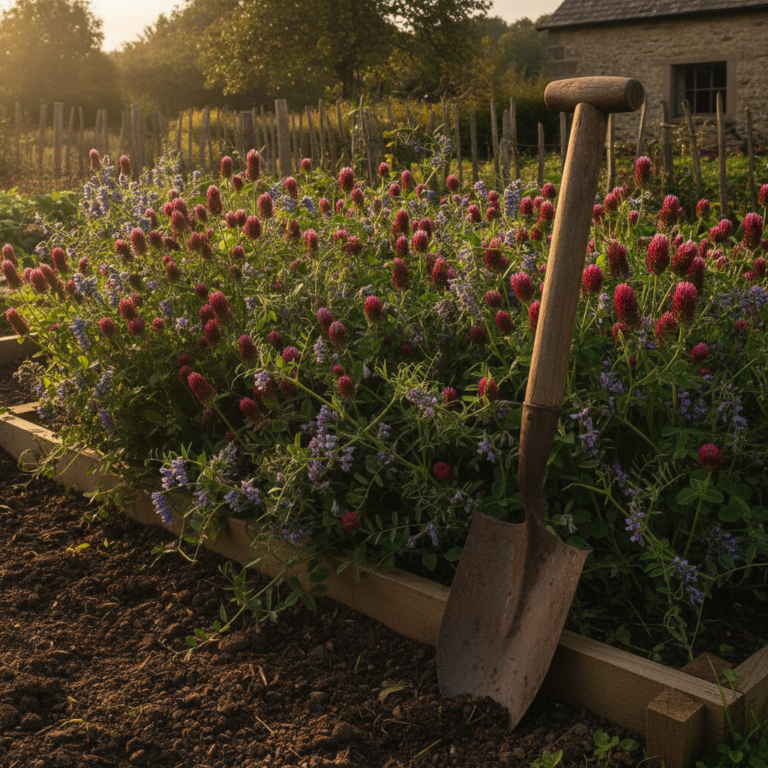
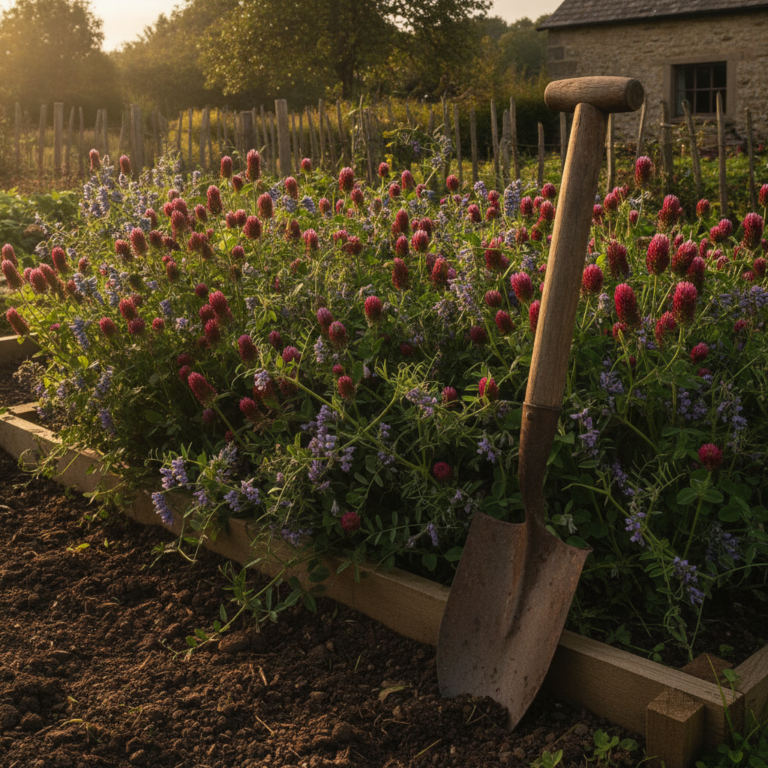
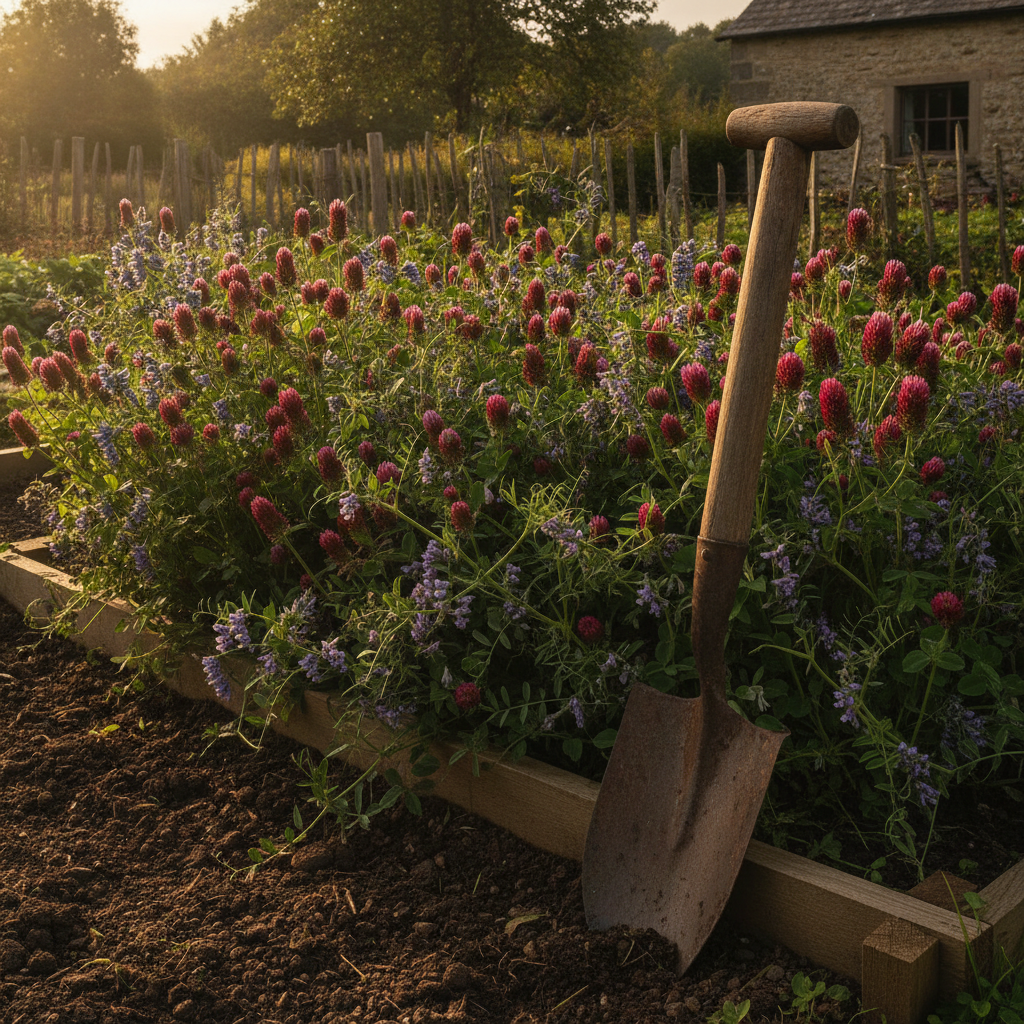
- Crimson Clover — Fast-growing, bee-friendly, fixes 100–150 lbs of nitrogen per acre. Great for spring or fall planting.
- Hairy Vetch — Cold-hardy and aggressive. One of the best winter cover crops for spring nitrogen release.
- Field Peas (Austrian Winter Peas) — Easy to establish, produces a heavy biomass, fixes nitrogen reliably.
- Fava Beans — Hardy in cool weather, deep-rooted, excellent nitrogen fixer and biomass producer.
Biomass Builders
These don’t fix nitrogen, but they build organic matter and break up compacted soil fast.
- Buckwheat — Grows in six weeks, suppresses weeds brilliantly, and releases phosphorus as it breaks down. Perfect summer filler crop.
- Oats — Winter-kills in cold zones, leaving a ready-to-plant mulch layer. Low effort, high reward.
- Phacelia — Fast-growing, beloved by pollinators, and breaks down quickly. Excellent before brassicas.
Deep-Rooted Soil Breakers
- Daikon Radish (Tillage Radish) — Drills down through compaction layers, then rots in place over winter. Leaves deep channels for air and water.
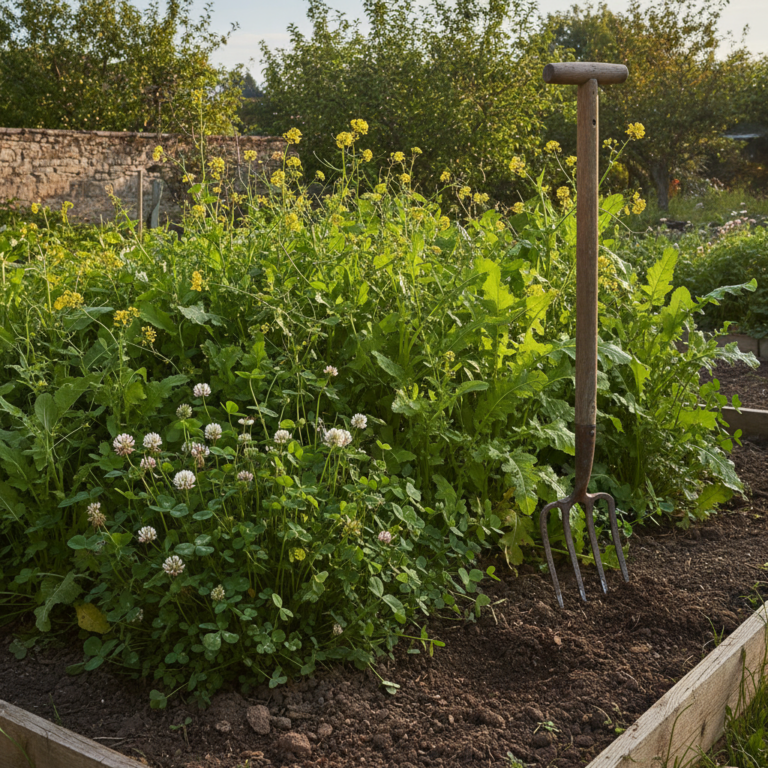
- Mustard — Also biofumigant. As it breaks down, it naturally suppresses soilborne pests and diseases.
—
Timing the Cut: How to Get Maximum Nitrogen Release
Here is where most gardeners who try green manures leave results on the table. When you cut matters enormously.
The golden rule: cut and incorporate your green manure crops just before or right at the point of flowering — never after seed set. At the flowering stage, the plant holds its maximum nutrient content. The stems are still soft enough to break down quickly. If you wait until seed set, two things go wrong: nutrient content drops, and you risk accidentally planting a weed crop.
After you cut, chop the plants as finely as you can with shears or a rotary mower. Then dig or fork them into the top 6–8 inches of soil. Water well if conditions are dry. The decomposition process typically takes 2–4 weeks in warm soil. That waiting window is non-negotiable — planting too soon can cause nitrogen lockup as the green material competes with your seedlings for nutrients during breakdown.
A simple rule of thumb: cut, dig, wait three weeks, then plant.
—
Green Manure vs. Store-Bought Soil Conditioners: An Honest Comparison
Bagged amendments have their place. But let’s be honest about what green manure crops do that a bag of granular fertilizer simply cannot.
First, living organic matter feeds the entire soil food web — not just the plant. Synthetic fertilizers bypass the biology entirely and deliver nutrients directly to roots. This creates dependency over time. The microbial life that makes soil healthy, resilient, and self-regulating gets bypassed and, eventually, diminished.
Second, green manures improve soil structure. They add bulk, create porosity, and feed earthworms. A bag of nitrogen does none of that.
Third — and this one matters for budget-conscious growers — seeds for cover crops cost almost nothing. A pound of crimson clover seed covers a large garden bed for pennies compared to any commercial soil amendment.
If you are building a layered, long-term soil strategy, this practice pairs beautifully with what we cover in Layered Learning: A Gardener’s Progressive System That Grows with You.
—
A Practical Green Manure Planting Calendar
Use this as a starting framework. Adjust it for your climate zone — and if you want to get even more precise about your garden’s unique conditions, Climate-Proof Your Crops: A 30-Day, Microclimate–Aware Planting Plan is an excellent companion resource.
Spring (March–May)
- Sow: Crimson clover, field peas, phacelia, oats
- Goal: Build nitrogen ahead of summer tomatoes, peppers, squash
- Cut and dig: 3–4 weeks before transplanting summer crops
Early Summer Gap Planting (June–July)
- Sow: Buckwheat in any empty bed or between rows
- Goal: Suppress weeds, attract beneficial insects, add phosphorus
- Cut and dig: After 5–6 weeks, before it sets seed
Late Summer / Early Fall (August–September)
- Sow: Hairy vetch, winter rye, field peas, daikon radish
- Goal: Overwinter cover, fix nitrogen, break compaction
- Cut and dig: Early spring, before soil warms above 50°F consistently
Fall / Winter (October–February)
- Let winter-kill crops (oats, buckwheat) decompose in place
- Hardy crops (hairy vetch, clover) continue growing slowly
- No action needed until spring — the soil is working while you rest
—
Small Spaces and Container Adaptations
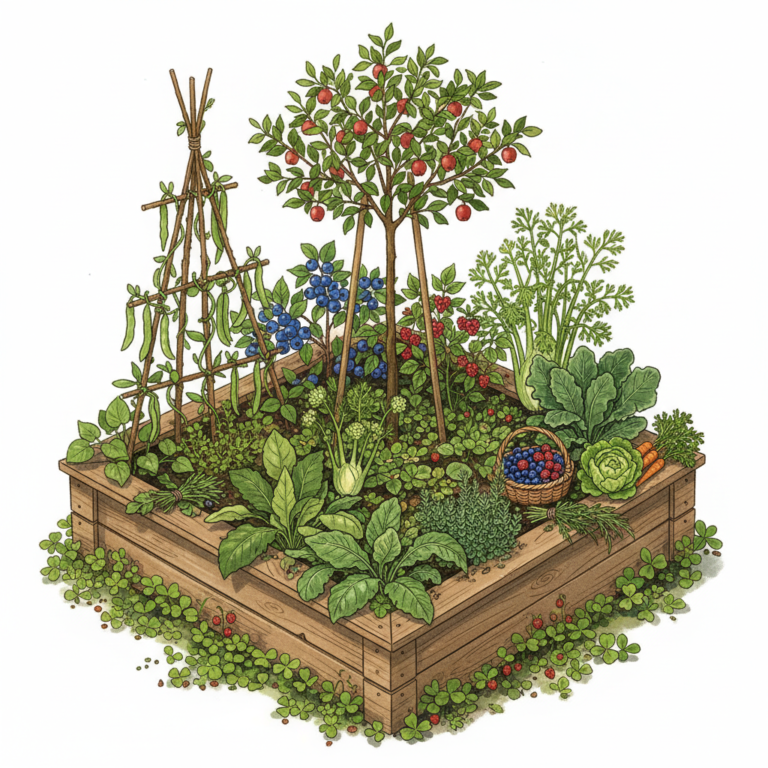
You do not need a field to use this technique. Even raised beds benefit enormously from a round of green manures between crops. Buckwheat and phacelia are especially well-suited to small spaces — they grow fast, stay compact, and break down quickly.
For container gardeners or those working with very limited space, chop the green matter, mix it into a bucket with existing potting soil, let it compost for a few weeks, and use that as a topdress. It is not quite the same as in-ground incorporation, but it gets the biology moving.
If you are building out a more intensive small-space system, the approach in Microforest in Small Spaces: A Step-by-Step Plan for Edible, Biodiverse Gardens pairs well with green manure rotations.
—
The Forgotten Rhythm of Healthy Soil
There is a rhythm to this that modern gardening largely abandoned in the 20th century. Grow. Cut. Bury. Rest. Plant. It is the same rotation that sustained civilizations long before chemistry got involved.
Green manure crops do not just feed your next vegetable planting. They rebuild the biological engine of your soil over time. Each cycle leaves behind more organic matter, more microbial diversity, and more resilience against drought, disease, and poor weather.
The best time to start a green manure rotation was last season. The second best time is right now. Pick one crop from the list above, scatter the seeds in your next open bed, and let the soil science do its work. Your grandparents knew this was enough. It still is.