Green Manure Crops: The Plow-Under Secret
Before synthetic nitrogen existed, every smart farmer knew a secret: grow it, then bury it. Green manure crops — plants grown specifically to be chopped and dug back into the soil — were the backbone of fertile fields for thousands of years. If you have ever wondered why your grandparents never bought a bag of fertilizer, this forgotten technique is a big part of the answer. In this post, you will learn exactly which green manure crops to grow, when to cut them, and how to use a simple planting calendar to start rebuilding your soil this season.
What Are Green Manure Crops and Why Do They Work?
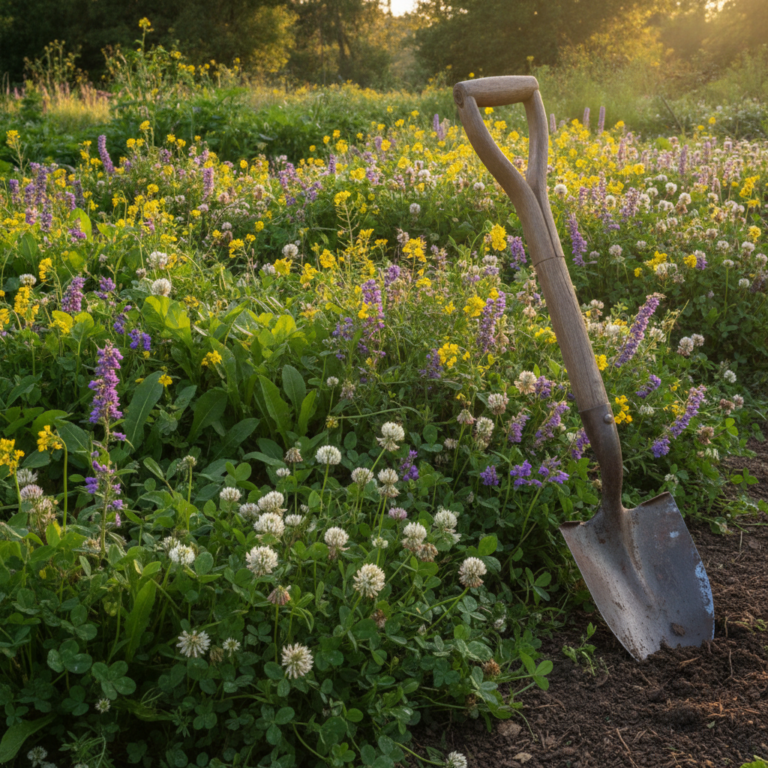
Green manure crops are fast-growing plants you cultivate not to eat, but to dig back into the ground. The living plant material breaks down rapidly in the soil. As it does, it releases nitrogen, carbon, and a wide range of trace minerals that synthetic fertilizers simply cannot replicate.
Think of it as feeding your soil a fresh, home-cooked meal instead of a vitamin pill. The difference is enormous.
Most green manures fall into two broad categories:
- Legumes — clover, vetch, field peas, fava beans. These fix nitrogen from the air into the soil through root bacteria called rhizobia.
- Non-legumes — mustard, phacelia, buckwheat, ryegrass. These add bulk organic matter, suppress weeds, and improve soil structure.
The best results often come from combining both types. A mix of clover and phacelia, for example, fixes nitrogen while building incredible soil texture at the same time.
If you are still getting to know your soil’s current condition, this guide on reading your dirt and fixing it fast is a great starting point before you choose your green manure mix.
The Best Green Manure Crops for Home Gardeners
Not all cover crops are created equal. Here are the top performers that are easy to source, quick to establish, and highly effective for small garden beds.
Crimson Clover
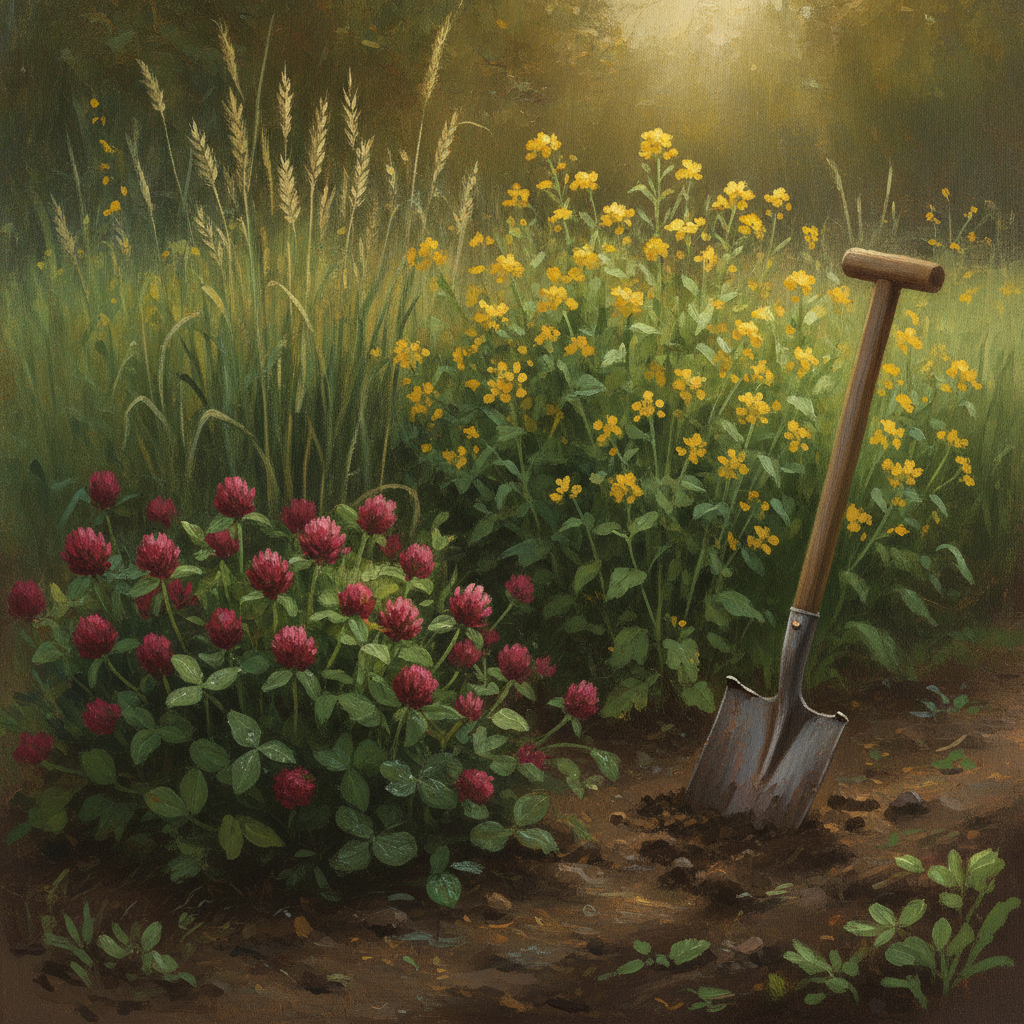
This is the all-star of green manure crops for most home gardeners. It fixes up to 150 lbs of nitrogen per acre, grows quickly, and its bright red flowers attract pollinators before you chop it under. Sow in spring or late summer. It thrives in most temperate climates.
Field Mustard
Mustard is a powerhouse for breaking up compacted soil. Its deep taproots loosen hardpan, and when dug in, it releases glucosinolates — natural compounds that suppress soil-borne diseases and pests. This is your go-to if your beds have had recurring fungal problems.
Hairy Vetch
One of the hardiest legume green manures available. Hairy vetch survives cold winters, fixes substantial nitrogen, and produces enormous amounts of organic matter. Pair it with winter rye for a resilient cold-season combination.
Buckwheat
Fast-maturing (ready to dig in just 6–8 weeks), buckwheat is ideal for filling gaps between main crops. It scavenges phosphorus from deep in the soil and makes it available to the next crop you plant. It is also excellent at suppressing weeds through sheer density.
Phacelia
Often overlooked, phacelia is a non-legume that decomposes extraordinarily fast once cut. Bees adore the lavender flowers. It is low-growing, easy to manage, and works beautifully in raised beds where you want a quick soil refresh before replanting.
How to Time the Cut-and-Dig for Maximum Nitrogen Release
Timing is everything with green manure crops. Cut too early and you lose bulk. Cut too late and woody stems decompose slowly, temporarily locking up nitrogen rather than releasing it.
The golden rule: dig your green manure under just as it reaches full flower — before seeds set.
Here is why this moment matters so much. At full flower, the plant holds maximum nitrogen and the stems are still soft enough to break down quickly. Once seeds form, the plant diverts energy away from leaves and stems. The breakdown slows significantly.
Practical steps for the cut-and-dig:
- Chop plants down with shears or a sharp spade. Cut them at ground level.
- Let the chopped material wilt for one to two days. This speeds decomposition.
- Dig or fork the material into the top 6–8 inches of soil. Do not bury it deeper than this.
- Water the bed well. Moisture activates decomposition immediately.
- Wait two to three weeks before planting your next crop. This prevents the fresh organic matter from competing with young roots.
That two-to-three week window is also a great time to observe your microclimate and think about what to plant next. The post on climate-proofing your crops with a microclimate-aware planting plan pairs perfectly with this step.
Why Green Manure Crops Outperform Store-Bought Soil Conditioners
A bag of granular fertilizer gives your soil a quick hit of one or two nutrients. Green manure crops give your soil something far more complex and lasting.
Consider what happens underground when you dig in a cover crop. Millions of soil microbes rush in to break down the fresh material. Their activity creates fungal networks, improves soil aggregation, and produces humus — the stable, long-lasting form of organic matter that makes soil smell rich and dark.
Synthetic fertilizers do not build humus. They feed the plant but skip the soil entirely.
Furthermore, green manure crops work on multiple layers of fertility at once:
- Nitrogen fixation (legumes)
- Phosphorus cycling (buckwheat)
- Disease suppression (mustard)
- Soil aeration through root channels (all types)
- Weed suppression during the growing period
No single purchased amendment does all of that. And the cost? A small packet of seeds that covers an entire raised bed. This is one of the most cost-effective things you can do in your garden this season.
If you are experimenting with multiple soil-building techniques at once, the garden experiments guide for small-scale trials will help you track what is working and what is not.
Your Practical Green Manure Planting Calendar
Here is a season-by-season guide you can start using right now. Adjust by two to four weeks based on your local climate and last frost dates.
Spring (March – May)
- Sow: Crimson clover, phacelia, field peas
- In beds that will not be planted until midsummer
- Dig under: 6–8 weeks after sowing, at first flower
- Follow with: Tomatoes, squash, corn, brassicas
Early Summer (June – July)
- Sow: Buckwheat in any gap between main crops
- Fast turnaround — ready to dig under in just 6–8 weeks
- Excellent before a late-summer planting of brassicas or roots
Late Summer (August – September)
- Sow: Hairy vetch, winter rye, crimson clover
- After main crops finish — do not leave beds bare over winter
- These overwinter and are dug under in early spring
- Follow with: Potatoes, onions, leeks, early peas
Autumn (October – November)
- Sow: Winter rye or field beans in colder climates
- Protects soil from erosion and compaction through heavy rain season
- Dig under: Late March to early April as temperatures rise
Pro tip: Never leave a bed bare between crops. Even a two-week gap is long enough to sow a fast green manure. Bare soil loses nutrients, grows weeds, and hardens in rain. A covered soil is a living soil.
Getting Started This Season
You do not need a large garden or a complicated setup to use green manure crops effectively. A single raised bed, a packet of crimson clover seed, and a willingness to dig it back in — that is genuinely all it takes to start rebuilding your soil the way farmers did for centuries before the chemical age arrived.
Start with one bed this season. Observe the difference in your soil’s texture, color, and smell after just one cycle. Most gardeners who try green manures once never go back to bare beds again.
As your confidence grows, you can layer in more techniques — combining green manures with biochar, compost tea, or rock dust applications for soil fertility that compounds season after season. The skill-building approach described in this layered learning guide for gardeners is a wonderful companion if you want a structured way to deepen your practice over time.
Your grandparents knew that healthy soil grows healthy plants without expensive inputs. Green manure crops were one of their most powerful tools. Now they can be yours too.