Green Manure Crops: The Plow-Under Secret
Before synthetic nitrogen existed, farmers already knew the secret to fat, fertile soil. They grew it. Specifically, they grew green manure crops — plants raised not for the table, but for the earth itself. You cut them down at just the right moment, dig them in, and let the soil do the rest. No bags, no bottles, no guesswork. Just living organic matter decomposing where it matters most: right in your growing beds.
This technique is centuries old. It fed civilizations. And somewhere between the invention of the fertilizer bag and the rise of the garden center, most home growers completely forgot about it. Today, we’re bringing it back — with a practical planting calendar you can start using this season.
What Are Green Manure Crops, Exactly?
A green manure crop is any plant you grow specifically to chop down and bury while it’s still green and full of nutrients. The plant matter breaks down quickly underground, feeding soil microbes, releasing nitrogen, and improving structure all at once.
Unlike compost, which is made off-site and carried in, green manures work in place. The roots loosen compacted soil. The stems add organic carbon. And if you choose legumes — like clover or vetch — the roots carry nitrogen-fixing bacteria that literally pull nitrogen from the air and lock it into your soil.
That’s not garden magic. That’s biology. And it’s been working since long before bagged fertilizer was invented.
If you’re new to reading your soil’s current condition, the post Soil Sense Without the Lab: Read Your Dirt, Fix It Fast is a great place to start before you choose your first green manure crop.
The Best Green Manure Crops for Home Gardens
Not all plants make equally good green manures. The best ones grow fast, produce lots of biomass, and ideally fix nitrogen. Here are the top performers for home gardeners:
Legumes — The Nitrogen Powerhouses
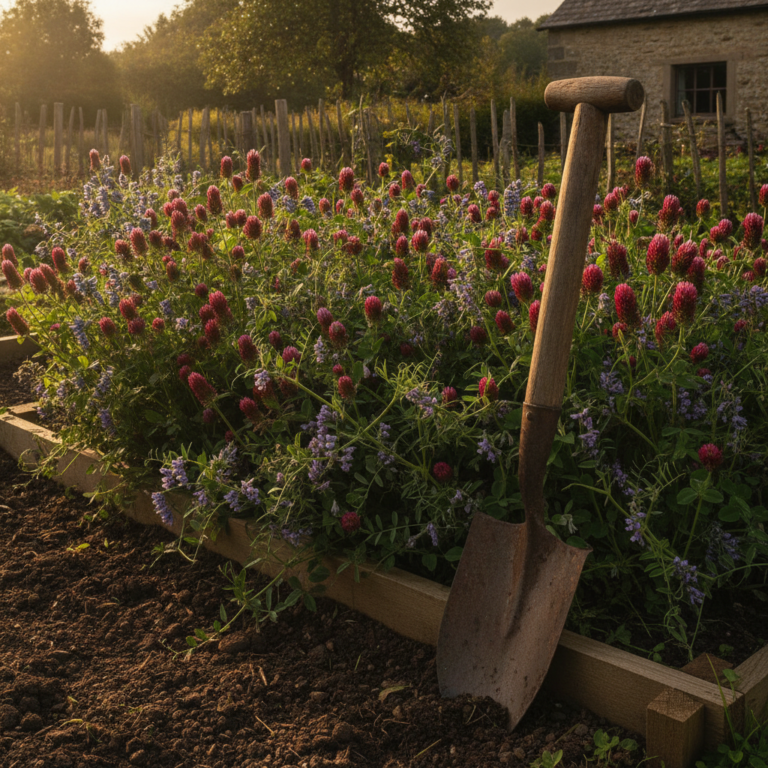
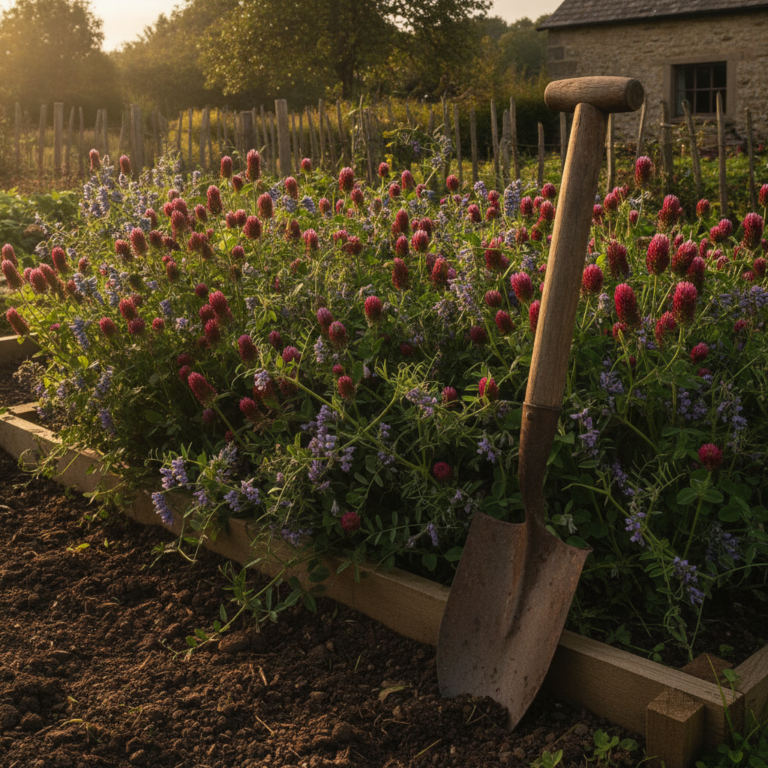
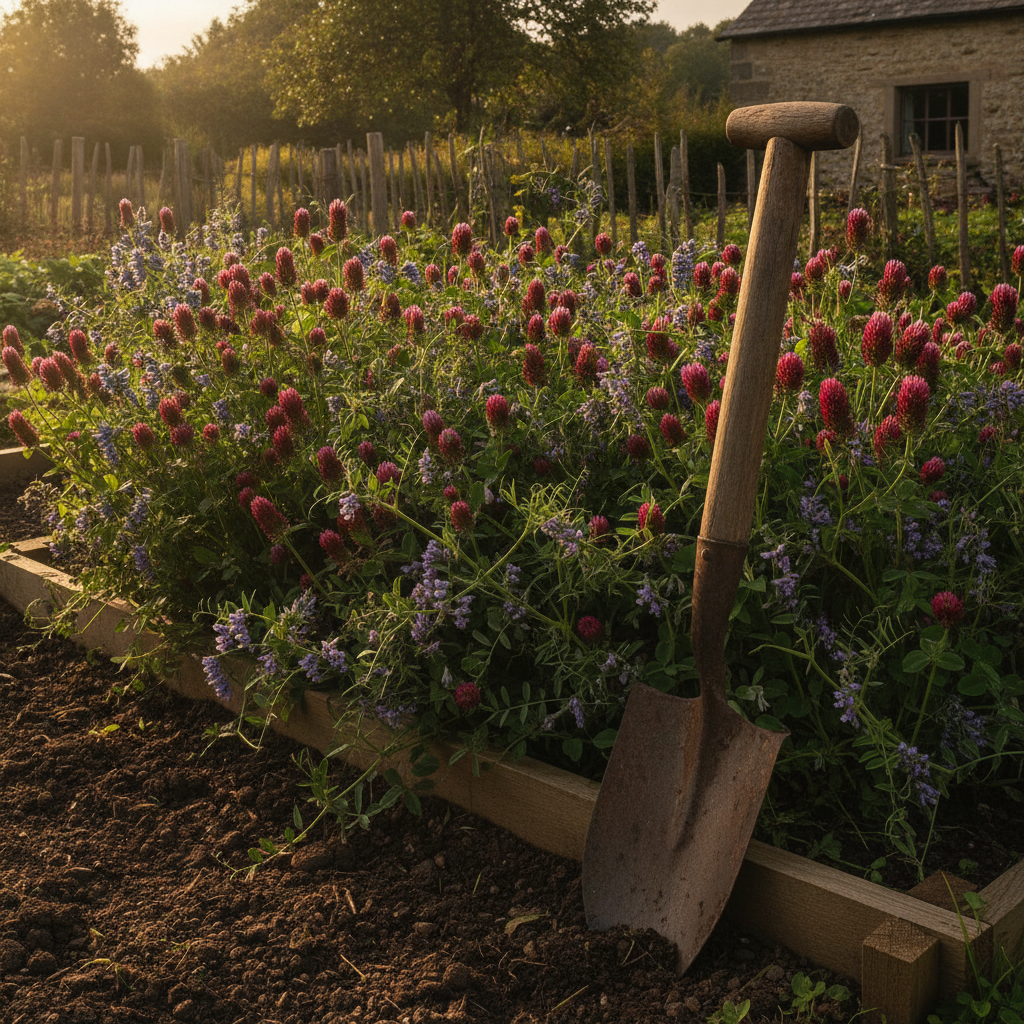
Crimson clover is the gold standard. It fixes 70–150 lbs of nitrogen per acre, grows quickly in cool weather, and has beautiful red blooms that pollinators love. Sow in early spring or late summer.
Hairy vetch is aggressive in the best way. It produces enormous amounts of biomass and fixes nitrogen even in poor soils. It’s slightly harder to dig in due to its tangled stems, but the payoff is worth it.
Field peas (also called Austrian winter peas) are a cold-hardy option. They’re excellent for fall plantings that overwinter and get turned under in early spring, just before you need to plant.
Non-Legumes — Carbon and Structure Builders
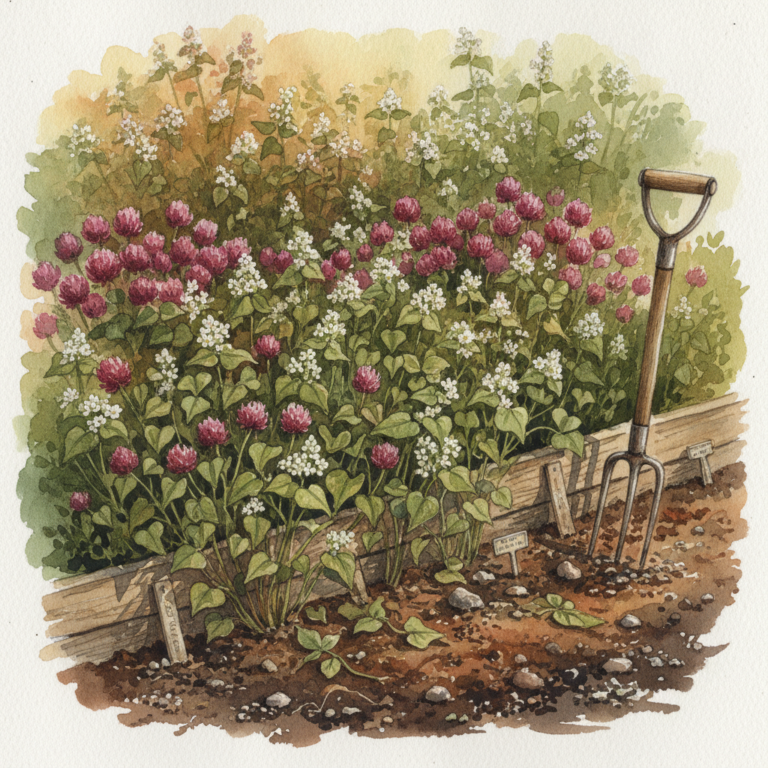
Buckwheat grows incredibly fast — you can go from seed to full biomass in just 30–40 days. It doesn’t fix nitrogen, but it’s fantastic at scavenging phosphorus from deep in the soil and making it available to your next crop. It also suppresses weeds like a champion.
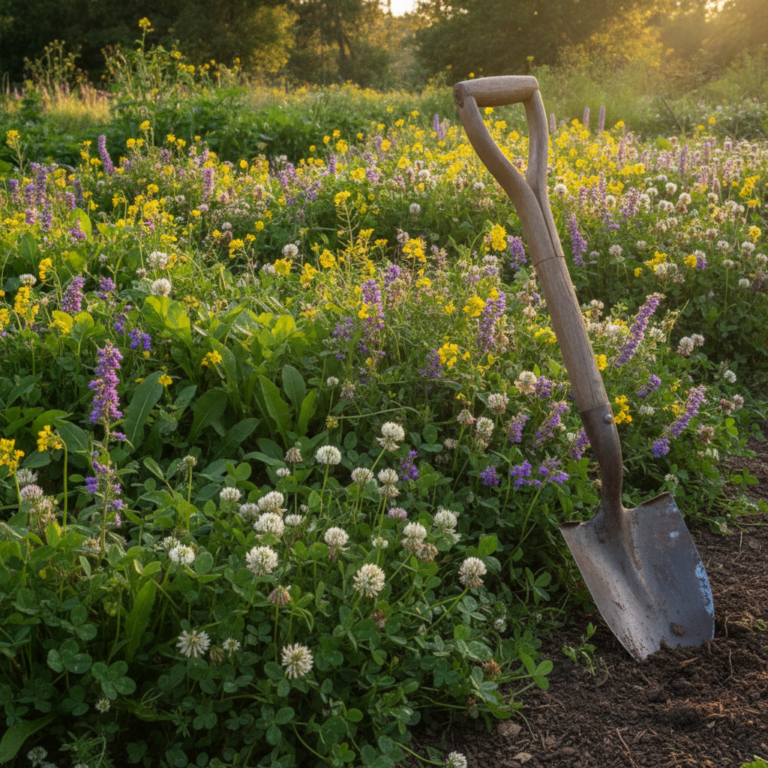
Phacelia is underused and underrated. It grows quickly, produces masses of soft, easy-to-dig green matter, and its flowers attract beneficial insects. One of the most garden-friendly green manures available.
Oats and rye work well as winter cover crops. They protect bare soil from erosion, add organic matter, and can be turned under in early spring. Winter rye is particularly cold-hardy and builds excellent soil structure.
The Timing Secret: When to Cut and Bury
This is where most gardeners go wrong. They either let the green manure crop go to seed (now it’s a weed problem) or they cut it too early and lose most of the biomass. Timing the cut matters enormously for nitrogen release.
The golden rule: cut and dig just before or at the point of first flowering. At this stage, the plant is at its peak nitrogen content. The stems are still soft enough to break down quickly. And the plant hasn’t yet diverted its energy into seed production.
Here’s why this timing is so critical. After flowering, plants start moving nutrients into seeds and away from stems and leaves. If you cut too late, you get lower nitrogen content and tougher, slower-to-decompose material. Cut at the right moment, and you’re burying a nitrogen bomb in the best possible sense.
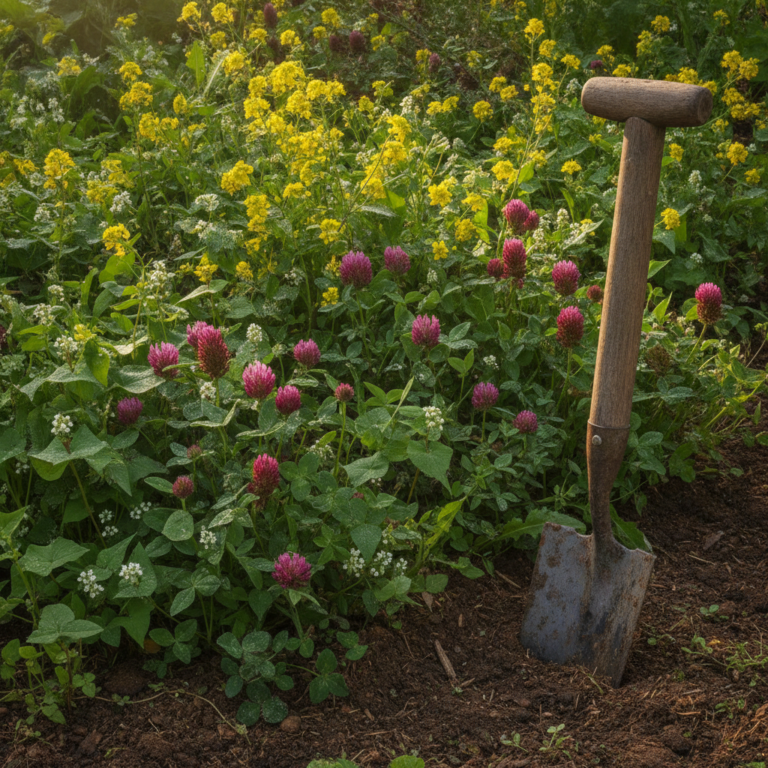
How deep should you dig it in? Aim for the top 6–8 inches of soil. You want the material within the active root zone of your future crops. Use a spade or broadfork to chop and turn the material into the soil. You don’t need to shred it finely — rough chopping is fine.
After burying, wait two to four weeks before planting your main crops. This waiting period allows the green matter to begin decomposing and avoids the short-term nitrogen “lock-up” that can happen when fresh material ties up soil nitrogen temporarily.
If you’re planning beds and timing around your main growing season, the Climate-Proof Your Crops: A 30-Day, Microclimate–Aware Planting Plan can help you build green manures right into your rotation schedule.
Why Green Manures Outperform Store-Bought Soil Conditioners
Let’s be honest about what most bagged soil amendments actually do. They deliver a single nutrient hit — often nitrogen, phosphorus, or potassium — in a form the soil can use only briefly. They do little for soil structure. They add almost nothing for soil biology. And they need to be bought again every season.
Green manure crops do all of this at once:
- They add nitrogen through fixation (legumes) and organic breakdown
- They improve soil structure through root action and organic matter
- They feed soil microbes — the real engine of a living soil
- They suppress weeds during the growing period
- They attract pollinators and beneficial insects before being turned under
- They cost almost nothing — a small packet of seed covers a large bed
A well-timed rotation of green manure crops can transform exhausted, compacted soil into something dark, crumbly, and alive within a single growing season. That’s not an exaggeration. That’s what farmers knew before the fertilizer companies told them to forget it.
A Practical Planting Calendar for Green Manures
Here’s a simple seasonal guide to fit green manures into your existing garden rotation:
Early Spring (March–April)
Sow crimson clover or field peas in empty beds as soon as the soil can be worked. These cool-season crops grow fast and can be turned under by late May, giving you perfectly conditioned beds for summer planting.
Early Summer (May–June)
Sow buckwheat in any gaps between plantings or in beds resting after spring crops. Buckwheat reaches cut-and-bury stage in just 30–40 days — fast enough to fit between a spring and fall planting without losing a full growing slot.
Late Summer (July–August)
This is prime time for hairy vetch or phacelia. Sow after your summer crops finish and let the green manure build all through fall. In mild climates, turn it under in late October. In colder zones, let it winter-kill and dig in early spring.
Fall (September–October)
Sow winter rye or field peas for overwintering cover. These protect bare soil from compaction and erosion all winter long, and you’ll turn them under in early spring — right before planting season begins.
Want to track how each green manure crop performs in your specific beds over time? The post Field Notes to Flourishing: Templates and Prompts to Track Growth, Mistakes, and Milestones gives you practical journal templates to record what worked and what didn’t.
Getting Started This Season
You don’t need to overhaul your entire garden to try this. Start with one empty bed. Sow a packet of crimson clover or buckwheat. Watch it grow. Cut it at first flower. Dig it in. Wait three weeks. Then plant your next crop into that bed and notice the difference.
That’s it. That’s the whole technique. Farmers did this for generations with no special equipment, no expert advice, and no budget beyond a handful of seed.
Green manure crops are one of the most powerful, most overlooked tools available to the home gardener. They cost almost nothing. They ask almost nothing. And they give your soil something that no bag of fertilizer ever truly can: life.
Your grandparents’ garden likely ran on exactly this kind of knowledge. It’s time to dig it up again — quite literally.