Green Manure Crops: The Plow-Under Secret
Long before synthetic nitrogen came in a bag, farmers already knew how to feed the soil. They grew green manure crops — lush, fast-growing plants raised with one purpose: to be cut down and buried. The decomposing roots and leaves would then release a slow, steady flood of nutrients back into the earth. No factory. No chemical runoff. Just the land feeding itself. If you’re skeptical of modern fertilizer advice and curious about what older growers actually did, this technique is one of the most powerful — and most overlooked — soil-building methods you can try this season.
What Are Green Manure Crops?
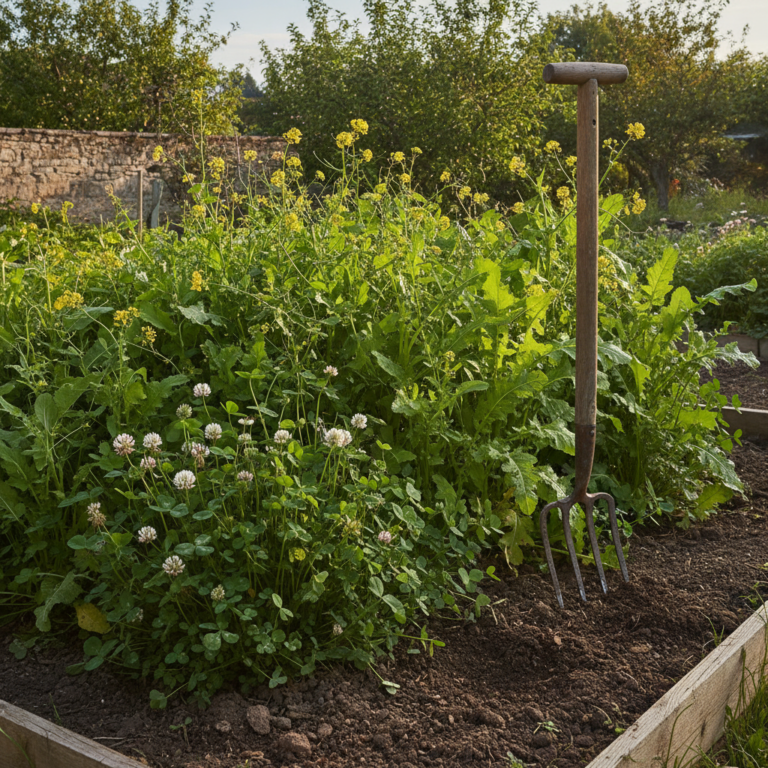
A green manure crop is any plant grown specifically to be incorporated into the soil while it’s still green and actively growing. Unlike mulch or compost that you bring in from elsewhere, green manures grow directly in your beds. You chop them down and dig them under — right there, in place.
The practice dates back thousands of years. Chinese farmers used it more than 3,000 years ago. Roman agriculturalists wrote about it. Your great-grandparents likely did it too, especially between seasons when beds would otherwise sit empty.
What makes it work is biology. Living plant material breaks down far more quickly than dried or composted material. That fast decomposition releases nitrogen, phosphorus, and a cascade of trace minerals directly where your next crop’s roots will grow. It also feeds soil fungi and bacteria, which quietly do the real work of soil fertility.
If you’ve been reading about how to read your soil and fix it fast, green manures are one of the most practical tools you can add to that diagnostic toolkit.
The Best Green Manure Crops to Grow
Not all plants work equally well as green manures. The best choices are fast-growing, easy to chop, and either fix their own nitrogen or break down rapidly to release it. Here are the top performers for home gardeners.
Legumes: The Nitrogen Fixers
Legumes are the superstars of green manuring. Their roots host Rhizobium bacteria that pull nitrogen directly from the air and deposit it in the soil as nodules. When you dig them under, that banked nitrogen becomes available to your next crop.
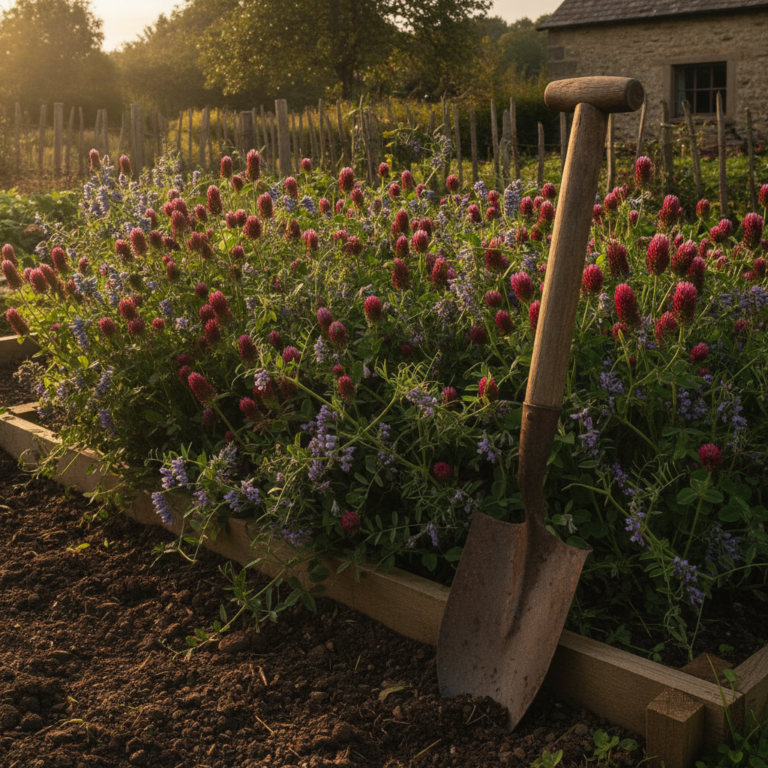
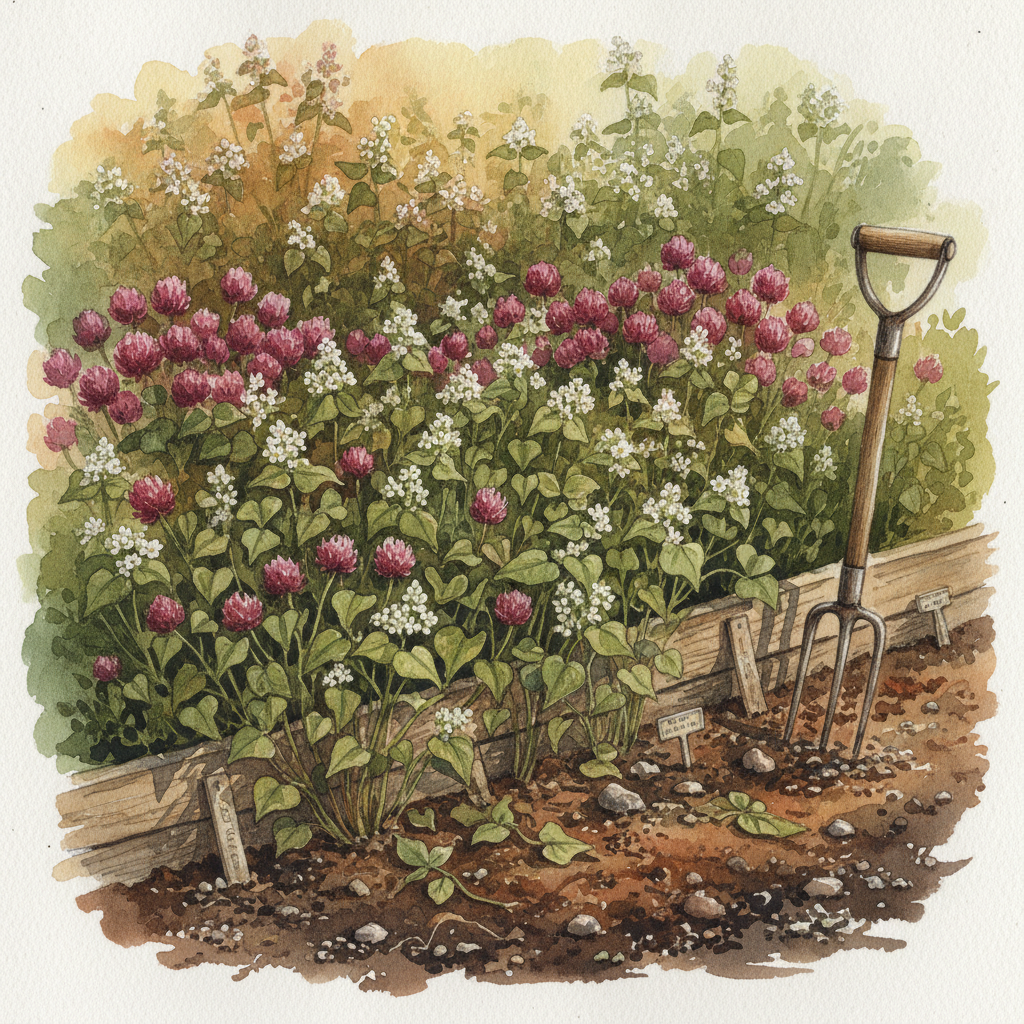
- Crimson clover — Fast-growing, stunning in flower, and excellent nitrogen fixer. Grows well in spring and fall.
- Hairy vetch — Cold-hardy and extremely productive. Great for overwintering.
- Field peas — Quick to establish, easy to dig under, and palatable if you miss the cut date and want to harvest first.
- Fenugreek — An underused gem that fixes nitrogen and decomposes very quickly after incorporation.
Non-Legumes: Fast Bulk and Organic Matter
These plants don’t fix nitrogen, but they build organic matter fast and suppress weeds while they grow.
- Buckwheat — Grows in six to eight weeks and smothers weeds brilliantly. Breaks down so quickly it’s almost magical.
- Mustard — Excellent for breaking up compaction and fighting soil-borne diseases. The roots release natural biofumigant compounds.
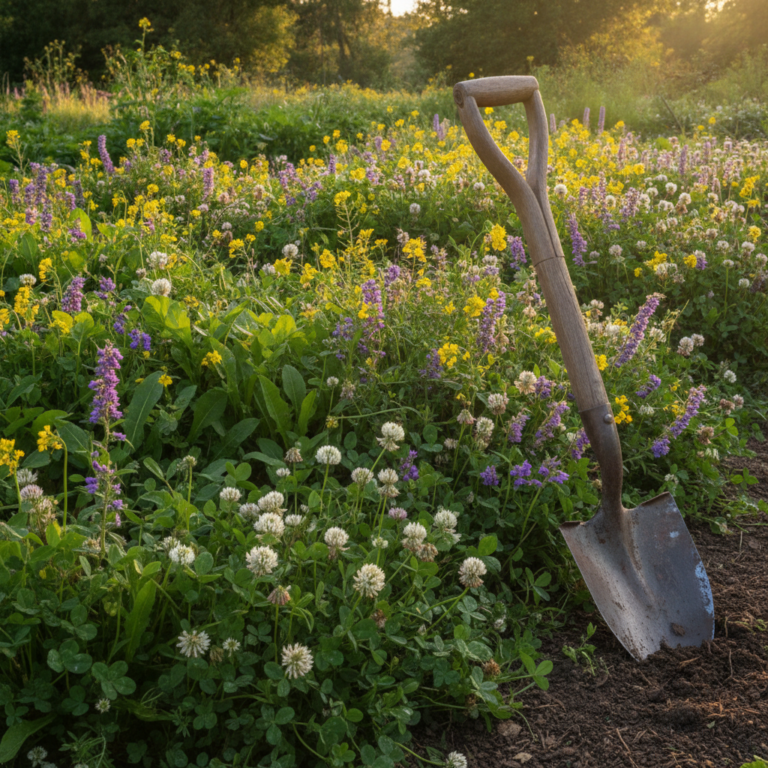
- Phacelia — A bee magnet and superb green manure. Breaks down very rapidly after cutting.
- Oats — Great for fall planting. They winter-kill in cold climates, leaving a soft mat that’s easy to turn in spring.
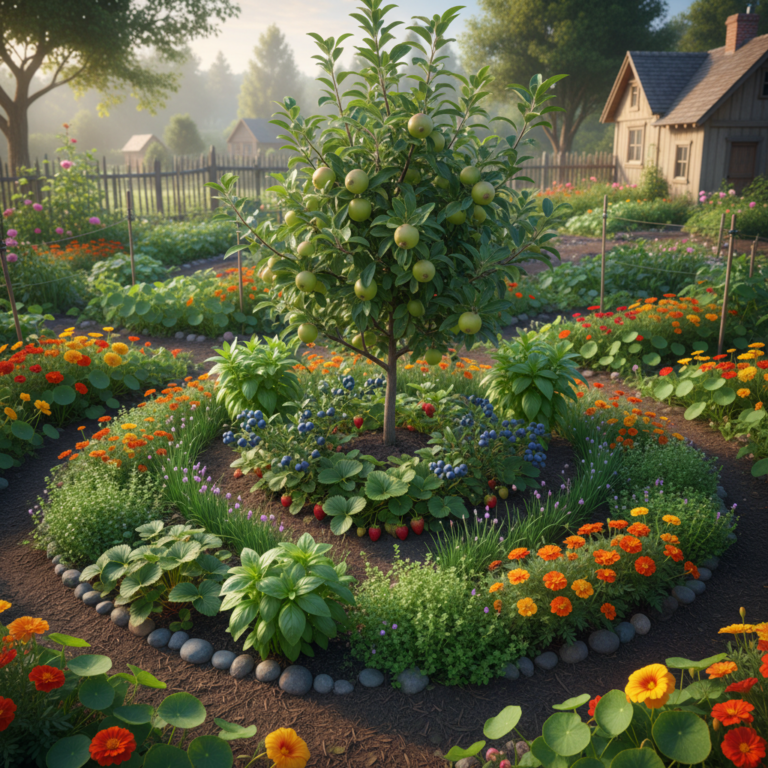
For small-space growers, even a single raised bed given over to buckwheat for six weeks between crops will noticeably improve your soil texture. If you’re working with limited square footage, pairing green manures with smart layout strategies — like those in this step-by-step microforest planner — can help you fit them into a tight rotation without losing growing space.
Timing the Cut-and-Dig for Maximum Nitrogen Release
This is where most gardeners go wrong. Timing your cut matters enormously. Dig too early and you lose biomass. Wait too long and the plant becomes woody, decomposition slows, and some species will set seed and become weeds.
The golden rule is to incorporate green manures at early to full flower — before seed set. At this stage, the plant’s tissues are still lush and nitrogen-rich. The carbon-to-nitrogen ratio is at its most favorable for fast decomposition.
Here’s how to time it well:
- Watch for bud formation. As soon as you see the first flower buds appear, count seven to ten days. That’s your cut window.
- Chop low and often. Use a sharp spade, hoe, or scythe to cut everything at soil level. Then chop the material into smaller pieces — this dramatically speeds decomposition.
- Dig it under. Incorporate the material into the top four to six inches of soil. No need to go deeper.
- Wait two to four weeks before planting. As the green matter breaks down, it temporarily ties up soil nitrogen in microbial activity. Give it time to complete that cycle before you plant your next crop.
Warm soil speeds decomposition significantly. In summer, two weeks is often enough. In cool spring or fall conditions, give it three to four weeks. If you’re not sure whether your soil is ready, you can use simple soil diagnostic techniques to check for biological activity before planting.
Why Green Manure Crops Outperform Bagged Amendments
Here’s the honest comparison. A bag of granular fertilizer delivers a fixed amount of one or two nutrients in a form that can leach away with rain. A well-timed green manure crop delivers nitrogen, phosphorus, potassium, calcium, sulfur, and a full array of trace minerals — all held in organic form, released slowly as microbes work.
Beyond nutrients, green manures improve soil structure. The roots break up compaction as they grow. The organic matter they add feeds the fungal networks that move nutrients between plants. And because you’re growing them in place, there’s no transportation, no packaging, and no guessing about what’s actually in the bag.
They also suppress weeds during a period when your beds might otherwise sit bare and vulnerable. A dense stand of phacelia or crimson clover leaves almost no room for opportunistic weed seeds to germinate.
This aligns perfectly with the idea of building a garden that works smarter, not harder. If you’re developing your growing skills progressively, incorporating green manures is a satisfying next step — the kind of thing covered in this layered learning system for gardeners.
A Practical Green Manure Planting Calendar
Use this as a starting guide. Adjust based on your local climate and frost dates. If you’re new to microclimate planning, the 30-day microclimate-aware planting plan is an excellent companion resource.
Spring (March – May)
Sow: Field peas, crimson clover, phacelia, oats. These tolerate cool soil and establish quickly as temperatures rise. Cut and dig: Four to six weeks after sowing, just before or at first flower. Plant food crops: Two to three weeks after incorporation.
Early Summer (June – July)
Sow: Buckwheat. This is buckwheat’s prime season. It grows in six to eight weeks and breaks down in two. Perfect for filling a gap between spring and fall crops. Cut and dig: At first white flower. Wait two weeks, then plant.
Late Summer (August)
Sow: Mustard or phacelia for a quick six-week run before fall planting. Mustard also helps break pest and disease cycles in beds that have had repeated plantings of the same crop family.
Fall (September – October)
Sow: Hairy vetch, winter rye, or a vetch-rye mix for overwintering. These will grow slowly through fall, protect the soil over winter, and be ready to cut and dig in early spring. Winter-killed oats work beautifully in colder climates — they die back naturally and leave a soft mulch mat that’s easy to work in spring.
Year-Round Principle
Never let a bed sit bare for more than two weeks. If you’re between crops and don’t have time to establish a full green manure, even a quick scatter of mustard or phacelia seed will start the process. Something is always better than nothing.
Getting Started This Season
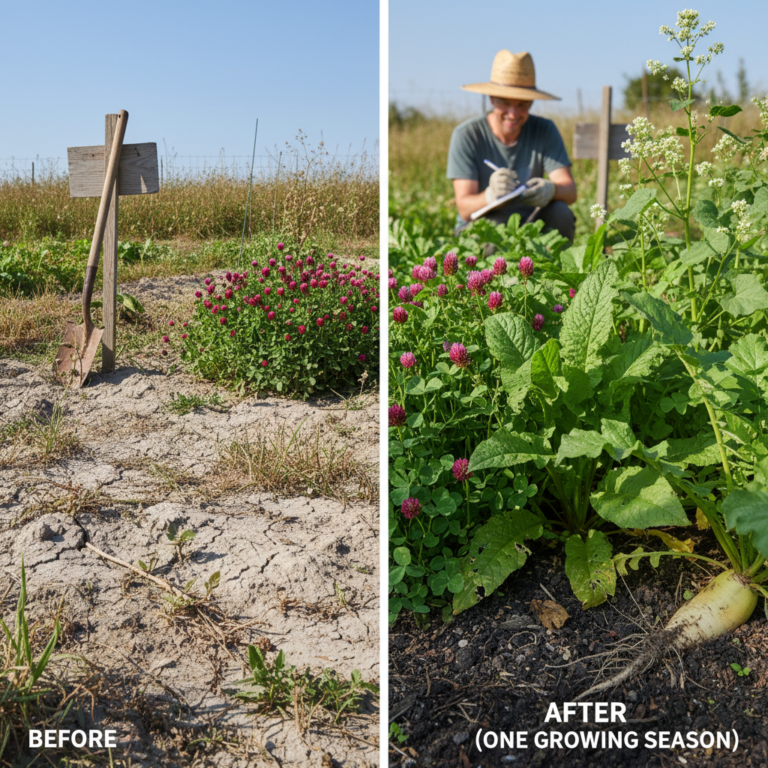
You don’t need a large garden or special equipment to begin. A single four-by-eight raised bed, a packet of crimson clover seed, and a spade are enough to run your first experiment. Sow thickly. Let it grow to bud stage. Chop it, dig it under, wait three weeks, and then plant into what will genuinely be noticeably better soil than you started with.
That small result — soil that smells alive, crumbles easily, and grows things better — is the beginning of a very old and very effective relationship between gardener and ground.
Green manure crops aren’t a trend. They’re a technique that sustained human agriculture for millennia before it was abandoned in favor of synthetic shortcuts. The good news is that the knowledge never disappeared. It just waited for gardeners like you to remember it.
Track what you sow, when you cut, and how your next crop responds. A simple journal entry after each rotation will show you patterns within a single season. For structured tracking templates, this garden planning and milestone tracker gives you exactly the framework to capture what you learn.
Start this season. The soil is waiting.