Green Manure Crops: The Plow-Under Secret
Before synthetic nitrogen existed — before bags of blue granules lined the hardware store shelves — farmers fed their soil a different way. They grew specific plants, let them bulk up, then chopped them down and buried them. That was it. No receipts. No chemical formulas. Just green manure crops doing what they had always done: feeding the earth with living organic matter. It worked then. It still works now. And chances are, your garden needs it more than you think.
What Are Green Manure Crops, Really?
The term sounds old-fashioned because it is. A green manure is simply a plant grown not for harvest, but for burial. You grow it, you cut it, you dig it in. The decomposing plant matter feeds soil microbes, releases nitrogen and other nutrients, and improves soil structure — all at once.
This is not the same as leaving weeds to rot. Green manures are chosen deliberately. They are fast-growing, high-biomass plants with specific nutritional profiles. Many of them fix nitrogen from the air through root partnerships with bacteria. Others break up compaction or suppress weeds while they grow.
Think of them as a living soil amendment. One you grow yourself for free.
If you have ever wondered why your soil feels tired even after adding compost, or why bagged amendments never quite deliver the results the label promises, green manure crops might be the missing rotation piece. Before you dig in, it also helps to know what your soil is actually telling you. Check out Soil Sense Without the Lab: Read Your Dirt, Fix It Fast — it will help you understand what you are working with before you plant a single seed.
The Best Green Manure Crops to Grow at Home
Not every cover crop makes a good green manure. You want plants that grow fast, add nutrients, and break down quickly after burial. Here are the best performers for home gardeners.
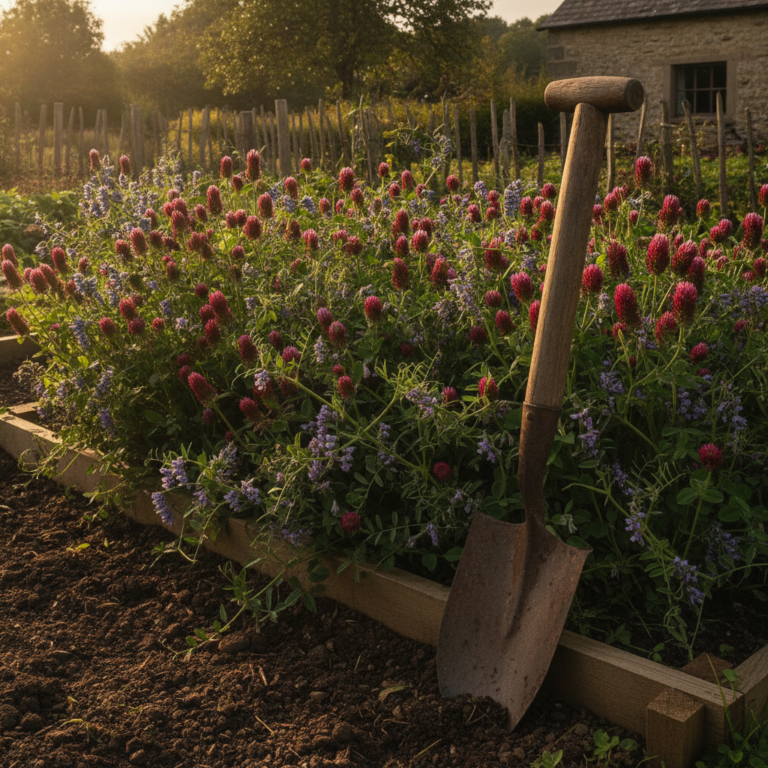
Crimson Clover
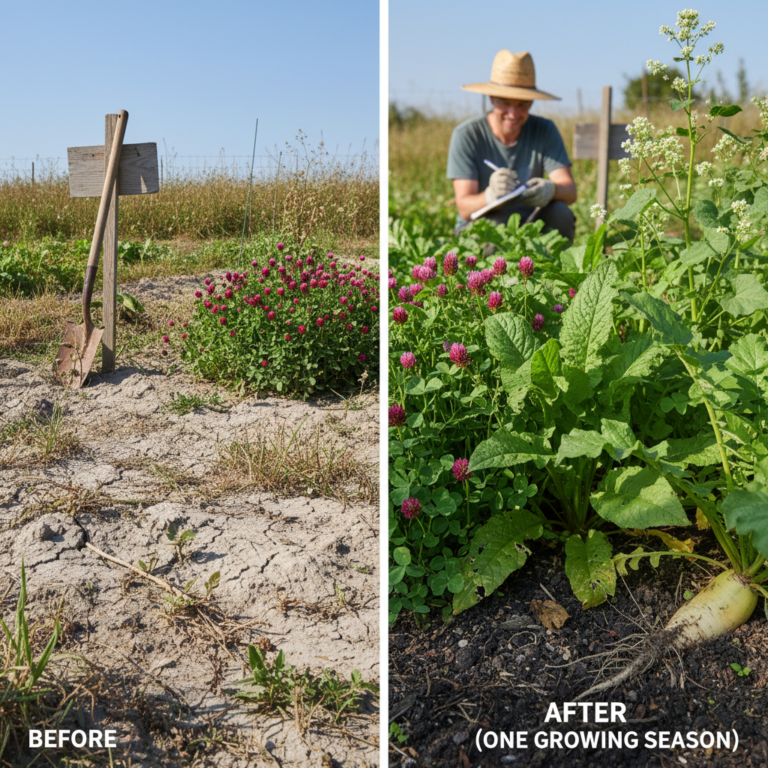
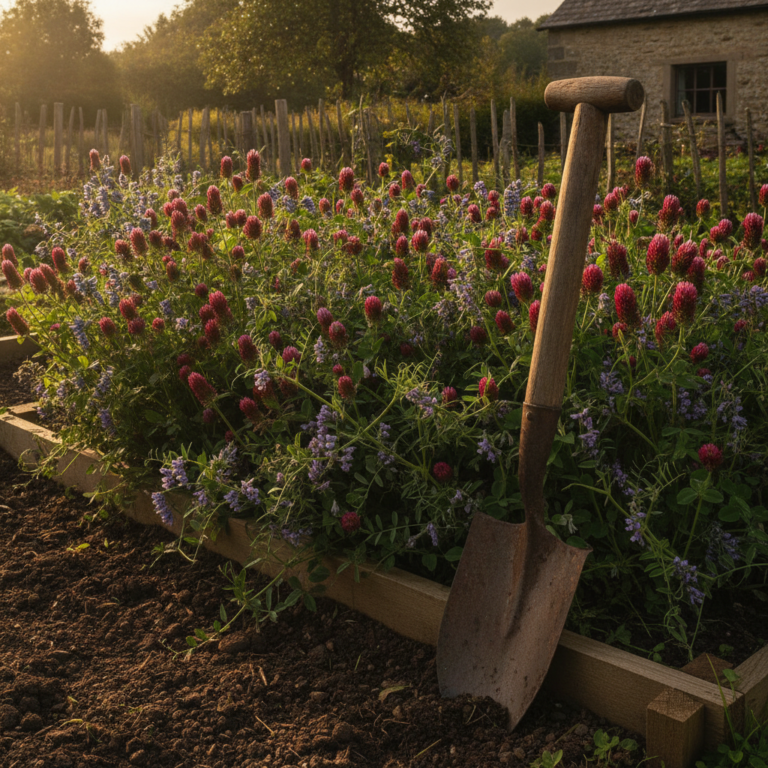
This is the gold standard for nitrogen fixation. Crimson clover partners with Rhizobium bacteria in its roots to pull atmospheric nitrogen into the soil. At plow-under, a healthy stand can contribute the equivalent of 100–150 pounds of nitrogen per acre. For a home garden bed, that translates to genuinely measurable fertility improvement.
It germinates easily, grows in cool and warm seasons, and the red flowers are a bonus — they feed pollinators before you turn them in.
Field Peas and Vetch
Both are legumes, meaning they fix nitrogen. They bulk up fast and produce tender, easy-to-decompose stems. Hairy vetch in particular is a powerhouse. It can survive winter in many climates, then be turned in during spring — right when your vegetable beds need a nitrogen boost most.
Field peas are softer and break down even faster, releasing their nutrients within two to three weeks of burial.
Buckwheat
Not a legume, but do not skip it. Buckwheat grows in six to eight weeks and produces enormous amounts of soft, easily decomposed biomass. It also solubilizes phosphorus — pulling locked-up phosphorus from the soil mineral matrix and making it available to future crops. That is a trick few store-bought amendments can match.
It is ideal as a summer green manure between spring and fall vegetable rotations.
Winter Rye and Oats
These grasses do not fix nitrogen, but they build organic matter fast. Winter rye in particular produces deep, fibrous roots that break up compaction and feed soil fungi. Oats winterkill in cold climates, leaving a soft mulch layer that is easy to work in come spring.
Use grasses when you want to build tilth and organic matter rather than nitrogen specifically.
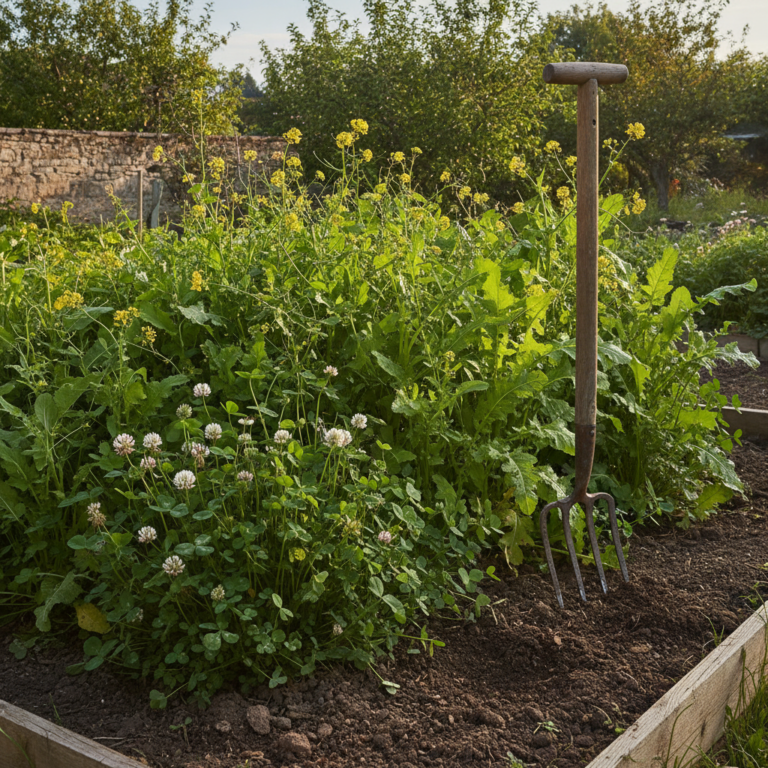
Mustard
Mustard is the wild card of the green manure world. Its roots release glucosinolates — compounds that act as natural biofumigants, suppressing soil-borne pathogens and certain weed seeds. If you have had persistent fungal problems or compacted, sick-smelling soil, a mustard green manure is worth trying.
How to Time the Cut-and-Bury for Maximum Nitrogen
Timing is everything with green manure crops. Cut too early and you leave nutrition on the table. Cut too late and the plants get woody and lignified, slowing decomposition significantly.
The sweet spot is just before or at the point of early flowering. At this stage, the plant is at peak biomass and its tissue is still soft and nitrogen-rich. Legumes in particular drop their nitrogen content quickly once seeds set — so do not wait for full bloom to pass.
After cutting, chop the material finely with a spade or sharp hoe. Then dig it into the top six to eight inches of soil. Do not bury it deeper — the aerobic decomposition you want happens in the upper soil layers where microbial activity is highest.
Here is the key rule most people miss: wait two to three weeks before planting into a turned-in green manure bed. Decomposing plant material temporarily ties up available nitrogen as microbes process it. Plant too soon and your seedlings may actually struggle. Wait it out and you will plant into genuinely enriched soil.
A Practical Green Manure Planting Calendar
The beauty of green manure crops is that they slot into the gaps in your growing season — the empty months when beds would otherwise sit bare and eroding. Here is a simple season-by-season guide.
Late Summer to Fall (August–October)
Sow crimson clover, hairy vetch, or winter rye after clearing summer crops. These will grow through fall, winterkill or overwinter depending on your climate, and be ready to turn in during early spring. This is the easiest entry point for most gardeners.
Early Spring (March–April)
Turn in your overwintered green manure. Wait two to three weeks. Then plant your main vegetable crops into the most fertile beds you have ever grown in.
Late Spring to Early Summer (May–June)
If you have beds that will be empty until fall crops go in, sow buckwheat. It will be ready to turn in within six to eight weeks, and you can follow it immediately with a second buckwheat round or transition to a fall sowing of legumes.
Midsummer (July)
Consider a fast mustard sow if you are dealing with soil health problems. Six weeks before your fall planting window, cut and dig it in and let the biofumigation do its work.
If you are planning your full seasonal garden rotation and want a detailed roadmap that accounts for your specific growing conditions, the Climate-Proof Your Crops: A 30-Day, Microclimate–Aware Planting Plan pairs beautifully with this approach. Knowing your microclimates helps you decide which beds will carry green manures and which will be in active production each season.
Why Green Manures Outperform Bagged Soil Conditioners
Store-bought soil amendments are not bad. But they are incomplete. A bag of granular fertilizer delivers isolated nutrients in a form that bypasses the soil food web entirely. There is no microbial negotiation. No slow release. No root architecture left behind to improve structure.
Green manures feed the whole system. The root channels improve drainage and aeration. The decomposing biomass feeds fungi, bacteria, and earthworms. The nitrogen arrives slowly, in organic form, tied to microbial activity rather than a chemical solubility curve. And the cost is the price of a seed packet.
This is what farmers understood for thousands of years before the Haber-Bosch process changed everything. The soil does not need to be fed in isolation — it needs to be cycled. Green manure crops are how you close that cycle.
For gardeners who are newer to this kind of systems thinking, the Layered Learning: A Gardener’s Progressive System That Grows with You is a wonderful companion. It helps you build these soil practices into a broader, season-long skill set rather than treating them as one-off tricks.
Getting Started This Season
You do not need to overhaul your whole garden to try this. Pick one bed. Clear it after your current crop finishes. Broadcast a packet of crimson clover or field peas. Water it in. Watch it grow for six to eight weeks. Then cut it, chop it, dig it in, and wait.
That is the whole practice. It scales up as your confidence grows. And once you see the difference in your soil texture and plant vigor the following season, you will understand exactly why old farmers never needed a fertilizer bag.
If you want to track your results — and you should, because watching soil improve over seasons is genuinely motivating — the Field Notes to Flourishing: Templates and Prompts to Track Growth, Mistakes, and Milestones gives you a ready-made system for recording what you planted, when you turned it in, and what your crops looked like afterward.
The plow-under secret was never really a secret. It was just forgotten. Now you have it back.