Green Manure Crops: The Plow-Under Secret
Before the first bag of synthetic nitrogen ever touched a field, farmers already knew how to grow rich, fertile soil — and they did it by growing green manure crops, chopping them down, and burying them alive. It sounds simple because it is simple. Yet somewhere between the rise of chemical agriculture and the modern garden center, this ancient trick got left behind. Today, we’re bringing it back.
If you’ve ever struggled with tired, compacted soil that just won’t produce the way it should, this technique might be the reset your garden beds have been waiting for. No bags, no bottles, no guesswork — just the power of living plants doing what they’ve always done.
What Are Green Manure Crops and Why Did Farmers Rely on Them?
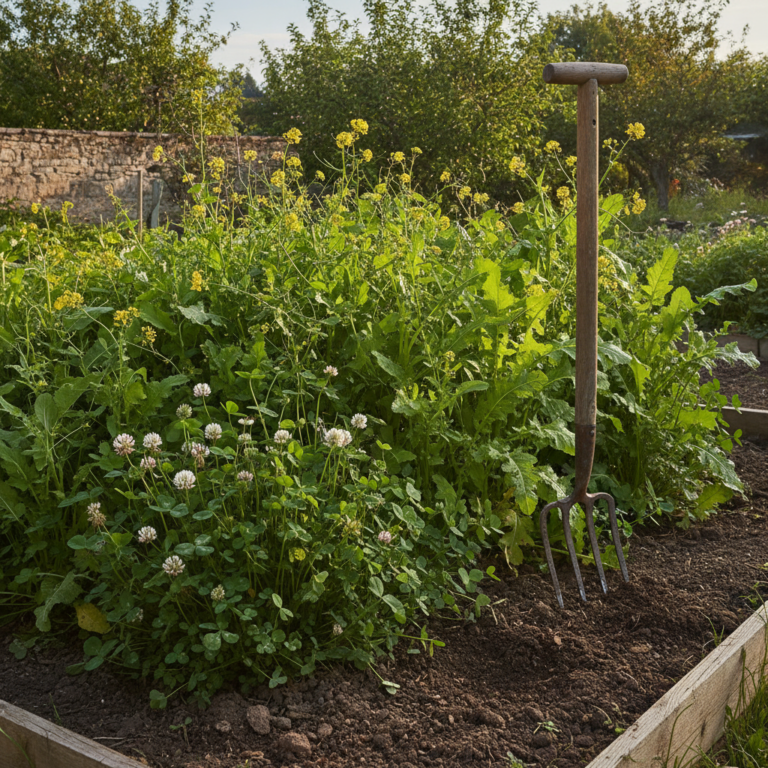
Green manure crops are plants grown specifically to be cut down and dug into the soil while still green and growing. The goal isn’t harvest. The goal is soil building. When you chop and bury a fast-growing, nitrogen-rich plant at peak growth, you release a slow, steady flood of nutrients directly into the root zone of your future crops.
Before synthetic fertilizers arrived in the mid-20th century, this was standard practice on every serious farm. Farmers rotated their fields through grain, vegetable, and green manure cycles the way a craftsperson rotates tools — because each one does a job nothing else can replicate quite as well.
The biology is elegant. Legumes like clover and vetch form relationships with soil bacteria called rhizobia, which pull nitrogen straight from the atmosphere and store it in root nodules. When you bury the plant, all that captured nitrogen slowly mineralizes and becomes available to your next crop. Non-legume green manures — like buckwheat and phacelia — add organic matter, improve soil structure, and feed the microbial web that makes everything else work.
If you want to understand your soil before you start, take a look at Soil Sense Without the Lab: Read Your Dirt, Fix It Fast. Knowing what you’re starting with helps you choose the right green manure for the job.
The Best Green Manure Crops for Home Gardeners
Not every plant makes an equally good green manure. The best choices grow fast, produce a lot of biomass, and break down quickly after being dug under. Here are the heavy hitters worth knowing:
Crimson Clover (Trifolium incarnatum)
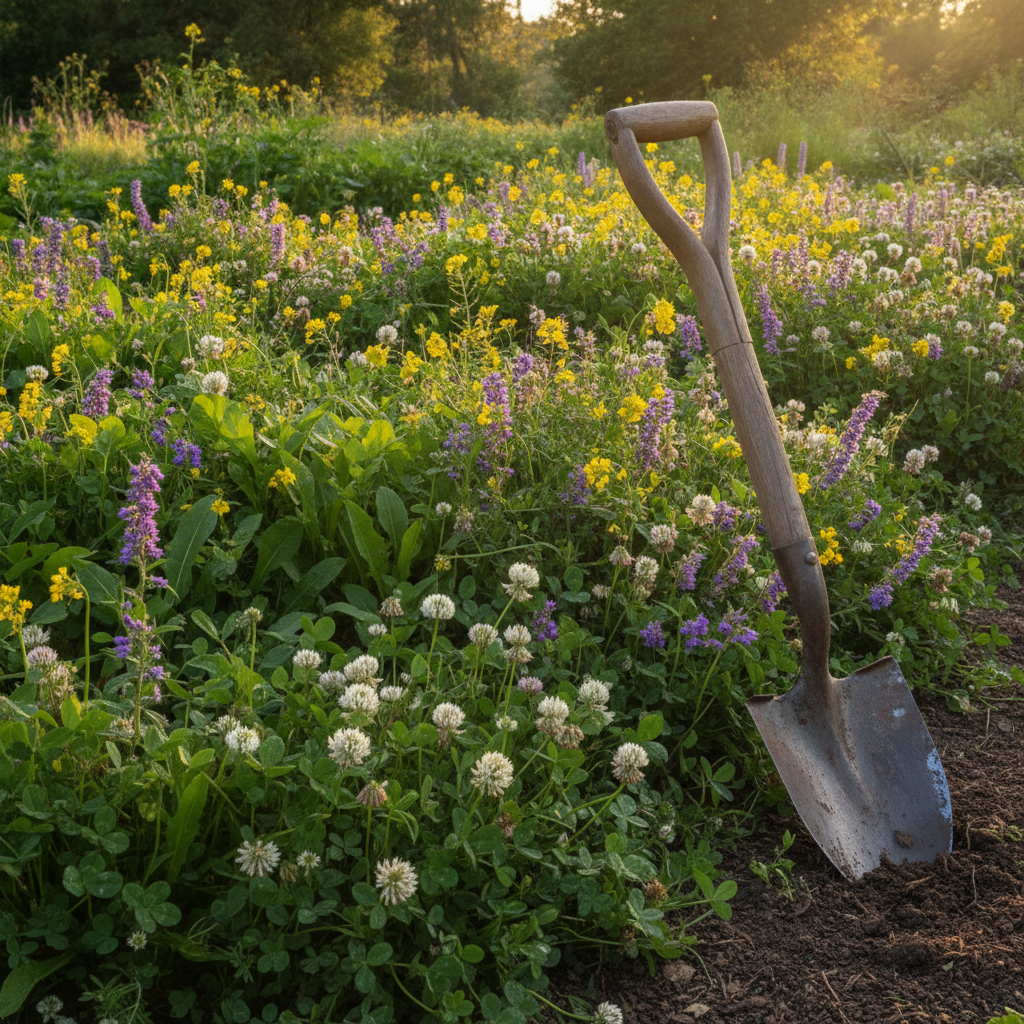
This is the crowd favorite for good reason. Crimson clover is a nitrogen-fixing legume that fixes between 70–150 lbs of nitrogen per acre under good conditions. It’s also beautiful — which doesn’t hurt morale in the garden. Sow it in late summer or early autumn for a spring dig-under. It tolerates light frosts and keeps on growing when other plants have given up.
Field Beans (Vicia faba)
Old-time farmers loved field beans. They fix nitrogen aggressively, grow a dense root system that breaks up compacted soil, and produce abundant leafy biomass. Sow in autumn for overwintering, then cut and bury in early spring before they flower. The root nodules are where the magic happens — don’t compost them away. Bury them in place.
Buckwheat (Fagopyrum esculentum)
Buckwheat is a summer green manure champion. It grows explosively fast in warm weather — ready to cut in just 6–8 weeks — and its roots release phosphorus from soil minerals in a form other plants can’t access. It also smothers weeds like nothing else. Sow in late spring or early summer. Cut just as it starts to flower for maximum biomass and minimum seed set.
Phacelia (Phacelia tanacetifolia)
Phacelia is one of the most underrated green manures in the home garden toolkit. It’s not a legume, so it doesn’t fix nitrogen — but it grows incredibly fast, produces masses of fine-textured organic matter, and its feathery purple flowers attract beneficial insects before you cut it down. It breaks down rapidly after being dug in. Results are visible in as little as three weeks.
Winter Rye (Secale cereale)
If you need to cover ground over winter and don’t want weeds taking over, winter rye is your answer. It’s hardy, vigorous, and produces enormous amounts of organic matter. The only catch: it creates a temporary nitrogen drawdown as it decomposes. Wait three to four weeks after dig-under before planting your main crop. Patience pays here.
How to Time the Cut-and-Dig for Maximum Nitrogen Release
Timing is everything with green manure crops. Cut too early and you lose biomass. Cut too late — after flowering and seed set — and you’ve fed the plant instead of your soil. The golden window is just before or at the very start of flowering, when nitrogen content in the leaves and stems peaks.
Here’s the simple rule: cut when the plant is lush, green, and just starting to show its first flowers. Then chop the material roughly with a spade or fork and dig it 4–6 inches into the soil. Don’t bury it deeper than that — you need oxygen-rich soil for decomposition to happen efficiently.
After digging, wait. For most green manures, the breakdown cycle takes two to three weeks in warm soil. In cooler spring conditions, allow three to four weeks before planting. During this window, soil microbes are doing intensive work — consuming the fresh green material and converting it into stable, plant-available nutrients. Planting too soon can cause ammonia toxicity to seedling roots. Patience here is directly rewarded with better germination and faster early growth.
To plan your timing within a broader seasonal framework, the Climate-Proof Your Crops: A 30-Day, Microclimate–Aware Planting Plan is an excellent companion resource. Green manure timing shifts based on your local microclimate more than most gardeners realize.
A Practical Green Manure Planting Calendar
You don’t need to overhaul your entire garden to use this technique. Even one or two beds rotating through a green manure cycle each season will noticeably improve your soil within a year. Here’s a calendar to get you started:
Spring (March–May)
- Dig under overwintered green manures (crimson clover, field beans, winter rye) as soon as soil is workable.
- Wait 3–4 weeks, then plant your main summer crops.
- Sow phacelia in any gap beds you won’t plant until late summer.
Early Summer (May–June)
- Sow buckwheat in any recently cleared beds or gaps between crop successions.
- Cut buckwheat at first flower (roughly 6–8 weeks after sowing) and dig in immediately.
- Follow with a fast-maturing late summer crop like salad greens or radishes after the 3-week rest period.
Late Summer (August–September)
- After main crops finish, resist the urge to leave beds bare.
- Sow crimson clover or phacelia immediately after clearing crops.
- Let them grow through autumn. They’ll outcompete weeds and hold soil nutrients that would otherwise leach away over winter.
Autumn (October–November)
- Sow field beans or winter rye in beds that will rest until spring.
- Leave all overwintering green manures standing — they protect soil structure from heavy rain and freeze-thaw damage.
Why Green Manures Outperform Most Store-Bought Soil Conditioners
Here’s the honest comparison most gardeners never hear. Bagged soil amendments — even the good organic ones — give you nutrients, but they don’t rebuild the living architecture of your soil. Green manure crops do both simultaneously.
When you bury a young, green plant, you’re feeding bacteria, fungi, earthworms, and nematodes all at once. You’re adding complex carbohydrates that build long-lasting organic matter — not just the simple sugars that spike and crash. You’re physically opening up compaction with root channels that persist long after the roots themselves decompose. And you’re doing it for the cost of a seed packet.
Store-bought compost and pelletized fertilizers have their place. But no bag can replicate the cascade of biological activity that follows a fresh green manure dig-under. This is the kind of deep soil building that makes your ground more productive every single year — not just this season.
If you’re newer to organic growing, the Smart Starts: A 4-Week Skill-Build Plan for Complete Garden Beginners is a great place to build the foundational habits that make techniques like this feel natural and doable.
Getting Started This Season
The most common mistake new gardeners make with green manure crops is waiting for the “perfect” moment. There isn’t one. Any bare bed is an opportunity. Any gap between crops is a window for a fast-growing green manure to get to work.
Start small. Pick one bed. Sow buckwheat or phacelia in it this week. Watch it grow. Cut it when it flowers. Dig it in. Wait three weeks. Then plant into that soil and notice the difference. That’s the whole lesson, distilled into one small experiment.
Your grandparents didn’t need a soil lab or a bag of synthetic nutrients to grow extraordinary food. They had seeds, patience, and the knowledge that the soil itself — fed and rested and rotated properly — was the most powerful tool in the garden. That knowledge is yours again now.
The plow-under secret was never really a secret at all. It was just forgotten. Time to remember it.