Green Manure Crops: The Plow-Under Secret
Before the first bag of synthetic nitrogen ever hit a store shelf, farmers already knew how to grow rich, productive soil. They grew green manure crops — specific plants raised not for harvest, but for burial. Chop them down at the right moment, dig them under, and your soil transforms. It’s one of the oldest, most effective soil-building tricks ever discovered, and almost nobody talks about it anymore.
That’s a shame. Because this method works better than most of what you’ll find at a garden center.
This post breaks down exactly which plants make the best green manures, how to time the cut-and-dig for maximum nitrogen release, and how to build a simple planting calendar you can start using this very season.
What Are Green Manure Crops, Exactly?
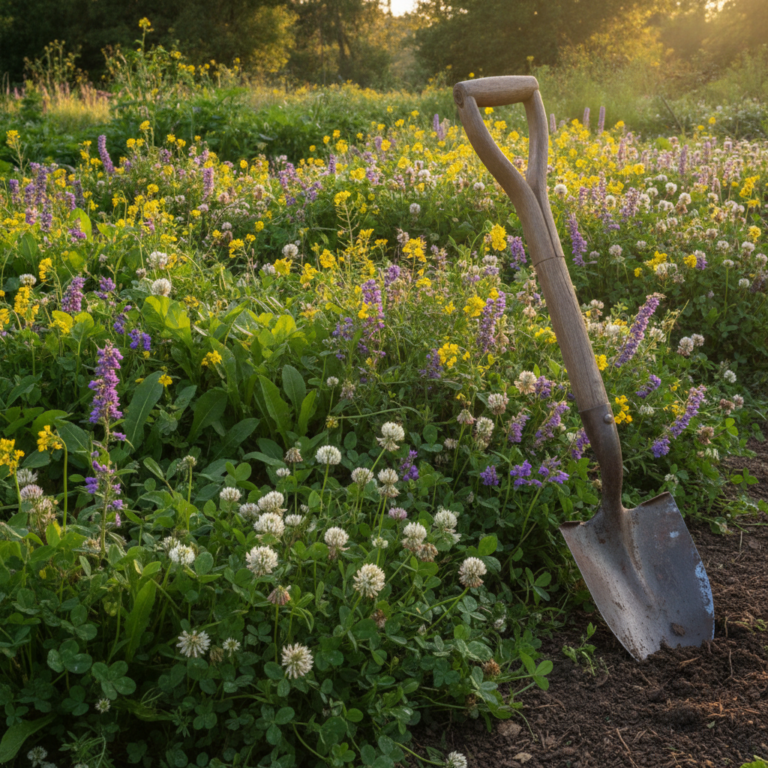
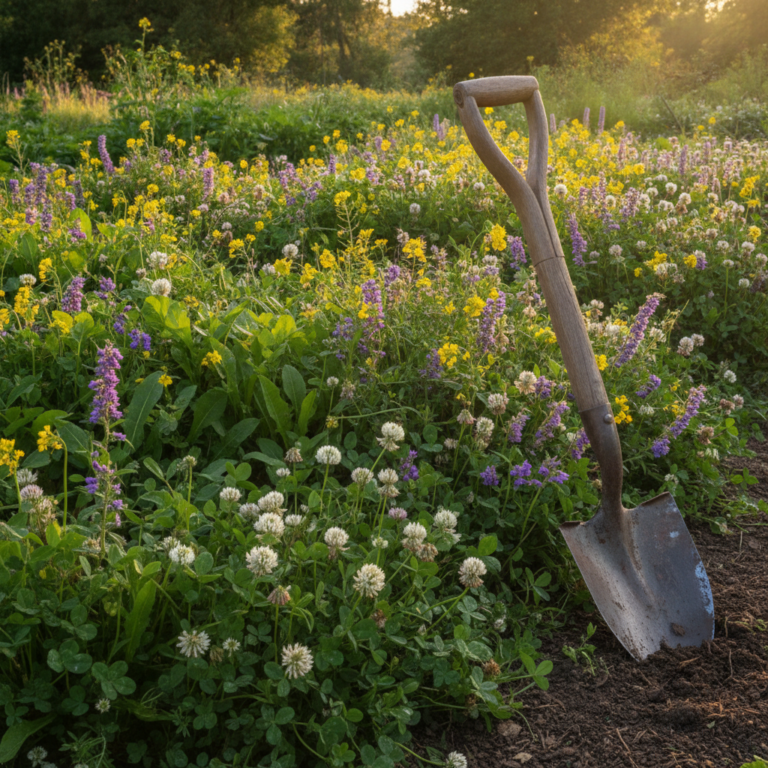
A green manure crop is any plant grown specifically to be incorporated back into the soil while it’s still green and actively growing. Unlike compost, which is decomposed material you add on top, green manures decompose right where they grow — feeding the soil from within.
The concept is beautifully simple. Plants pull carbon from the air and nutrients from deep in the soil. When you bury them before they fully mature, that stored energy releases slowly into the root zone. Soil microbes go to work. Earthworms multiply. Structure improves. Nitrogen builds up.
Before synthetic fertilizers became cheap and widely available after World War II, this was standard farm practice. Every rotation included a green manure phase. Grandparents didn’t call it “green manure” — they just called it farming smart.
If you’re just getting started with understanding what your soil actually needs, the post Soil Sense Without the Lab: Read Your Dirt, Fix It Fast is a great companion read before you begin.
The Best Green Manure Crops for Home Gardens
Not all green manures are equal. Some fix nitrogen from the atmosphere. Others break up compacted soil. A few do both. Here’s a breakdown of the most useful options for home gardeners.
Legumes: The Nitrogen Fixers
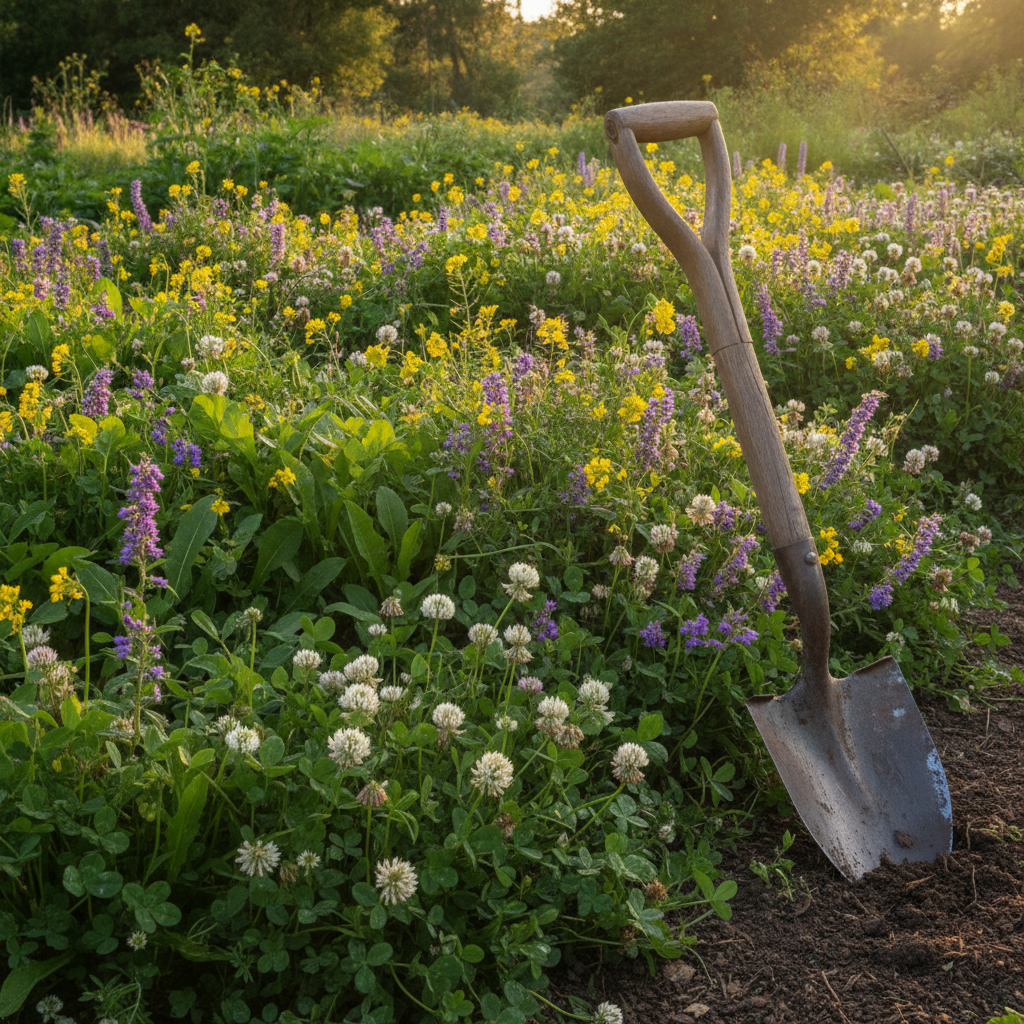
Legumes are the superstars of green manure gardening. They form partnerships with soil bacteria — called rhizobia — that convert atmospheric nitrogen into a plant-available form. When you bury legumes, all that stored nitrogen releases into your beds.
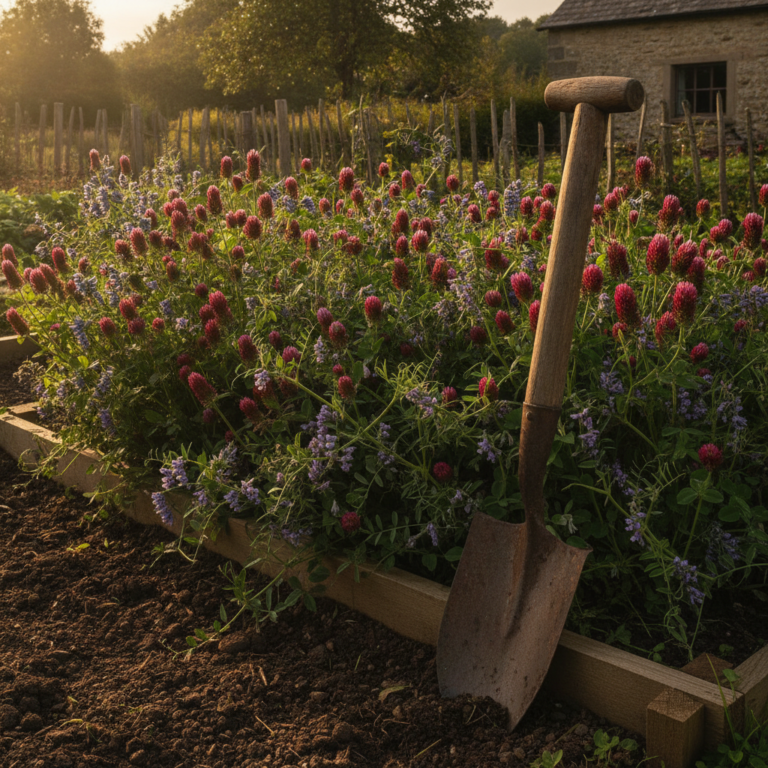
- Crimson Clover — Fast-growing, beautiful, and nitrogen-rich. Excellent for spring or fall planting.
- Field Peas — Hardy and quick. Fix nitrogen fast and suppress weeds effectively.
- Hairy Vetch — One of the most nitrogen-dense green manures available. Great for fall planting and spring dig-under.
- Fava Beans — Deep-rooted, cold-hardy, and generous nitrogen fixers. Perfect for overwintering in mild climates.
- Cowpeas — A summer workhorse. Tolerates heat and dry spells well.
Non-Legumes: The Soil Builders
These don’t fix nitrogen, but they add massive amounts of organic matter and can break up compacted layers.
- Buckwheat — Grows incredibly fast (matures in 6–8 weeks), smothers weeds, and scavenges phosphorus from deep soil layers.
- Phacelia — Breaks down quickly after burial and is beloved by pollinators before you dig it under.
- Winter Rye — Produces enormous root mass. Excellent for improving soil structure and suppressing weeds.
- Mustard — Has mild soil-fumigant properties. Particularly useful after heavy disease pressure.
For most home gardeners, a legume-and-filler mix — say, field peas and oats — gives you the best of both worlds: nitrogen and organic matter in one go.
Timing the Cut-and-Dig for Maximum Nitrogen
Here’s where most first-timers get it wrong. They either let the green manure go to seed (which locks up nitrogen as the plant shifts energy toward reproduction) or they dig it under too late when it’s already woody and tough to decompose.
The golden window is just before flowering — or right at the very first bud stage.
At that moment, the plant is packed with soft, nitrogen-rich tissue. It breaks down rapidly in the soil, usually within two to four weeks depending on temperature and moisture. Soil microbes feast. Earthworms follow. Your beds come alive.
Step-by-Step: How to Plow Under a Green Manure Crop
- Cut the crop down with shears, a scythe, or even a string trimmer. Aim for just before flowering.
- Let it wilt for a day or two on the surface. This prevents the cut material from simply re-rooting.
- Chop and dig the material into the top 15–20 cm (6–8 inches) of soil. A spade or broadfork works well.
- Wait 2–4 weeks before planting your main crop. This allows initial decomposition and prevents nitrogen tie-up.
- Observe your soil. It will look darker and feel more crumbly than before. That’s the sign it’s working.
If you want to understand the tools that make this process easier and longer-lasting, Tools That Grow with You: Durable Gear and Smart Maintenance for Every Skill Level covers what to reach for and how to keep it sharp.
A Practical Green Manure Planting Calendar
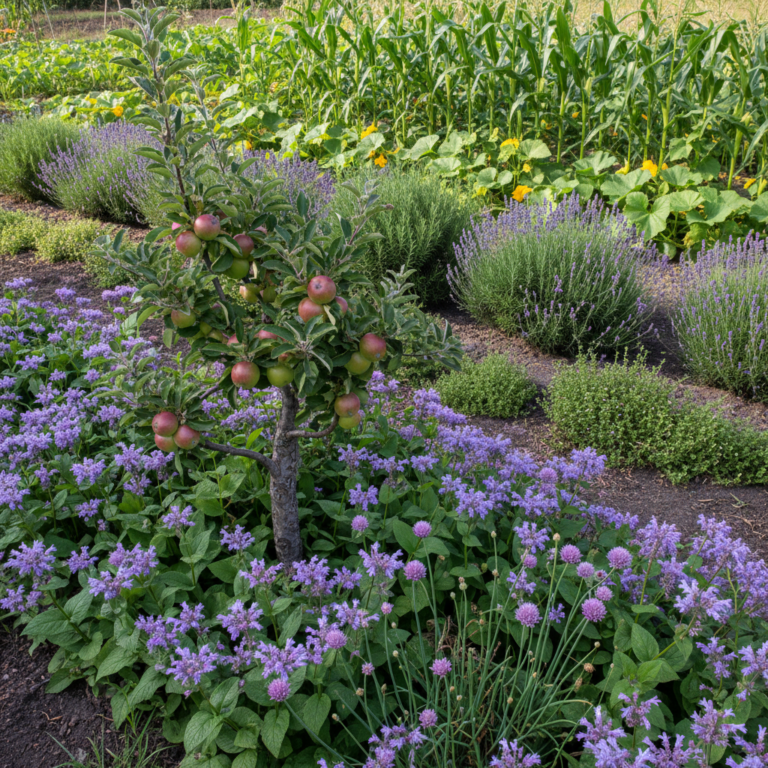
The key to making green manures work in a home garden is fitting them into the gaps in your rotation. Every empty bed is an opportunity. Here’s a simple seasonal guide:
Spring (March–May)
Sow field peas or crimson clover as soon as the soil can be worked. These cool-season crops establish quickly and are ready to dig under in 6–10 weeks — just in time to prep beds for summer plantings like tomatoes, squash, or corn.
Summer (June–August)
Use buckwheat or cowpeas to fill any gaps between spring and fall crops. Buckwheat is especially useful here — it grows so fast that you can sometimes fit in two rounds before fall. It also crowds out weeds beautifully.
Late Summer to Fall (August–October)
This is prime time. Sow hairy vetch, winter rye, or fava beans after you pull out summer crops. These overwinter, fixing nitrogen through the cool months, and you dig them under in early spring before planting season begins. This is the single most powerful rotation timing in temperate climates.
Winter (November–February)
In mild climates, keep fava beans or winter field peas going. In colder zones, let winter rye or hairy vetch do their quiet work under frost, then dig in when the ground opens up.
Pairing this calendar with your local microclimate knowledge makes a significant difference. For that, check out Climate-Proof Your Crops: A 30-Day, Microclimate–Aware Planting Plan — it’ll help you fine-tune your timing for your specific space.
Why Green Manure Crops Beat Most Store-Bought Soil Conditioners
Here’s what a bag of granular fertilizer does: it delivers a spike of nutrients quickly, often too quickly for plant roots to absorb efficiently. Runoff is common. Soil biology isn’t improved. The fix is temporary.
Here’s what green manure crops do differently:
- They feed soil microbes, not just plants — building long-term biological activity
- They improve soil structure through root channels and organic matter addition
- They suppress weeds during their growing phase
- They reduce erosion on bare soil
- They attract pollinators before cut-down
- They cost almost nothing — a handful of seed covers a large bed
The results compound. Each cycle of green manures leaves the soil more alive than the last. After two or three seasons, you’ll notice that almost everything grows better — including crops that previously struggled.
This is the kind of foundational knowledge that makes everything else in gardening click into place. If you’re building your skills progressively, Layered Learning: A Gardener’s Progressive System That Grows with You offers a smart framework for stacking techniques like this one.
Common Mistakes to Avoid
A few things can trip you up when you first start using green manures. Watch out for these:
- Digging under too late. Once the plant sets seed, nitrogen shifts away from the leaves and stems. Dig earlier, not later.
- Planting too soon after burial. Give the decomposing material at least two to four weeks. Fresh green material temporarily ties up soil nitrogen as microbes break it down.
- Using the wrong crop for your season. Cool-season legumes (clover, vetch) will bolt and fail in summer heat. Match the crop to the season.
- Skipping inoculation for legumes. If you’re planting clover or vetch for the first time in a new bed, coat the seed with rhizobium inoculant. It ensures effective nitrogen fixation and makes a noticeable difference.
Start This Season — One Bed Is Enough
You don’t need to overhaul your entire garden. Pick one empty bed — maybe where your garlic just came out, or where beans finished early. Scatter a handful of crimson clover or buckwheat seed, water it in, and watch what happens over the next six to eight weeks.
The soil you dig back into will look different. It will smell different. It will be different.
That’s the moment this old technique stops being theory and becomes something you trust completely. Green manure crops have been building fertile soil for thousands of years. They don’t need improving. They just need rediscovering.
And now you know exactly how to do it.