Green Manure Crops: The Plow-Under Secret
Before synthetic nitrogen came in a bag, farmers had a quiet secret: they grew specific plants just to bury them. These were green manure crops — living soil food grown deliberately to be chopped down and dug in. No factory required. No chemical runoff. Just plants doing what they have always done best: pulling nutrients from the air and building organic matter underground. If your soil feels tired, compacted, or just plain hungry, this old rotation trick may be exactly what it needs.
What Are Green Manure Crops, Exactly?
A green manure crop is any fast-growing plant you grow specifically to turn back into the soil. You never eat it. You never compost it off-site. You cut it down at just the right moment and dig or fork it directly into the ground beneath your feet.
The logic is beautifully simple. Growing plants capture carbon from the air. Legumes also pull nitrogen directly from the atmosphere and lock it into root nodules. When you bury that green mass, soil microbes break it down rapidly. The result is a burst of available nitrogen, improved soil structure, and a thriving microbial ecosystem — all without spending a dollar on amendments.
This is not a new idea. It is an ancient one. Roman farmers used lupins this way. Chinese farmers used vetches. Your great-grandparents likely called it “plowing in” and did it every few years as standard practice. Modern agriculture replaced this wisdom with synthetic inputs. But many home gardeners are quietly rediscovering it — and their soil is thanking them for it.
If you are still learning to read what your soil needs in the first place, this guide on reading your dirt and fixing it fast is a great place to start before you plan your first green manure rotation.
The Best Green Manure Crops for Home Gardens
Not all plants work equally well as green manures. The best choices depend on your season, your soil goals, and how quickly you need the bed turned around. Here are the most reliable options.
Nitrogen-Fixing Legumes
These are the workhorses. Legumes form partnerships with Rhizobium bacteria to pull nitrogen from the air and store it in root nodules. When you cut and bury the plant, that nitrogen becomes available to your next crop.
- Crimson clover — Fast-growing, beautiful, and highly effective. Fixes up to 150 lbs of nitrogen per acre. Works in spring or fall.
- Hairy vetch — One of the hardiest options. Survives cold winters and releases nitrogen quickly after incorporation. Excellent before corn or brassicas.
- Field peas — Quick to establish in cool weather. Ready to turn in just 6–8 weeks. Great for early spring or fall gaps in the calendar.
- Fenugreek — An often-overlooked gem. Fast growing and highly palatable to soil life after incorporation.
Biomass Builders (Non-Legumes)
These plants do not fix nitrogen, but they add enormous amounts of organic matter. They also suppress weeds, break up compaction, and feed the fungal networks your garden depends on.
- Buckwheat — The summer standby. Grows in poor soil, smothers weeds in weeks, and breaks down incredibly fast after turning. Blooms attract pollinators too.
- Mustard — Acts as a natural biofumigant, releasing glucosinolates that suppress soil-borne pathogens and nematodes. A natural soil sanitizer.
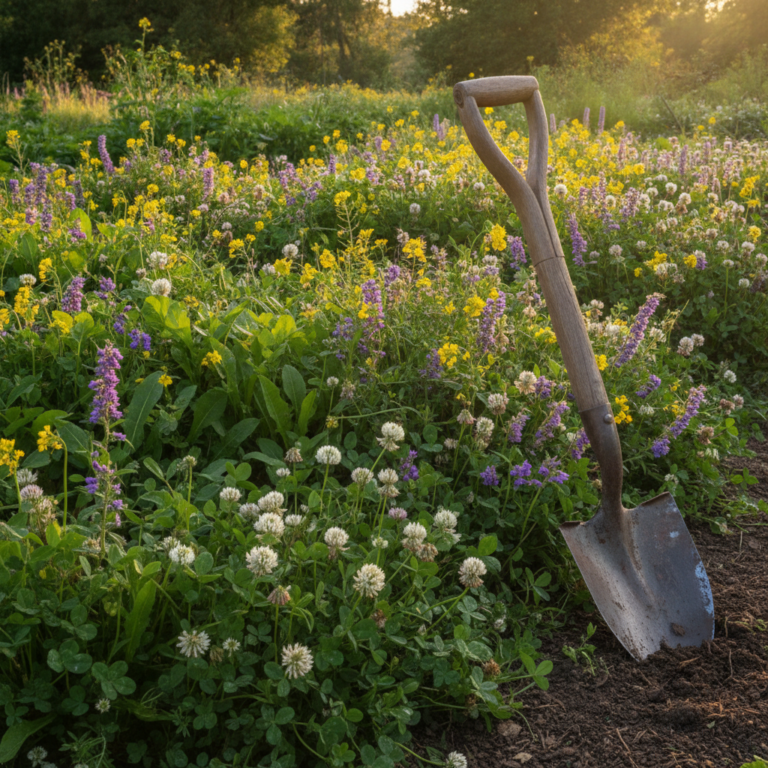
- Phacelia — Stunning purple flowers, rapid growth, and extremely fast decomposition. Beloved by beneficial insects right up to the cut date.
- Winter rye — A deep-rooted cold-season giant. Excellent for breaking hardpan and adding bulk organic matter in late fall.
Timing the Cut: When to Plow Under for Maximum Benefit
This is the part most gardeners get wrong. Timing is everything with green manure crops. Cut too early and you get less biomass. Cut too late and the plant becomes woody, decomposes slowly, and ties up nitrogen rather than releasing it.
The golden rule: cut just before or at first flower. At this point, the plant is at peak nitrogen content and cellular walls are still soft enough for rapid microbial breakdown. The moment flowering begins in earnest, the plant starts directing energy toward seeds, and nutrient density in the leaves and stems begins to drop.
After cutting, chop the material roughly with a spade or hoe. Then fork or dig it into the top 6–10 inches of soil. Do not bury it deeper — microbial activity is most concentrated in that upper zone. Water the bed if the weather is dry. Then wait.
Most green manures decompose adequately in 2–4 weeks in warm weather. In cooler conditions, allow 4–6 weeks before planting your next crop. Planting too soon after incorporation can cause nitrogen immobilization — where microbes temporarily tie up nitrogen while breaking down carbon-rich material.
Want a deeper framework for planning these rotations around your specific conditions? The 30-day microclimate-aware planting plan shows you how to layer soil-building tasks around your garden’s unique environment.
A Practical Green Manure Planting Calendar
Here is a simple seasonal guide you can adapt to your zone. Use this as a starting point and adjust based on your first and last frost dates.
Early Spring (4–6 Weeks Before Last Frost)
Sow field peas or hairy vetch into empty beds. These crops tolerate light frosts. Turn them in 6–8 weeks later, just before transplanting summer crops like tomatoes or peppers.
Late Spring to Summer (After Last Frost)
Buckwheat is your go-to for any bed that will sit empty for 4–6 weeks. It germinates in 3–5 days, smothers weeds, and can be turned in within 30–40 days. Use it to fill gaps between successions.
Late Summer (6–8 Weeks Before First Frost)
Sow crimson clover or phacelia after summer crops are pulled. These will grow through fall, fix nitrogen, and either be turned in before frost or left to winter-kill and decompose in place.
Fall to Winter (Before Hard Freeze)
Sow winter rye or hairy vetch for overwintering ground cover. These protect soil from erosion, suppress winter weeds, and are ready to turn in come spring. They are the ultimate “set it and forget it” green manure.
Pairing this calendar with a broader crop rotation strategy is smart. The tiered crop guide helps you think about which vegetables to slot into newly enriched beds after each green manure cycle.
Why Green Manures Outperform Most Bagged Amendments
A bag of synthetic nitrogen fertilizer releases nutrients quickly. Too quickly, in fact. It feeds the plant but bypasses the soil ecosystem entirely. Rain washes much of it away before roots can absorb it. Over time, this weakens soil structure and reduces microbial diversity.
Green manure crops work differently. They feed the entire soil food web. Bacteria, fungi, earthworms, and nematodes all benefit from the burst of fresh organic matter. This activity produces humus — the stable, long-lasting form of organic matter that gives healthy garden soil its dark color and spongy texture.
The nitrogen released through green manure decomposition is also slower and more steady. It stays in the soil longer. Plants can access it over weeks rather than days. And each cycle of growing and incorporating green manures builds the soil a little more than the last. Compaction eases. Drainage improves. Water retention increases.
Most gardeners who switch to regular green manure rotations report needing fewer and fewer soil amendments over the years. The soil begins to take care of itself — the way it always did before we started interrupting the cycle.
If you are just getting started with natural soil-building methods, the 4-week beginner garden plan walks you through foundational skills that make every technique — including green manures — easier to manage and understand.
Getting Started This Season
You do not need a large plot to start. Even a single raised bed can benefit from one rotation of buckwheat or field peas. The investment is a small packet of seed and thirty minutes of your time to sow and later turn it in.
Start by identifying one bed that will be empty for at least four weeks this season. Match the green manure crop to your season using the calendar above. Sow densely, water in, and watch the soil start to feed itself. When you dig that green mass back in and smell the rich, earthy scent of decomposing organic matter — you will understand exactly why your grandparents never needed a bag of fertilizer.
This is not a trend. It is a return. And your soil has been waiting for it.