Green Manure Crops: The Plow-Under Secret
Before the first bag of synthetic nitrogen ever hit a farm store shelf, farmers already knew how to grow their own fertilizer. They called it green manure. The practice was simple, elegant, and devastatingly effective: grow a specific crop, cut it down before it sets seed, and dig it right back into the earth. Green manure crops fed the soil from the inside out — no bags, no chemicals, no guesswork. And here’s the thing: this forgotten technique still works just as well today as it did a hundred years ago.
If you’ve been spending money on store-bought soil conditioners and still feeling like your garden soil is tired, this post is for you. We’re going to cover the best plants to use, exactly when to cut and bury them, and how to build a seasonal planting calendar you can start using right now.
What Are Green Manure Crops, Exactly?
A green manure crop is any fast-growing plant you sow with the sole intention of turning it back into the soil while it’s still green and leafy. You’re not harvesting it. You’re not composting it separately. You’re burying it in place — right where it grew.
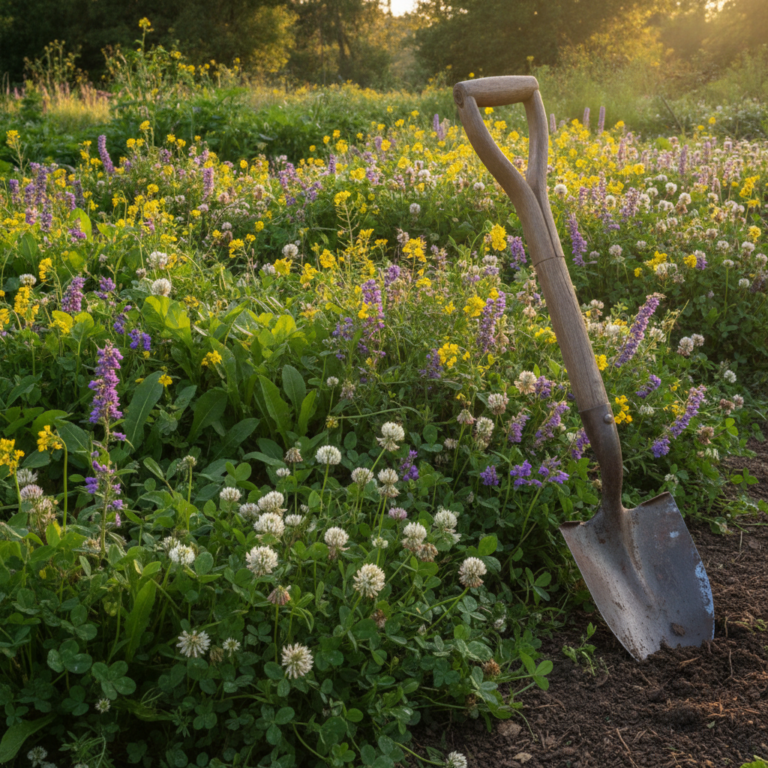
The buried plant matter does several remarkable things at once. It adds organic matter, which improves soil structure. It feeds soil microbes, which unlocks nutrients already locked in your dirt. And if you choose legumes — plants like clover, vetch, or field peas — the roots actually pull nitrogen from the air and fix it into the soil in a form your vegetables can use directly.
This is not a new discovery. It’s ancient knowledge. Roman farmers used lupins as green manures. Chinese farmers have rotated rice fields with nitrogen-fixing crops for over two thousand years. Your grandparents likely knew this too, even if they didn’t use the term.
If you want to understand your soil more deeply before you start, check out Soil Sense Without the Lab: Read Your Dirt, Fix It Fast. Knowing what your soil is missing will help you choose the right green manure for your specific needs.
The Best Green Manure Crops for Home Gardeners
Not every plant makes an equally good green manure. The best ones grow fast, have lots of leafy biomass, and ideally fix nitrogen. Here are the top choices to start with:
Legumes (Nitrogen Fixers)
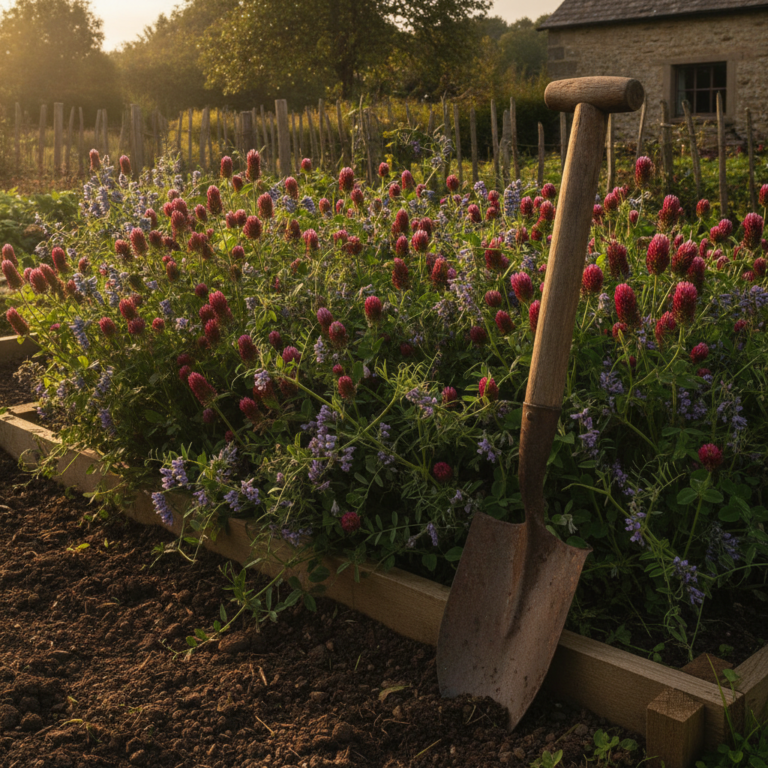
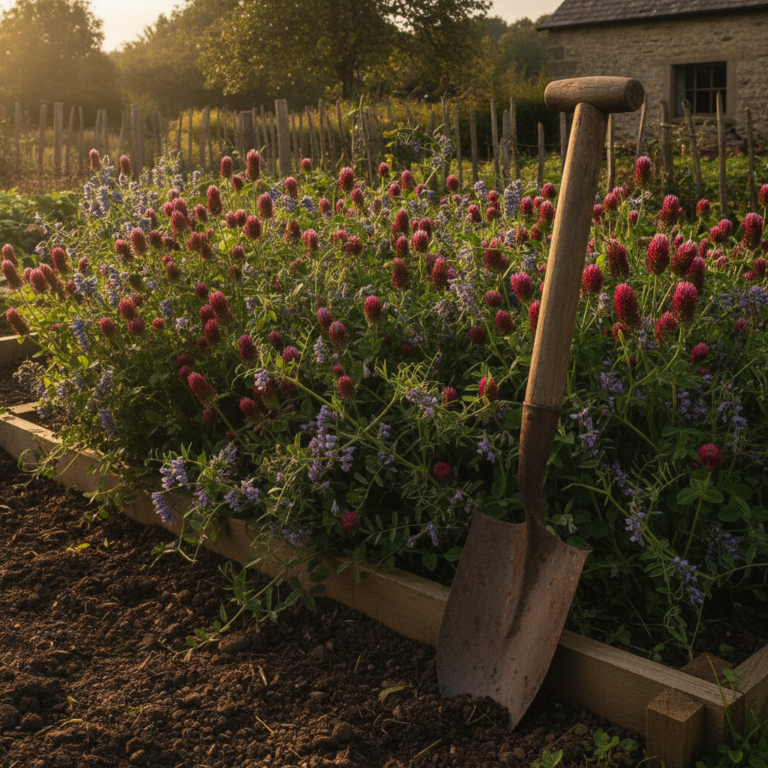
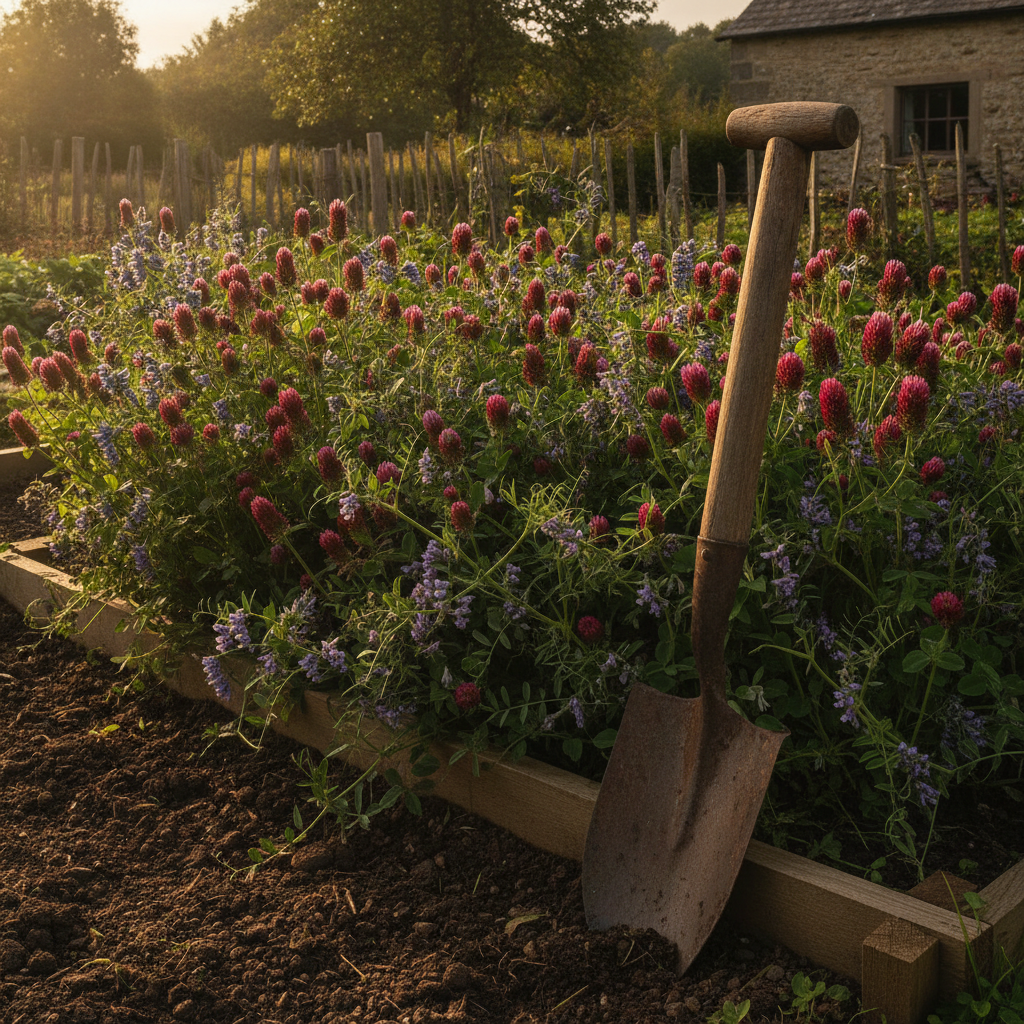
Crimson clover is one of the most reliable choices for home gardens. It grows quickly, produces abundant leafy growth, and fixes impressive amounts of nitrogen. It also looks beautiful, which is a bonus.
Winter vetch (hairy vetch) is a cold-hardy powerhouse. It can survive hard frosts, makes excellent ground cover over winter, and releases large amounts of nitrogen when turned under in spring.
Field peas are fast-growing, cold-tolerant, and highly productive. They’re ideal for early spring or autumn planting and break down quickly after turning under.
Fenugreek is a lesser-known gem. It grows rapidly in warm weather, fixes nitrogen, and breaks down fast. It’s especially good for summer green manuring between crops.
Non-Legumes (Organic Matter Builders)
Buckwheat is a warm-season standout. It grows incredibly fast — you can turn it under in as little as five weeks — and it scavenges phosphorus from deep in the soil, making it available to future crops.
Phacelia is beloved by bees and by gardeners who want fast biomass. It grows in cool weather, has a fine root system that improves soil structure, and breaks down quickly after digging.
Mustard does double duty. It builds organic matter AND acts as a natural biofumigant, suppressing soil-borne diseases and some nematodes when it’s chopped and incorporated.
Timing the Cut: The Nitrogen Release Secret
Here’s where most beginners go wrong. They wait too long. Or they cut too early. Timing matters enormously with green manure crops, and the difference of even a week can change how much benefit you get.
The golden rule is this: cut and turn your green manure just before or at early flowering stage. At this point, the plant has reached peak nitrogen content but hasn’t yet redirected its energy into seed production. The stems and leaves are still tender, which means they break down faster in the soil.
If you wait until the plant is fully in flower or going to seed, the stems become tough and woody. Decomposition slows dramatically. Your vegetables might be waiting weeks longer than necessary before they can access that nitrogen.
After cutting, wait two to three weeks before planting into that bed. This gives the green matter time to begin breaking down and prevents the decomposing plant material from competing with your new seedlings for nitrogen during the initial decomposition phase — a process known as nitrogen drawdown.
Use a sharp spade to chop the plants down first, then dig them into the top six to eight inches of soil. You don’t need to dig deep. That top layer is where the microbial action happens. If you want to make sure your tools are up to the job, Tools That Grow with You: Durable Gear and Smart Maintenance for Every Skill Level is worth a read before you start.
Why Green Manure Outperforms Bagged Soil Conditioners
Bagged fertilizers and soil conditioners have their place. But they have significant limitations that green manure crops simply don’t share.
First, bagged products are static. They deliver a fixed amount of nutrition. Green manures, on the other hand, are dynamic. They interact with soil biology. The plants actively improve soil structure while they grow. Their roots break up compaction, create channels for water and air, and feed a thriving underground community of microbes and fungi.
Second, green manures build organic matter — something no granular fertilizer can do. Organic matter is the foundation of long-term soil fertility. It holds moisture, buffers pH, supports earthworms, and makes nutrients available slowly over time.
Third, growing your own green manure is essentially free. Seeds cost very little. Labor is minimal. And the returns compound season after season as your soil continues to improve.
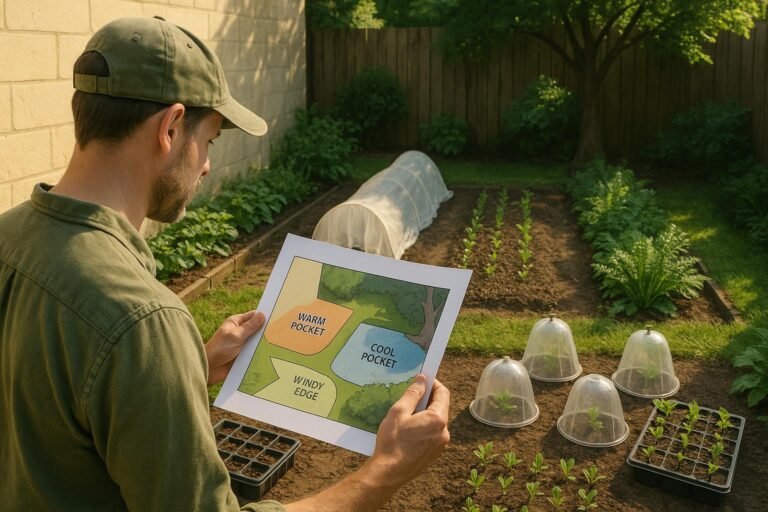
This is exactly the kind of thinking that separates resilient gardens from dependent ones. If you’re planning your overall growing strategy for the season, Climate-Proof Your Crops: A 30-Day, Microclimate–Aware Planting Plan pairs beautifully with a green manure rotation.
A Practical Green Manure Planting Calendar
Here’s how to fit green manure crops into your garden year without losing any productive growing space:
Early Spring (March–April)
Sow field peas or phacelia in beds that won’t be planted until May or June. Turn them under four to five weeks after sowing, then wait two to three weeks before transplanting tomatoes, squash, or corn.
Late Spring to Early Summer (May–June)
After harvesting overwintered greens or early spring crops, sow buckwheat or fenugreek. These fast growers can be turned under in five to six weeks, clearing the bed for late summer plantings.
Midsummer (July–August)
Sow a second round of buckwheat or a fast mustard variety in any beds that will sit empty until autumn. This suppresses weeds, feeds the soil, and keeps organic matter cycling through the growing season.
Autumn (September–October)
This is the most powerful time for green manuring. Sow winter vetch, crimson clover, or a mix of both after clearing summer crops. Let them grow through autumn, overwinter, and turn them under in early spring. The nitrogen release will be exceptional.
Winter (November–February)
In mild climates, hairy vetch and crimson clover continue to grow slowly through winter. In colder areas, they’ll die back but still decompose in place, adding organic matter by spring. Either way, they’re working for you.
If you’re tracking your garden improvements season by season, Field Notes to Flourishing: Templates and Prompts to Track Growth, Mistakes, and Milestones gives you a great framework for recording what works in your specific plot.
One Simple Rule to Remember
Every time a bed sits empty in your garden — even for just four weeks — something should be growing in it. That something can be a green manure crop. The soil is never truly resting when it’s covered in living roots. In fact, bare soil loses fertility. It erodes, dries out, and loses microbial life.
Your grandparents knew this intuitively. They didn’t let land sit idle. They put it to work growing the next crop’s fertility while the last harvest was still being eaten. It’s one of the most elegant closed-loop systems in all of agriculture — and you can start doing it this weekend with a handful of clover seed.
The ground beneath your feet is waiting to be fed. Give it what it’s been missing. Grow your fertilizer, bury it with purpose, and watch what happens to your harvests next season. This is the plow-under secret, and now it’s yours.