Green Manure Crops: The Plow-Under Secret
Before synthetic nitrogen existed, farmers already knew how to feed hungry soil. They grew green manure crops — plants raised specifically to be cut down and buried — and the results were extraordinary. Soil that received this plow-under treatment grew stronger harvests year after year, without a bag of fertilizer in sight. If you’ve been wondering why your garden soil feels tired and your plants look pale, this forgotten technique might be exactly what you’ve been missing.
What Are Green Manure Crops, Exactly?
A green manure crop is any plant grown not to eat, but to feed the soil itself. You sow it, let it grow to just the right stage, then chop it and dig it in. As it breaks down underground, it releases nitrogen, carbon, and a cascade of trace nutrients directly where plant roots need them most.
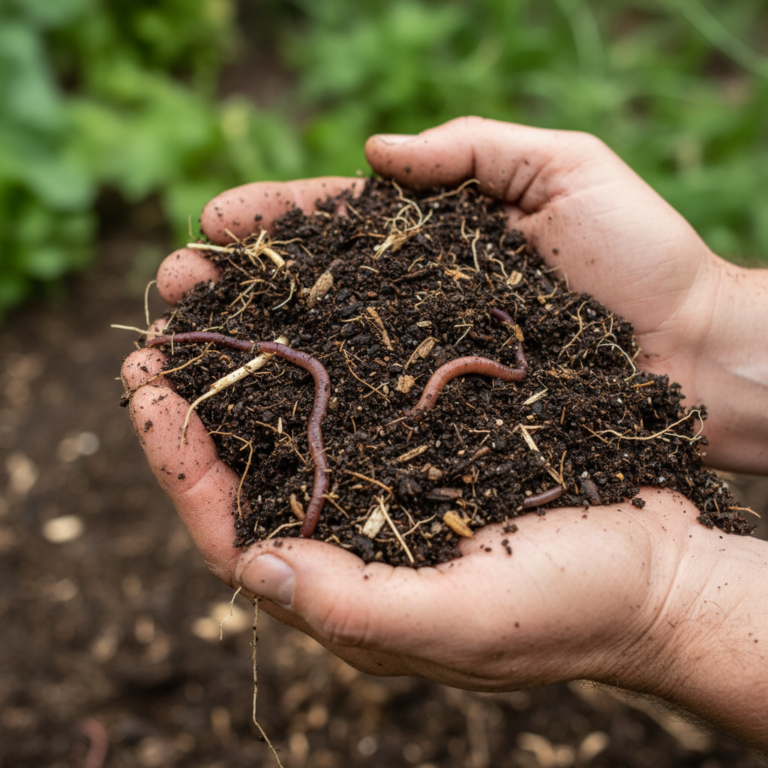
This is fundamentally different from composting. With compost, you’re working outside the soil, then adding the finished product back in. With green manures, the whole decomposition process happens in the ground. Worms, fungi, and bacteria get to work on fresh plant tissue right where they live. The result is faster, more bioavailable nutrition for whatever you plant next.
Think of it as feeding the soil a living meal rather than a processed supplement.
The Best Green Manure Crops to Grow This Season
Not all cover crops double as good green manures. The best ones fall into two broad categories: nitrogen-fixers and biomass builders. The wisest old-time gardeners used both together.
Nitrogen-Fixing Legumes
These plants form a partnership with soil bacteria called rhizobia. The bacteria colonize the plant’s roots and pull nitrogen directly from the air, storing it in small nodules. When you turn the plant under, all that captured nitrogen releases into your soil.
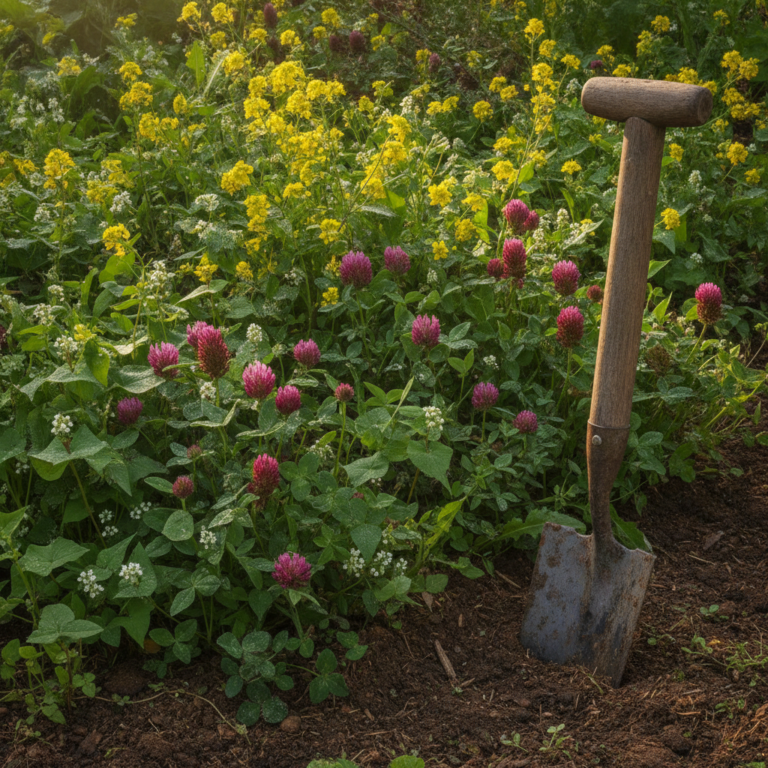
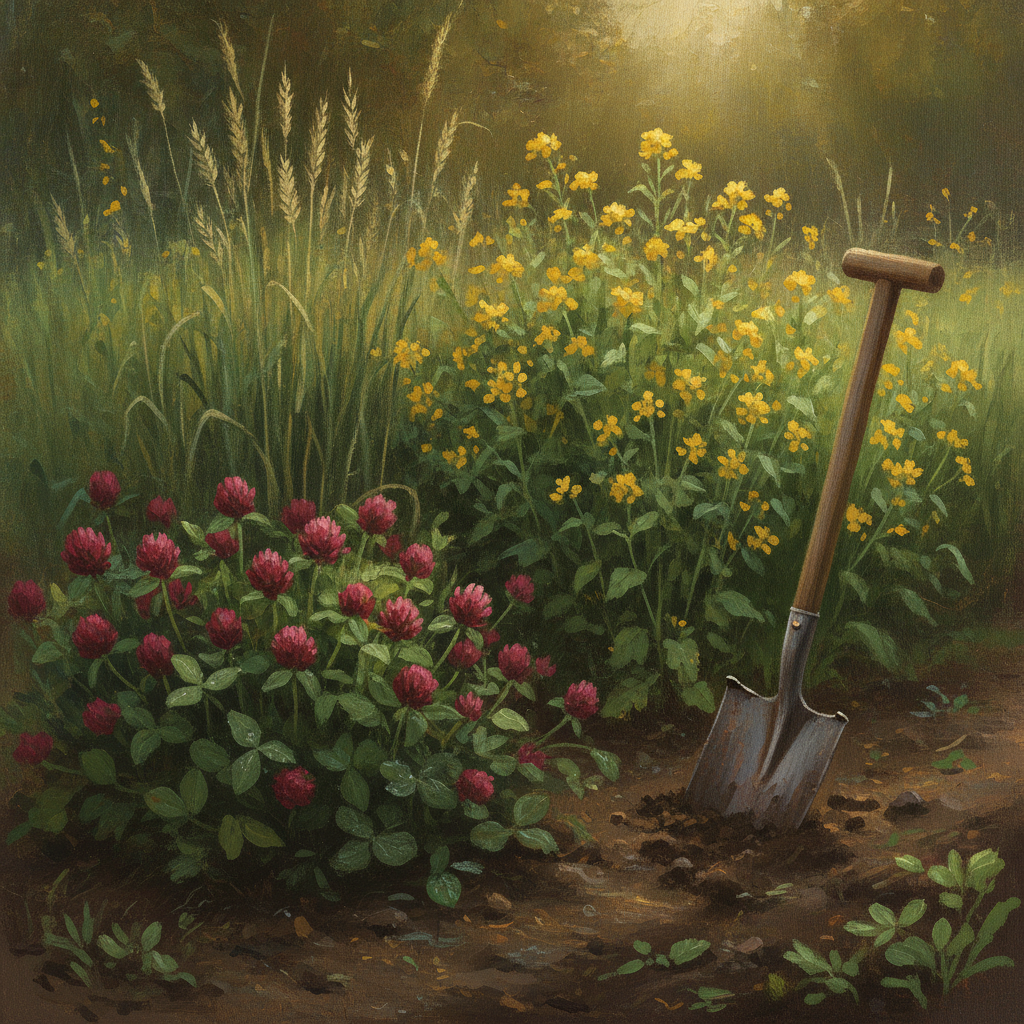
- Crimson clover — Fast-growing, beautiful, and one of the most reliable nitrogen fixers for home gardens. Sow in early spring or late summer.
- Field peas (Austrian winter peas) — Cold-hardy and vigorous. Excellent for fall planting before a spring vegetable bed.
- Hairy vetch — Aggressive grower that produces impressive biomass. Best used where you want serious soil improvement over a full season.
- Fenugreek — A lesser-known but powerful option with deep roots that also break up compaction.
- Buckwheat — Technically not a legume, but it smothers weeds and mines phosphorus from the subsoil, making it available to the next crop.
Biomass Builders
These crops don’t fix nitrogen, but they produce enormous amounts of organic matter. That bulk improves soil structure, feeds the fungal web, and adds long-lasting carbon.
- Cereal rye — The champion of biomass production. Even a short-season planting creates impressive root mass underground.
- Phacelia — A stunning blue-flowered option beloved by pollinators. Breaks down quickly, making it ideal before a fast-following crop.
- Mustard — Releases compounds as it decomposes that naturally suppress soil-borne diseases. A secret weapon in beds with a history of root rot.
For most home gardeners, the best strategy is to mix a legume and a biomass builder together. Sow crimson clover with cereal rye, or field peas with oats. You get nitrogen and structure in a single pass.
If you’re just starting out and want help choosing plants that suit your skill level and climate, the Plant Selection Spectrum guide walks you through crop choices step by step.
How to Time the Cut-and-Dig for Maximum Nitrogen Release
Timing is everything with green manure crops. Cut too early and you lose bulk. Cut too late — after the plants flower and set seed — and the nitrogen locks up in woody tissue that breaks down slowly. Worse, you risk a weed crop of volunteers next season.
The sweet spot is at early to full flower — just as the first blooms open, before seeds form. At this stage, the plant tissue is still soft and nitrogen-rich. It breaks down fast and releases nutrients within two to four weeks in warm soil.
The Practical Steps
- Cut or mow the crop to the ground. A scythe, hedge trimmer, or even sharp garden shears all work. Leave the material on the surface.
- Let it wilt for two to three days. This reduces its bulk and makes turning easier.
- Dig or turn it in to a depth of 15–20 cm (6–8 inches). A fork or spade works well. You don’t need perfect burial — rough incorporation is fine.
- Wait two to four weeks before planting. Decomposing plant matter temporarily ties up some soil nitrogen. Give the process time to complete before sowing your next crop.
In cold weather, decomposition slows. If you’re turning in a fall cover crop, allow six to eight weeks before spring planting, or incorporate it the previous autumn.
For a complete look at how soil behaves through the seasons — and how to read what it’s telling you before you plant — check out Soil Sense Without the Lab: Read Your Dirt, Fix It Fast. It pairs beautifully with a green manure rotation.
A Practical Green Manure Planting Calendar
Here’s how to weave green manure crops into a real growing year. Adjust planting times based on your last and first frost dates.
Early Spring (4–6 Weeks Before Last Frost)
Sow field peas, hairy vetch, or crimson clover into any empty beds. These cold-tolerant plants establish quickly and fix nitrogen before your main season crops need it. Cut and dig at early flower stage — typically 8–10 weeks after sowing.
Summer Gap Beds (After Early Crops Finish)
When you harvest garlic, early peas, or spring greens, don’t leave ground bare. Immediately sow buckwheat or phacelia. Both grow fast in summer heat, smother weeds, and can be turned under within 6–8 weeks. Then plant your late-season brassicas or root crops into the improved bed.
Late Summer to Early Autumn
Sow a winter cover mix — cereal rye plus crimson clover or hairy vetch — across any beds that will rest through winter. These plants establish before frost, protect soil from erosion, and are ready to turn under in early spring.
Autumn to Winter (Frost-Free Climates)
In mild regions, you can grow a full green manure rotation through winter. Mustard or fenugreek sown in October can be turned under in January, giving you perfectly conditioned soil for early spring planting.
If you want to build this kind of rotation into a full seasonal plan, the Climate-Proof Your Crops: A 30-Day Microclimate-Aware Planting Plan shows you how to sequence plantings around your specific garden conditions.
Why Green Manure Crops Beat Most Store-Bought Soil Conditioners
A bag of granular fertilizer delivers a single nutrient hit. It doesn’t improve soil structure. It doesn’t feed fungi. It doesn’t attract earthworms or stimulate the microbial life that makes nutrients available over time.
Green manure crops do all of those things simultaneously. They add nitrogen, yes. But they also add carbon, which feeds the bacterial and fungal networks your plants depend on. They leave behind root channels that improve drainage and aeration. They protect bare soil from compaction during rain. And they cost almost nothing — a packet of seed covers an entire raised bed.
The old farmers who relied on these techniques weren’t making do with second-best. They were using a system so complete that modern soil scientists are still studying it. The difference between their fields and a chemically farmed plot wasn’t just visible above ground. It ran deep underground, in a living soil ecosystem that built itself stronger every season.
That same ecosystem is waiting in your garden. You just have to give it the right plants to work with.
Getting Started This Season
You don’t need a large garden or a complicated rotation to start using green manure crops. One raised bed, one packet of crimson clover seed, and six weeks of growing time is enough to see the difference. Sow it, let it grow, cut it at first flower, dig it in, wait three weeks, and plant your next crop.
Watch how that bed compares to your unfed beds. Notice the earthworm activity when you dig. Notice how the soil crumbles differently. Notice how your plants look when they go into ground that’s been pre-fed with living organic matter.
If you want a structured way to track what you try and what you learn, the Garden Journaling for Mastery templates give you exactly the right prompts to record your green manure experiments season by season.
The plow-under secret isn’t really a secret anymore. It’s just a technique that got buried alongside the farmers who used it. Now you can dig it back up — and put it to work in your garden today.